
Uruguay is one of South America’s most relaxed and underrated destinations. In one trip you can wander a colourful old town in Montevideo, watch the sunset at a white cliffside art-hotel, taste wine in the countryside, and relax on long Atlantic beaches.
This guide covers Montevideo, the coast around Punta del Este, and a day in wine country. Below you’ll find all the stops, how to get there, the best time to visit, where to stay, and a few FAQs.
Jet Lag Jelly Tip: Uruguay is small, so you can see a lot without long travel days. Pick one base on the coast and do day trips.
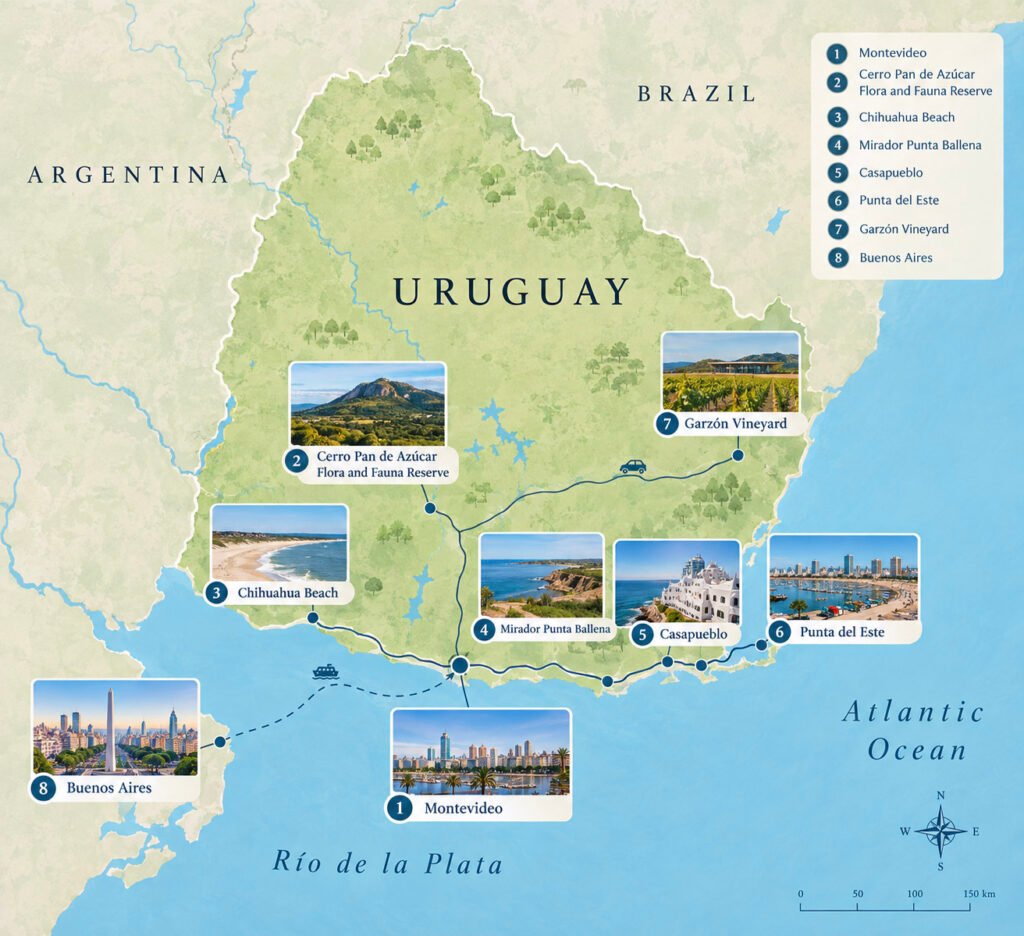
Uruguay Itinerary
1. Montevideo
2. Cerro Pan de Azúcar Flora and Fauna Reserve
3. Chihuahua Beach
4. Mirador Punta Ballena
5. Casapueblo
6. Punta del Este
7. Garzón Vineyard
8. Buenos Aires
1. Montevideo: Top 5 Attractions
1. Ciudad Vieja (Old Town)
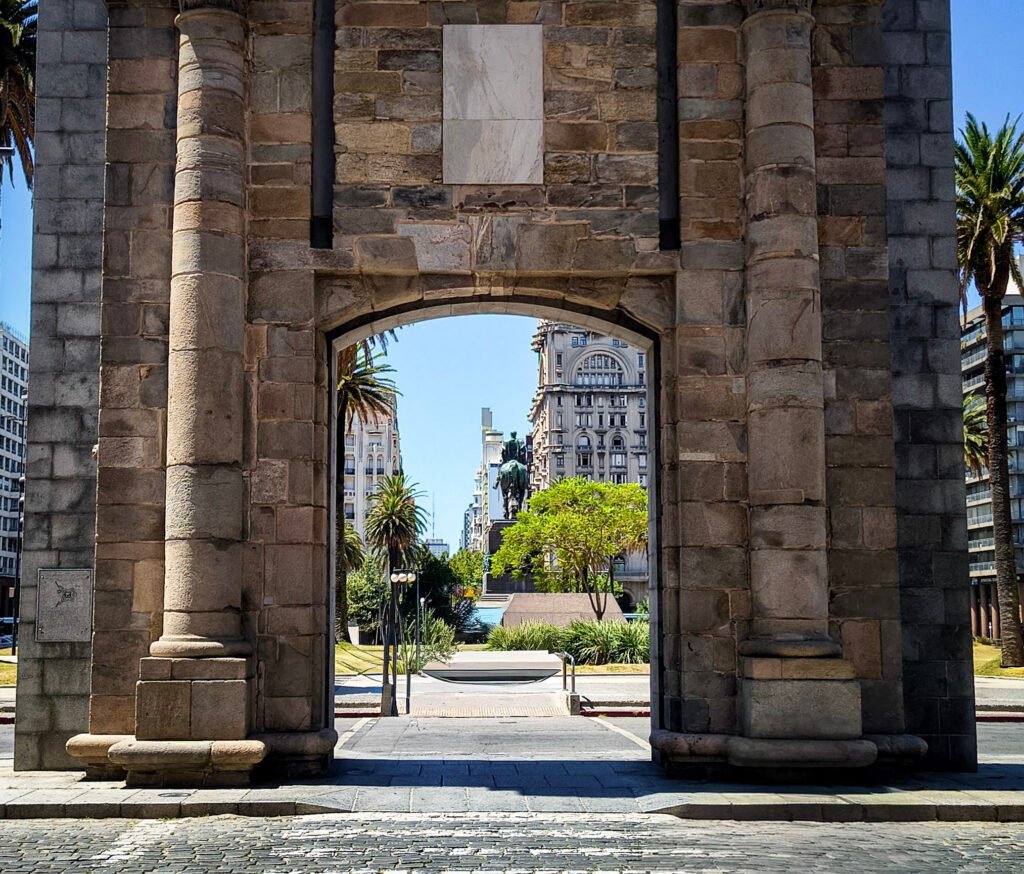
Montevideo’s historic centre, with narrow streets, old buildings, cafes, galleries, and small plazas. It’s the best place to get a feel for the city on foot.
Jet Lag Jelly Tip: Go in the morning, when it's quieter and cooler, and take your time wandering without a fixed plan.
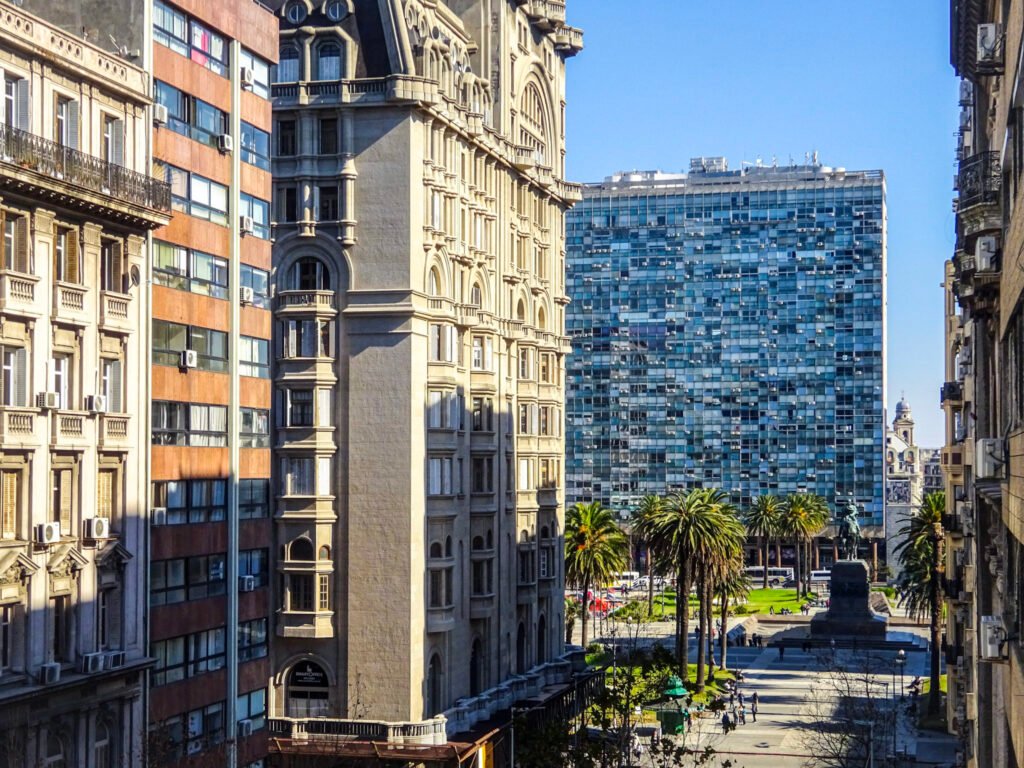
2. Plaza Independencia and Palacio Salvo
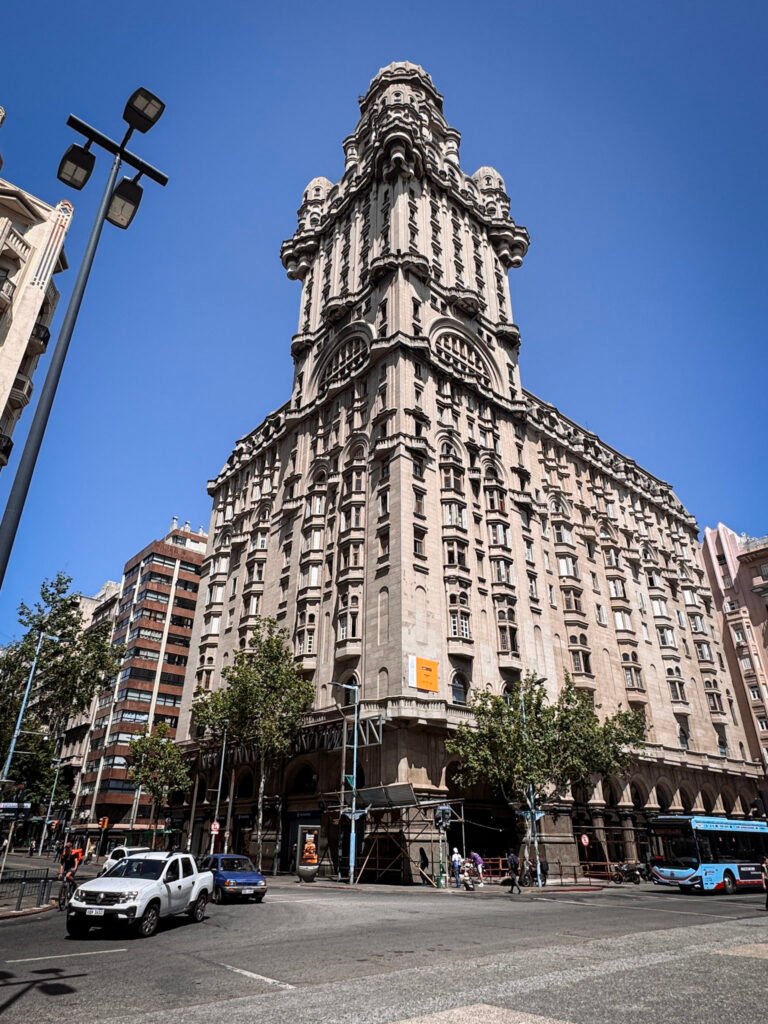
The city’s main square, with the Palacio Salvo, a landmark early 20th-century tower, rising beside it. It marks the border between the old town and the modern centre.
Jet Lag Jelly Tip: Come back in the evening for photos, when the square is lit up. You can browse Montevideo city tours on GetYourGuide if you'd like a guide for the history.
3. Mercado del Puerto
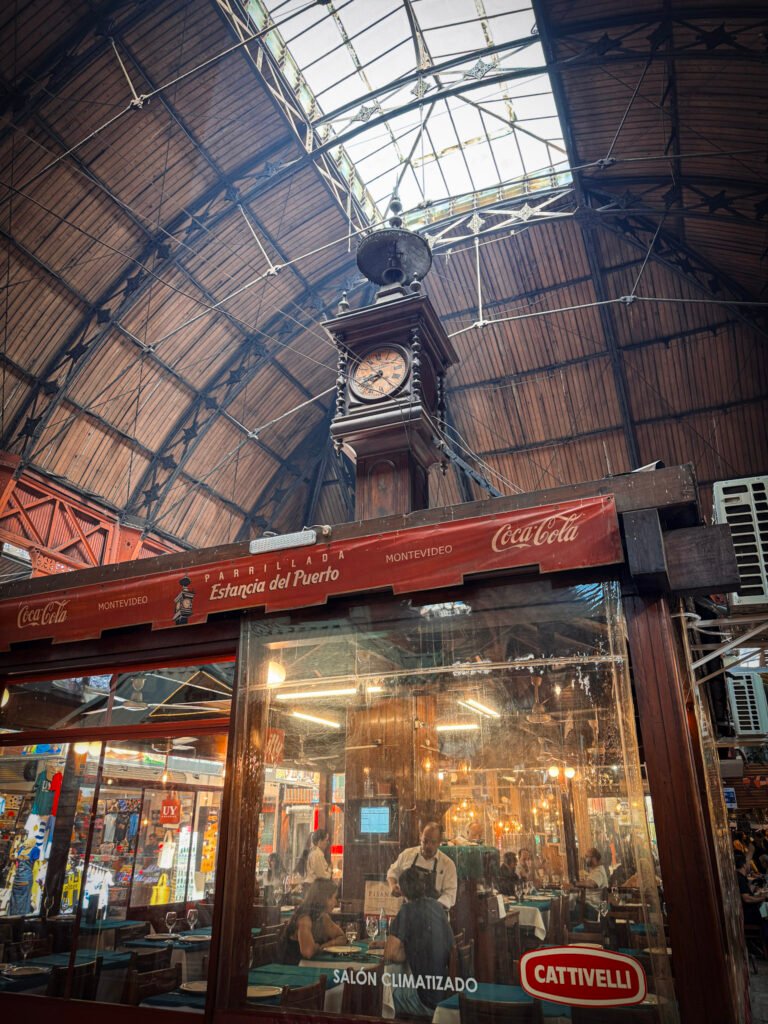
A historic market hall full of grills (parrillas), where you can try traditional Uruguayan barbecue. It’s lively, busy, and a good lunch stop.
Jet Lag Jelly Tip: Go a little before the usual lunch rush, and be ready to share the space with other visitors.
4. Teatro Solís
Montevideo’s famous historic theatre, known for its elegant interior. You can visit for a performance or look around on a tour.
Jet Lag Jelly Tip: Check the schedule for tours or performances ahead of time, since opening and tour times can change.
5. La Rambla (Waterfront Promenade)
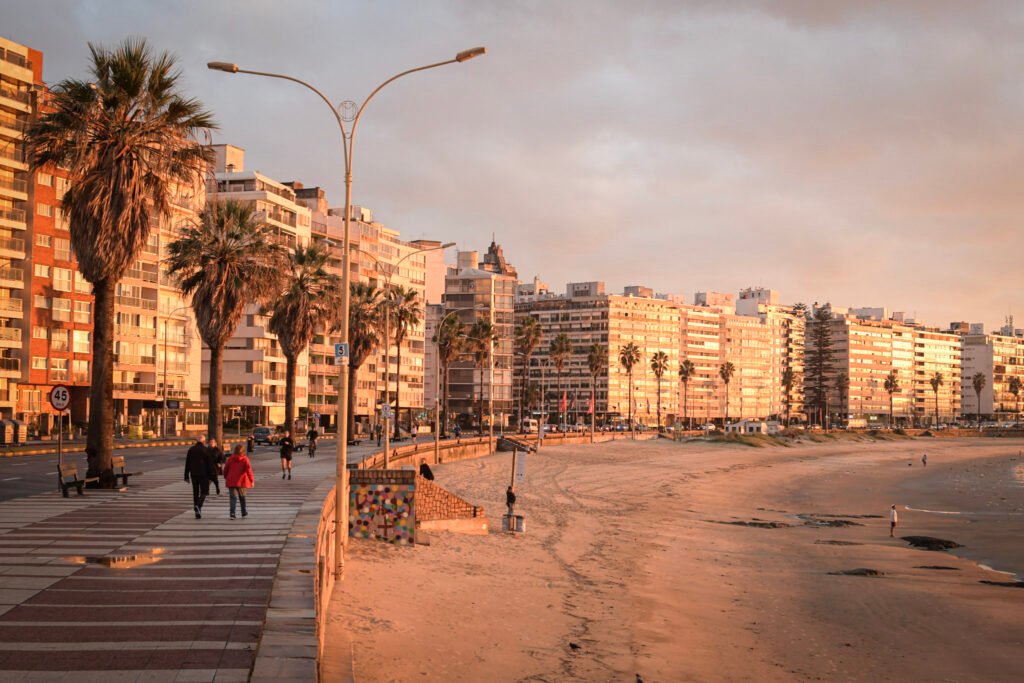
A long seafront path along the river, popular for walking, cycling, and watching the sunset. Locals come here to relax in the evening.
Jet Lag Jelly Tip: Walk or cycle a section in the late afternoon and finish at sunset.
2. Cerro Pan de Azúcar Flora and Fauna Reserve

Heading east from Montevideo, this nature reserve near Piriápolis protects a granite hill with trails and views over the surrounding coast. It’s a good place for a hike if you want a break from the beaches.

It’s also a fun stop for animal lovers. Some of the local wildlife, like coatis and large lizards, wander freely along the paths and roads, and other animals live in fenced fields, so you can see a mix of both as you explore.

Jet Lag Jelly Tip: Bring a camera and keep your eyes on the path, since the animals often walk right out in front of you. Keep a respectful distance, don't feed them, and keep food and bags closed, because coatis are curious and will go after snacks. Start early, bring water, sun protection, and good shoes, and check the current trail and opening details before you go.
3. Chihuahua Beach
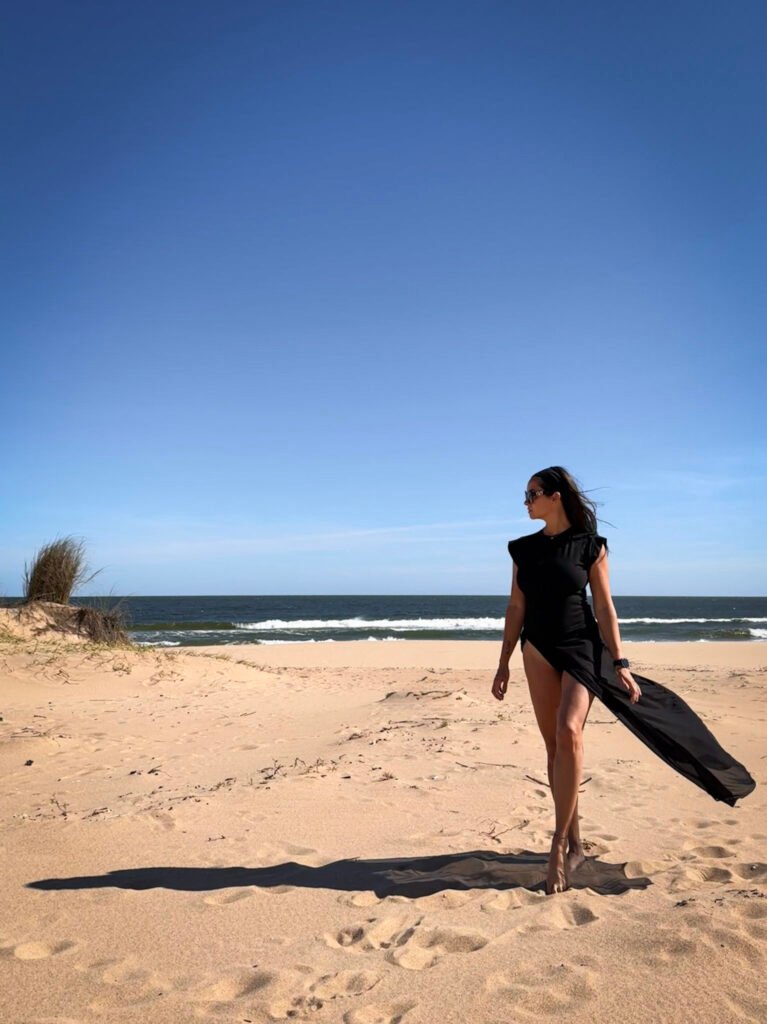
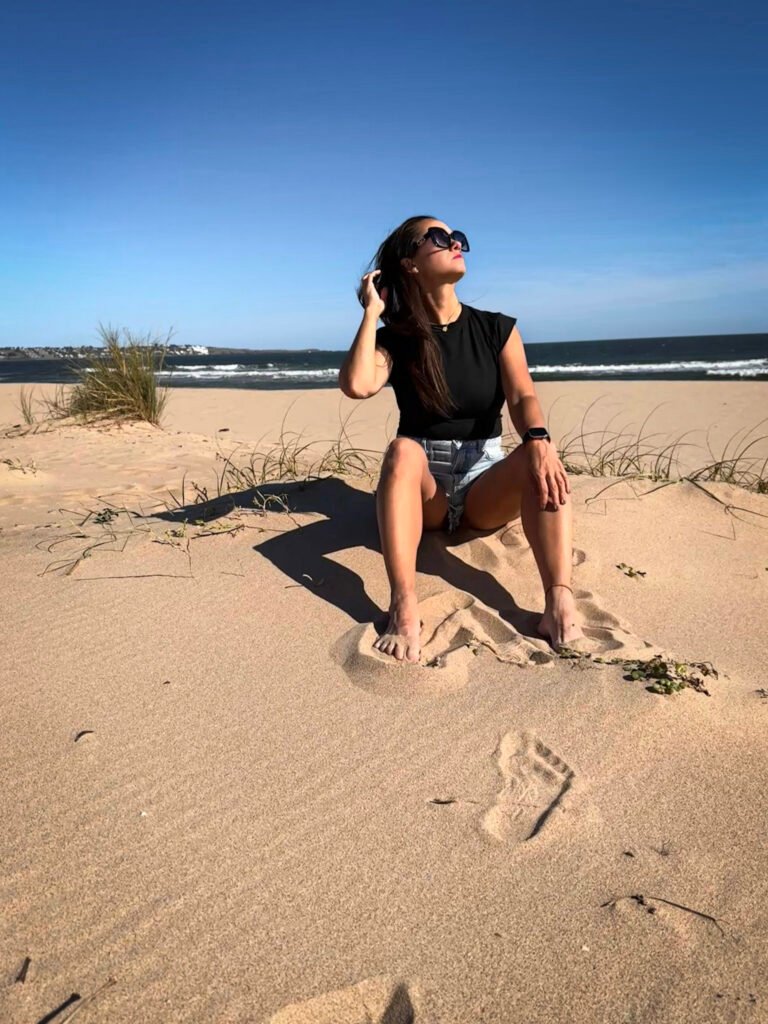
Chihuahua is a naturist, clothing-optional beach on Portezuelo Bay, about half an hour from Punta del Este. It’s known for its sand, dunes, and relaxed atmosphere.

The sunsets here are amazing, so it’s a great place to stay until the end of the day.
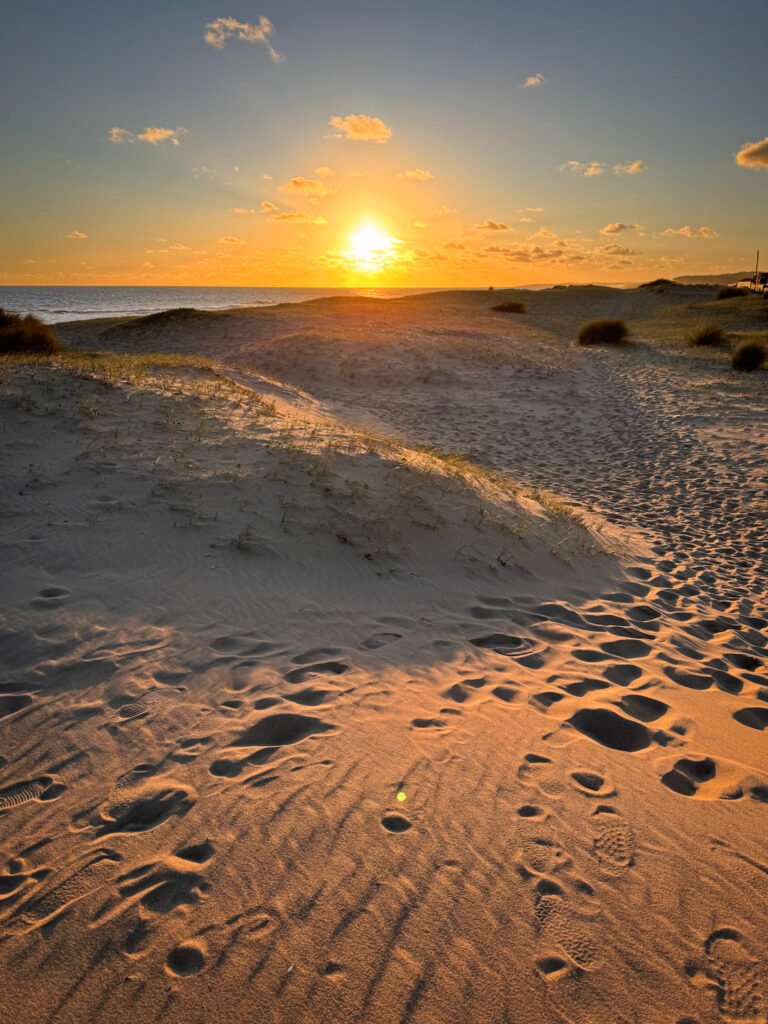
Jet Lag Jelly Tip: Plan to arrive in the afternoon and stay for sunset, and bring a layer, since it can cool down quickly once the sun goes down. Respect the beach's rules. Nudity is normal here, and photography is generally not welcome, so keep your camera away and ask if you're unsure.
4. Mirador Punta Ballena
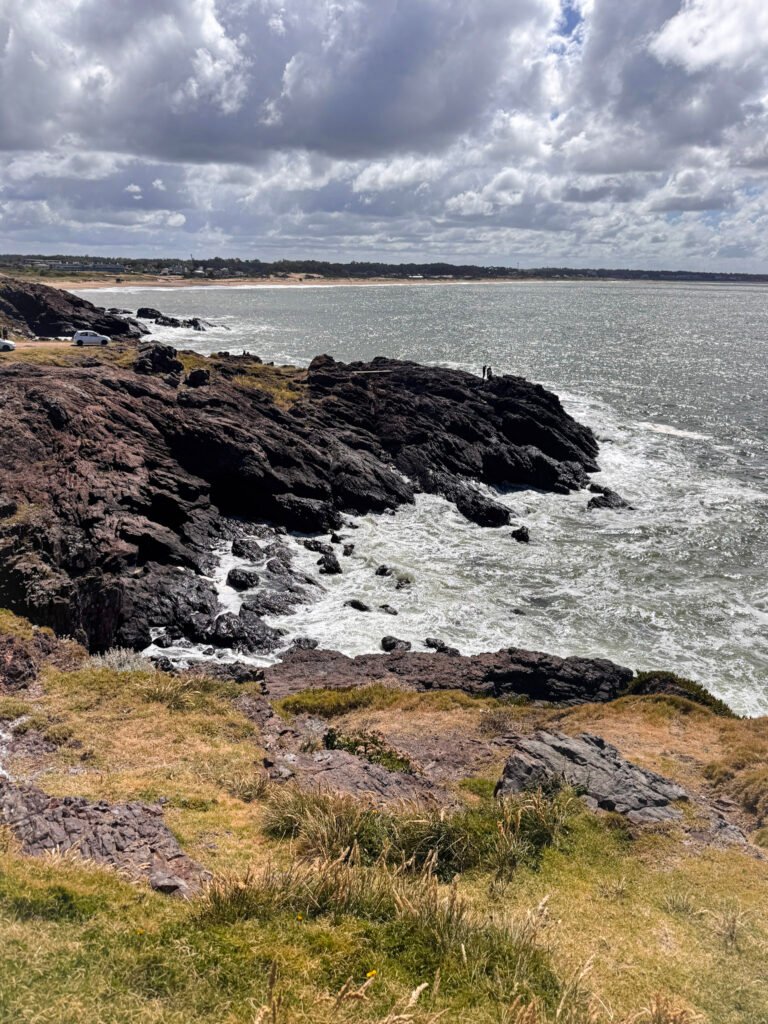
A scenic viewpoint over the coastline at Punta Ballena, with wide views of the sea and shoreline. It’s one of the best free photo stops on the route.
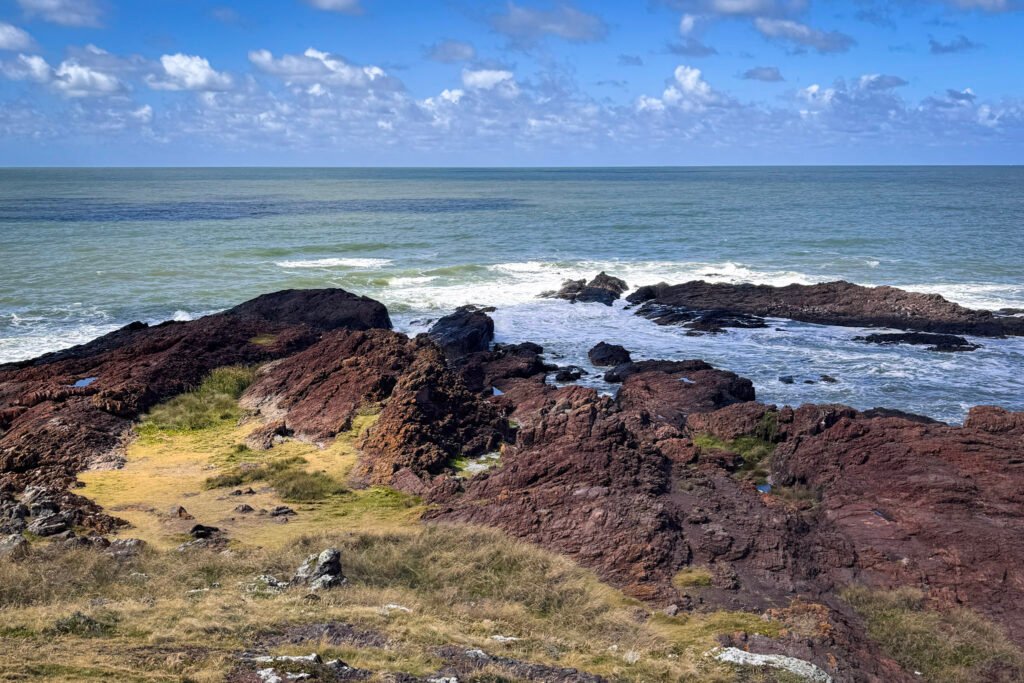
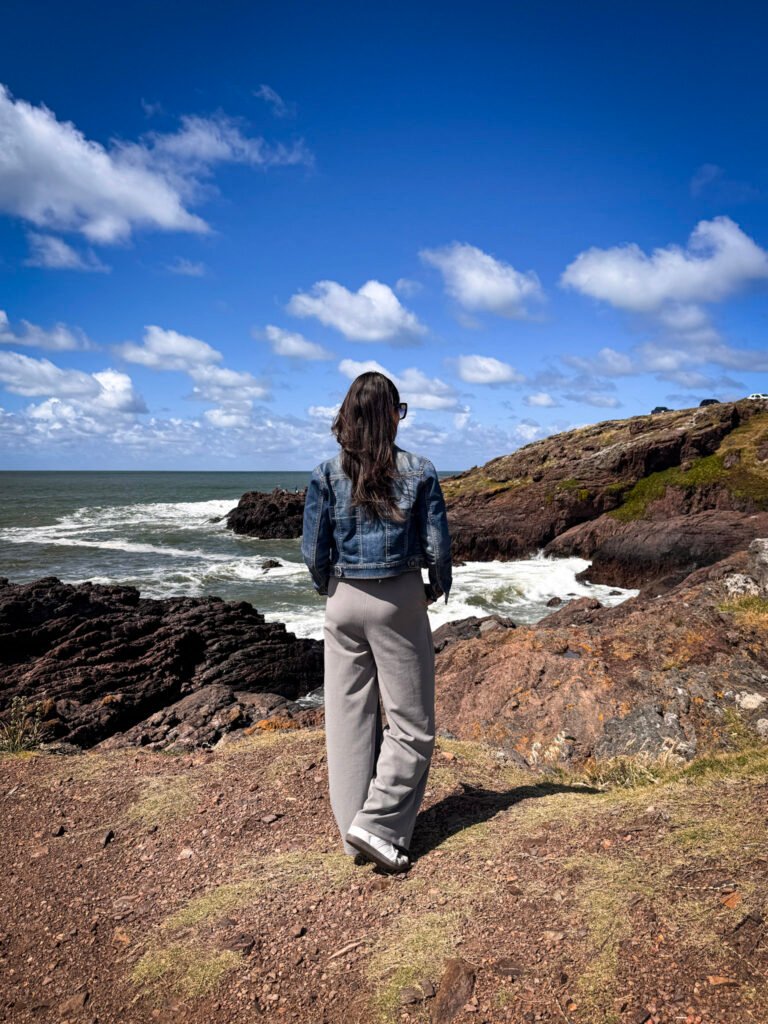
Jet Lag Jelly Tip: Visit in the late afternoon for the best light, and bring a layer, since it can be breezy at the top.
5. Casapueblo
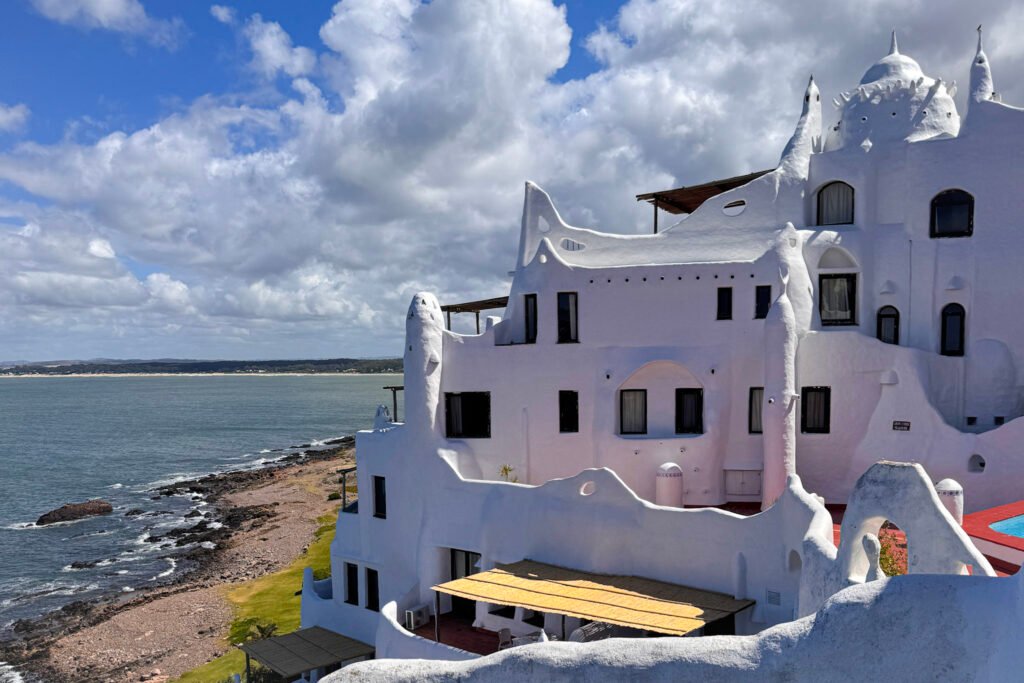

A white cliffside building at Punta Ballena, designed by the artist Carlos Páez Vilaró. It houses a hotel, a gallery, and a museum, and it’s one of Uruguay’s most recognizable sights.
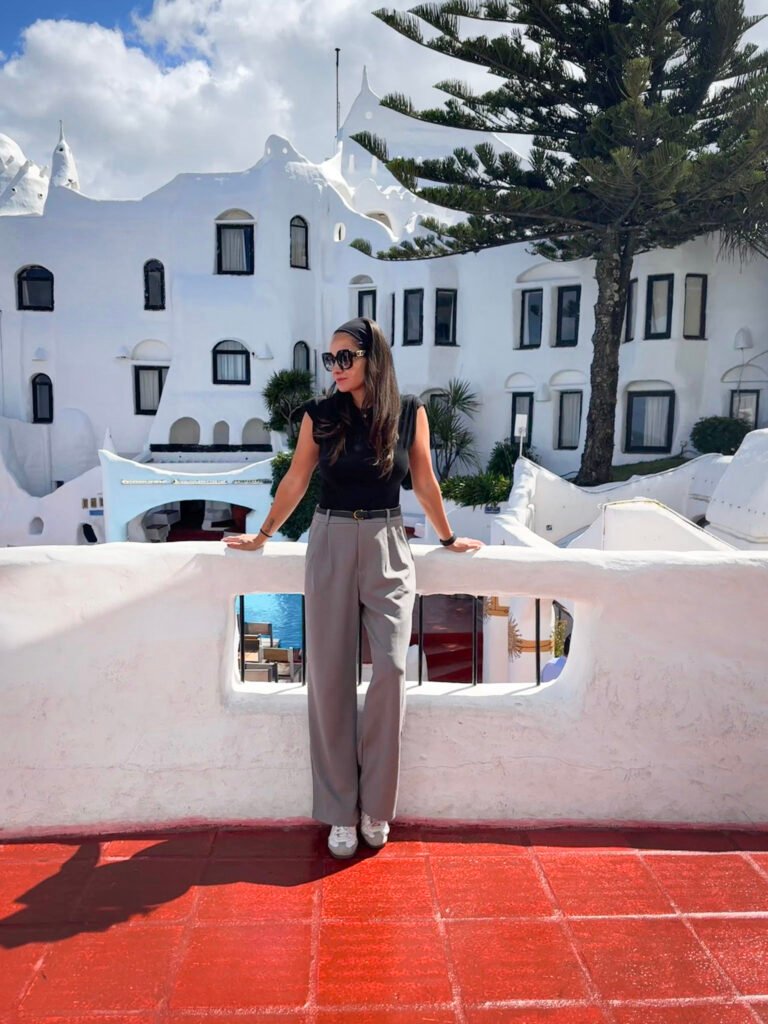
Jet Lag Jelly Tip: Plan your visit around sunset, which is when Casapueblo is most popular, and check opening hours and any entrance fee before you go. You can also browse Casapueblo and Punta Ballena tours on GetYourGuide if you'd like transport and a guide arranged.
6. Punta del Este
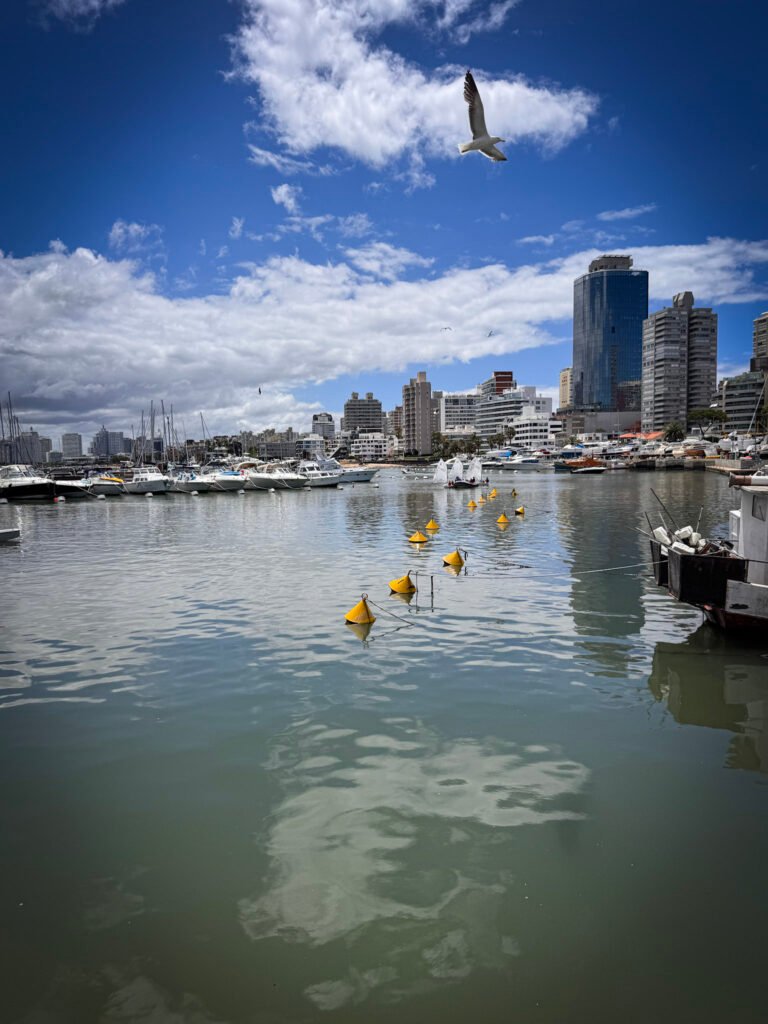
Punta del Este is Uruguay’s best-known beach resort, built on a peninsula between calm and wild beaches. Here’s what to see.
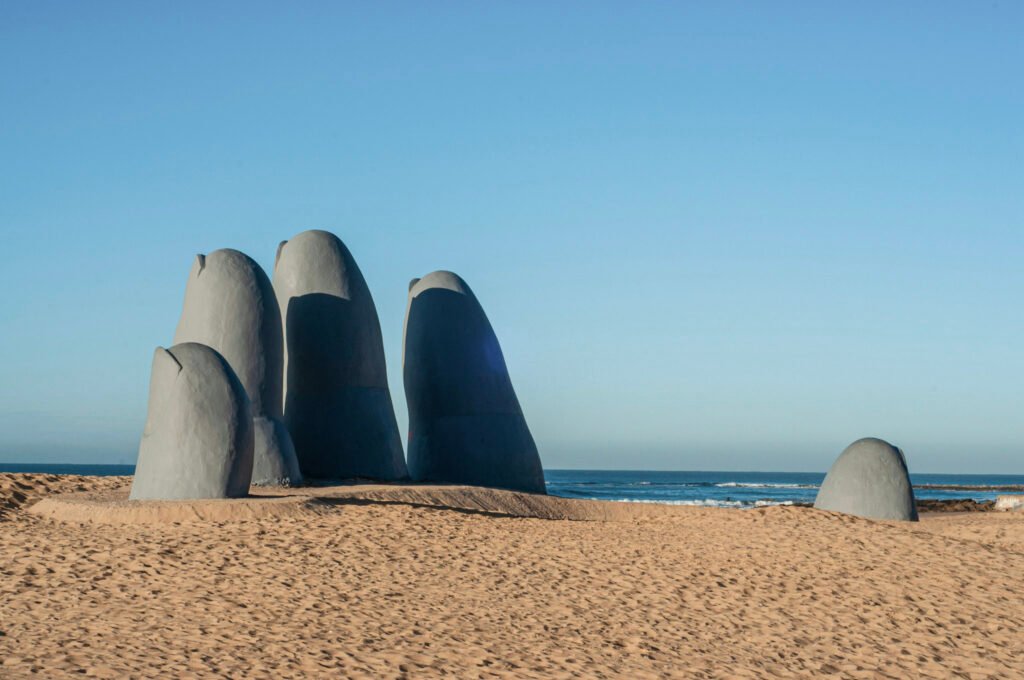
1. La Mano (The Hand)
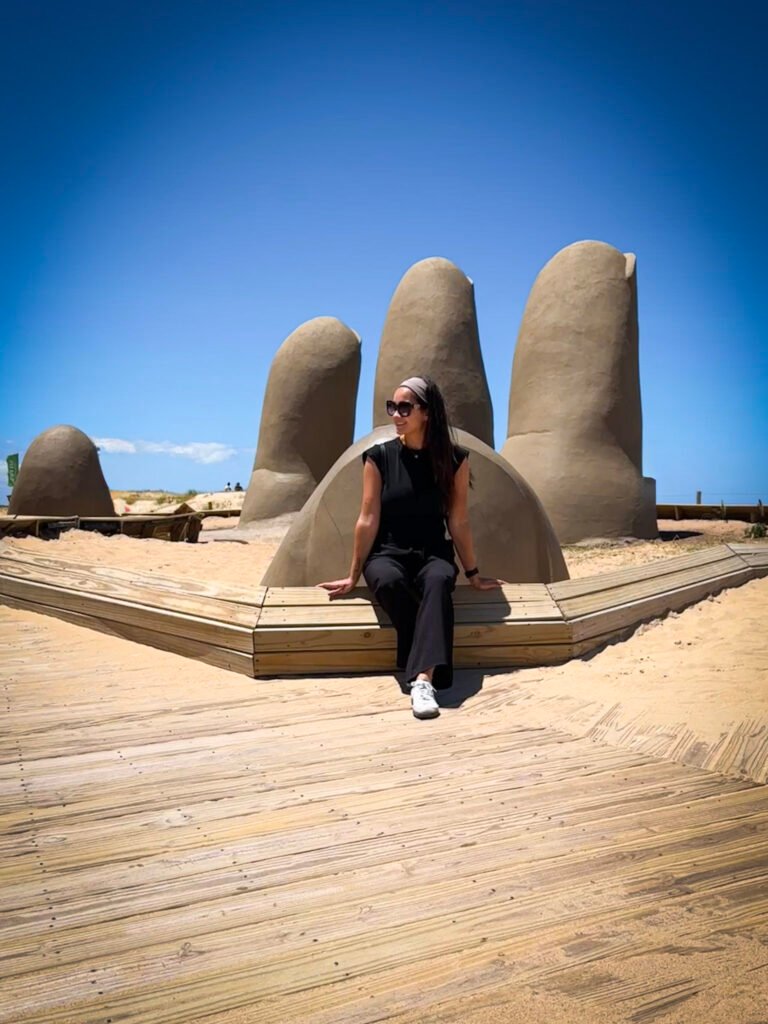
The famous sculpture of a hand rising from the sand on Playa Brava, and the town’s most photographed landmark.
2. Playa Mansa and Playa Brava
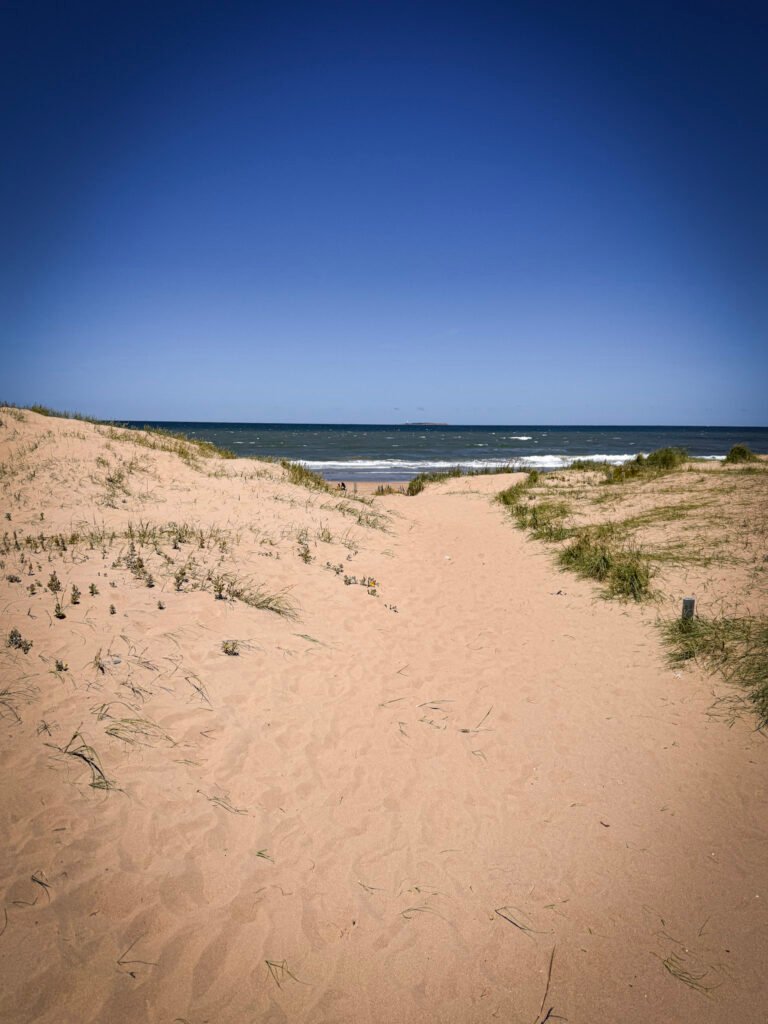
The calmer beach on one side of the peninsula and the wilder, wavier beach on the other. Choose by whether you want swimming or surf.
3. The Port
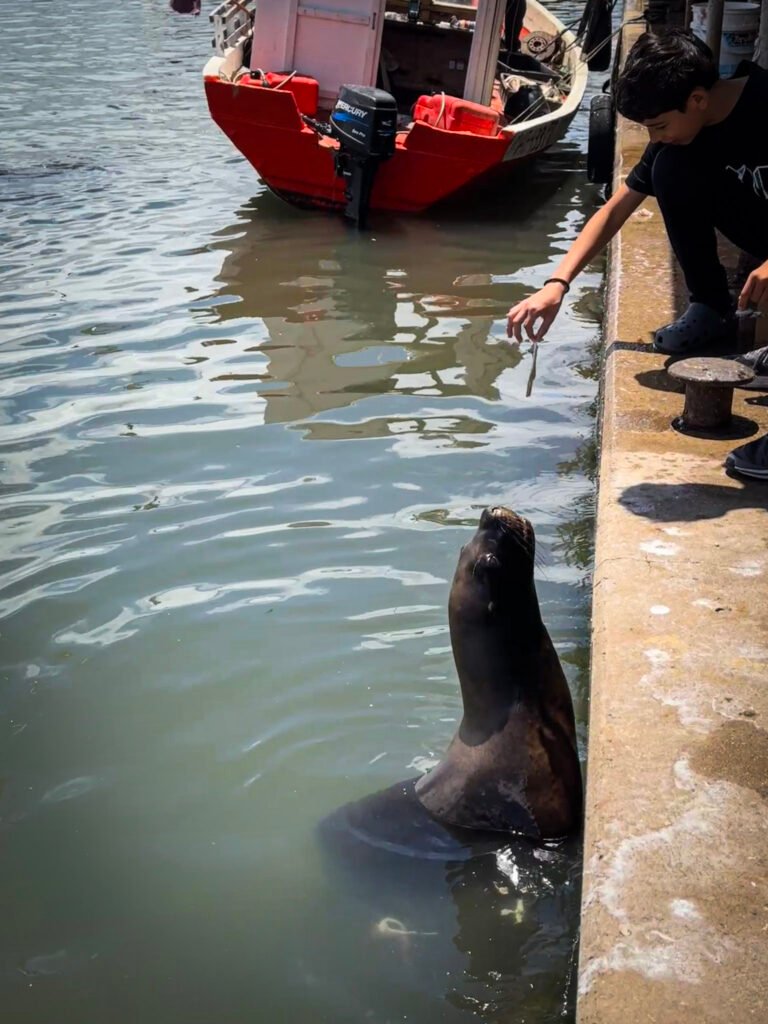
A lively harbour with boats, restaurants, and sea lions that often rest nearby.
Jet Lag Jelly Tip: Have lunch at the port, then walk the peninsula and end the day at the beach that suits the weather. You can also browse Punta del Este tours on GetYourGuide, including boat trips and day tours around the coast. Boat trips depend on the sea conditions, so keep a flexible day.
7. Garzón Vineyard (Bodega Garzón)
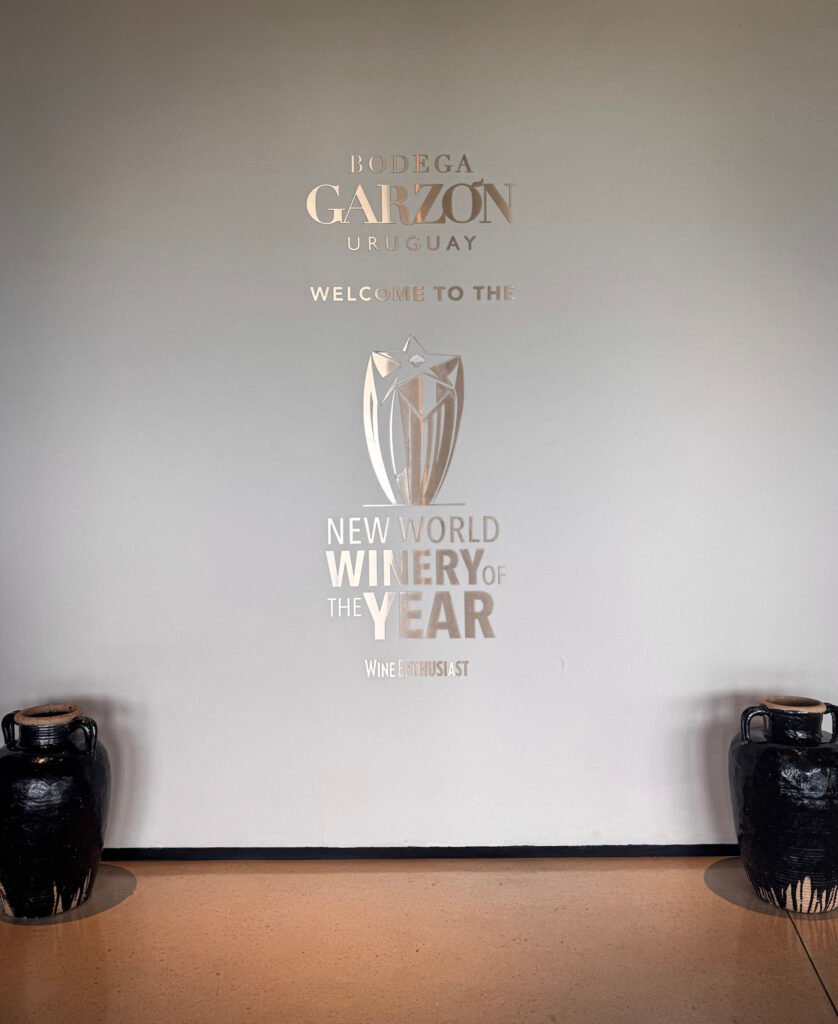
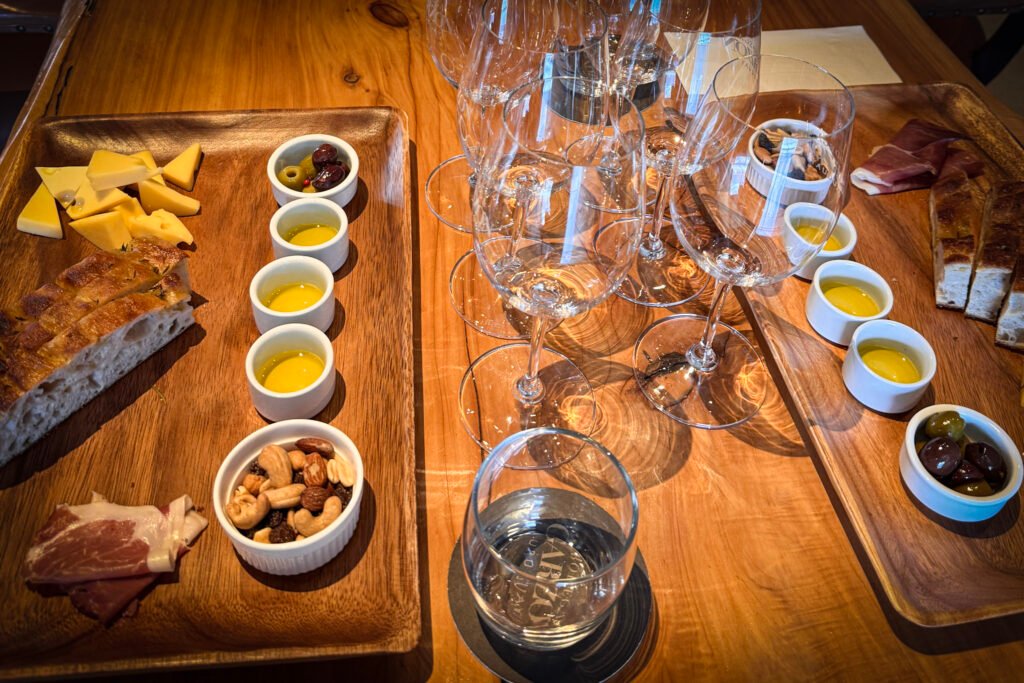
Inland from the coast, Garzón is a quiet wine-country area known for Uruguay’s signature Tannat grape. A winery visit makes a great contrast to beach days.
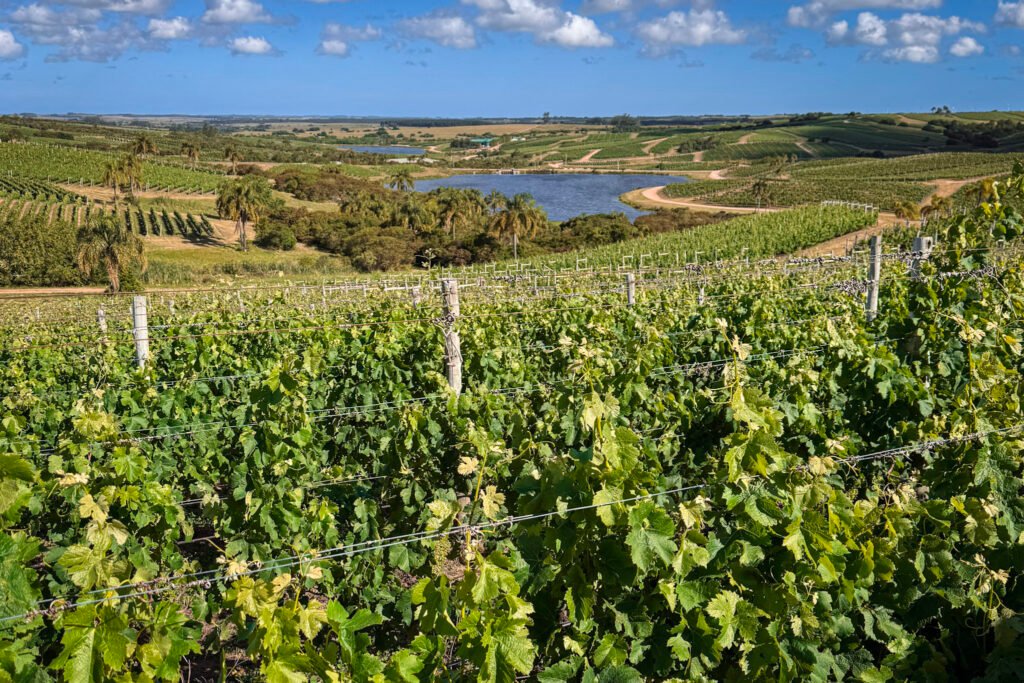
Jet Lag Jelly Tip: Book your tasting or lunch in advance, since visits are usually by reservation. You can also browse Garzón wine tours on GetYourGuide if you'd rather not drive after tasting.
8. Day Trip to Buenos Aires from Uruguay (via Colonia del Sacramento)
If you have an extra day, you can visit Buenos Aires from Uruguay by ferry. Most people go through Colonia del Sacramento, a historic riverside town with cobblestone streets and a UNESCO-listed old quarter, which is worth a stop on its own. From Colonia, the ferry across the Río de la Plata to Buenos Aires takes about an hour.
Jet Lag Jelly Tip: Book your ferry and any tour in advance, and check passport and entry rules for Argentina before you go. You can also browse Buenos Aires day trips from Uruguay on GetYourGuide if you'd like a guide and transport arranged.
Best Time to Visit Uruguay
Best for the beaches: December to February. This is Uruguay’s summer, with warm weather and a lively Punta del Este, but also higher prices and crowds, especially in January.
Best overall: November, March, and April. The weather is pleasant, the crowds are smaller, and prices are often lower. Late summer is also a good time for wine country, since the grape harvest usually happens then.
Winter (June to August): Cooler and quieter, and the beach towns are much less busy. Better for Montevideo and for a slower trip than for swimming.
Jet Lag Jelly Tip: If you want summer without the peak crowds, aim for early December or late February.
Where to Stay
Montevideo: best for city sights and food. Choose the Ciudad Vieja or a seafront area for walkability. Browse Montevideo stays
Punta del Este: best base for the coast. Close to the beaches, restaurants, and the port, with Punta Ballena and Casapueblo a short drive away. Browse Punta del Este stays
Jet Lag Jelly Tip: Book early for December through February. Punta del Este fills up quickly, and the best-located places go first.
FAQ
How many days do you need in Uruguay? Five to seven days covers Montevideo, the coast, and a wine-country day, and a week or more lets you slow down.
Do you need a car in Uruguay? It isn’t essential for Montevideo, but a car is very helpful for Punta Ballena, Chihuahua, the Pan de Azúcar reserve, and Garzón.
What’s the best time to visit? December to February is best for beaches, and November, March, and April offer good weather with fewer crowds.
Is Playa Chihuahua clothing-optional? Yes, it’s a naturist beach, so nudity is normal. Be respectful and avoid taking photos of other people.
Can you visit Casapueblo without staying there? Visitors can generally tour it, but check current opening hours, entrance details, and sunset arrangements before you go.
Is Uruguay good for a first trip to South America? Yes. It’s compact and relaxed, with a mix of city, beach, and wine regions in one trip.
Summary
Uruguay combines a charming capital, scenic coastal viewpoints, long beaches, and quiet wine country in one small country. Start in Montevideo, head east along the coast to Punta del Este, and finish with a winery day in Garzón. Go in summer for the beaches or in spring and autumn for easier crowds.