
This post contains affiliate links. If you book through one, I may earn a small commission at no extra cost to you — it helps keep Jet Lag Jelly running. Read my full affiliate disclosure for more.
I’d seen the Cotswolds in every “England but make it a postcard” photo for years before I actually went, and I’ll admit I went in a little skeptical — surely no place is that photogenic in real life. It is. Honey-colored stone, rivers that look like they were placed there by a set designer, and villages that somehow all agree on the same architectural mood board without looking repetitive.
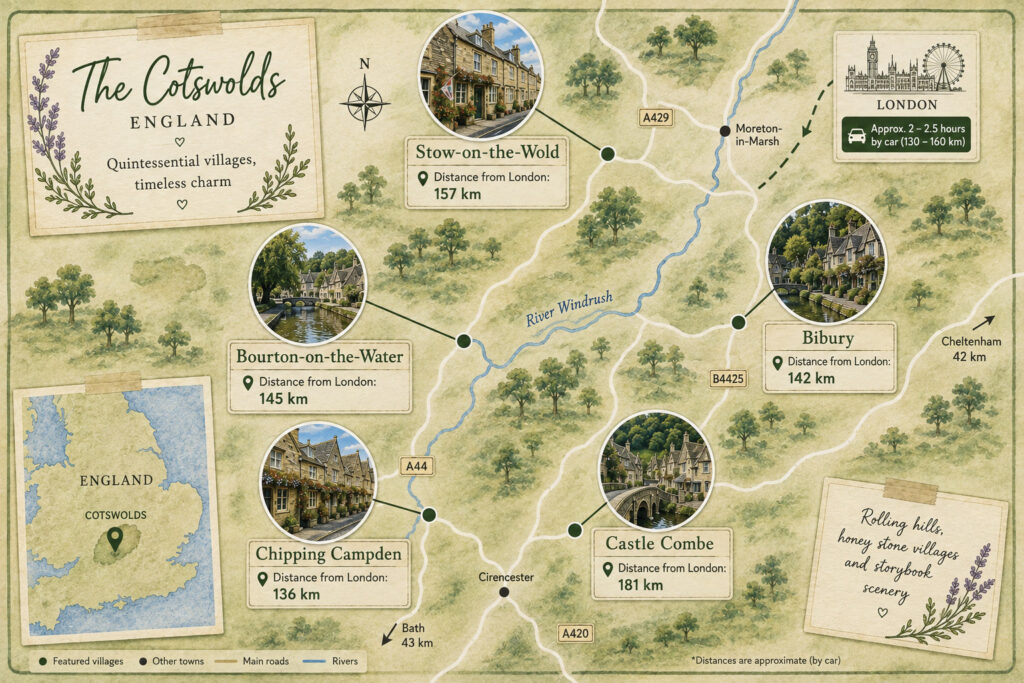
I based myself out of Cheltenham and used it as a springboard to explore the region. Here are the top 5 villages worth building a Cotswolds trip around, how to get there from London, and what to actually budget for it.
Cotswolds, England Itinerary
1. Bourton-on-the-Water
2. Stow-on-the-Wold
3. Bibury
4. Chipping Campden
5. Castle Combe
1. Bourton-on-the-Water
Nicknamed the “Venice of the Cotswolds,” Bourton-on-the-Water is built around the shallow River Windrush, crossed by five low stone footbridges that give the whole village a strangely calm, laid-back energy despite being one of the most visited spots in the region. Wide grassy banks line the water on both sides, and it’s genuinely one of those places where you can just sit by the river with an ice cream and watch the world go by.
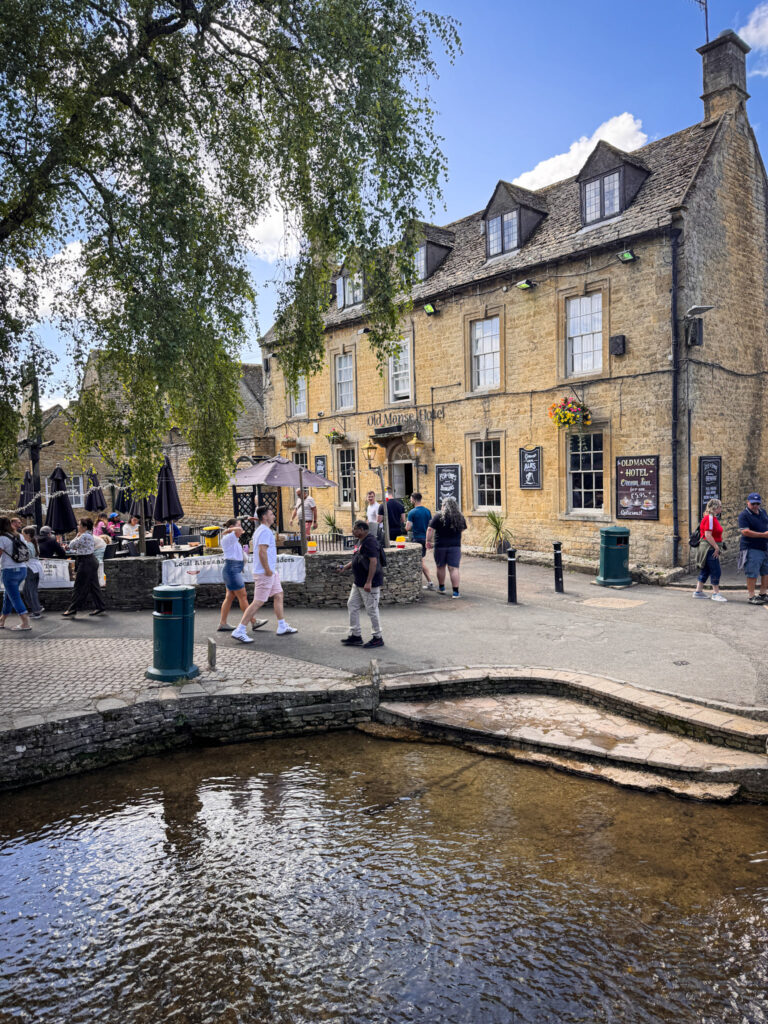
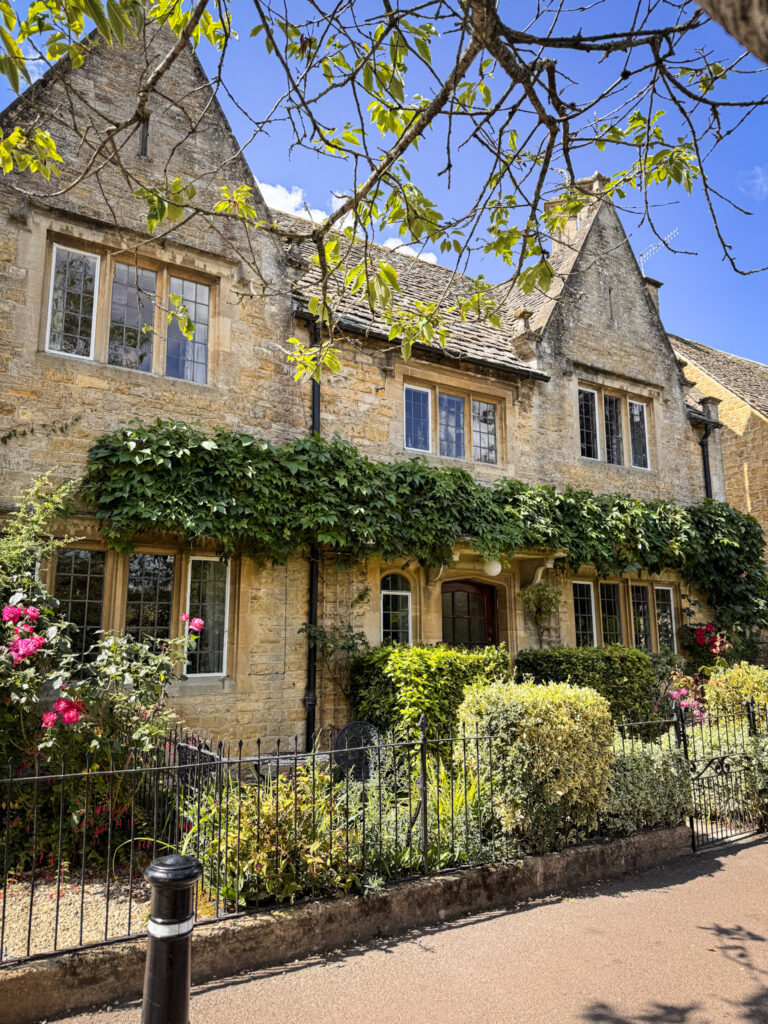
It’s not just a pretty river, either. The Model Village — a 1/9th scale replica of Bourton itself, built from the same local stone back in 1937 — is a genuinely charming detour, and there’s a small museum-and-motoring-collection scene tucked into old mill buildings if you want a break from walking. The village gets busy fast, especially by mid-morning, so the earlier you arrive, the more it feels like your own discovery rather than a group tour.
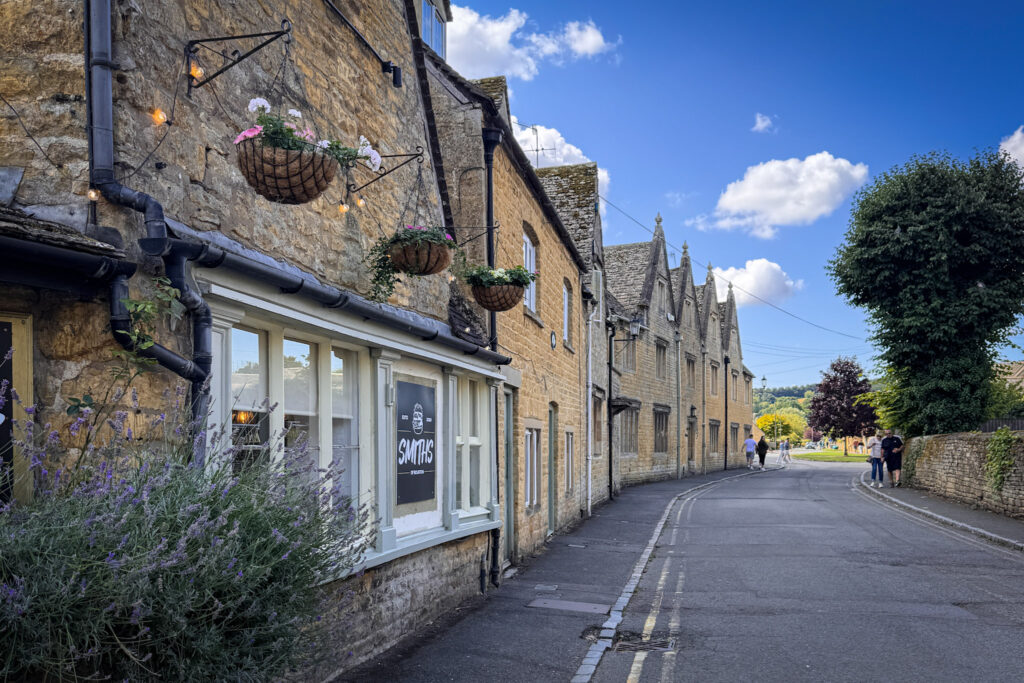
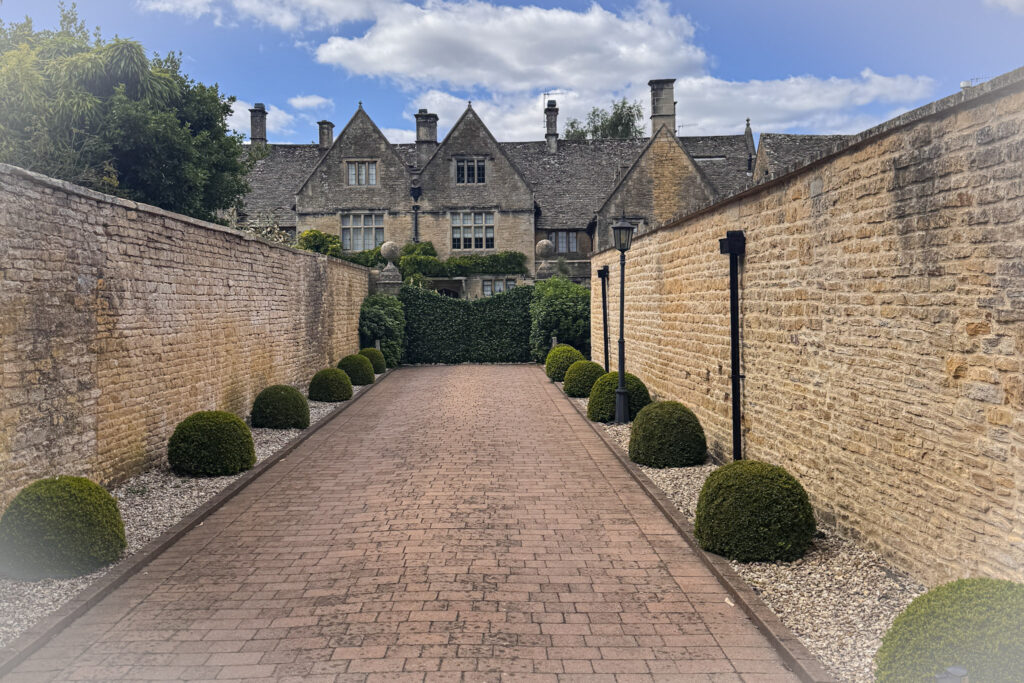
Jet Lag Jelly Tip: Get there before 9am if you can. Bourton is famously photogenic, but by 11am the bridges are shoulder-to-shoulder with day-trippers — the same shot at sunrise is a completely different experience.
2. Stow-on-the-Wold
Sitting on top of an 800-foot hill at the crossing of several old roads (including the Roman Fosse Way), Stow-on-the-Wold has a slightly different feel than Bourton — less river-village, more historic market town. The market square is lined with antique shops, cozy pubs, and independent stores, and it’s easy to spend an afternoon just wandering in and out of doorways.
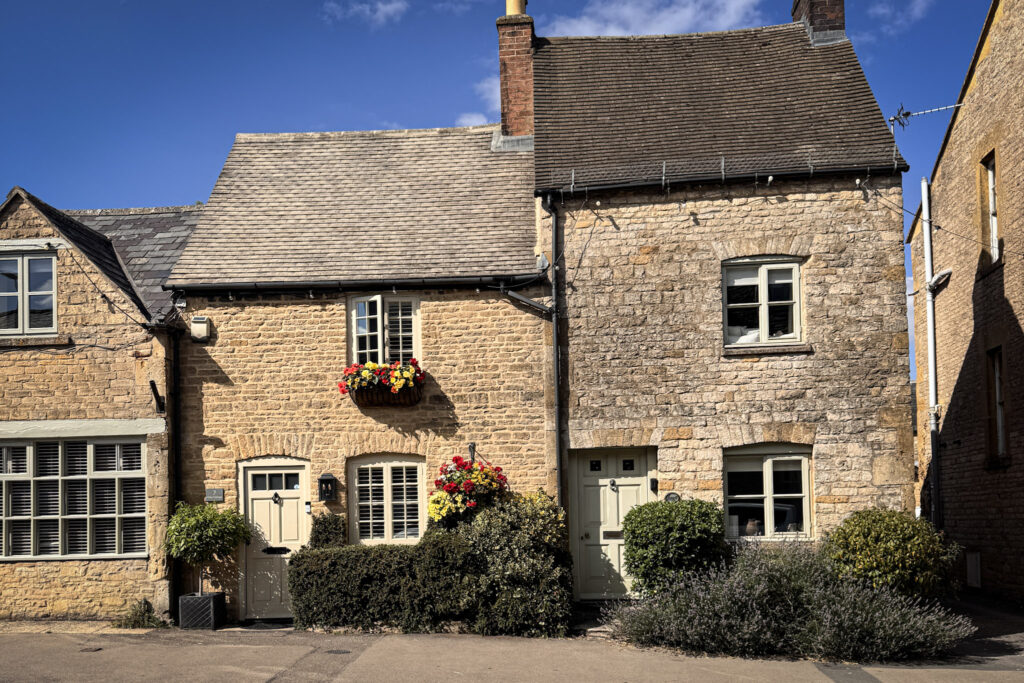
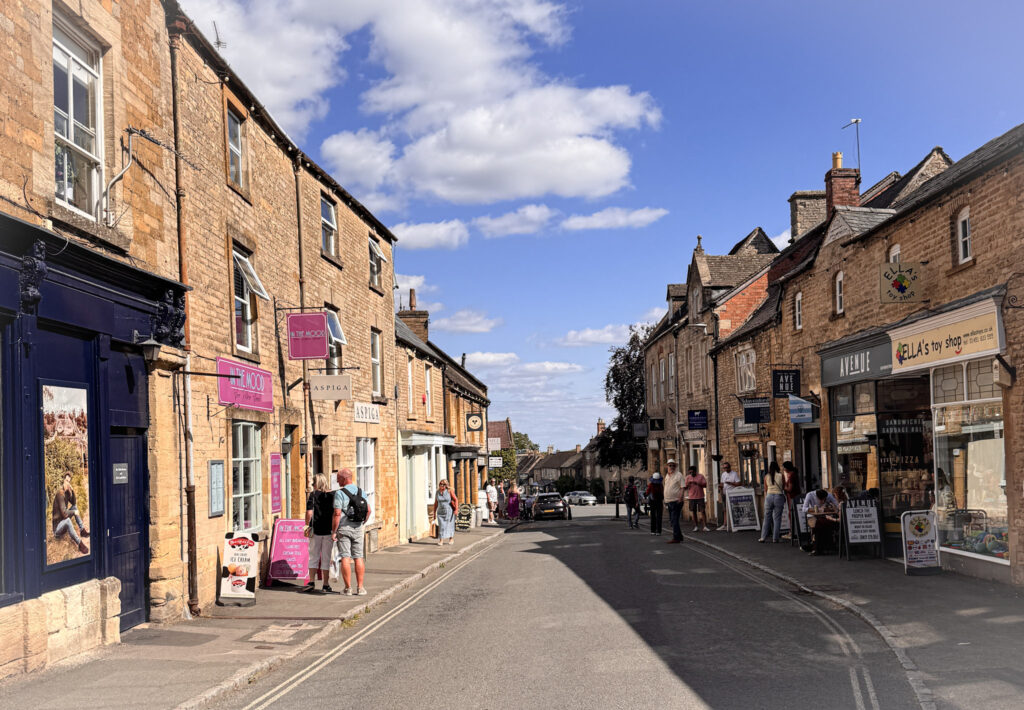
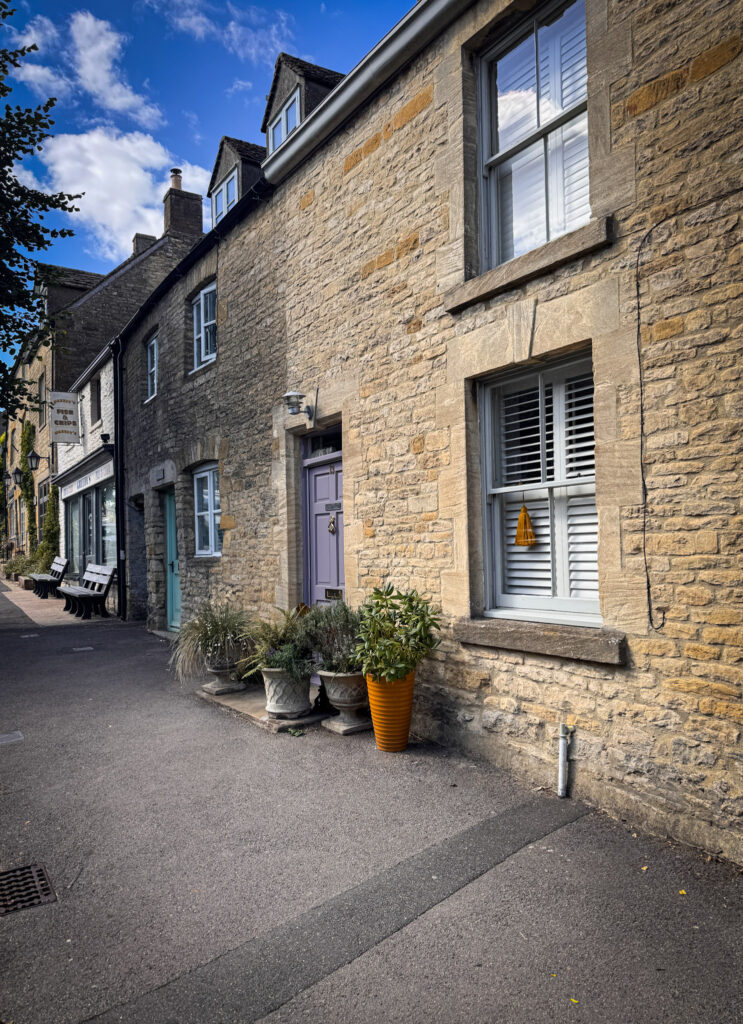
The real must-see, though, is tucked around the back of St Edward’s Church: a small wooden door framed by two ancient yew trees, widely nicknamed the “Tolkien Door” for its uncanny resemblance to the doors of Middle-earth. Whether or not it actually inspired Tolkien is debated, but standing in front of it, you’ll understand the comparison instantly.
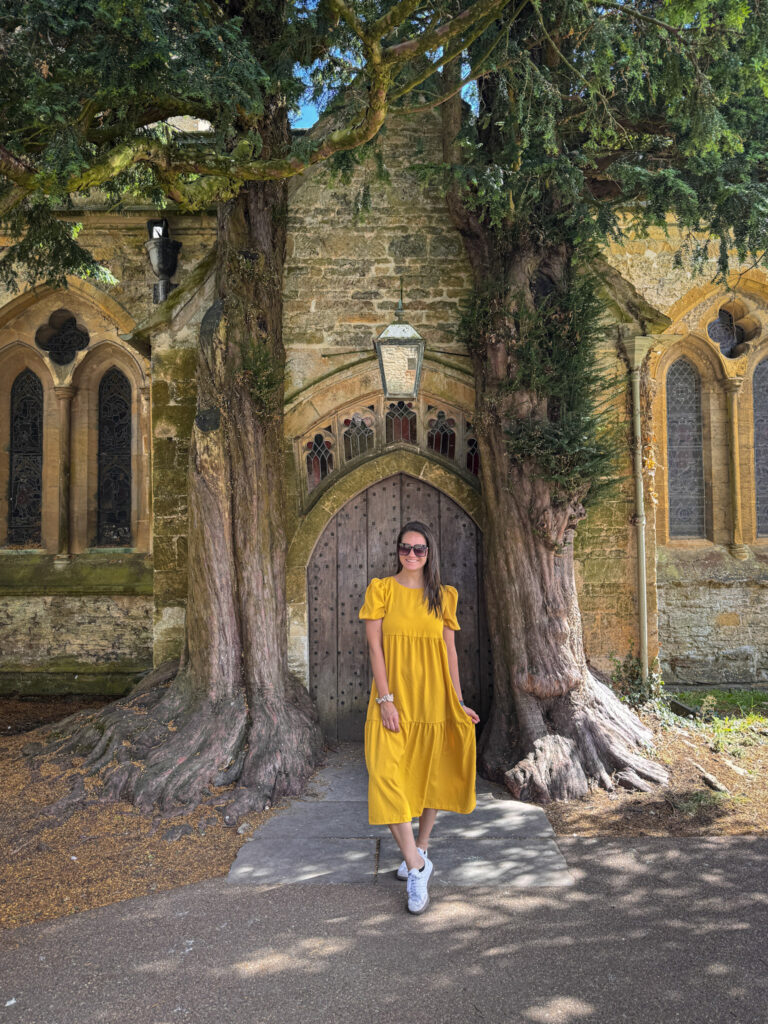
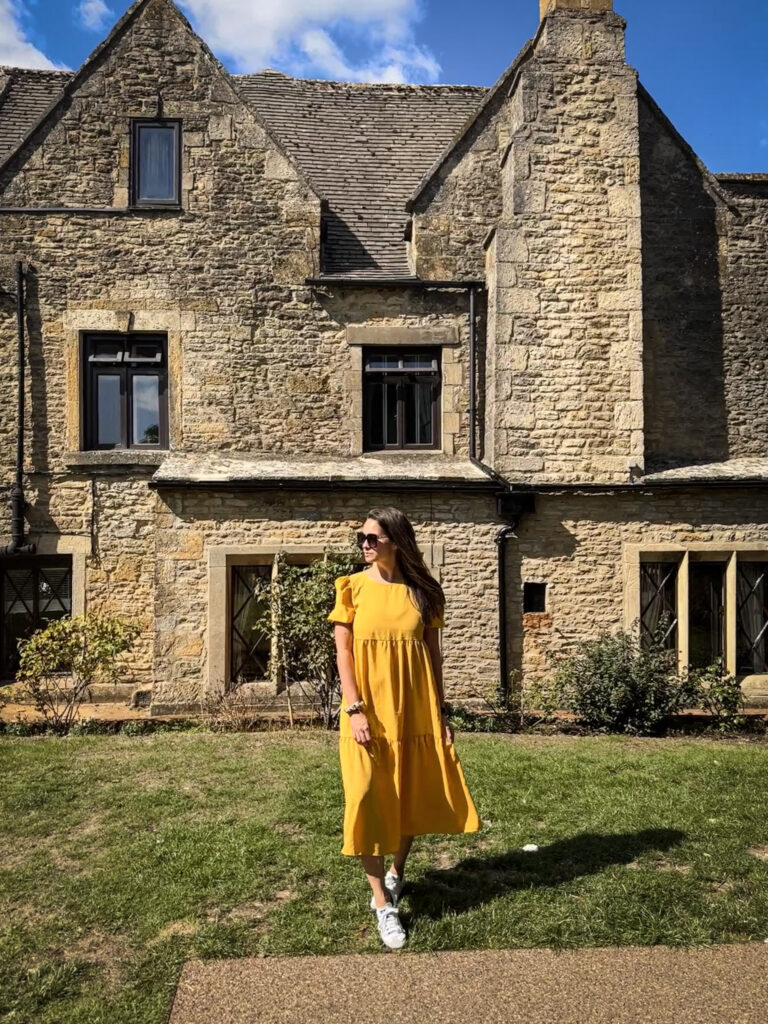
Jet Lag Jelly Tip: Time your visit to Stow for a weekday if you can — the antique shops and pubs are far more enjoyable without the weekend crowds, and you'll actually get the church door to yourself for a photo.
3. Bibury
Often called the most beautiful village in England, Bibury is famous for Arlington Row — a stretch of 17th-century stone weavers’ cottages along the River Coln that’s become one of the most photographed spots in the entire country. It’s small, quiet outside of peak hours, and genuinely lives up to the reputation.
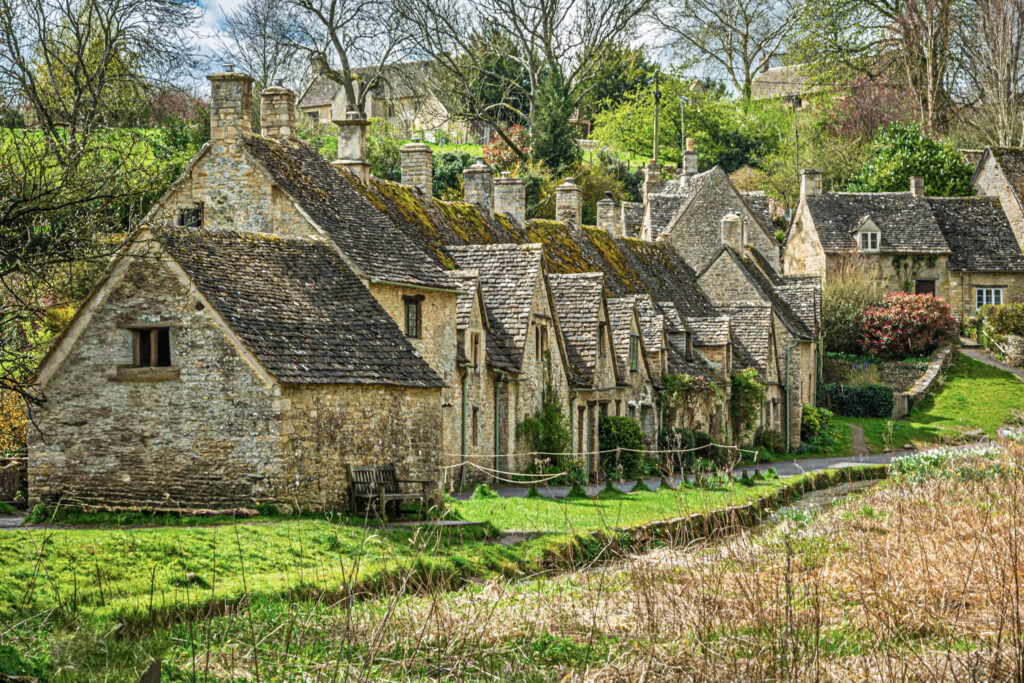
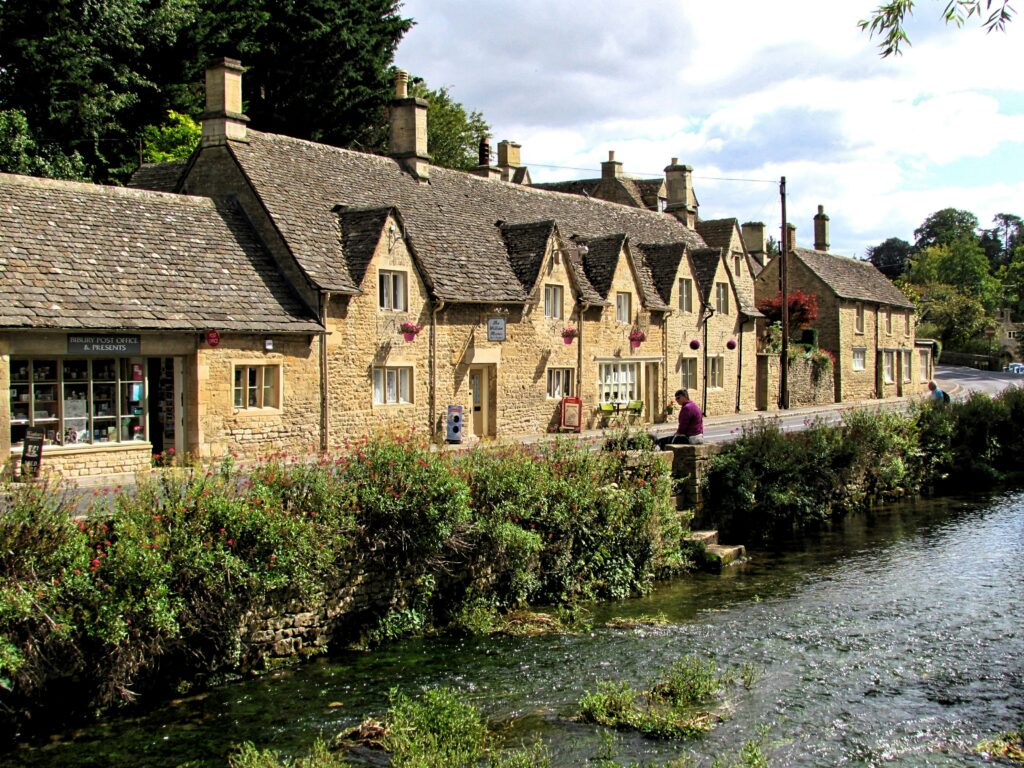
Jet Lag Jelly Tip: Arlington Row is at its best (and least crowded) at golden hour — the honey-colored stone practically glows.
4. Chipping Campden
A lively market town known for its elegant High Street and Arts and Crafts heritage, Chipping Campden also marks the start (or end) of the 102-mile Cotswold Way walking trail. It has more buzz than some of the smaller villages, with antique shops, tea rooms, and historic inns that have been serving guests since the 14th century.
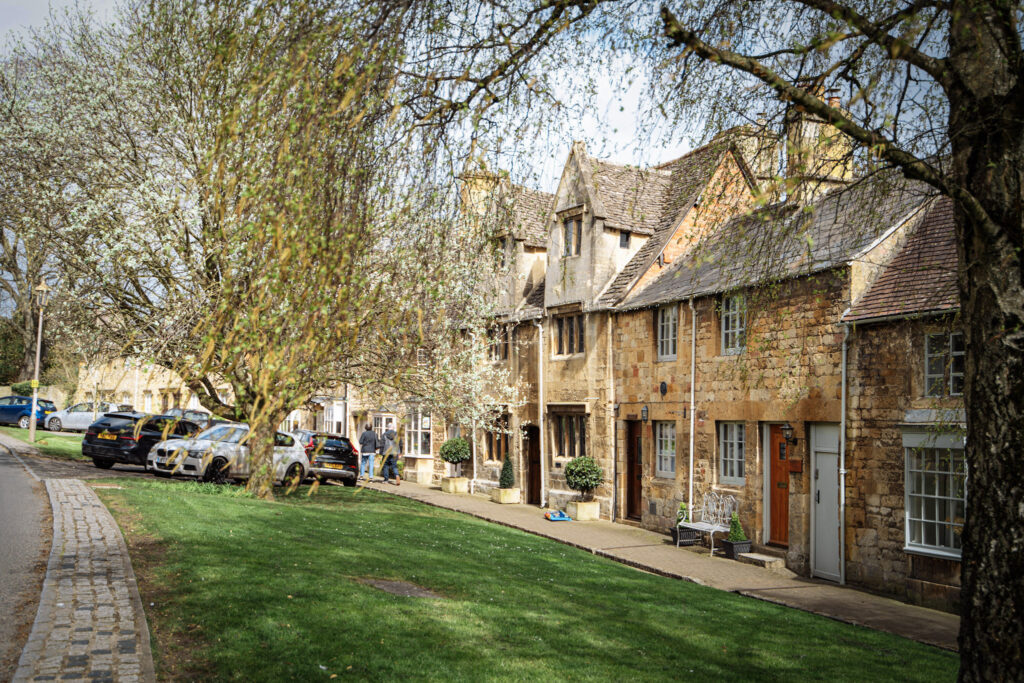
Jet Lag Jelly Tip: If you're only picking one Cotswolds market town beyond Stow, make it this one — it has the same historic character with noticeably fewer tour buses.
5. Castle Combe
Frequently used as a filming location for period dramas, Castle Combe feels almost too perfectly preserved to be real — no visible power lines, no modern shopfronts, just stone cottages tumbling down toward a small stream. It sits a bit apart from the main cluster of Cotswold villages, so it works best as a standalone stop rather than squeezed into a day with several others.
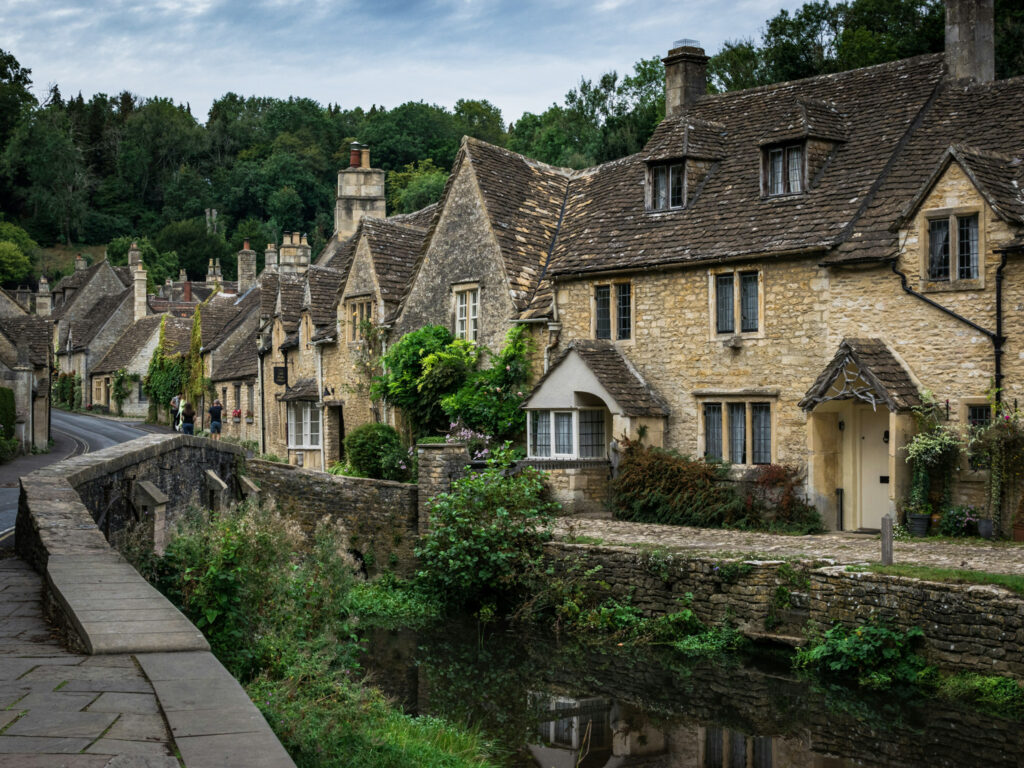
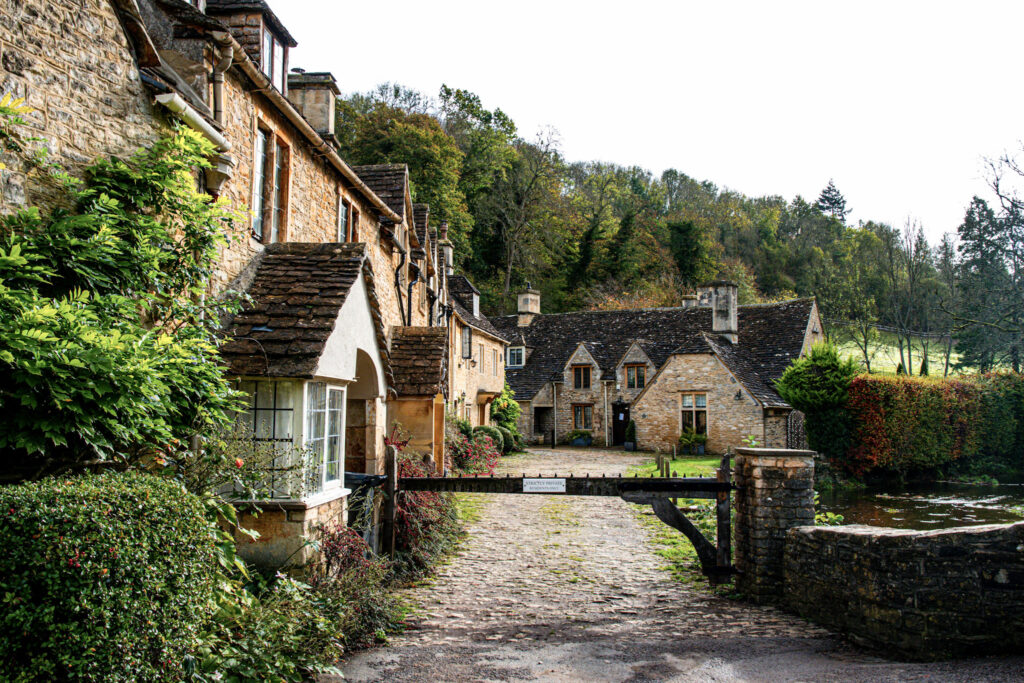
Jet Lag Jelly Tip: Visit early morning or evening. Castle Combe is tiny, and midday tour groups can fill the whole village in a way that breaks the spell.
How to Get There from London
The Cotswolds is genuinely easy to reach without a car, which surprised me.
By train: Direct trains run from London Paddington to Moreton-in-Marsh (around 1 hour 25 minutes), which is the best-connected station for the north Cotswolds — Bourton, Stow, and Chipping Campden are all a short bus or taxi ride from there. For the southern Cotswolds (Bibury, Cirencester, Castle Combe-adjacent areas), trains run to Kemble in about 1 hour 10 minutes. You can book tickets in advance through Trainline, which is usually cheaper than buying on the day. From either station, local buses (Pulhams Coaches is the main operator around Moreton and Stow) or a taxi cover the last few miles into the villages themselves.
By car: Driving from London takes roughly 1 hour 45 minutes to 2 hours 15 minutes depending on your destination and traffic, and gives you far more freedom to hop between villages in a single day — most of them aren’t directly connected by public transport to each other. DiscoverCars is a solid way to compare rental prices if you’re picking up from a London airport or train station.
Jet Lag Jelly Tip: If you're only doing a day trip, the train to Moreton-in-Marsh plus a taxi is honestly less stressful than driving — Cotswold lanes are narrow, parking in the villages is limited, and you won't be tempted to rush your visit to make it back to the car.
Where to Stay
Cheltenham makes a great base if you want a proper town with restaurants and nightlife to come back to each evening, with easy day-trip access to both Bourton and Stow. If you’d rather stay right in the postcard, Stow-on-the-Wold has some genuinely historic inns (some dating back to the 14th century) within walking distance of everything, and Bourton-on-the-Water has plenty of riverside cottages if you want to experience the village once the day-trippers clear out.
You can browse and compare places to stay across the region on Booking.com — filtering by village makes it easy to match your stay to whichever part of the itinerary you’re doing that day.
Jet Lag Jelly Tip: Staying overnight in Bourton or Stow, rather than just day-tripping, is the single biggest upgrade to the experience — both villages are dramatically calmer (and prettier) in early morning and evening light, once the coach tours have left.
Budget: What to Expect
The Cotswolds isn’t a budget destination, but it’s not outrageous either, especially compared to central London.
- Accommodation: Village B&Bs and guesthouses start around £90–120/night; historic inns and boutique hotels run £150–250/night; upscale country house hotels can go well beyond that.
- Food: A pub lunch runs £12–18 per person; a sit-down dinner with a drink is more like £25–40 per person. Cream teas (the Cotswolds specialty) run about £8–12.
- Transport: Train fares from London start around £14–18 each way if booked ahead; local buses between villages are a few pounds per ride. A car rental, if you go that route, runs roughly £35–55/day.
- Activities: Most of what makes the Cotswolds worth visiting — walking, the villages themselves, the views — is free. Paid attractions like the Model Village in Bourton run around £11–12 for adults.
A comfortable day trip from London lands around £60–90 per person including train fare, lunch, and a coffee stop; an overnight stay adds another £100–200 depending on where you sleep.
Best Time to Visit
Late spring (May–June) is arguably the sweet spot — wildflowers, mild weather, and gardens in full bloom, without the peak-summer crowds. September is a close second, with the summer crowds thinning out and the light turning golden for photos.
July and August are the busiest months by far, especially in Bourton and Stow, where coach tours can genuinely clog the main streets. Winter has its own quiet charm — log fires in the pubs, fewer people, and a good chance of frost on the stone cottages — but shorter days and unpredictable weather mean less time for wandering.
Jet Lag Jelly Tip: Whatever season you visit, aim for a weekday. Weekend crowds in the Cotswolds' most famous villages are dramatically heavier than weekday visits, even outside peak summer.
FAQ
Do I need a car for the Cotswolds? Not necessarily. Moreton-in-Marsh and Kemble both have direct trains from London, and buses or taxis cover the last stretch into most villages. A car gives you more flexibility to hop between multiple villages in one day, though — you can compare rental prices at Heathrow here if you’d rather drive.
How many days do I need? A single day trip from London covers one or two villages comfortably (Bourton and Stow pair well together, about 4 miles apart). Two to three days lets you add Bibury, Chipping Campden, or Castle Combe without rushing.
Is Bourton-on-the-Water worth it if it’s touristy? Yes — it’s touristy because it’s genuinely beautiful, not despite it. Visit early morning to get a quieter version of the same experience.
Which is prettier, Bourton or Stow? Different vibes entirely. Bourton is riverside and photogenic; Stow is historic and market-town charming. Most people find both worth seeing rather than picking one.
Can I visit the Cotswolds as a day trip from London? Yes, easily. Moreton-in-Marsh is about 1 hour 25 minutes from London Paddington by direct train, making a single-village or two-village day trip very doable.
Summary
The Cotswolds earns its reputation honestly — Bourton’s river and bridges, Stow’s market-town history, and the wider region’s honey-stone villages all deliver exactly what the postcards promise. Go early, go on a weekday if you can, and give yourself at least one overnight stay to see these villages once the crowds clear out.
Sleep later. Explore now.