
This post contains affiliate links. If you book through one, I may earn a small commission at no extra cost to you — it helps keep Jet Lag Jelly running. Read my full affiliate disclosure for more.
The French Alps have a party trick: they put a turquoise lake at the bottom of the mountains and dare you to stop staring at it. Annecy is the famous one — the “Venice of the Alps,” canals and all. But about 40 minutes away sits Lake Bourget, France’s largest natural lake, quietly doing its own thing with a canal, a castle, and a poet’s ghost.
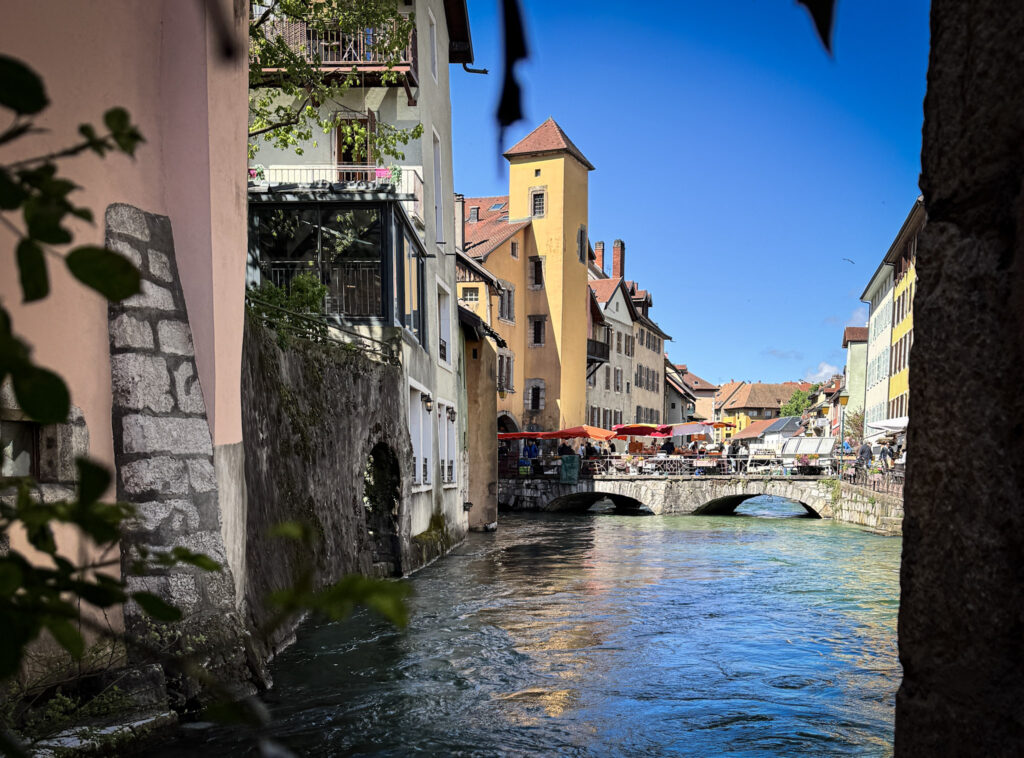
I spent my days bouncing between the two. Here’s the top 10 places in Southeastern France, in the order it actually makes sense to see it.
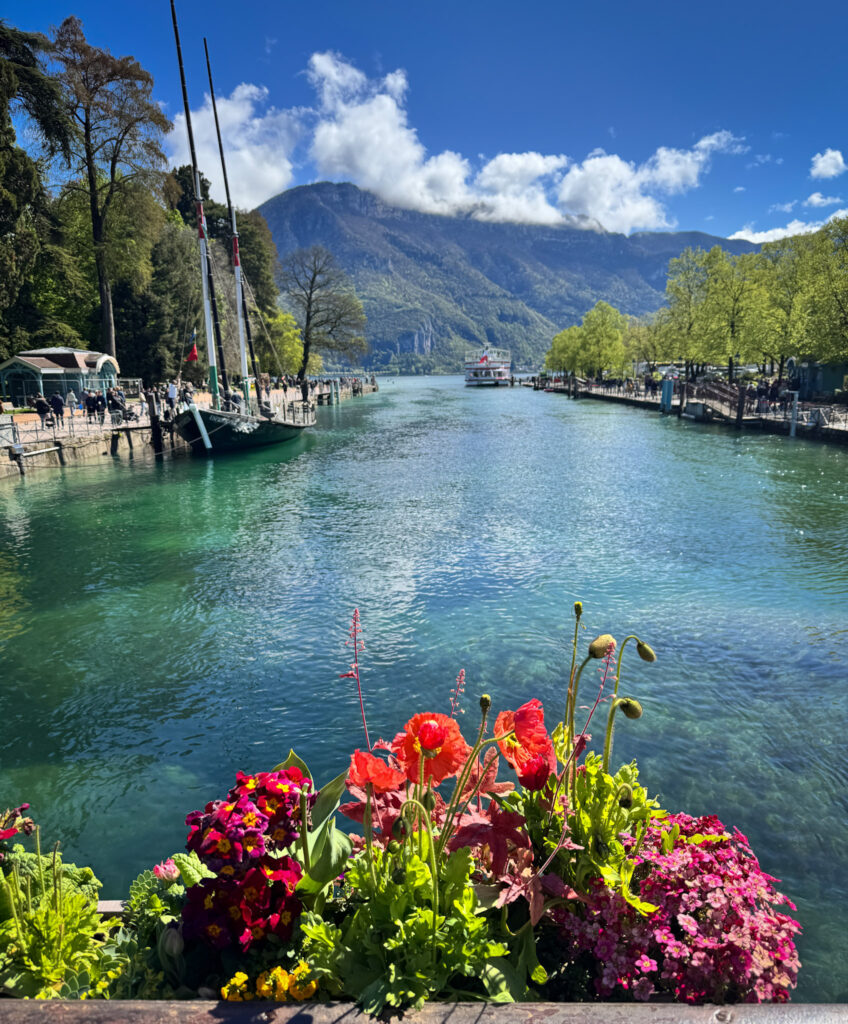
Southeastern France Itinerary
1.Annecy
2. Duingt
3. Menthon-Saint-Bernard
4. Gorges du Fier
5. Château de Montrottier
6. Canal de Savières
7. Talloires
8. Forêt du Roc-de-Chère
9. Chambéry
10. Yvoire
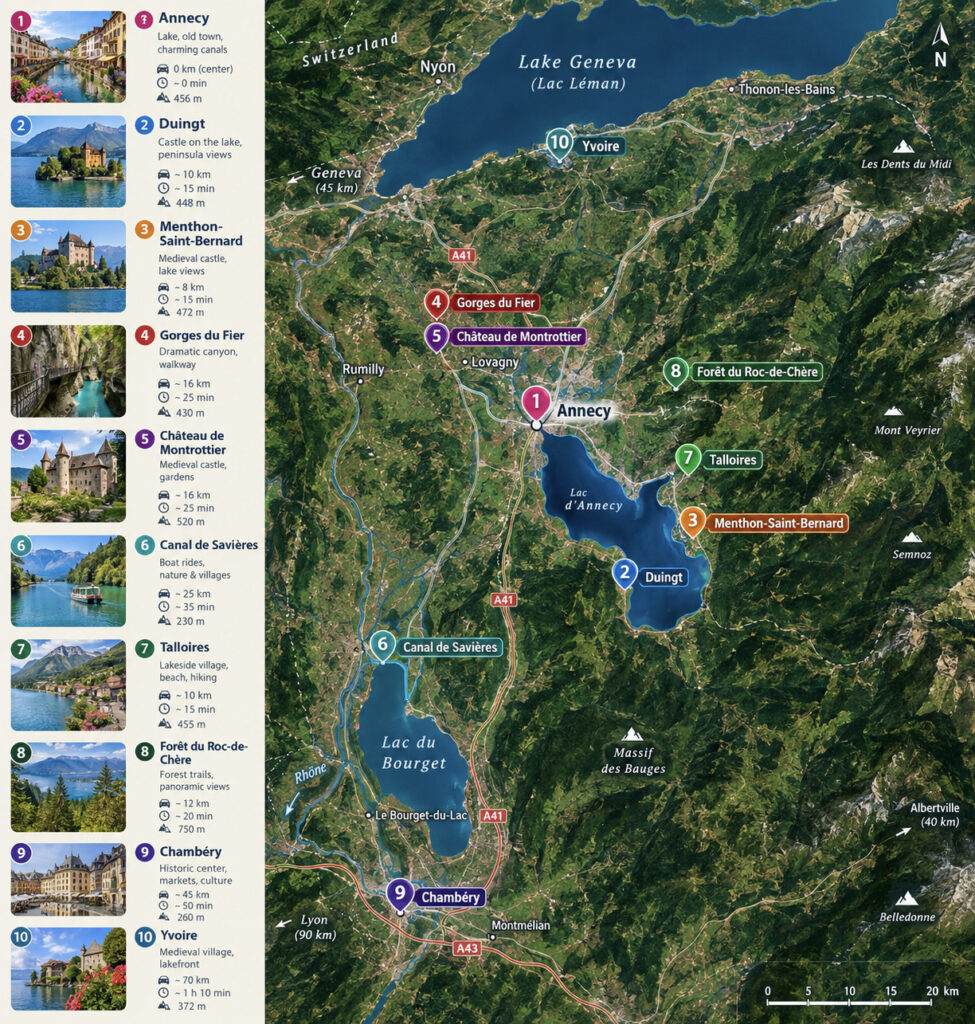
1. Annecy: the postcard everyone warned you about
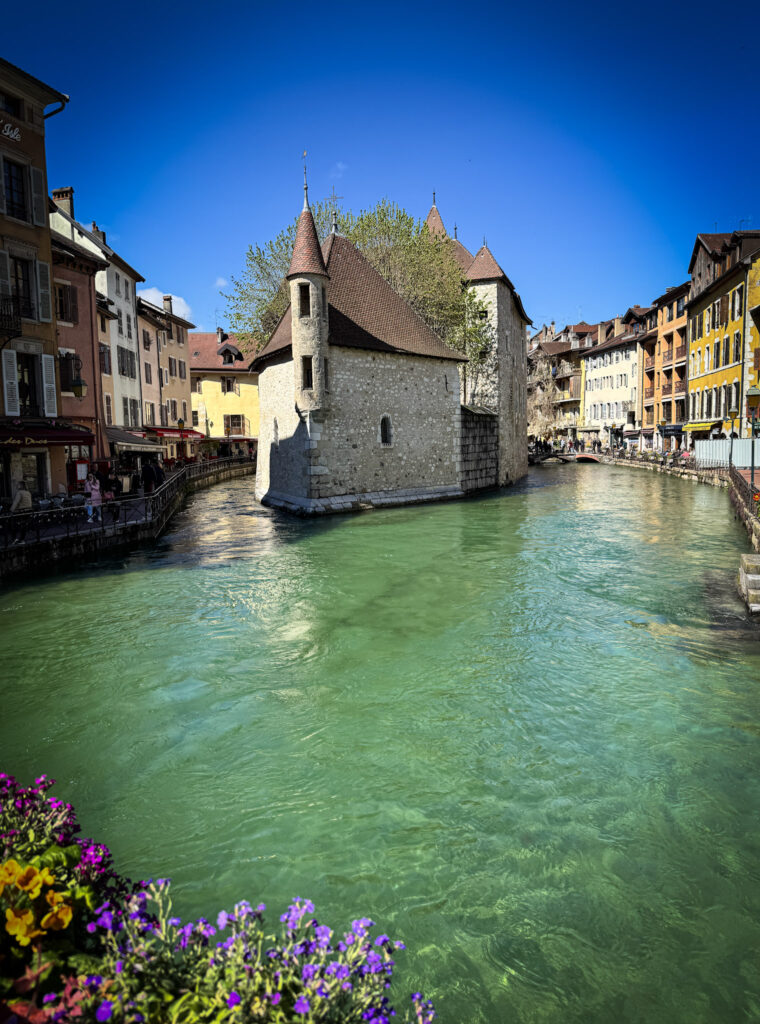
Annecy earns the hype, and that’s mildly annoying because I wanted to be above it. I was not above it.
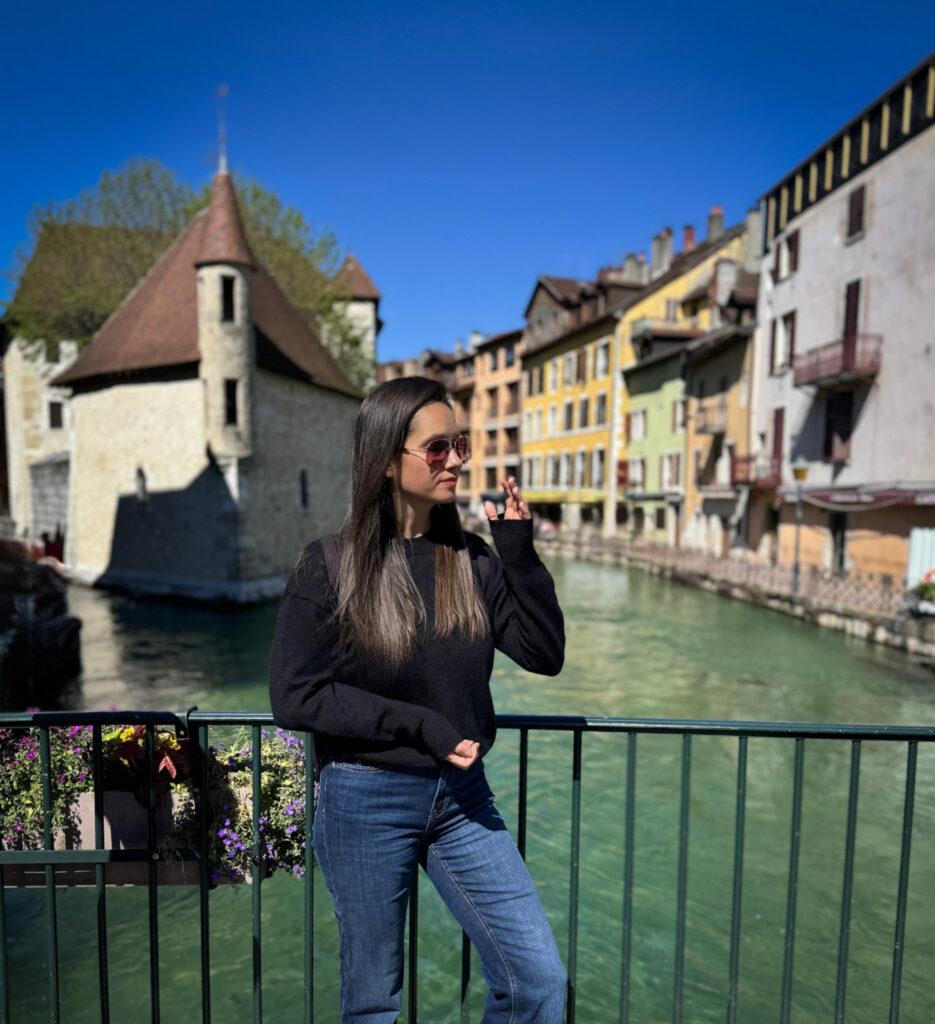
The Old Town is a maze of canals, arcaded streets, and pastel houses that all seem to be leaning in to hear your conversation. The Palais de l’Isle — that little turreted building marooned on its own islet in the canal — is the single most photographed thing in the region, and yes, you will take the exact same photo as everyone else. Do it anyway.
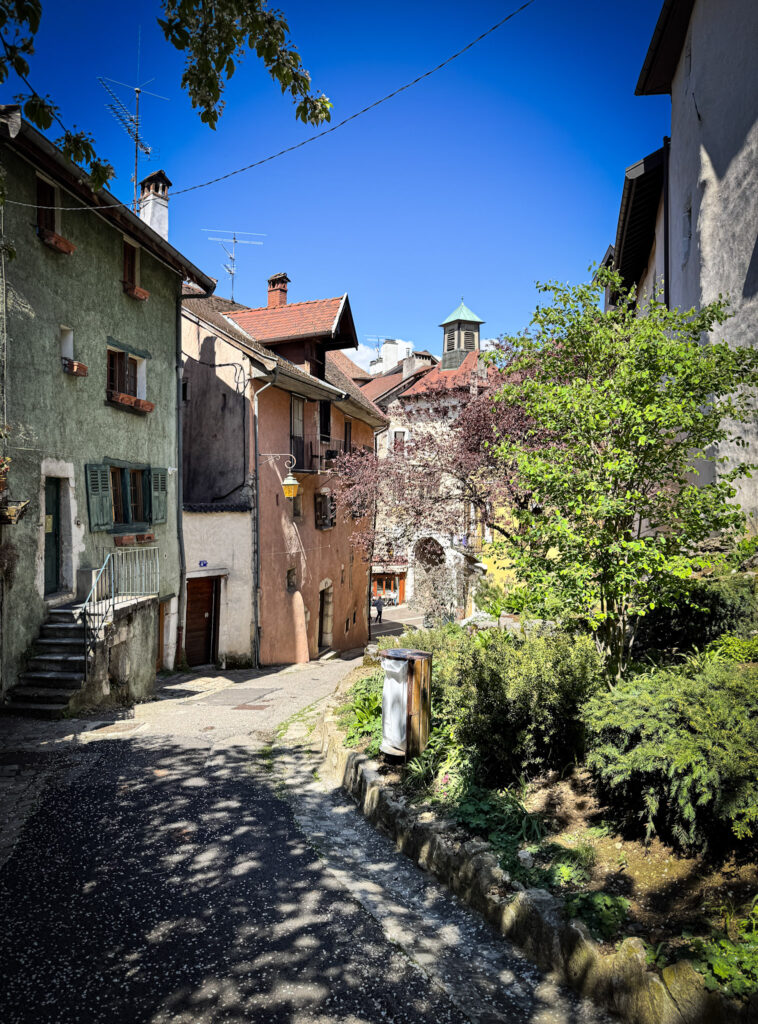
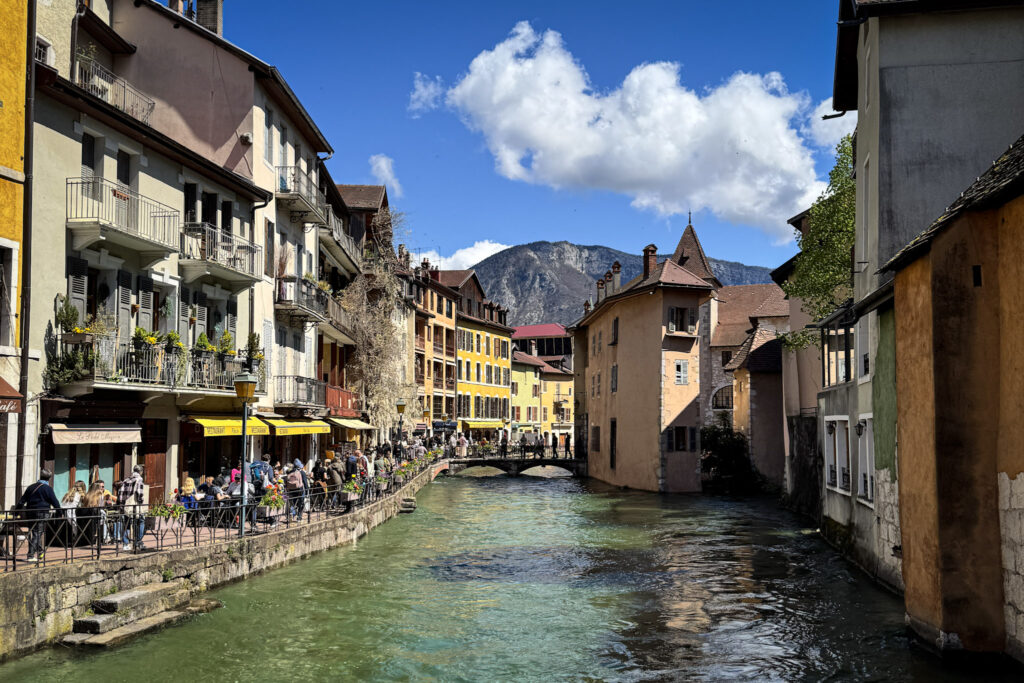
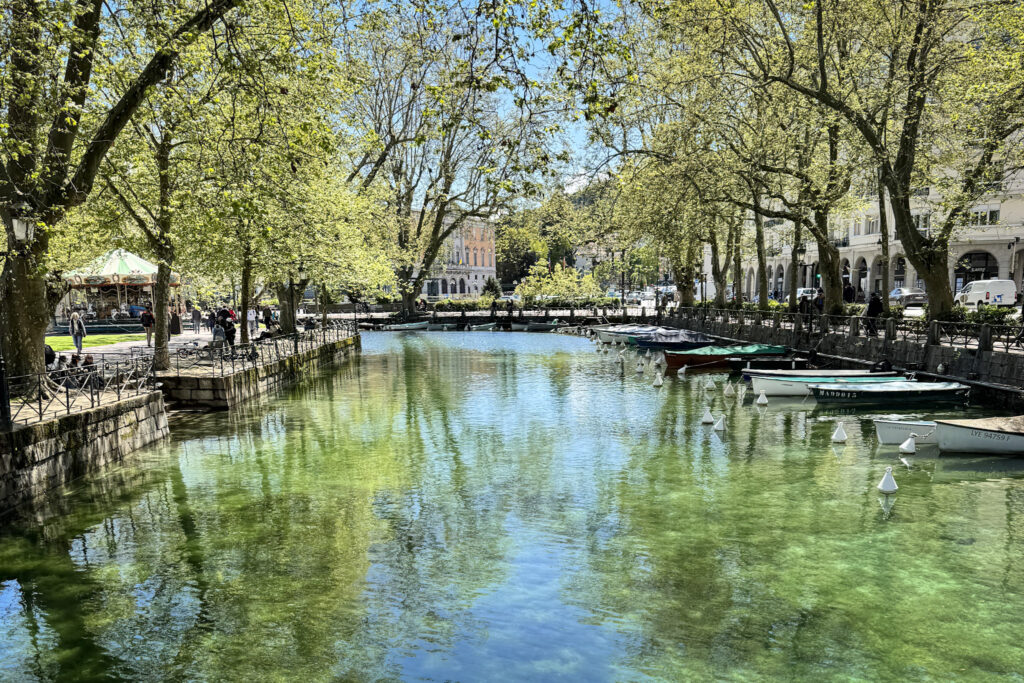
Lake Annecy itself is the real main character. It’s often called the cleanest lake in Europe, and the color backs that up — glacial blue-green shading into something closer to Caribbean near the shore. You can walk it, cycle the lakeside path, rent a paddleboard, or just sit on a bench and let a swan judge your life choices.
Jet Lag Jelly Tip: Park outside the Old Town (it fills up fast) and walk in. Mornings before 9am are the only time you'll get the canal shots without forty other tourists photobombing you.
- Lake Annecy Tourist Office — Must-sees
- Annecy tours & activities — GetYourGuide
2. Duingt: the château on the water
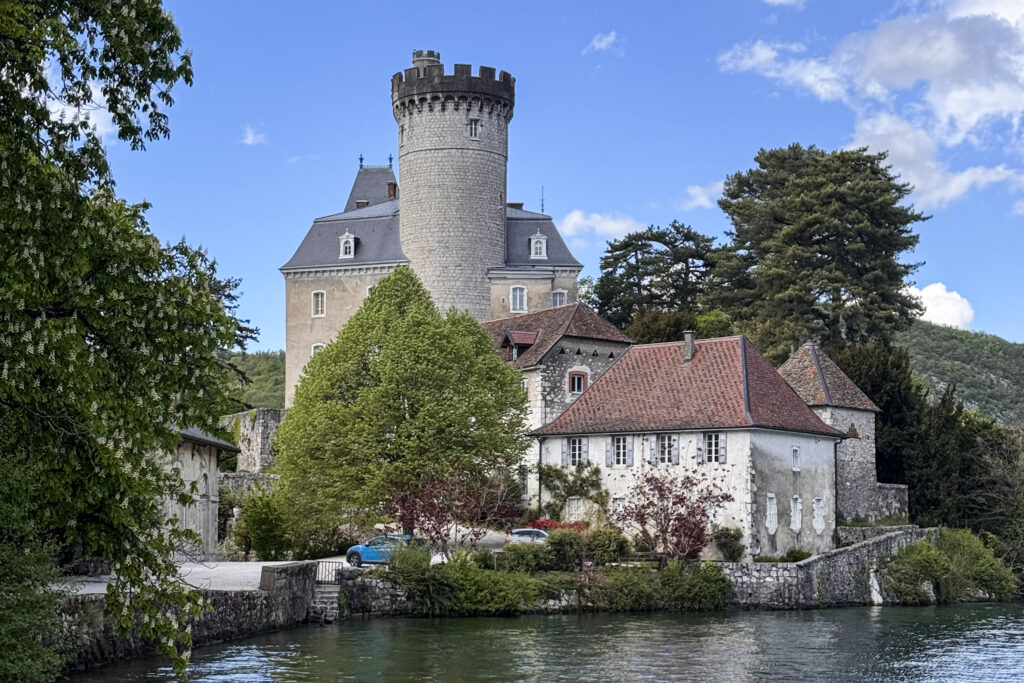
A short drive down the western shore, Duingt sits right at the pinch point where the “big lake” narrows into the “little lake” — and the view from the Plage du Château is the one you’ve probably seen on a postcard without knowing where it was. The Château de Duingt, also called Châteauvieux, rises straight out of the water on its own little peninsula, round tower and all, with nearly a thousand years of history behind it.
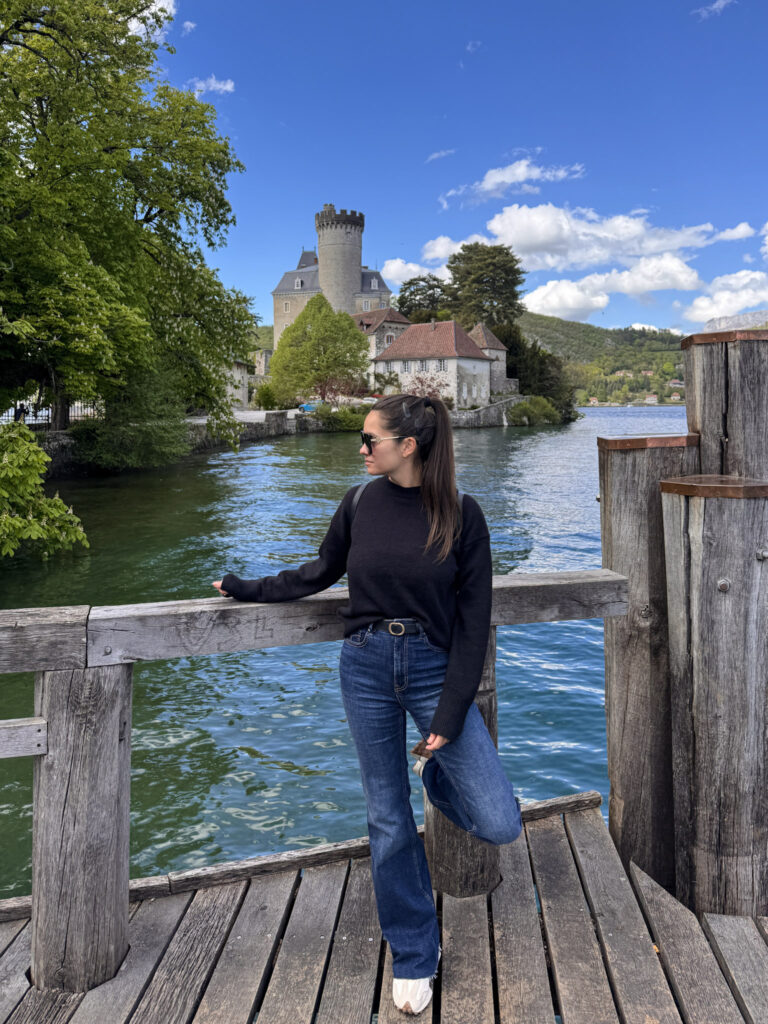
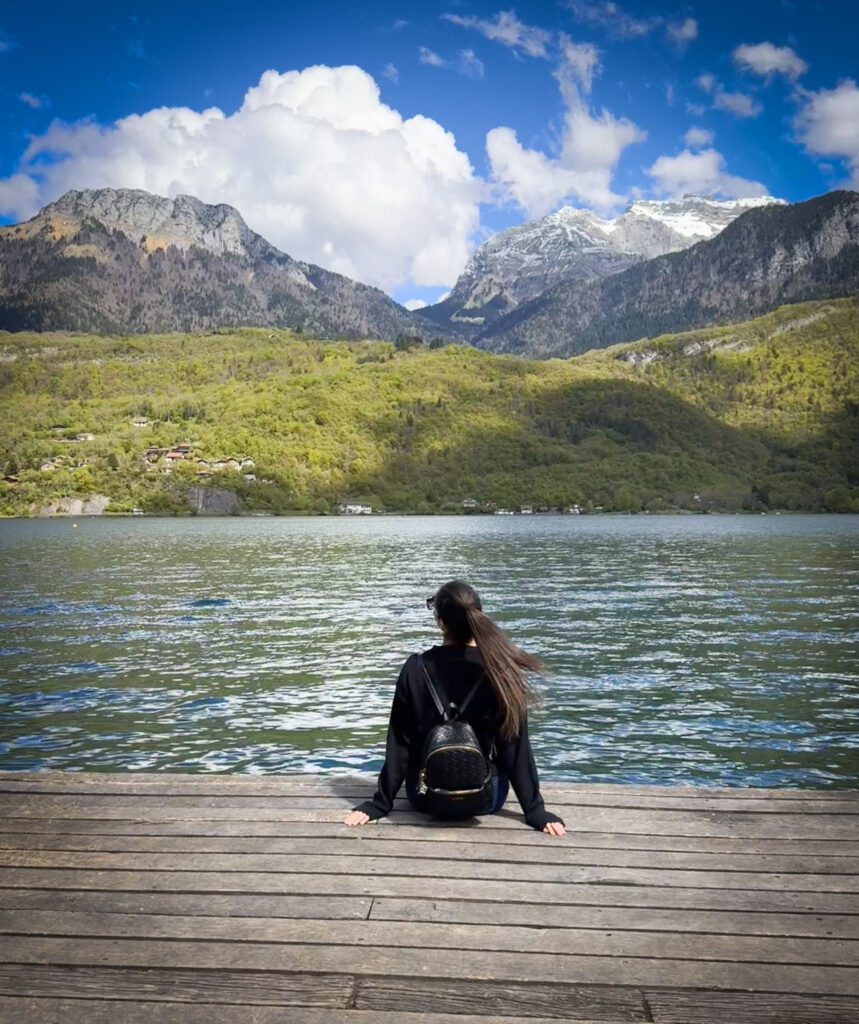
It’s still privately owned and mostly used for weddings and events, so you won’t be going inside — but you don’t need to. The best of it is standing on the beach looking across the water at the château with the jagged Dents de Lanfon rising behind it on the opposite shore. It’s one of those views that looks almost too composed to be real.
Jet Lag Jelly Tip: Come by late afternoon — the light hits the château's stone front directly and the water turns a deeper blue, which is when it looks its most postcard-perfect.

Vieux village de Duingt — Lac Annecy Tourist Office
3. Menthon-Saint-Bernard: the castle that inspired Sleeping Beauty
Perched on a rocky spur above the village, the Château de Menthon-Saint-Bernard is the one with the turrets — genuinely, the story goes that its silhouette helped inspire Disney’s Sleeping Beauty castle, and once you see it against the sky you’ll believe it. What makes it more than a pretty face is that it’s been owned and lived in by the same family for close to a thousand years. This wasn’t just a fortress; Saint Bernard of Menthon, patron saint of mountaineers and skiers, was born here in 1008 before going on to found the famous hospice at the Great St. Bernard Pass — yes, that’s where the rescue dogs get their name.
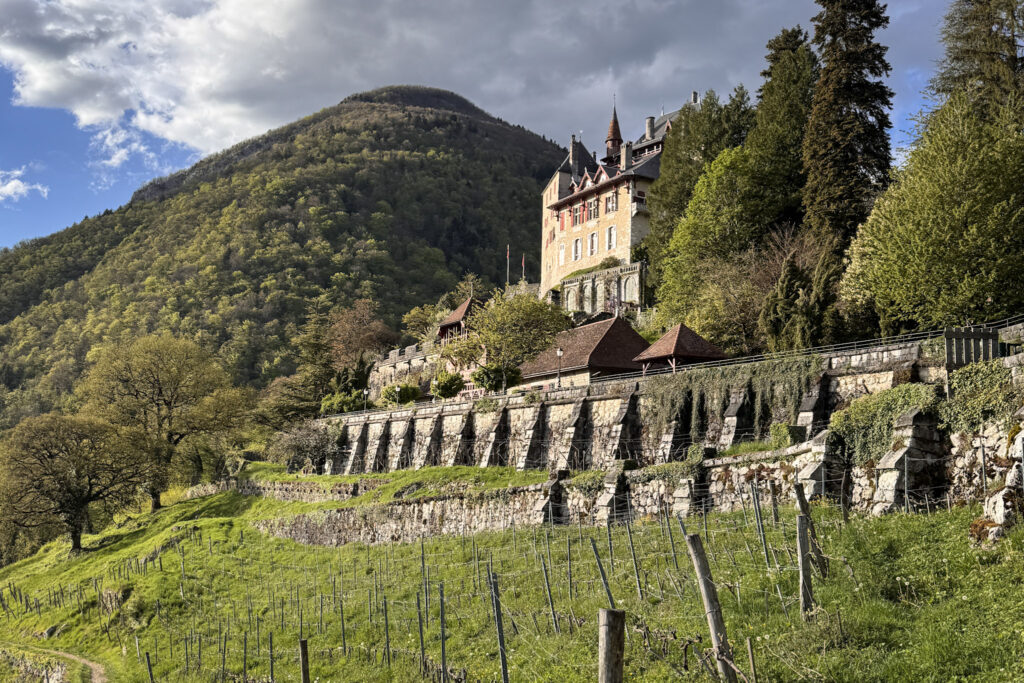
Below the castle, the village itself is small and easy — a church, a scatter of old buildings, backstreets climbing into the hills, and views of Lake Annecy and the jagged Dents de Lanfon peaks that seem to loom directly over the rooftops.
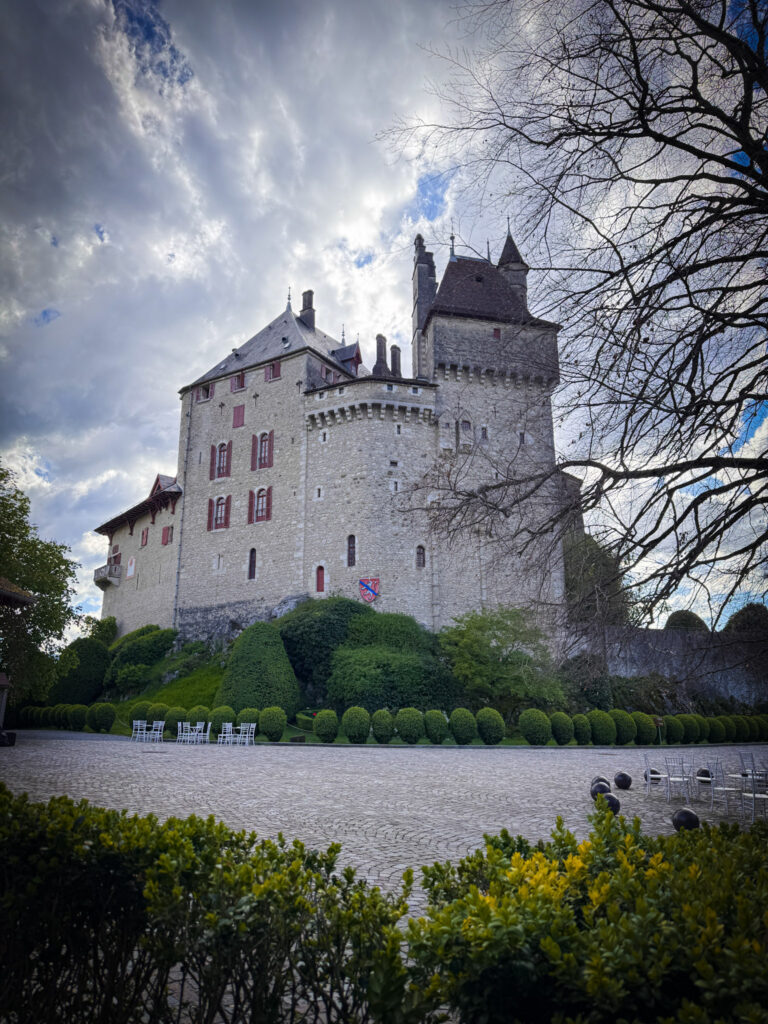
Jet Lag Jelly Tip: Go in late afternoon — the light rakes across the stone façade and lights up the turrets, and the crowds thin out compared to midday.
- Château de Menthon-Saint-Bernard — official site & ticket
4. Gorges du Fier: the canyon
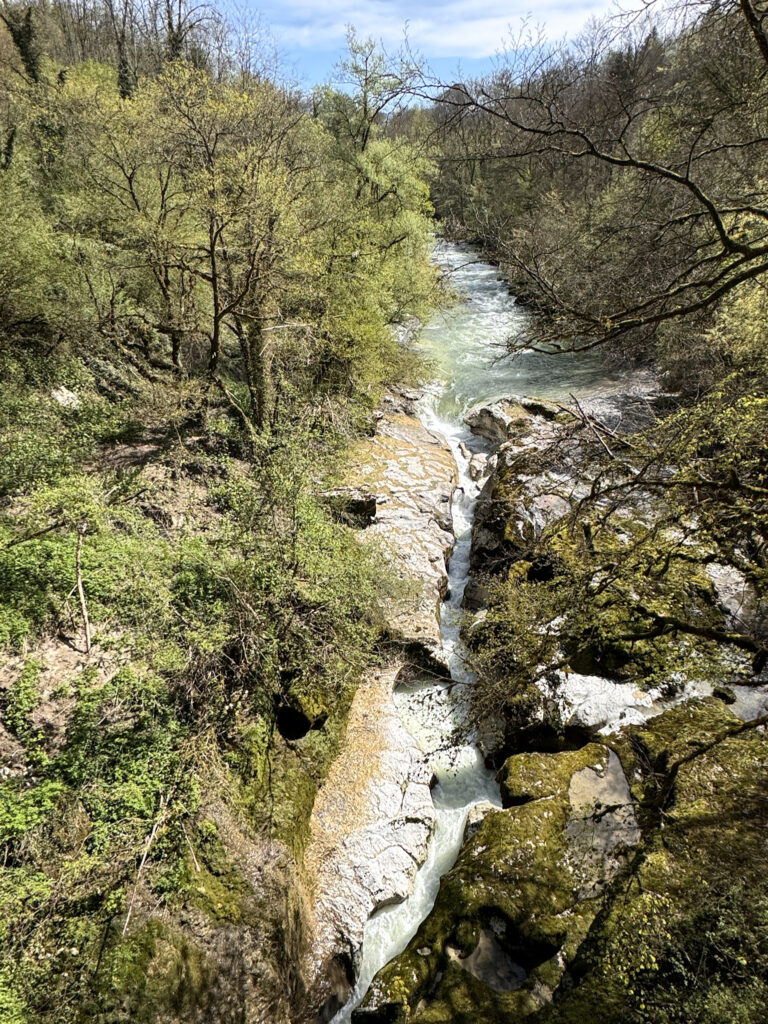
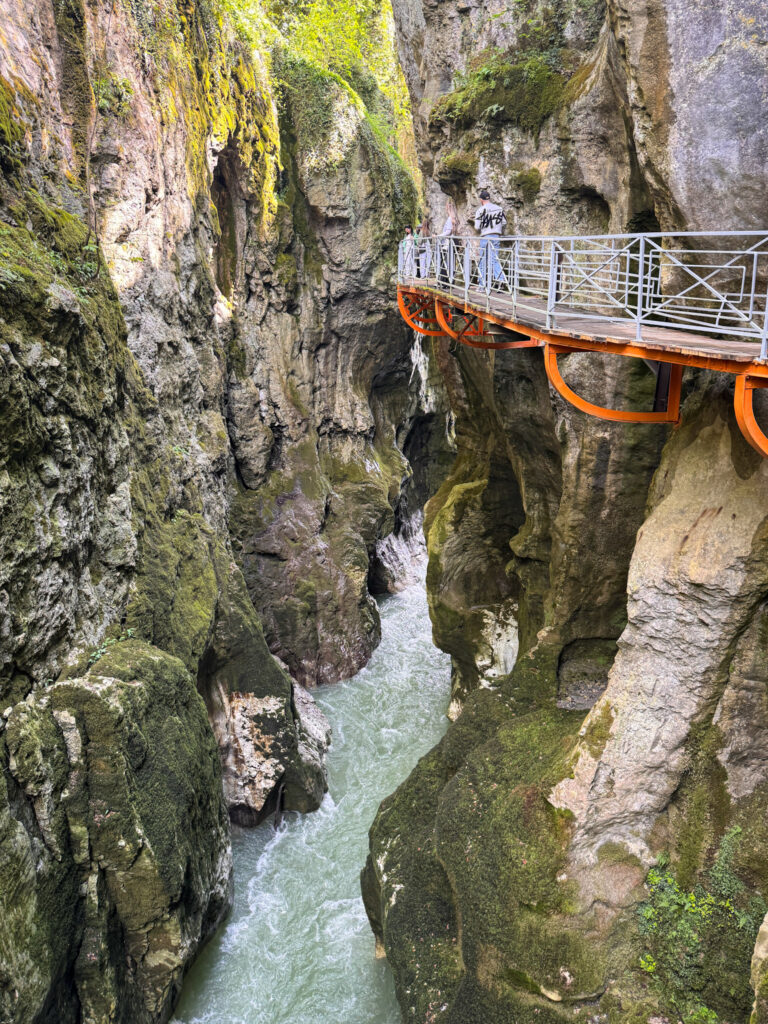
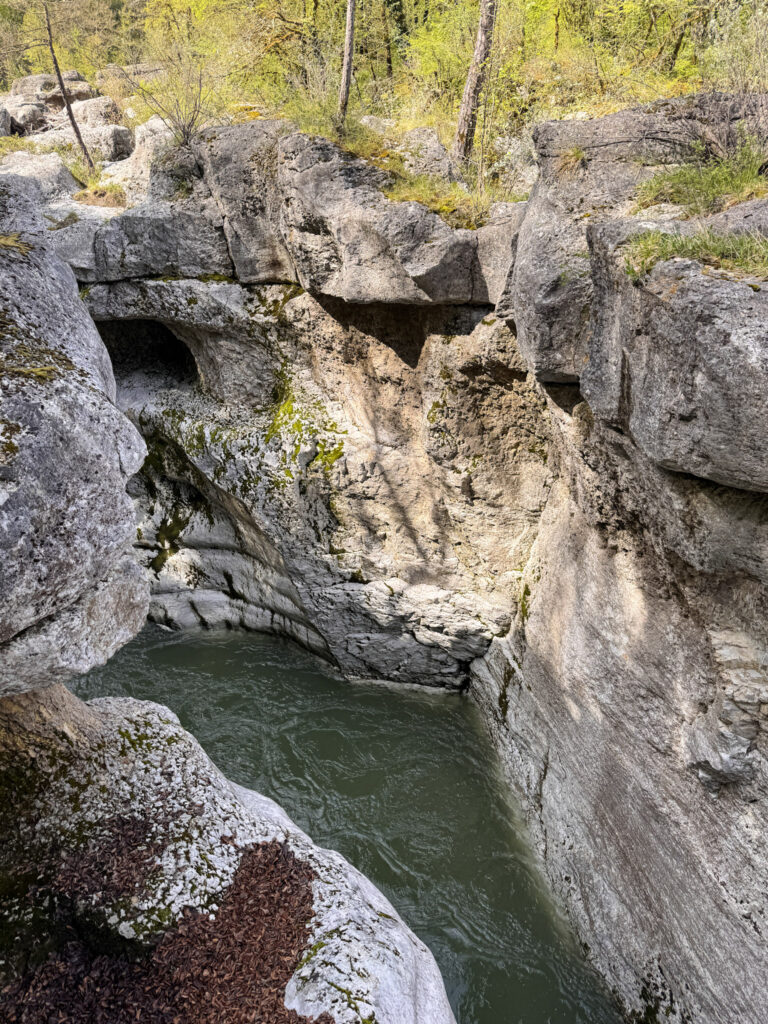
Ten minutes outside Annecy, the Fier river has spent centuries carving a genuinely dramatic canyon — and since 1869 you can walk it on a footbridge suspended 25 meters above the water. It’s narrow, echoey, and slightly terrifying in a fun way. No dogs, no strollers, and yes, they mean it.
Jet Lag Jelly Tip: The canyon walk takes about an hour — go early if you can, the footbridge gets narrow and crowds bottleneck fast in peak season.
- Check tickets for the Gorges du Fier here
5. Château de Montrottier — Pontverre: the castle
Right above the gorge stood the Château de Pontverre, a medieval stronghold on the Fier’s left bank that once guarded the same strategic river crossing — today it’s mostly history and ruins, but it explains why this stretch of the valley was so fought over. The site’s more famous neighbor is the Château de Montrottier, perched at 460 meters with a 13th-century keep and, improbably, a museum of curiosities inside — suits of samurai armor, lace, ceramics, all gathered by a 19th-century collector who clearly had a lot of free time and money.
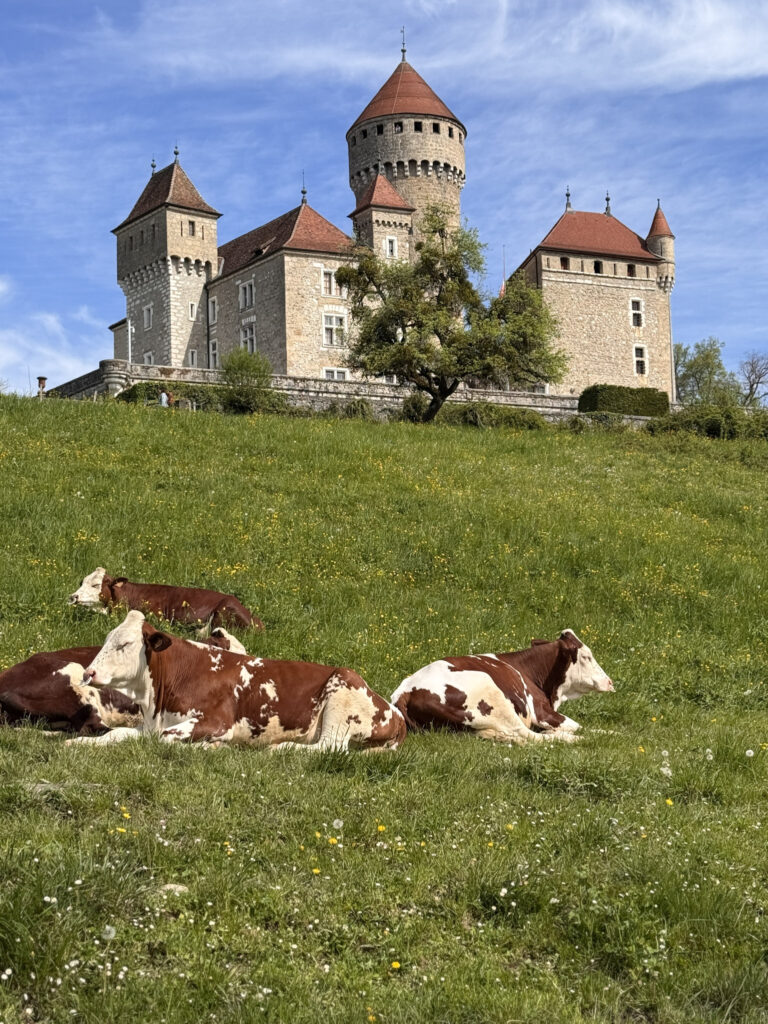
Jet Lag Jelly Tip: Combine it with the gorge visit — the "Chemin des Châteaux" loop back to the parking lot gives you a good look at Montrottier's towers without paying for the full château visit, if you're short on time.
- Check tickets for Château de Montrottier here
6. Canal de Savières
Drive about 45 minutes north and the whole mood changes. The Canal de Savières is a short, sleepy waterway — just 4.5km — connecting Lake Bourget to the Rhône, running straight through the tiny village of Chanaz, sometimes nicknamed “Savoie’s little Venice” (every region needs one, apparently). Wooden houses on stilts, a working mill, a chocolate shop, and a pace of life that makes Annecy look frantic by comparison.
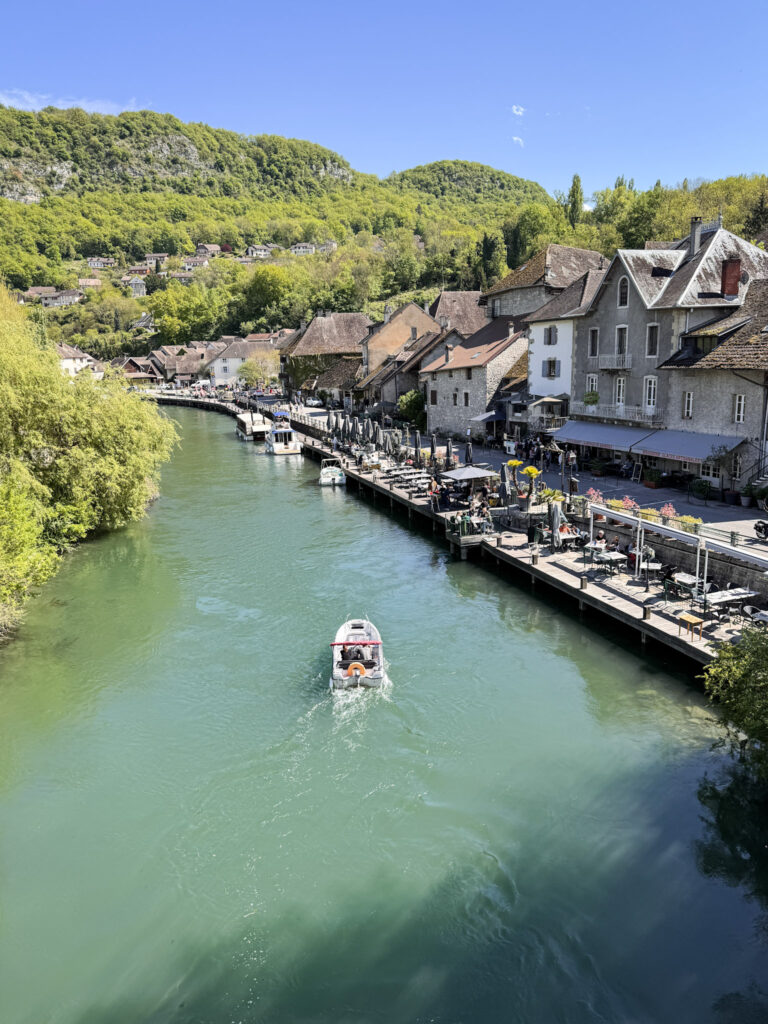
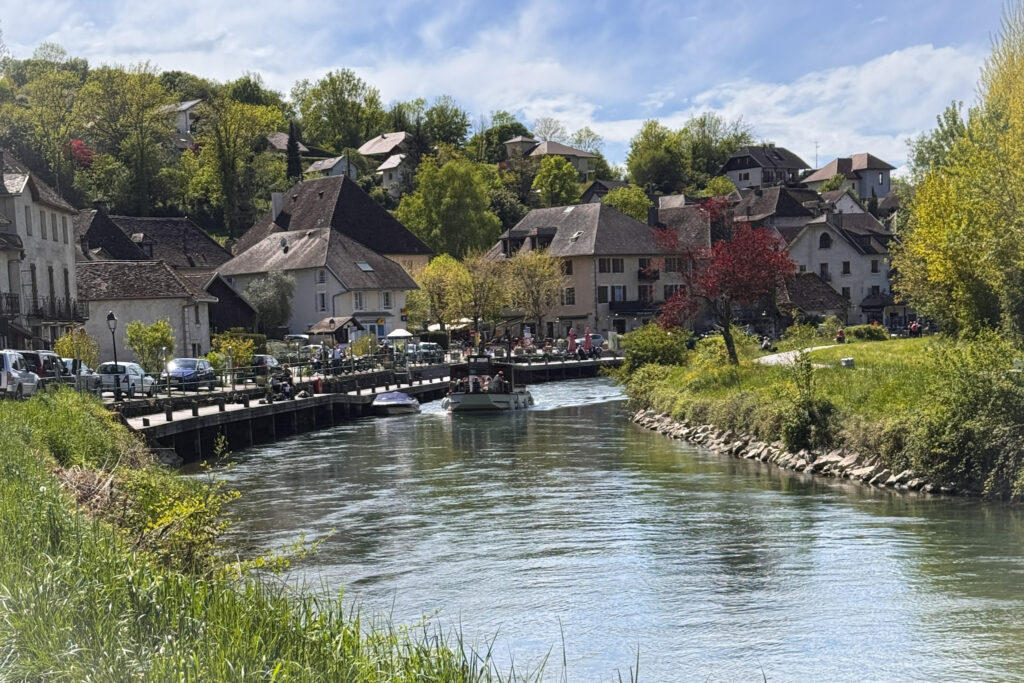
You can paddle it in a kayak or SUP, or take a slow electric boat with zero permit required — the canal occasionally even reverses flow when the Rhône floods, which is a fun bit of trivia to drop while gliding past someone’s garden.
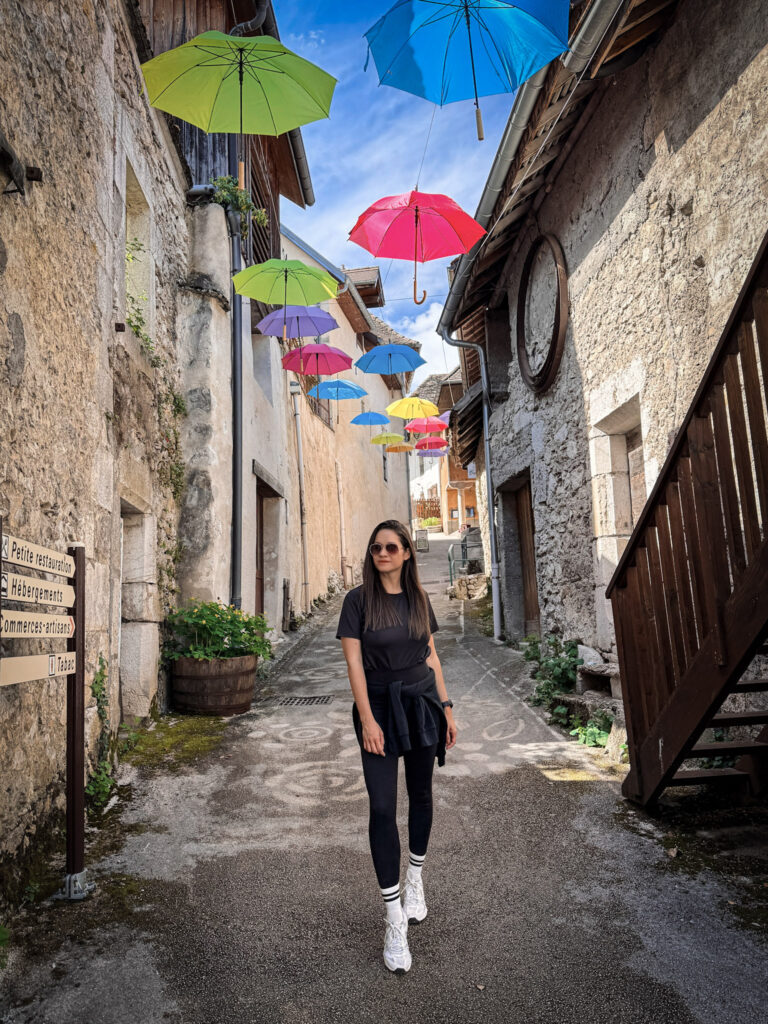
Jet Lag Jelly Tip: Rent a kayak in Chanaz and paddle out toward Lake Bourget rather than the Rhône side — the lake opening gives you a proper "wow" moment the Rhône direction doesn't.
- Kayak & SUP on the Canal de Savières — Outtrip
7. Talloires: the village behind the postcard
Talloires sits on the lake’s eastern shore, and it’s easy to just drive through it on the way to Roc de Chère — don’t. The old village, tucked back from the water, is a proper maze of narrow stone lanes, timber-framed houses, and steep little staircases connecting one level of the village to the next. It’s quiet in a way the Annecy Old Town never gets to be — no crowds, just old stone, red-tiled roofs, and the odd cat.
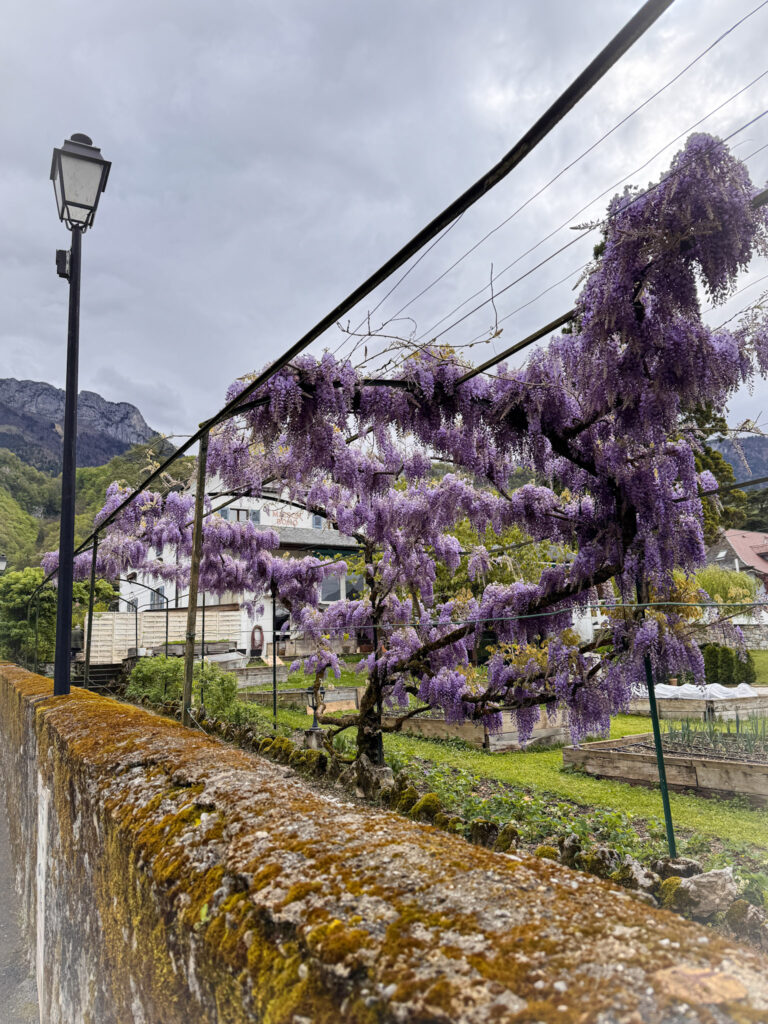
It’s also got real weight behind it: Benedictine monks founded a priory here in 1018, and the abbey building — now a hotel — still anchors the village. Cézanne painted the lake from here in 1896. Somehow it never gets nearly the foot traffic Annecy does.
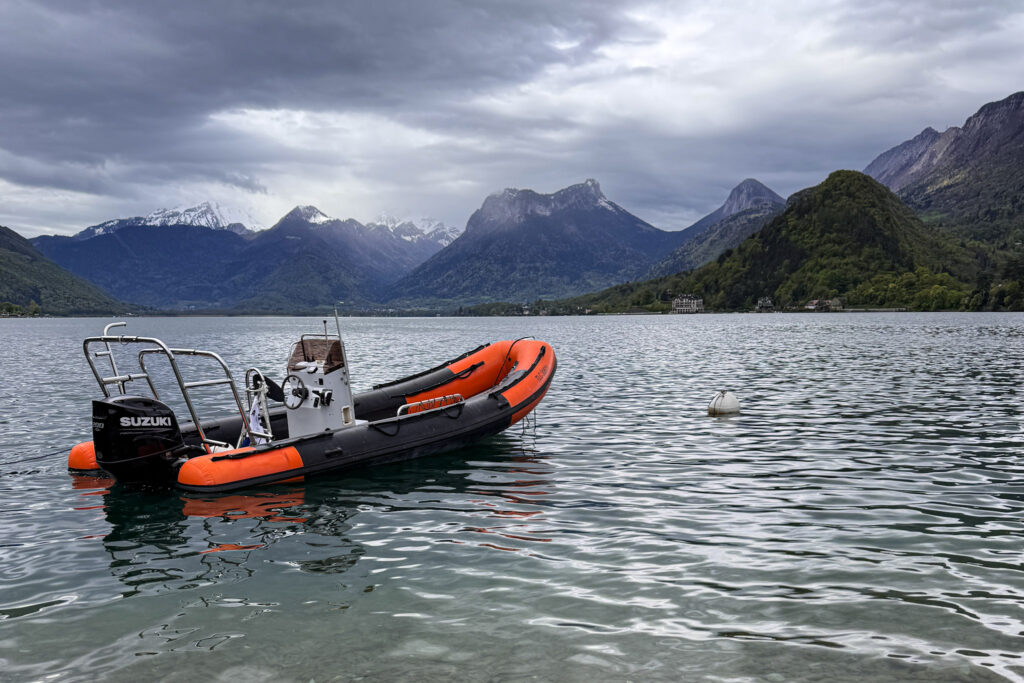
Jet Lag Jelly Tip: Park near the center and just walk uphill into the backstreets — the stepped alleys between the old houses aren't signposted, but that's the point. You'll get glimpses of the lake through the rooftops the whole way.
- Discover Talloires — Lake Annecy Tourist Office
8. Forêt du Roc-de-Chère: the viewpoint that does all the work
Not far at all from Annecy — this is on the eastern shore, between Talloires and Menthon-Saint-Bernard — the Roc de Chère is a small forested outcrop that’s been a protected nature reserve since 1977. Sixty-eight hectares of cliffs, ponds, and microclimates, and you can walk across the whole thing in under an hour.
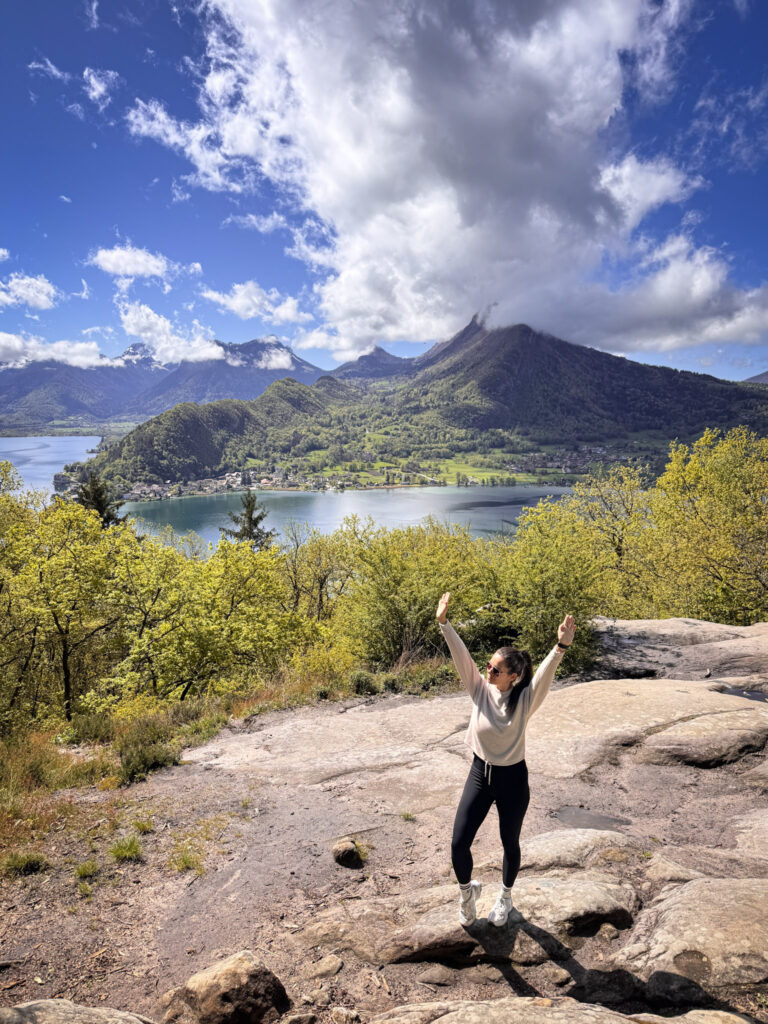
I went in mid-April, right as everything was blossoming — the trail up is lined with flowering branches that half-frame the lake below the whole way. The payoff is the belvédère: a bare rocky ledge where the trees finally clear and the lake just opens up underneath you, curving off toward the mountains with a little lakeside village tucked into the far shore. It’s the kind of view that makes you stop talking mid-sentence.
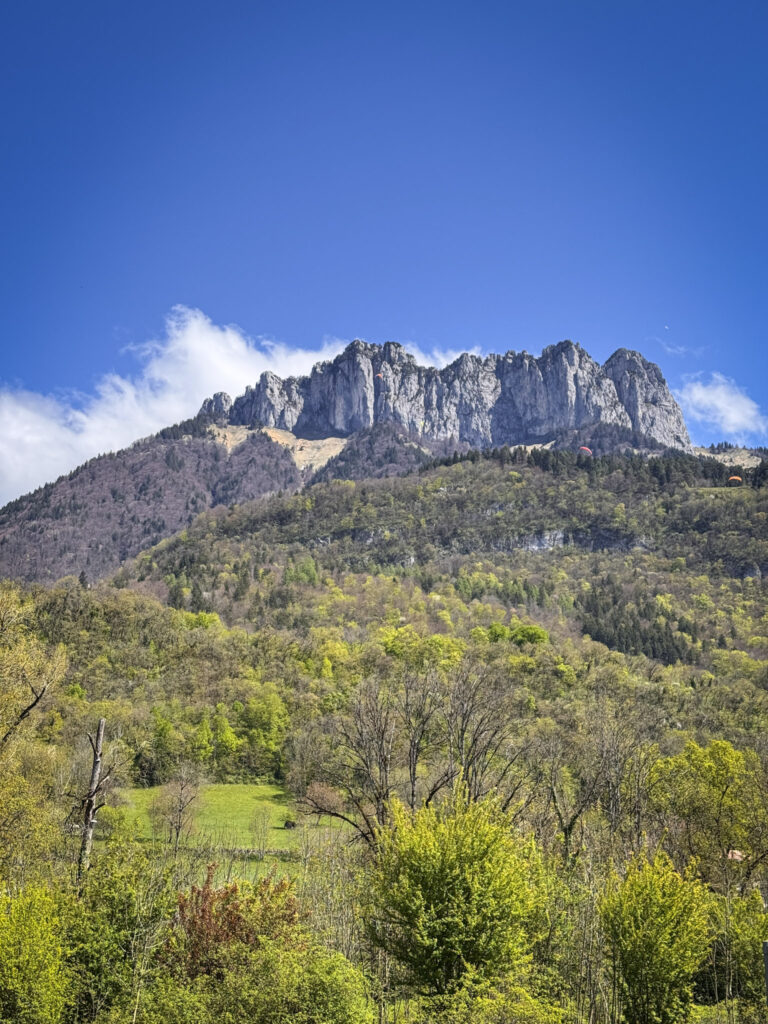
Jet Lag Jelly Tip: Go in spring if you can time it — the blossoms along the trail add a whole extra layer to the view, and the lake still has that crisp, less-crowded feel before summer hits. Wear proper shoes for the last stretch; the belvédère itself is bare rock, not a platform.
- Roc de Chère Nature Reserve — Lac Annecy Tourist Office
9. Chambéry: the old capital of Savoy
Sitting almost exactly between Annecy and Lake Bourget, Chambéry is easy to skip and shouldn’t be. This was the seat of the House of Savoy for nearly 900 years before Savoy became French in 1860, and the old town still carries that weight — arcaded streets, hidden courtyards, painted trompe-l’œil façades, and the Château des Ducs de Savoie looming over it all.
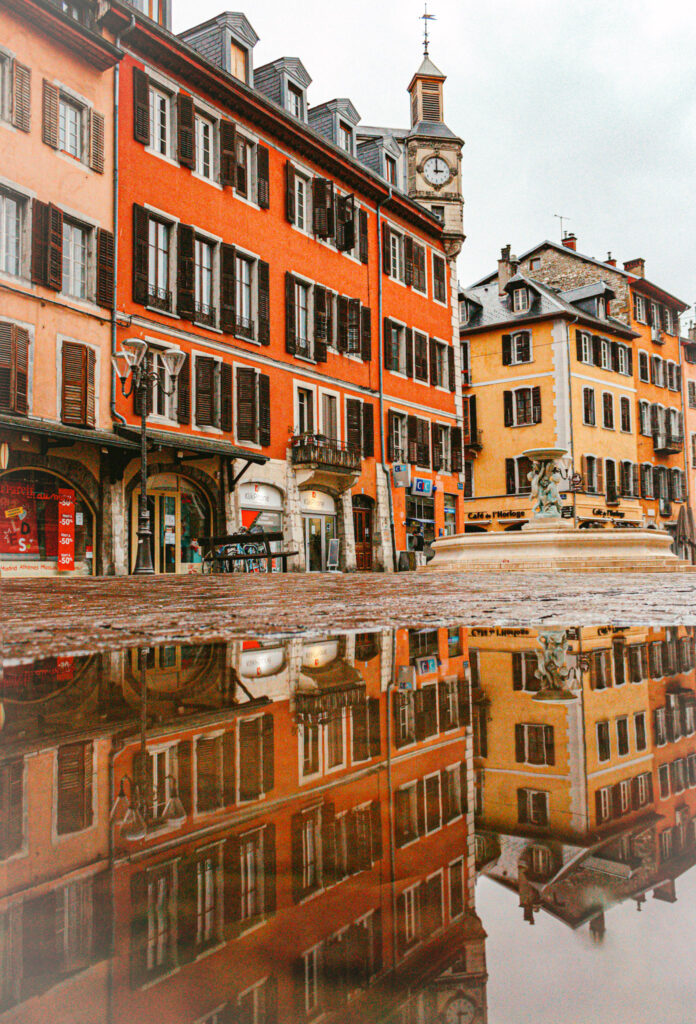
The real icon, though, is the Fontaine des Éléphants — four cast-iron elephants spouting water from their trunks, built in 1838 to honor a local general who made his fortune in India. Locals call them, with real affection, “the four without asses,” since only their front halves stick out of the monument. From there, the arcaded Rue de Boigne leads straight up to the château.
Jet Lag Jelly Tip: Don't just walk the main streets — duck into Chambéry's "traboules," the hidden passageways connecting courtyards behind the grand façades. Most people miss them entirely.

- Château des Ducs de Savoie & Chambéry Old Town
- Hotels in Chambéry
10. Yvoire: the flower-covered village on Lake Geneva
This one’s a proper detour — Yvoire sits up on Lake Geneva, closer to Geneva and Thonon-les-Bains than to Annecy — but it’s worth the drive if you have an extra day. Founded in 1306 as a fortified stronghold for the Counts of Savoy, it’s now one of France’s officially recognized “Most Beautiful Villages,” and it earns the title honestly: 14th-century ramparts and gates, cobbled lanes, and stone houses absolutely buried in flowers from spring through autumn.
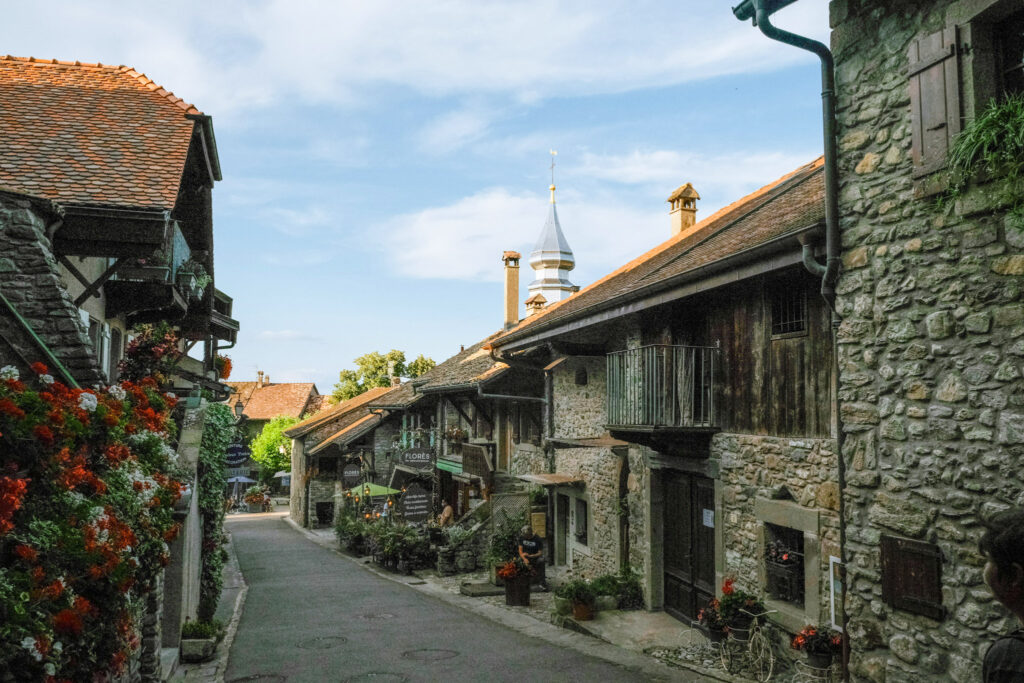
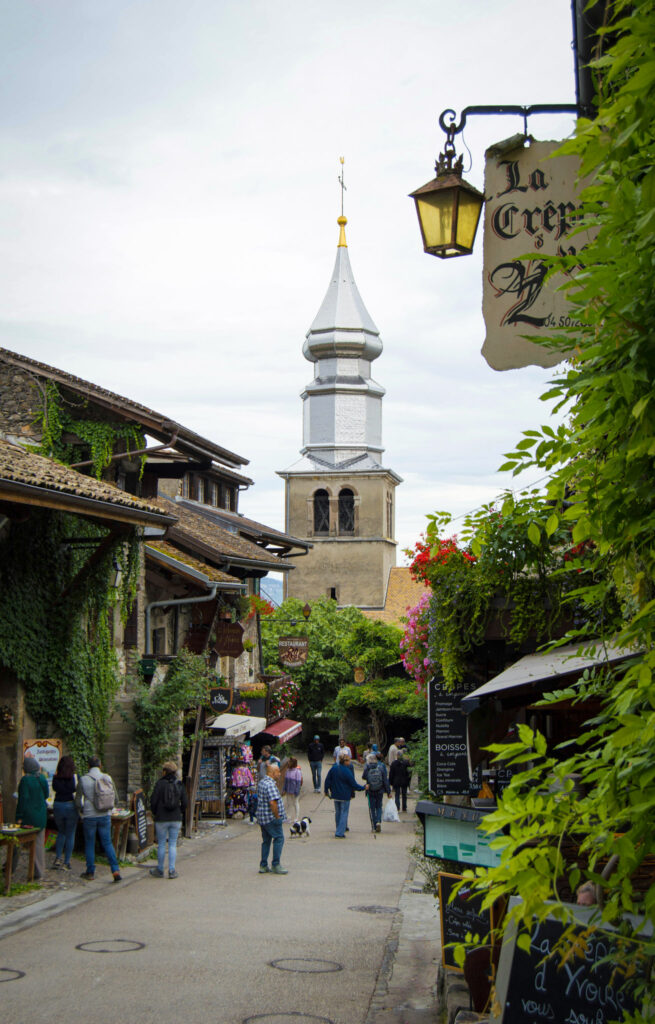
The castle at the harbor is still privately owned by the same family and isn’t open to visit, but you don’t need to go inside — it looks better from the ramparts or the little fishing port anyway, with the Alps and the lake as backdrop. There’s also a Garden of the Five Senses tucked into the village if you want a slower, quieter stop between the shops and galleries.
Jet Lag Jelly Tip: Arrive before the first boat tours land or stay past the last one — Yvoire gets seriously crowded with day-trippers from Geneva in summer, and having the ramparts nearly to yourself changes the whole visit.
Best time to visit Savoy
Mid-May to mid-September is the sweet spot — warm enough to swim, long enough days to actually use them. July and August are peak season: gorgeous weather, but the Annecy Old Town gets shoulder-to-shoulder and hotel prices climb with it.
If you can swing it, aim for June or September. June gets you warming lake water without the full crowd crush; September keeps the water swimmable into early autumn while everyone else has gone home, plus it’s one of the driest months of the year. Spring (April–May) is lovely for hiking and cycling but the lake itself is still on the chilly side for swimming.
Winter is a different trip entirely — Annecy turns into a cozy, snow-dusted base for nearby ski resorts like La Clusaz and Le Grand-Bornand, but the lakeside activities mostly shut down and Lake Bourget’s canal-village charm goes fairly quiet.
How to get to Savoy
By air: Geneva Airport is the closest major hub (about 45km/45 minutes from Annecy), with direct buses and trains. Chambéry Airport is smaller but even closer to both Annecy and Lake Bourget, with seasonal flights from the UK. Lyon-Saint Exupéry is the bigger international option if you’re coming from further afield, roughly 1.5–2 hours away by train or car.
By train: Annecy has direct TGV service from Paris Gare de Lyon (around 3.5–4 hours) and from Lyon Part-Dieu (about 2 hours). The train station sits right in the Old Town, so you can arrive without a car and still reach most of what’s listed above by bike, bus, or the odd taxi.
By car: This is genuinely the easiest way to string the whole itinerary together, since a couple of these stops (Lovagny, the Canal de Savières) aren’t a quick walk from anywhere. The A41 connects Geneva to Annecy to Chambéry, and Lake Bourget is about 40 minutes from Annecy by car. If you’re flying in, picking up a rental at Geneva Airport is the most convenient way to start the drive.
Where to stay
Annecy Old Town puts you inside the postcard — walkable to the canals, the lake, and the train station, though rooms book up fast and cost more in summer. Good base if you’re primarily doing the Annecy side of the trip (Duingt, Menthon-Saint-Bernard, Talloires, Lovagny, and Roc de Chère are all easy day trips from here).
Aix-les-Bains is the better base if you’re heading over to Lake Bourget for the Canal de Savières — with its own share of lakefront hotels and a much gentler price tag than Annecy in peak season.
- Hotels in Annecy
- Hotels in Aix-les-Bains
FAQ
Is Annecy or Lake Bourget better to visit? They’re not really competing — Annecy is the polished, photogenic classic; Lake Bourget is the quieter, undiscovered version of the same trip. If you only have a day, do Annecy. If you have a bit longer, add on the Canal de Savières.
How many days do you need for this itinerary? Three days is comfortable: one for Annecy Old Town and the lake, one for Duingt, Menthon-Saint-Bernard, Talloires, and Roc de Chère on the eastern shore, and one for Lovagny and the Canal de Savières.
Is Lake Annecy swimmable? Yes, and it’s often cited as one of the cleanest lakes in Europe. Water temperature is comfortable from June through early September; late September is doable for the brave.
Do I need a car for this trip? Not for Annecy itself, but yes for Duingt, Menthon-Saint-Bernard, Talloires, Lovagny, and the Canal de Savières — none of them are well connected by public transport, and having a car makes the whole loop far easier. Renting a car from Geneva Airport is usually the simplest way to sort this out before you start the loop.
Summary
Annecy gives you the postcard — canals, crowds, a lake the color of glacier melt. A short drive down the shore, Duingt gives you the château-on-the-water shot everyone’s seen and no one can place, Menthon-Saint-Bernard gives you the fairytale turrets on the hill, and Talloires gives you the quiet stone-lane village to wander with none of the crowds. Further out, Lovagny gives you a canyon and a castle, the Roc de Chère gives you a view worth the climb, and the Canal de Savières slows everything down to houseboat speed. Different moods, same region, all worth the trip.
Sleep later. Explore now.
If you’re exploring more of the region, check out my Top Places to Visit in Provence, France guide too.