
This post contains affiliate links. If you book through one, I may earn a small commission at no extra cost to you — it helps keep Jet Lag Jelly running. Read my full affiliate disclosure for more.
Provence doesn’t really do “one big city to explore” — it does dozens of small ones instead, each with its own personality, scattered across olive groves and lavender fields close enough together that you can hit several in a single day without ever feeling rushed.
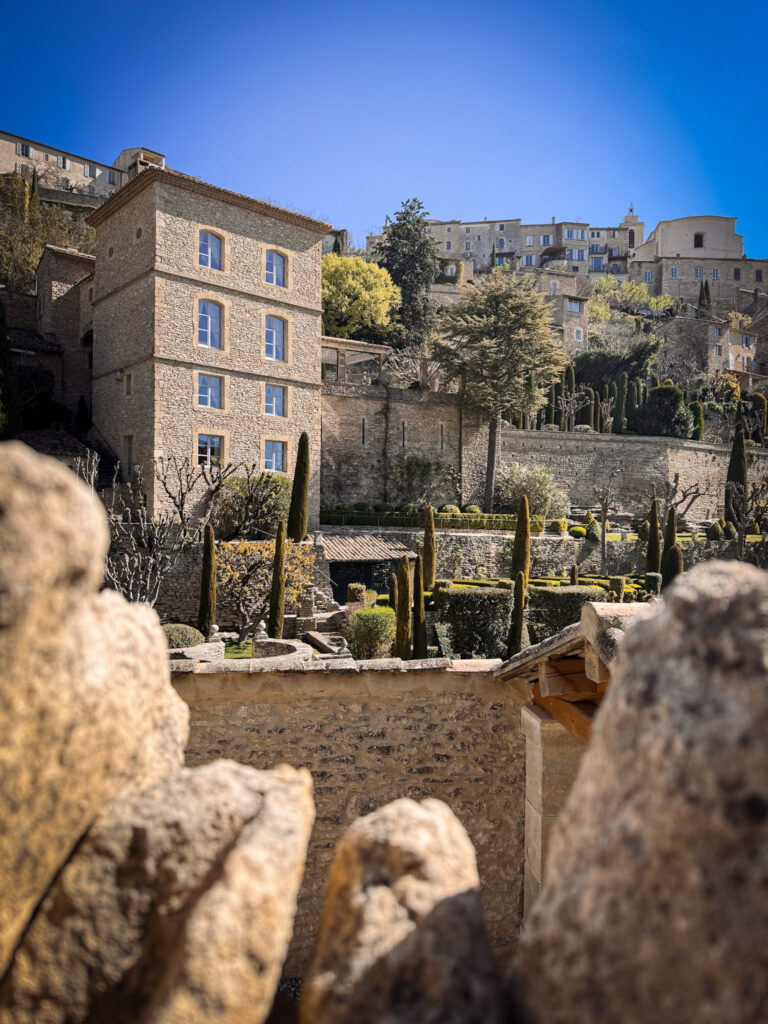
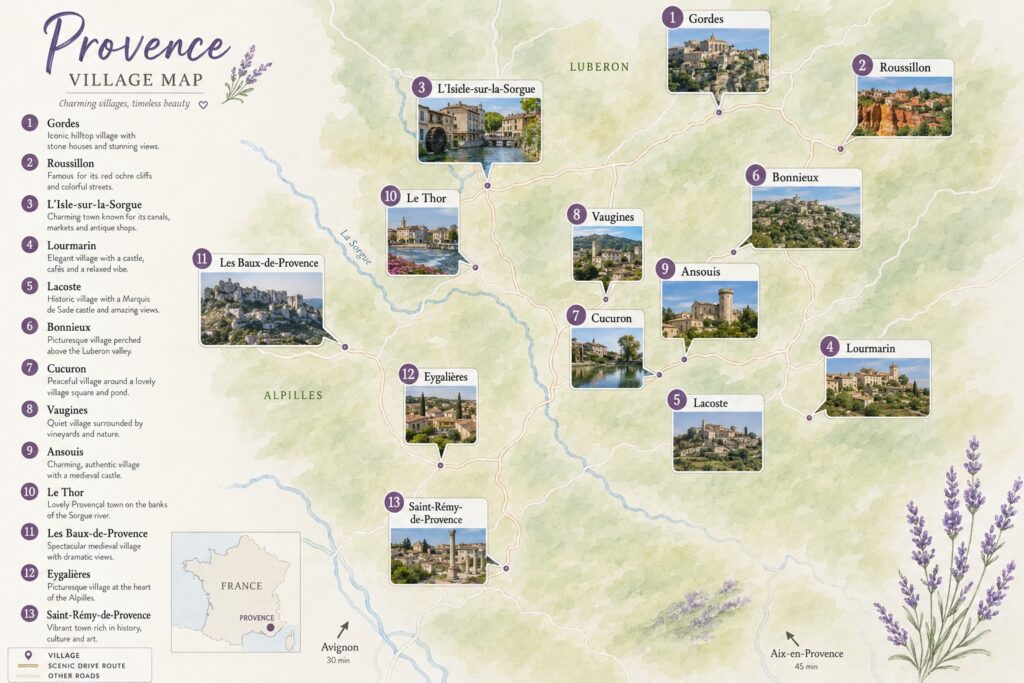
Here’s the shortlist of villages that made the cut.
Provence Itinerary
1. Gordes
2. Roussillion
3. L’Isle-sur-la-Sorgu
4. Lourmarin
5. Lacoste
6. Bonnieux
7. Cucuron
8. Vaugines
9. Ansouis
10. Le Thor
11. Les Baux-de-Provence
12. Eygalières
13. Saint-Rémy-de-Provence
1. Gordes
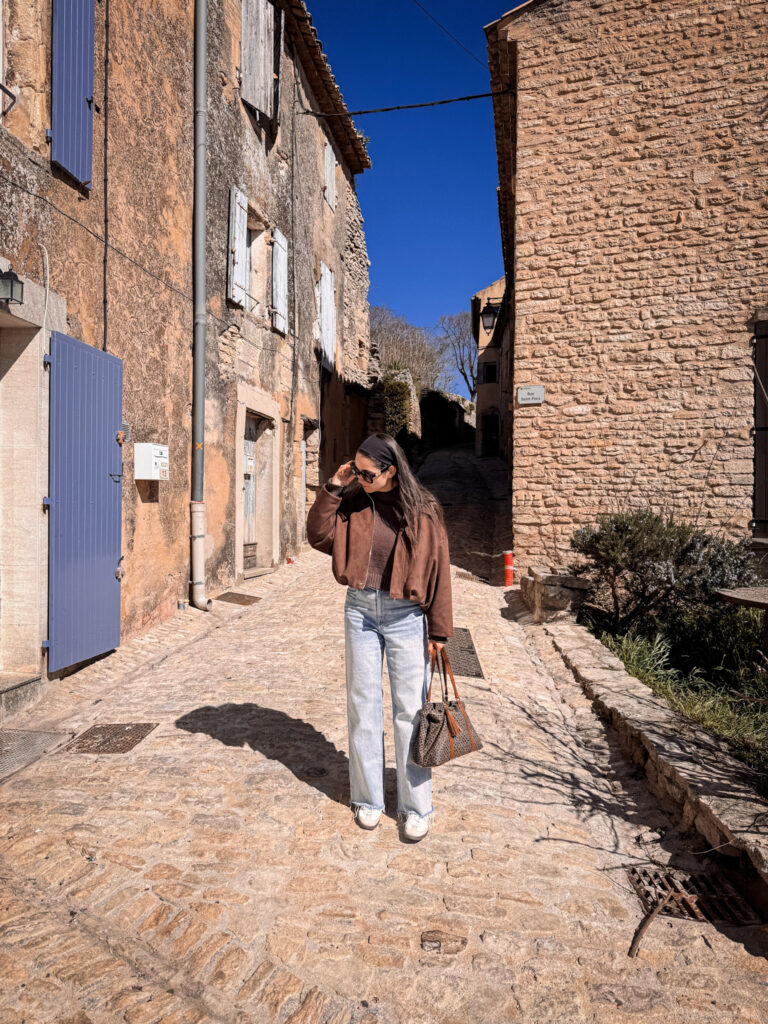
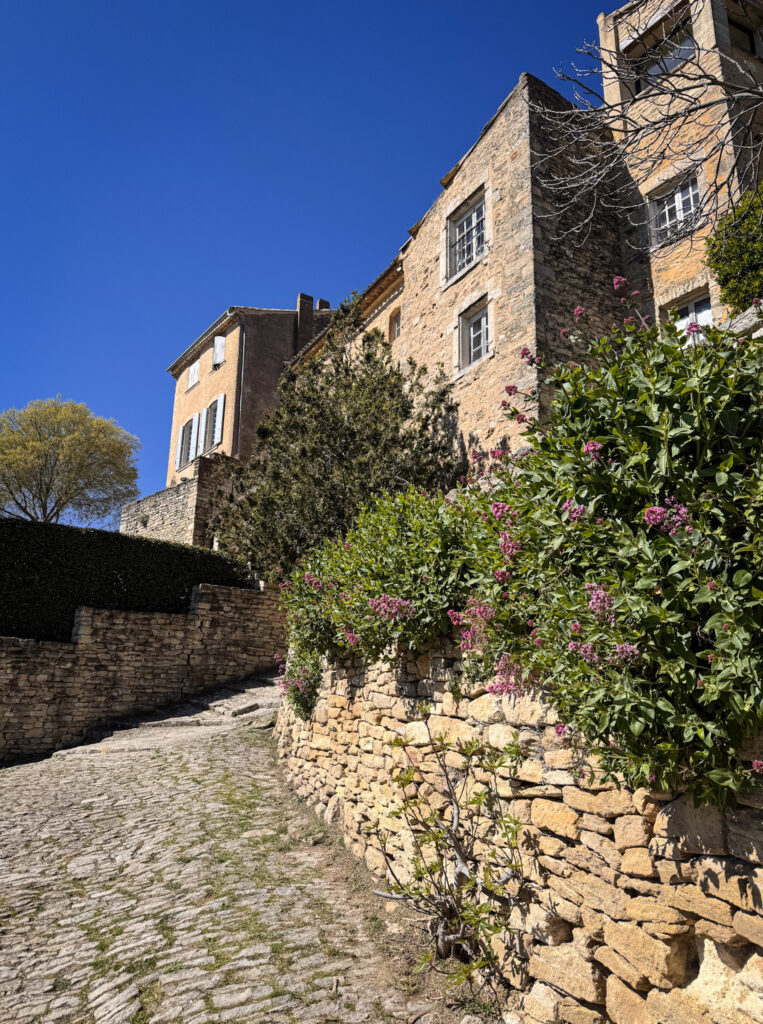
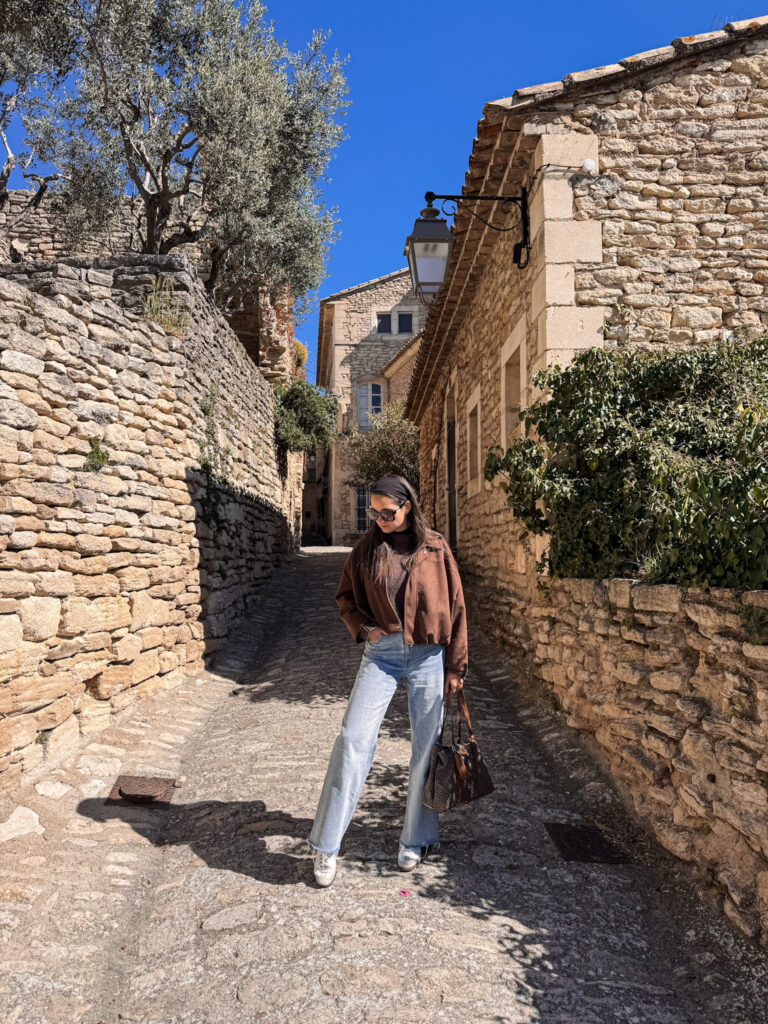
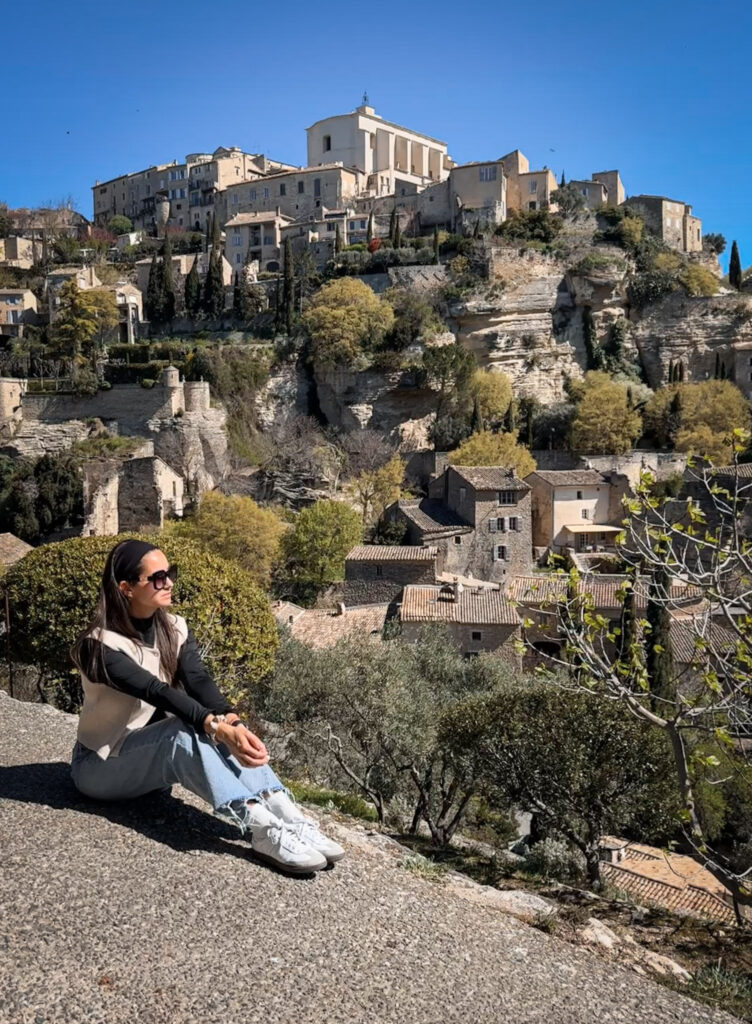
One of the most photographed villages in France for a reason — houses built in tiers straight up a rocky hillside, all in that same pale Luberon stone, visible from a viewpoint on the D15 that stops every car that passes it. Wander up into the old town for the château and the maze of stone stairways.
Useful Information:

Official tourism site: gordes-village.com
The best photo viewpoint is the D15 pullout just below the village, best in early morning or golden hour light
Nearby: the Abbaye Notre-Dame de Sénanque, a 12th-century Cistercian abbey famous for its lavender fields (bloom typically late June–early August)
2. Roussillon
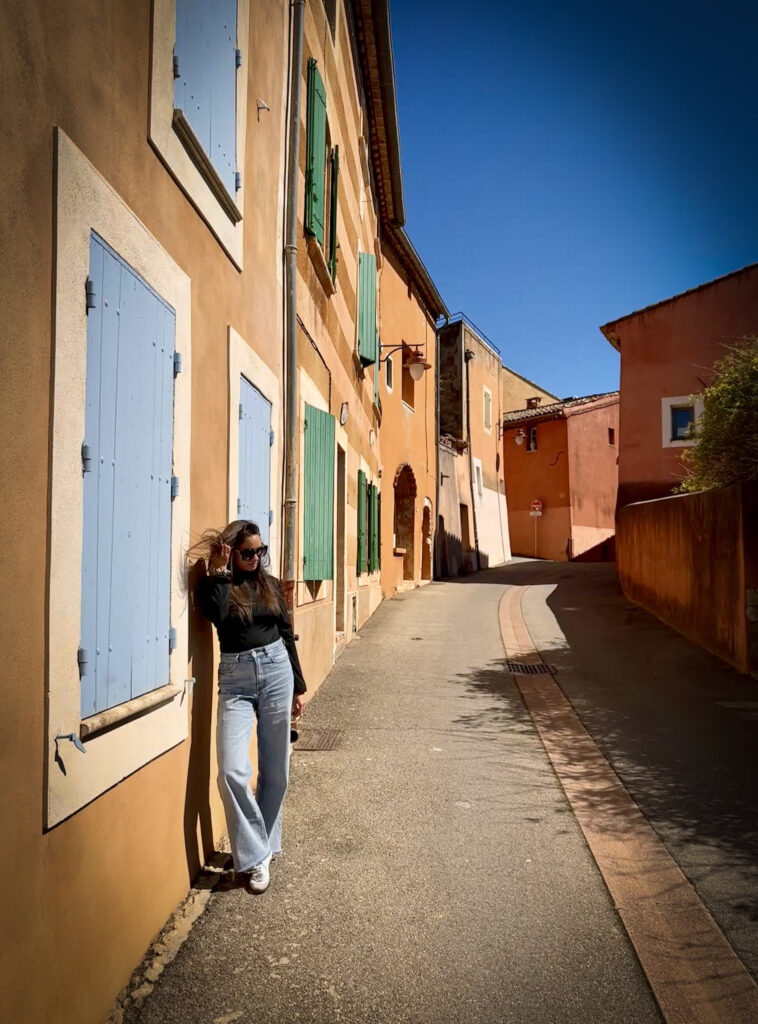
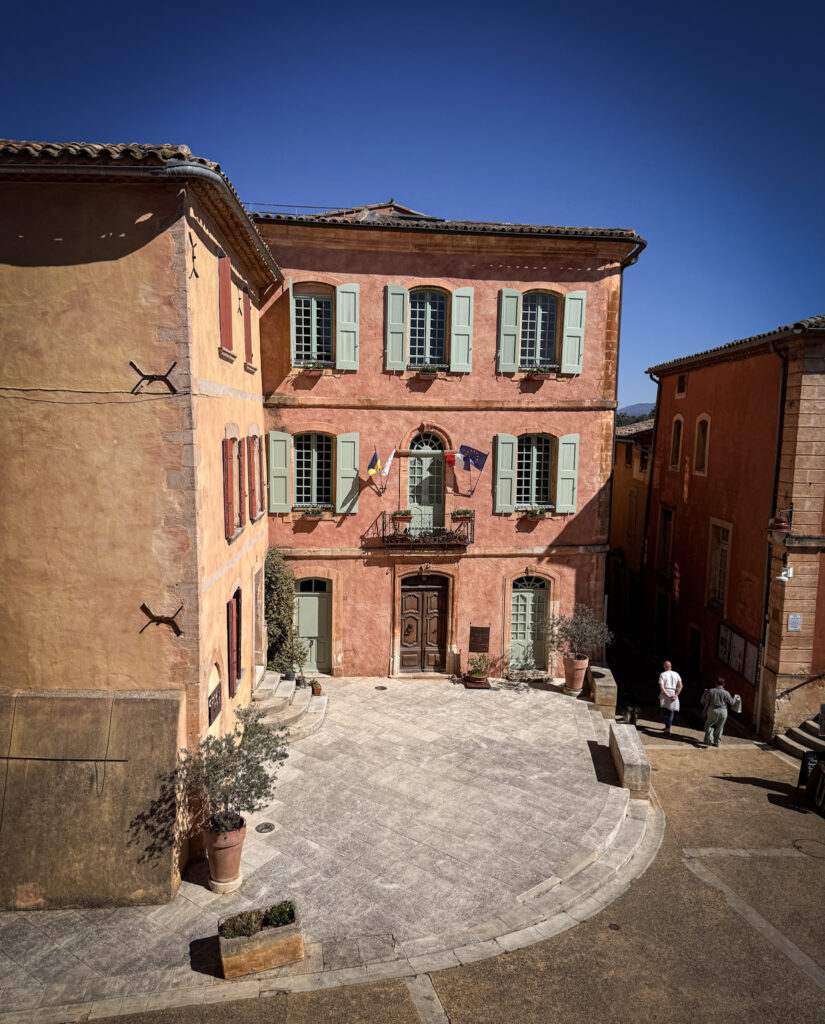
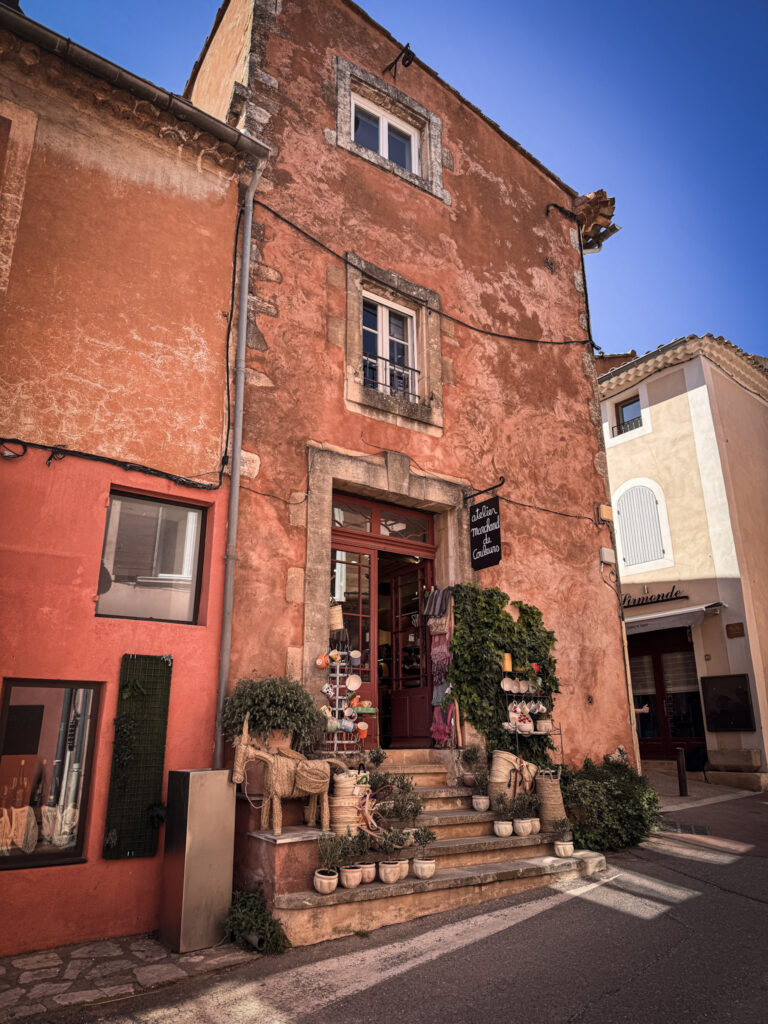
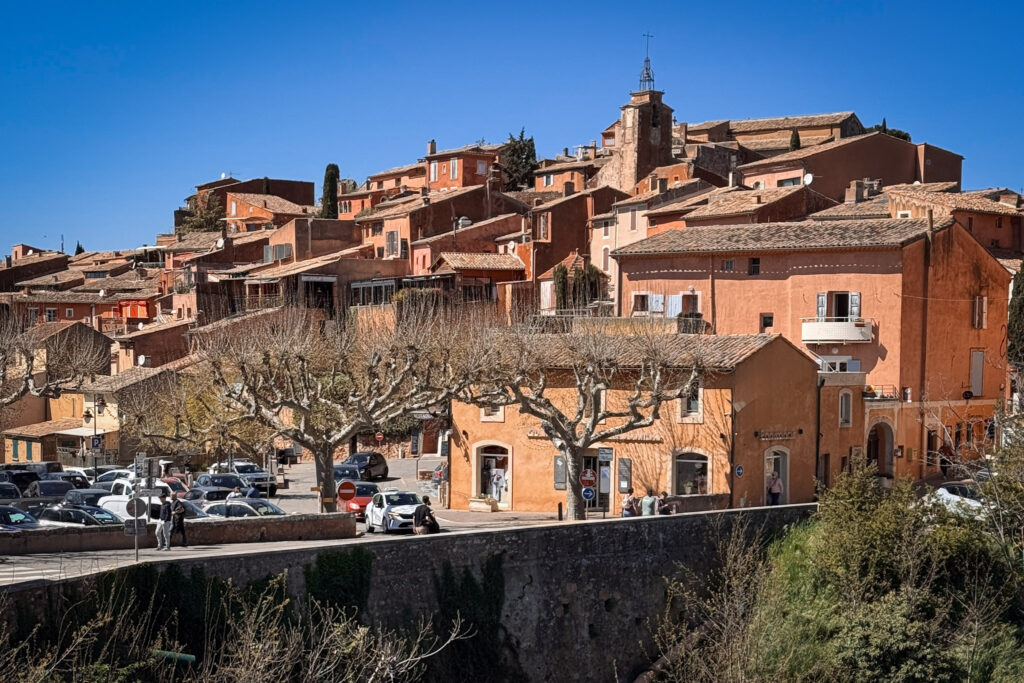
A total shift in palette from everywhere else on this list — this village sits on top of one of the largest ochre deposits in the world, so every building is painted in shades of red, orange, and gold pulled straight from the cliffs beneath it.
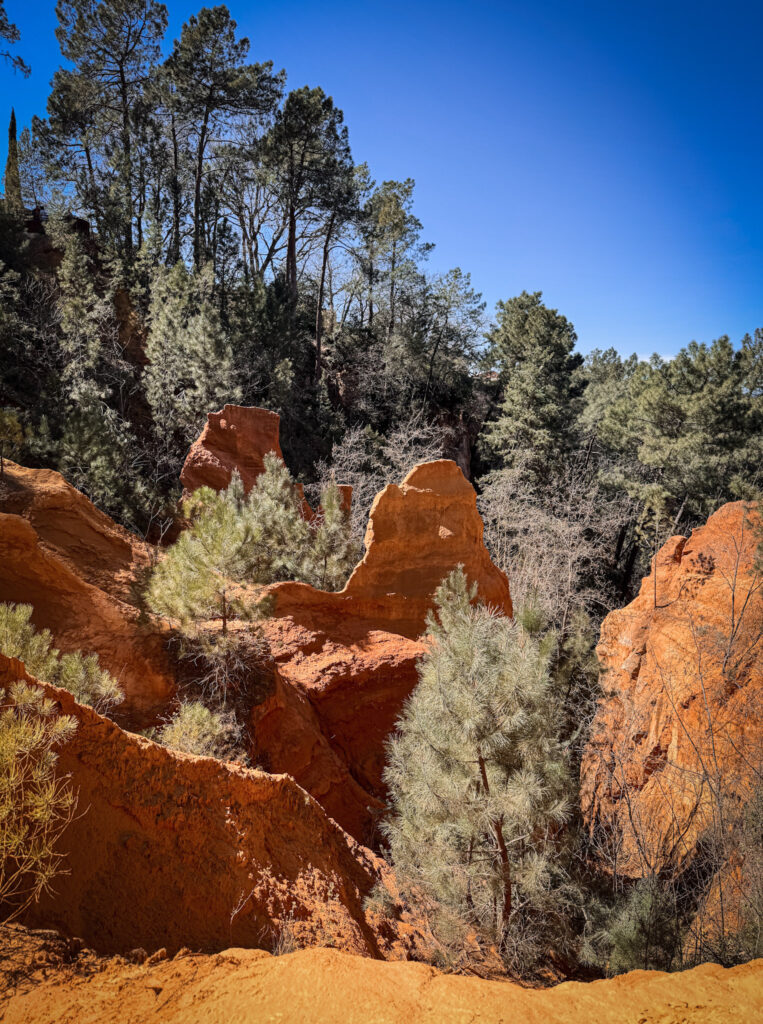
The Sentier des Ocres, a short walking trail through the old ochre quarries, is the highlight — genuinely otherworldly scenery, like a small slice of Utah dropped into southern France.
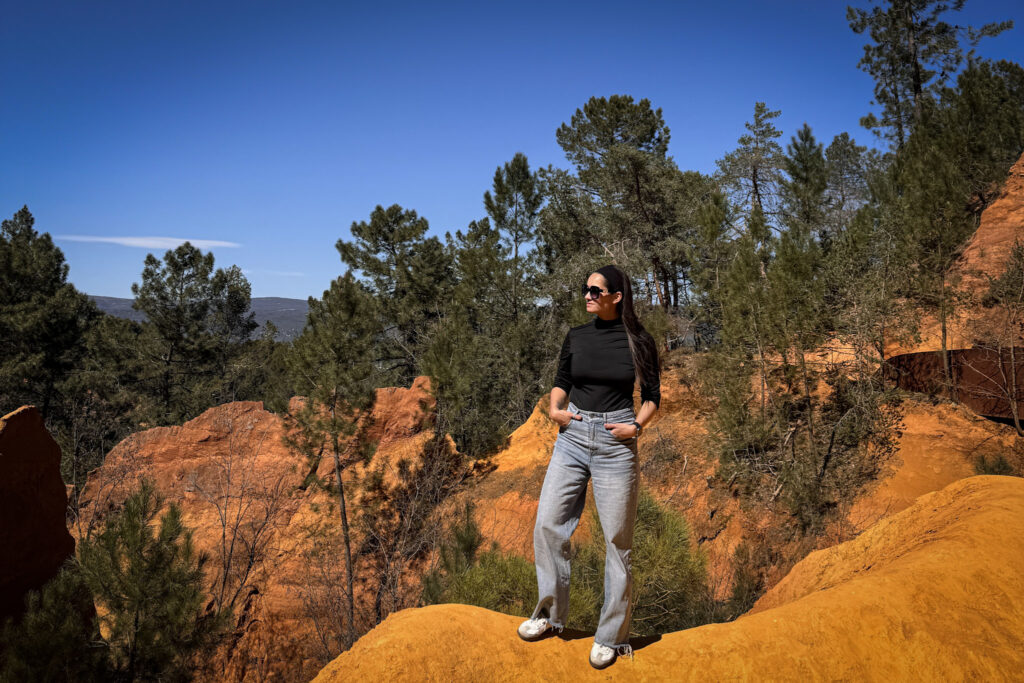
Useful Information: Sentier des Ocres Park

- Entry is a paid, walk-up ticket only (no online booking) — around €3.50 for adults, free under 10
- Two loop options: a short 30-minute circuit and a longer 50-minute one
- Open daily most of the year (roughly February–December), hours shift seasonally
- Wear closed shoes and dark clothing — the ochre dust stains, and some paths are sandy/uneven
3. L’Isle-sur-la-Sorgue
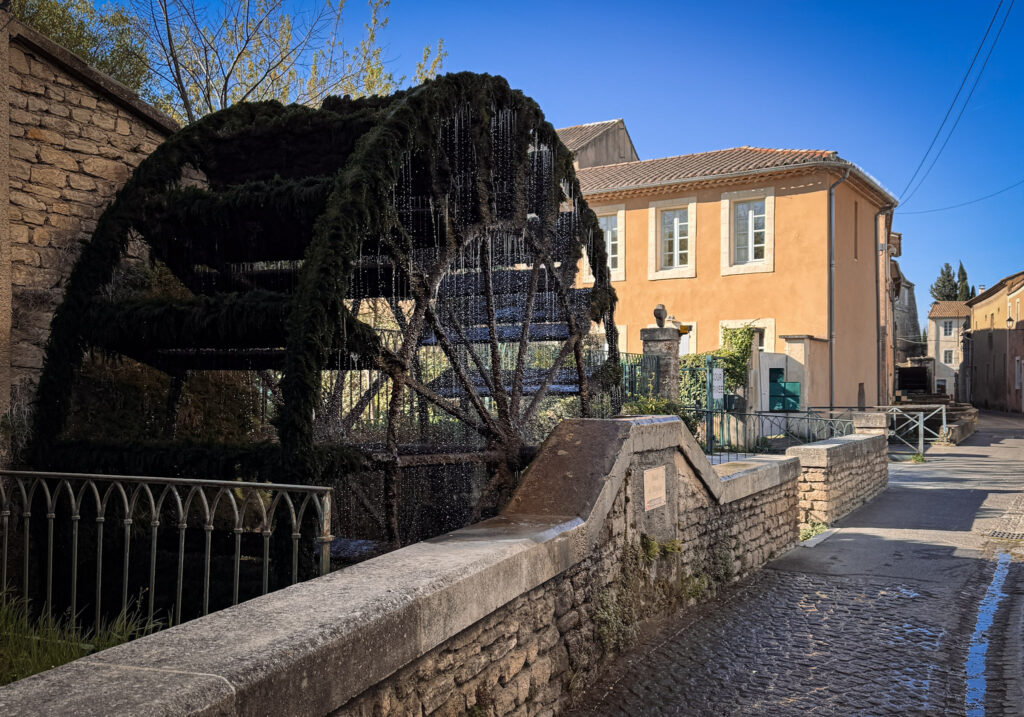
Known as the “Venice of Provence” for the branches of the Sorgue River running straight through town. You’ll find water mills scattered all around the village and along the riverbanks — some right in the town center, others in the surrounding countryside — remnants of the silk, paper, and wool industries that once powered the local economy. Several still have their original wooden wheels intact, moss-covered and slowly turning with the current, and they’re genuinely one of the most photogenic details of the whole town.
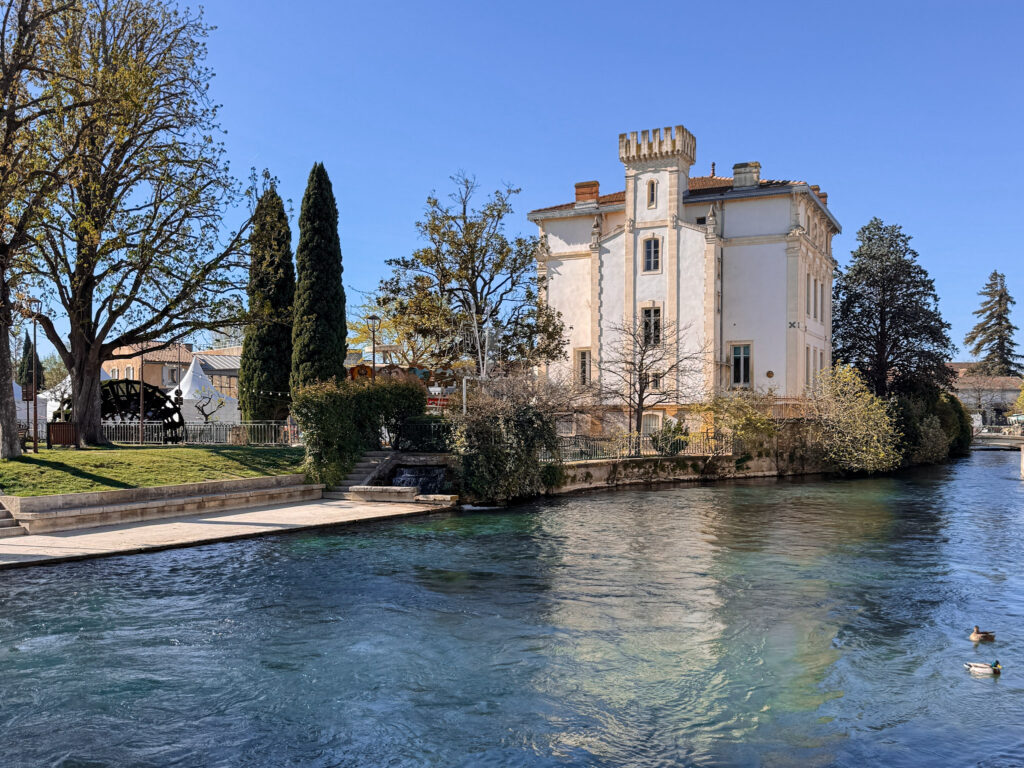
One of the prettiest spots to catch this combination is the Château Gautier (officially Château Giraud today, though still commonly called Gautier after a previous owner) — an eclectic 19th-century château right on the water’s edge, mixing Gothic, Renaissance, and Louis XIII architectural details into one genuinely striking building. It’s not open for public visits — these days it houses municipal offices and a music school — but the surrounding Parc Gautier is free and open to wander, and it’s one of the best places in town to sit by the water and watch a wheel turn.
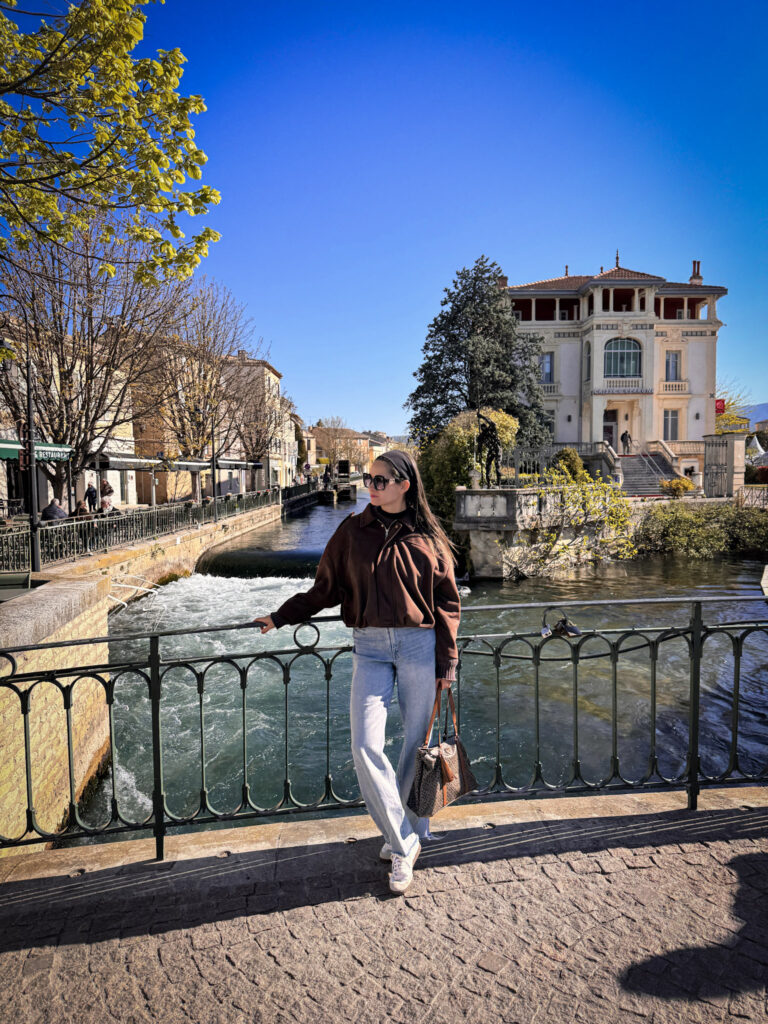
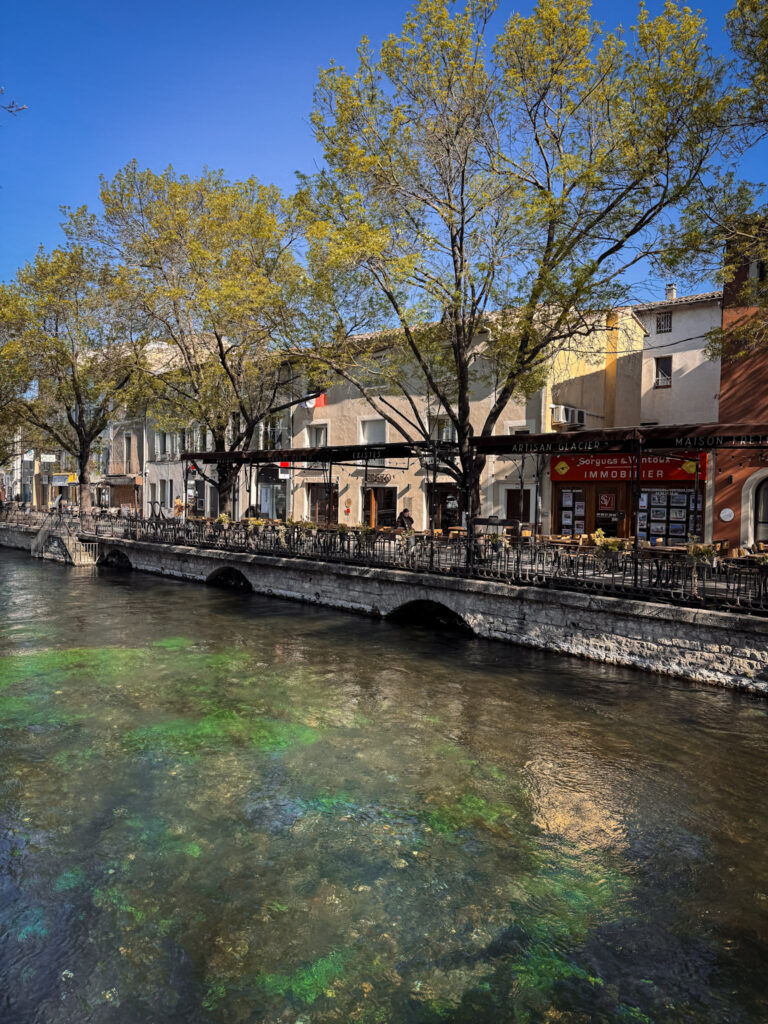
Honestly, some of the best time we spent here wasn’t at any single sight — it was just walking the riverbank itself. The canals loop around almost the entire old town, shaded by huge overhanging plane trees, with cafés and antique shops spilling right up to the water’s edge. There’s no real “route” to follow — just pick a direction and let the river guide you.
Jet Lag Jelly Tip: Sunday mornings are the move — market stalls line the canals and it's genuinely one of the best browsing experiences in Provence, antiques or not. If you want the waterwheel walk specifically, the tourist office on Place de la Liberté has a free map marking around 15 of the old wheels around town.
4. Lourmarin
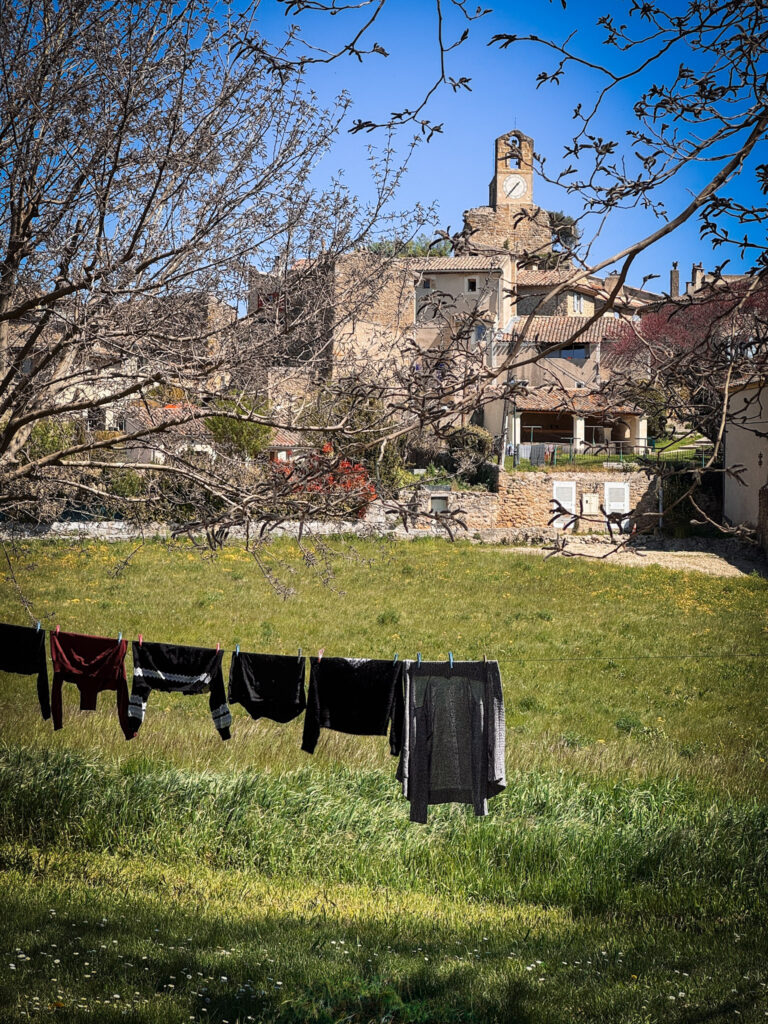
Officially one of France’s “most beautiful villages,” and it earns it. Wander the narrow, winding stone streets of the old town and you’ll understand why so quickly — golden stone buildings, blue shutters, cobbled lanes barely wide enough for two people, and a little fountain tucked into nearly every corner.
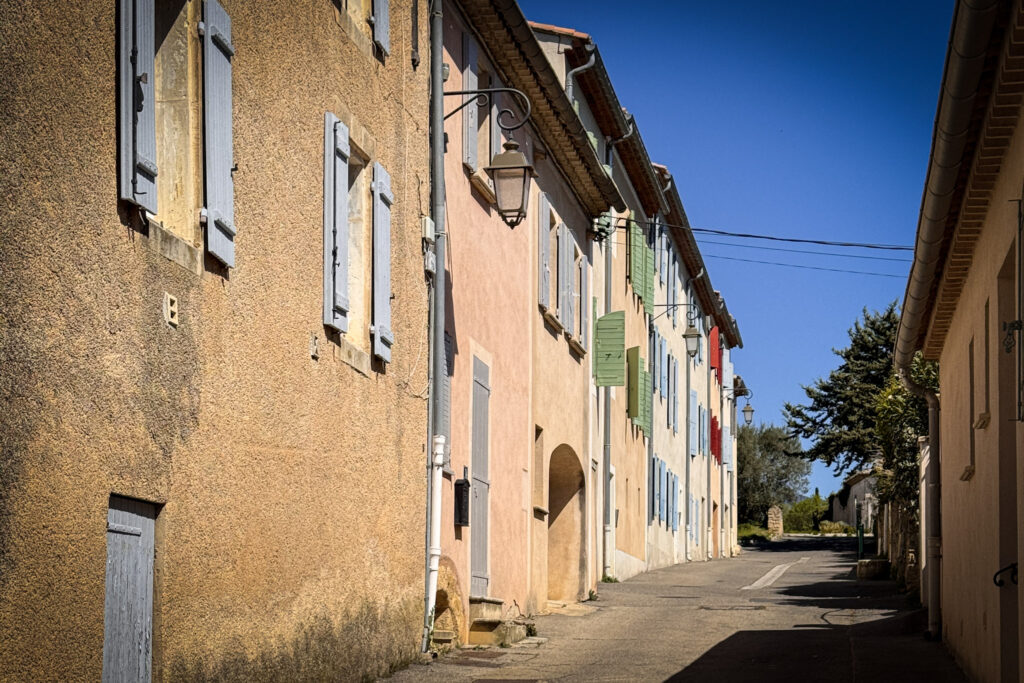
The village is anchored by the Château de Lourmarin, a genuinely striking mix of medieval fortress and Renaissance château — the older, more austere tower sits right alongside a more refined 16th-century wing, added later by a wealthy owner who wanted something grander. It’s open for self-guided visits, and worth the entry fee for the interior alone, but even just approaching it up the gravel drive, with the tower rising against the sky, is a great photo moment on its own.
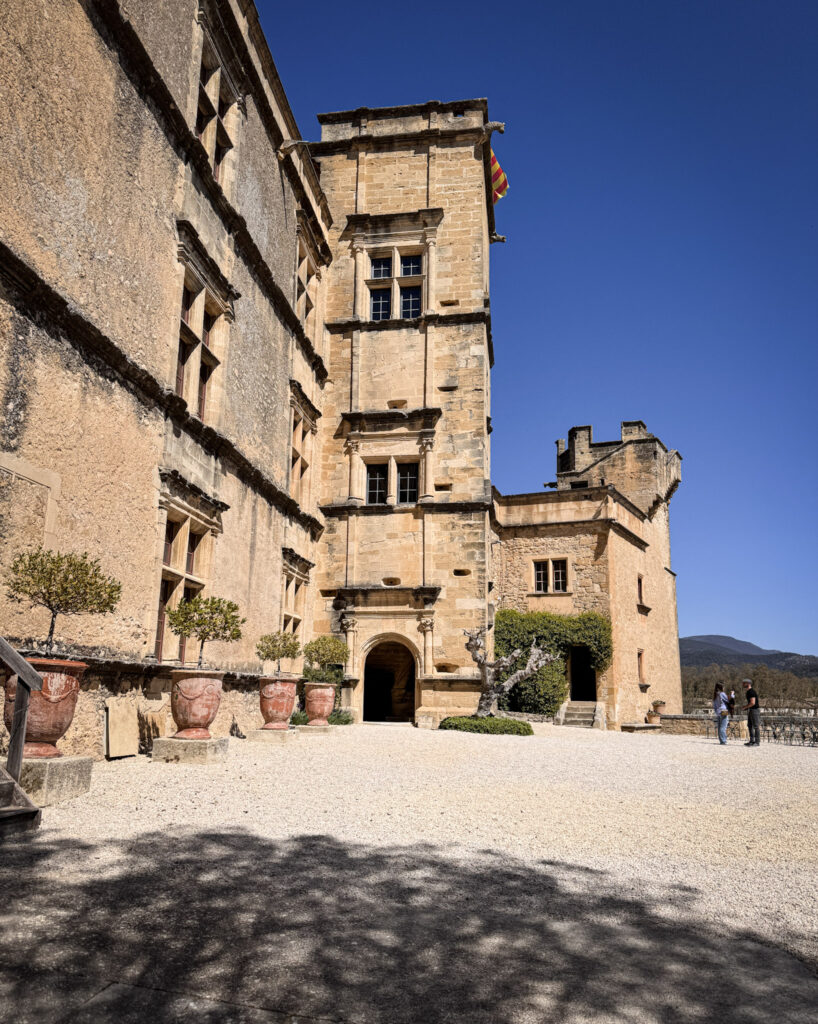
Useful Information: Château de Lourmarin

- Adult admission: €6.50; free for children under 6
- Open daily year-round except December 25 and January 1 (hours shift seasonally — roughly 10:30am–6:45pm May–September, shorter hours the rest of the year)
- Budget about an hour to properly see the interior and grounds
- Fun fact: it's the first Renaissance building ever constructed in Provence, with the older medieval tower and the newer 16th-century wing sitting side by side
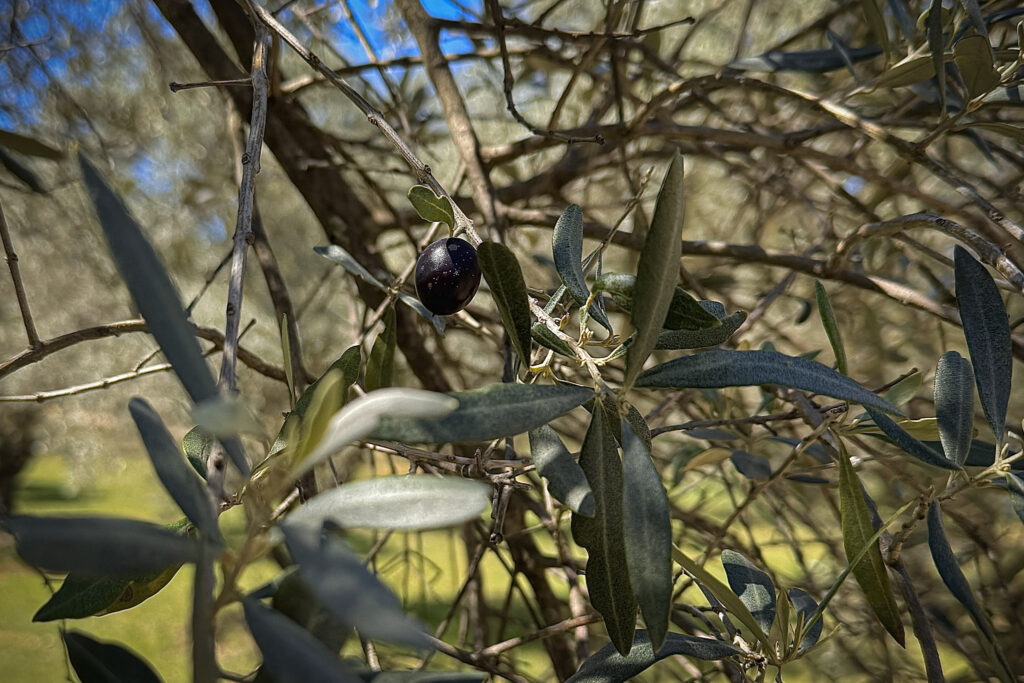
Just outside the village center, Lourmarin is surrounded by peaceful olive groves — rows of silvery-green trees on soft grass, a quiet contrast to the stone streets just a few minutes’ walk away. It’s a lovely spot to slow down, especially in the late afternoon light.
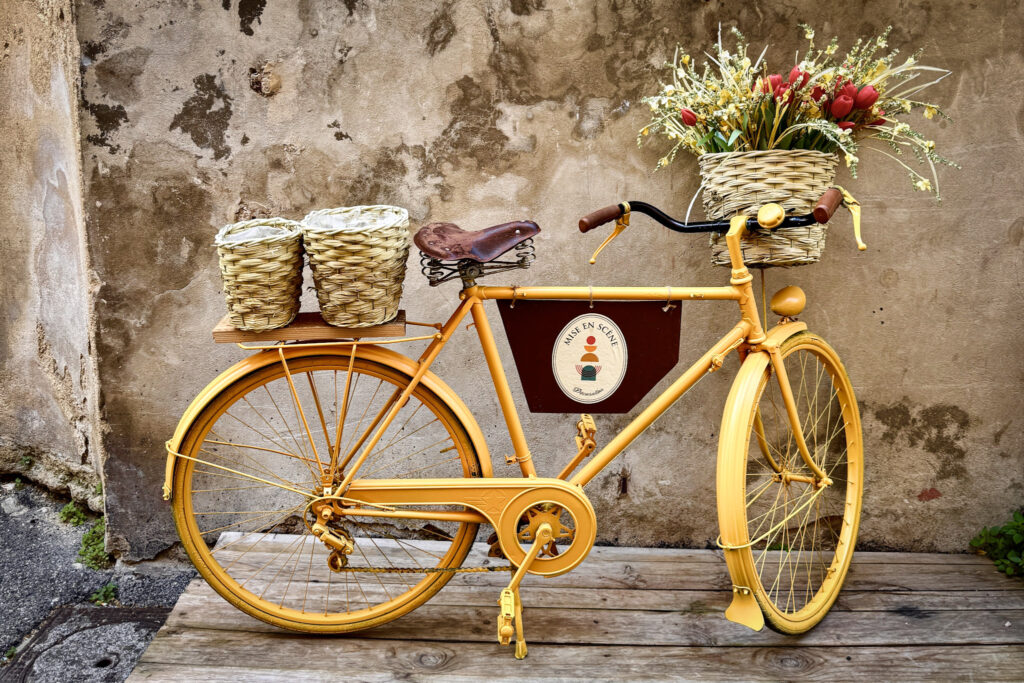
Back in the old town, the streets come alive with local market stalls — think local pottery, linens, and provençal specialties — and small quirky touches everywhere, like a decorated bicycle propped outside a shop, doubling as both display and photo op. Wandering without much of a plan is genuinely the best way to experience Lourmarin.
Albert Camus lived and is buried in Lourmarin, which draws a quiet literary pilgrimage crowd alongside the usual tourists, and the village has more than enough good restaurants that it’s worth timing lunch here too.
Jet Lag Jelly Tip: Give yourself at least half a day here — between the château, the olive groves, and just getting lost in the old streets, Lourmarin rewards slow wandering more than almost any other village on this list.
5. Lacoste
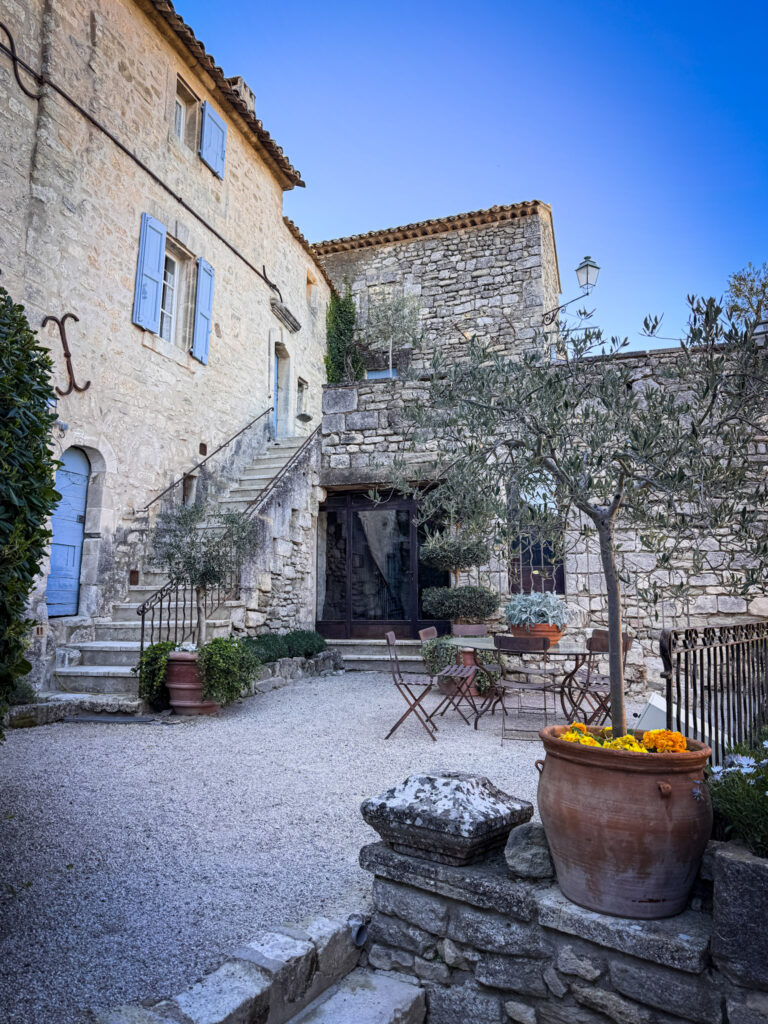
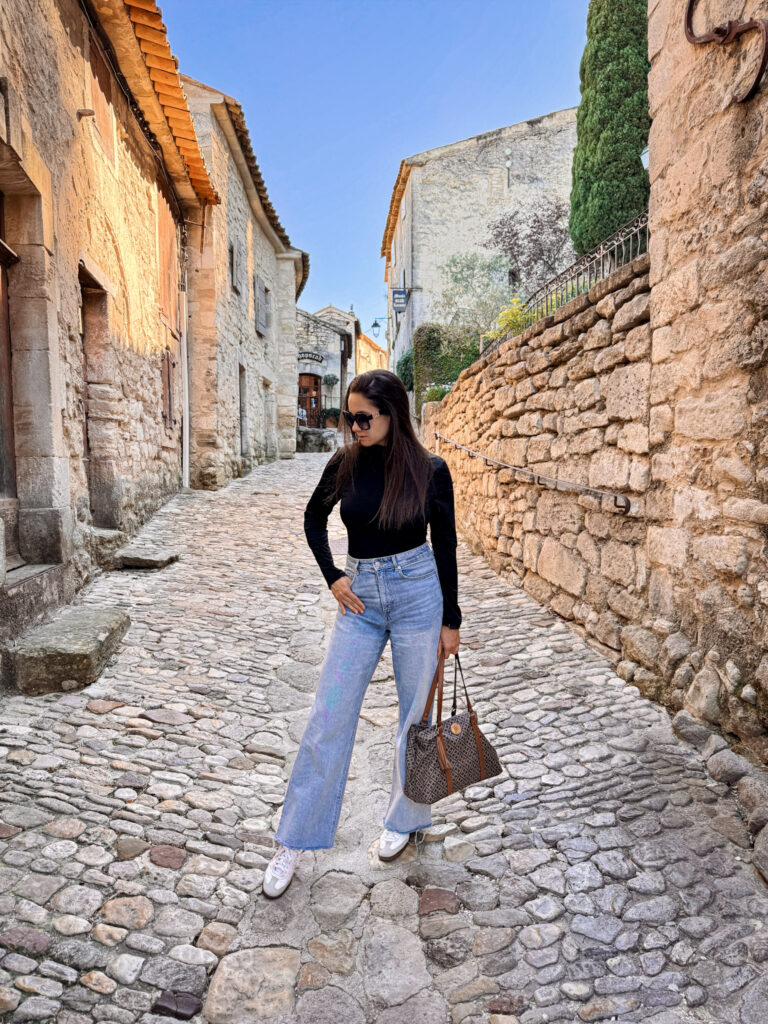
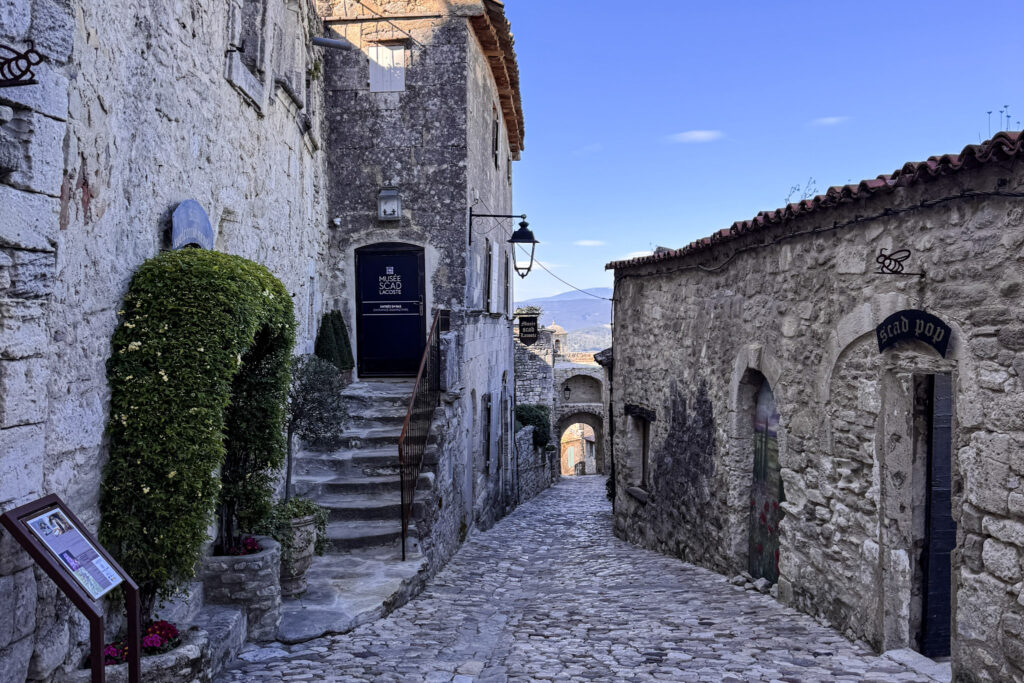
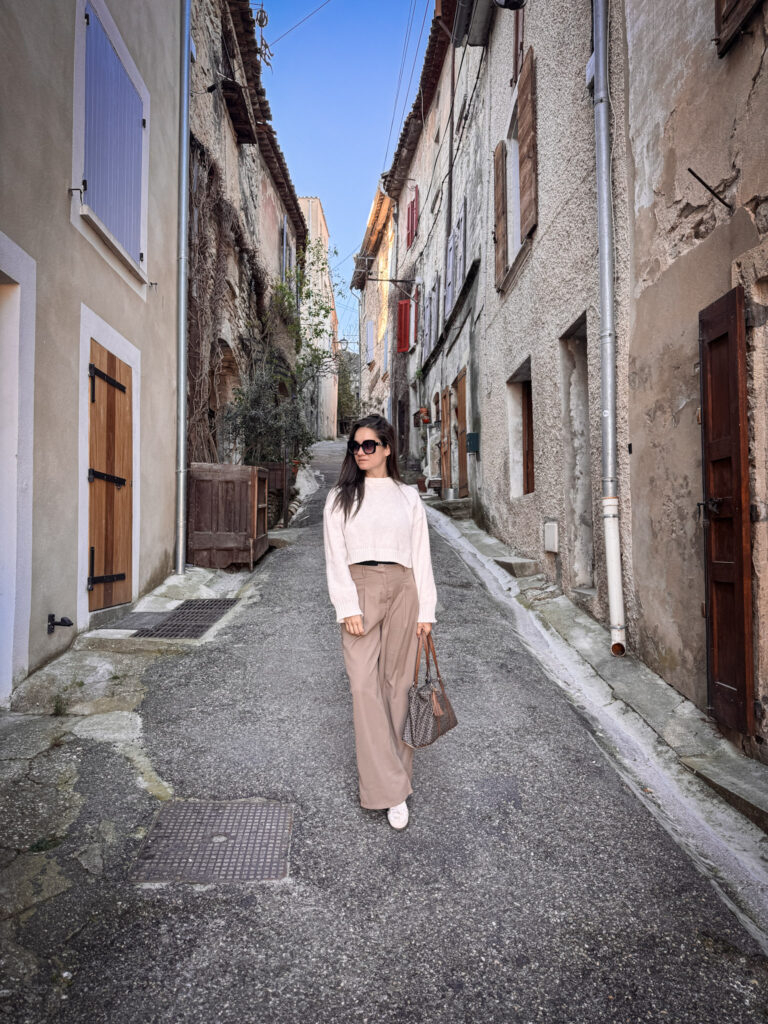
This is the village for anyone who likes getting a little bit lost. The streets here are so narrow and winding that your phone’s GPS basically gives up, and half the fun is just wandering — up worn stone steps, through tiny archways, past doors painted every shade of blue, with barely another tourist in sight. It has serious main-character energy if you’re into a moody, cinematic wander.
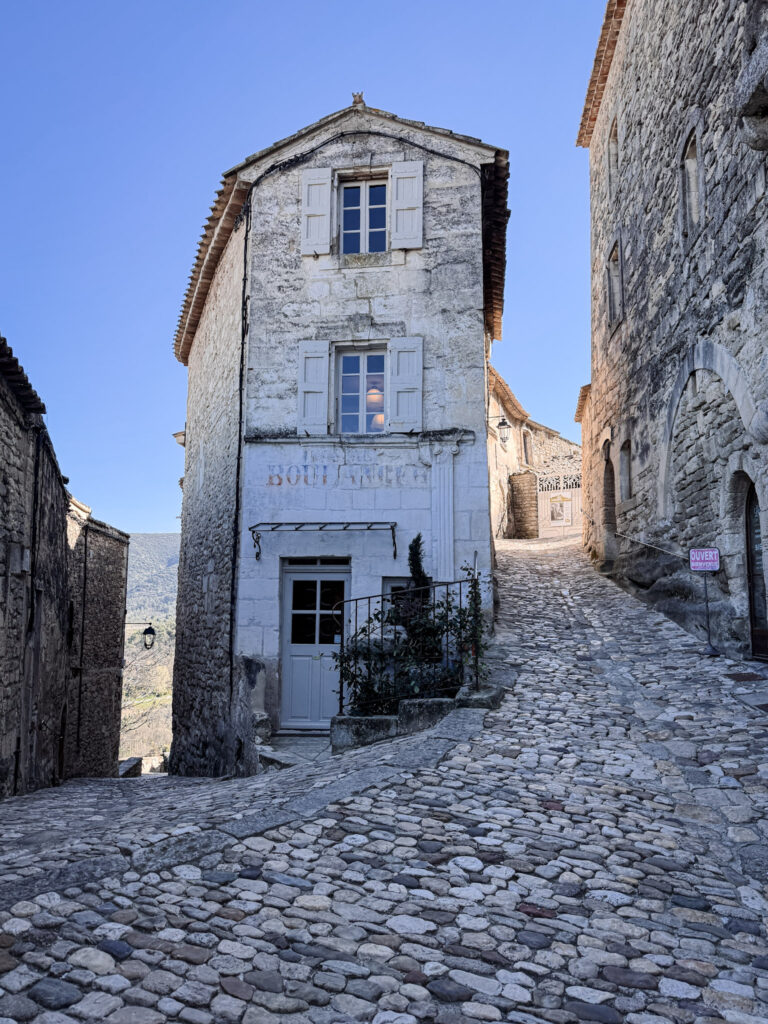
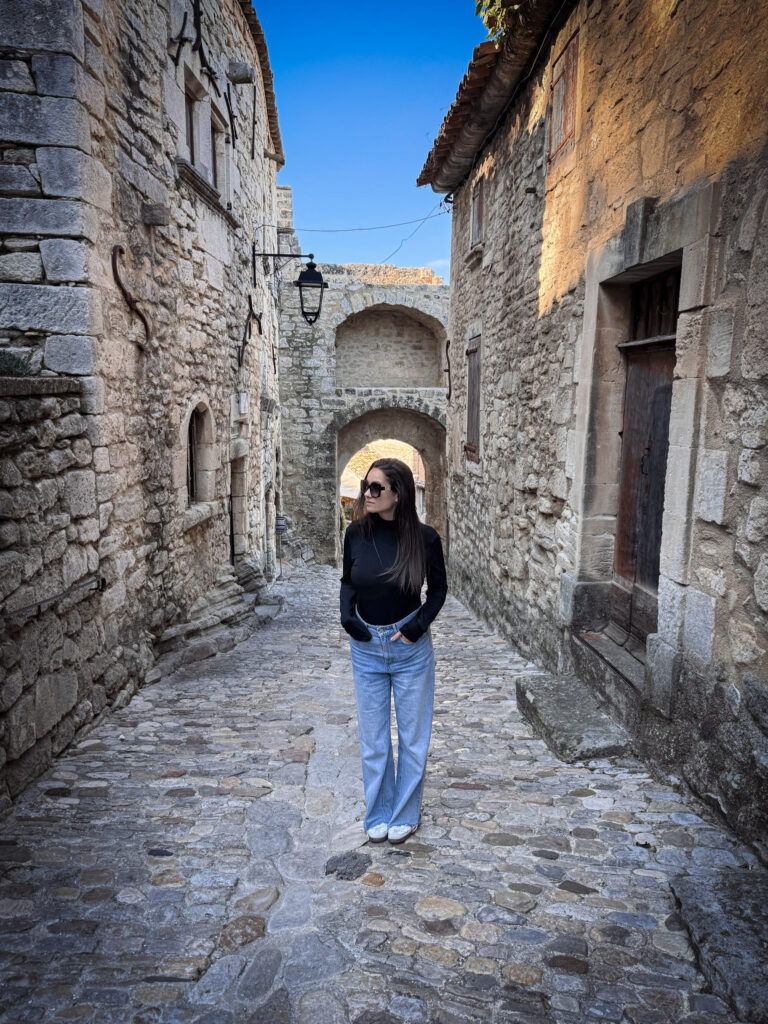
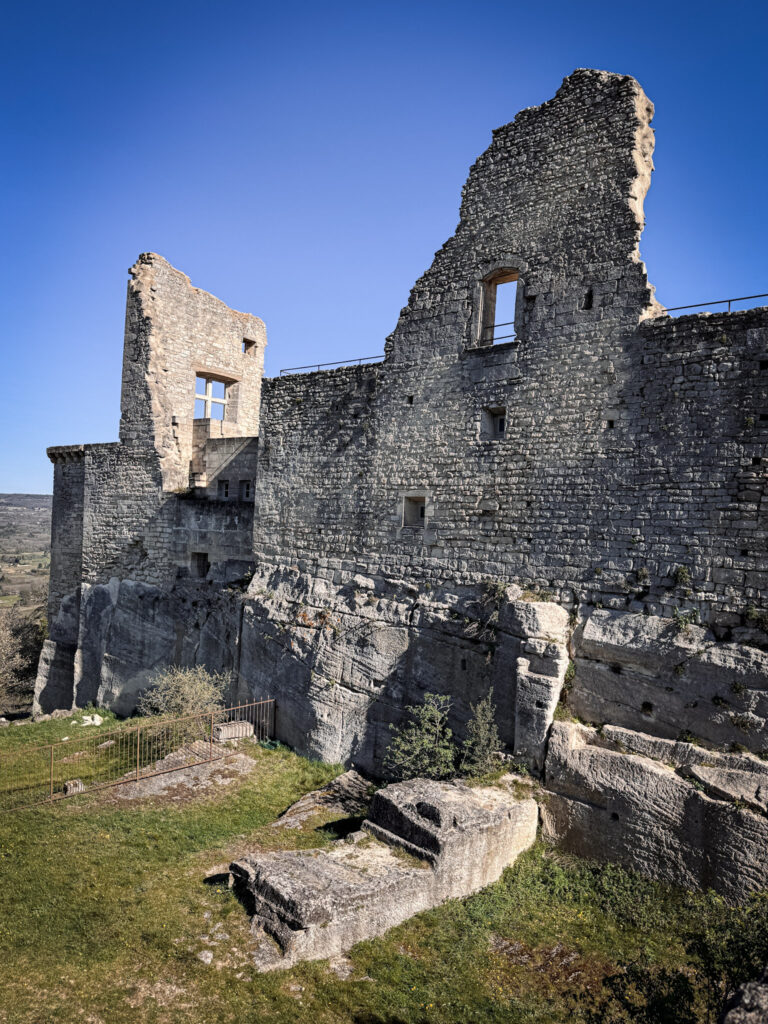
At the top, the village opens up to the ruins of the Château de Lacoste — part crumbling fortress, part fashion-world footnote, since it was once owned by the notoriously scandalous Marquis de Sade and, centuries later, by designer Pierre Cardin. These days, much of Lacoste doubles as a campus for an American art school, which somehow makes the whole village feel more alive rather than “touristy” — students sketching in doorways, a little café tucked into the old buildings, galleries you can just wander into.
Jet Lag Jelly Tip: Skip trying to find the "right" path up to the castle — just pick a staircase and go. Some of the best photos in Lacoste come from streets that don't lead anywhere in particular.
6. Bonnieux
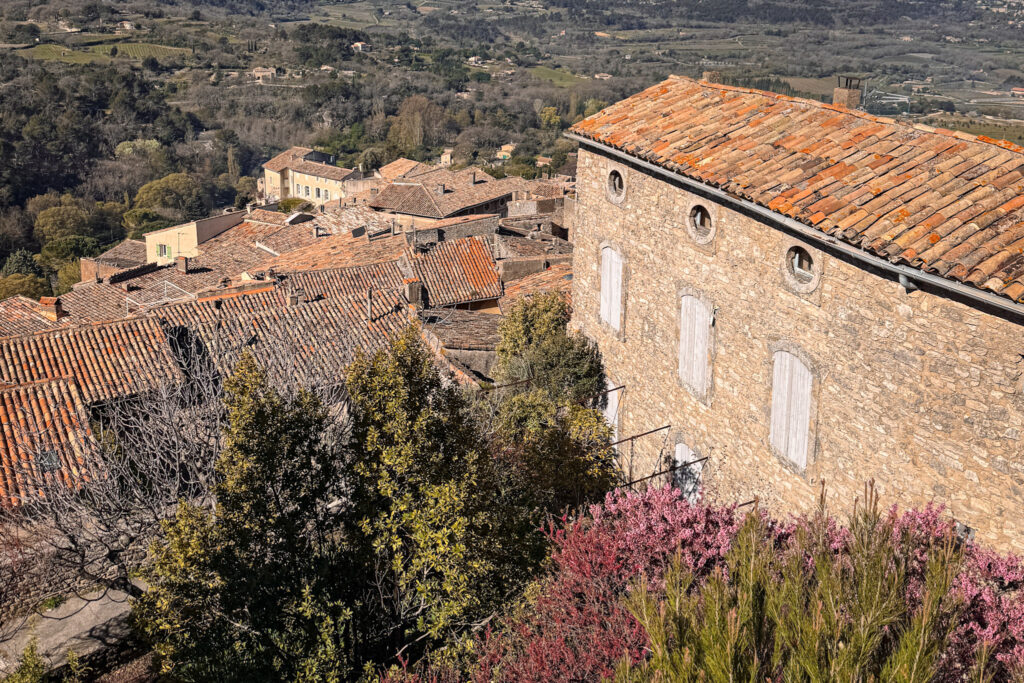
Another hilltop Luberon village, and one that genuinely earns the climb. The streets curl upward in that classic Provençal way — pale stone houses, blue-grey shutters, the odd splash of purple blooms against a wall — and every turn seems to open onto another sweeping view of the valley below, patchwork fields and distant villages stretching out toward the horizon.
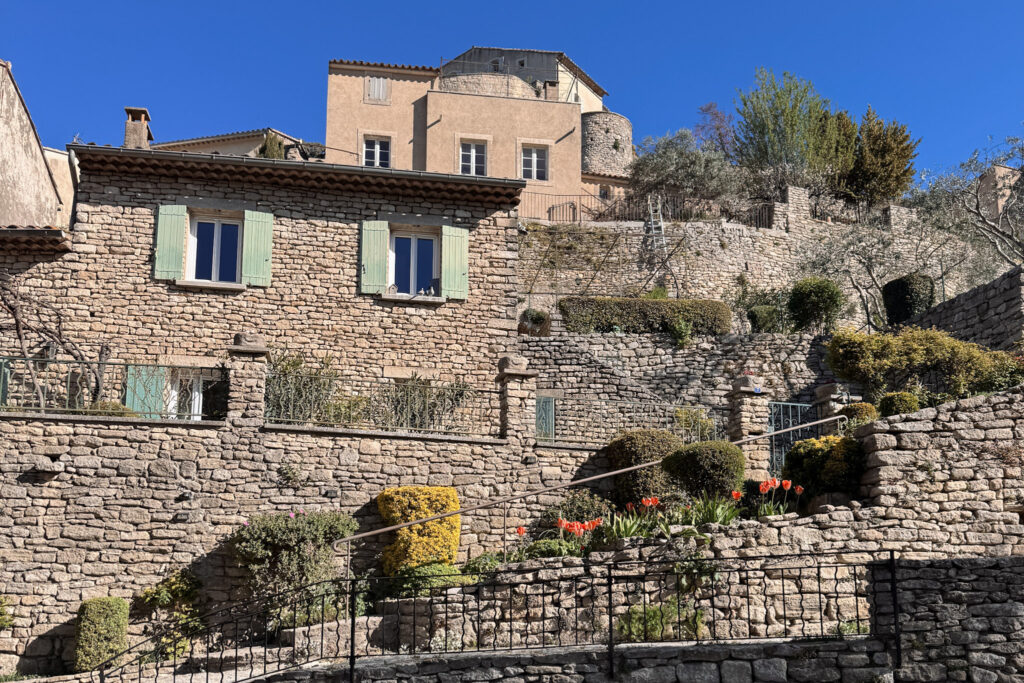
The proper reward is at the top: 86 steps lead up to the old hilltop church, and the panorama from up there is one of the best in the whole Luberon — on a clear day you can see clean across to Lacoste and Gordes. It’s the kind of spot that makes you just stand there for a while longer than planned.
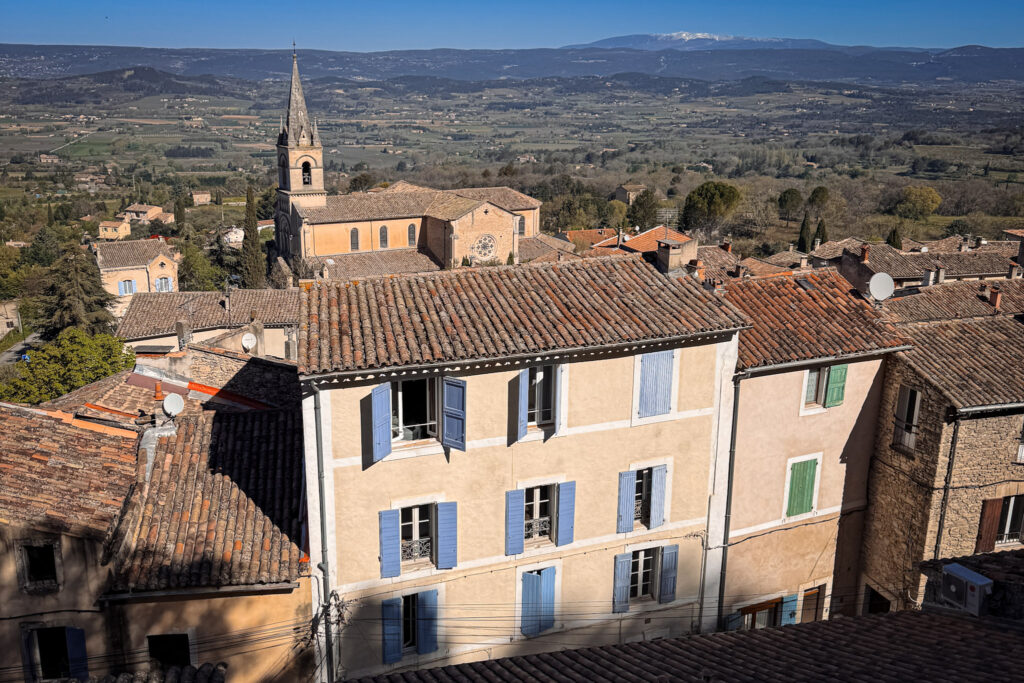
Jet Lag Jelly Tip: Time your visit for late afternoon if you can — the golden light hitting the valley from up top is worth building the rest of your day around.
7. Cucuron
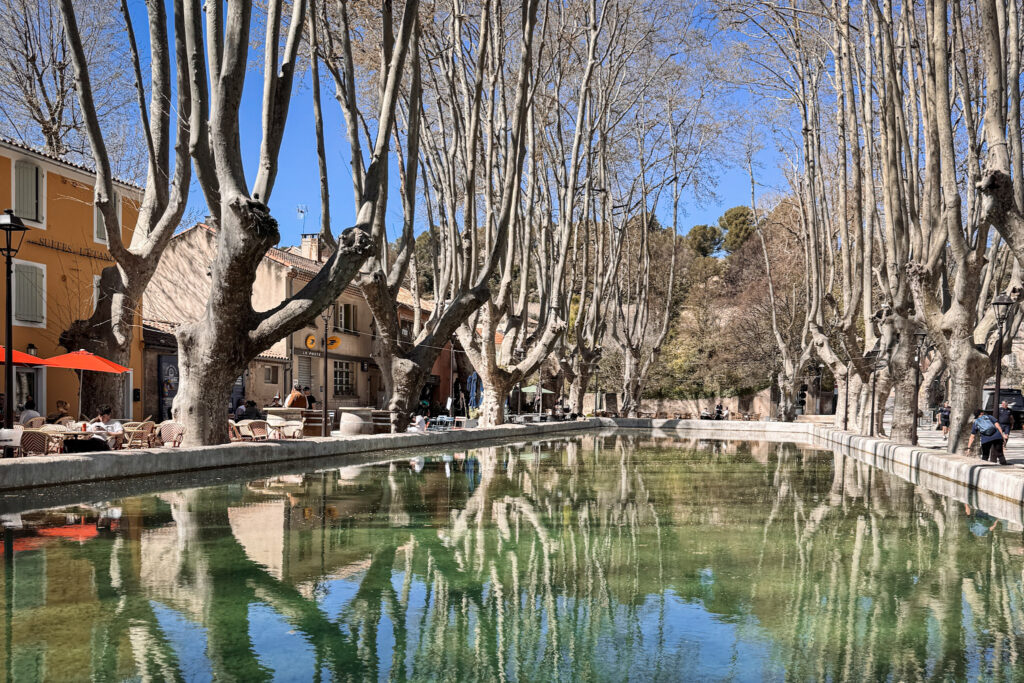
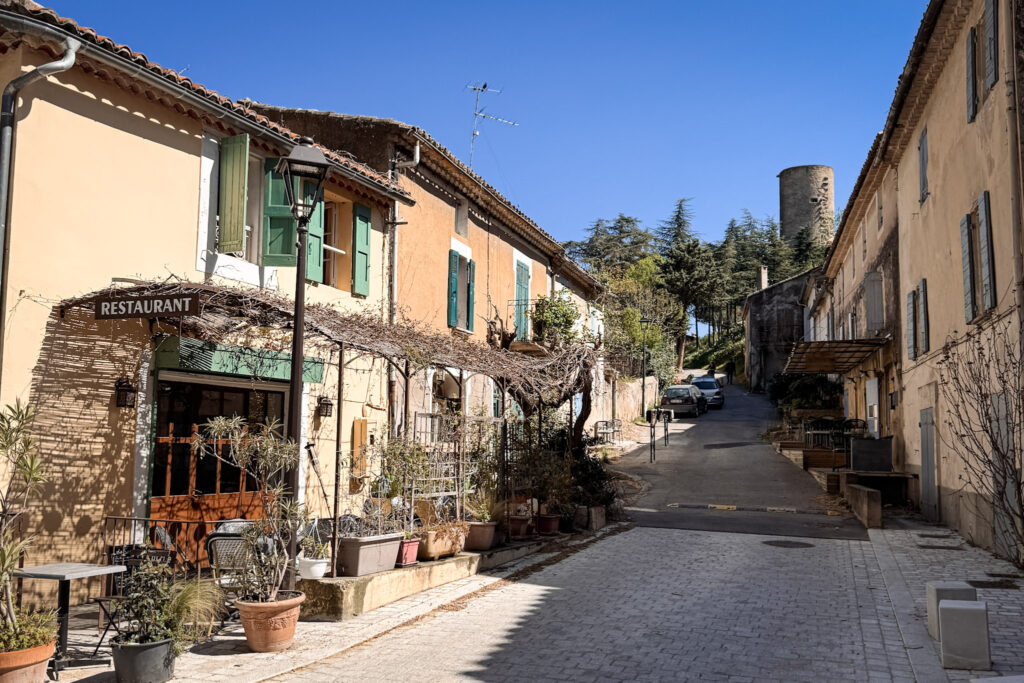
Cucuron is one of those villages that feels made for slowing down. Wander its quiet streets — warm stone walls, green shutters, restaurant tables spilling out under vine-covered trellises — and you’ll eventually land at the heart of it: the Bassin de l’Étang, a long, still pond ringed by plane trees close to 200 years old, their branches arching overhead to form a natural shaded tunnel. Grab a coffee, find a bench, and just watch the light move through the leaves.
Climb up to the old stone tower at the edge of the village — the Donjon Saint-Michel — for a rooftop view over Cucuron’s rooftops and the countryside beyond.
Jet Lag Jelly Tip: Cucuron's market runs Tuesdays, Lourmarin's runs Fridays — worth checking which day you're passing through and building lunch around whichever market's on.
8. Vaugines
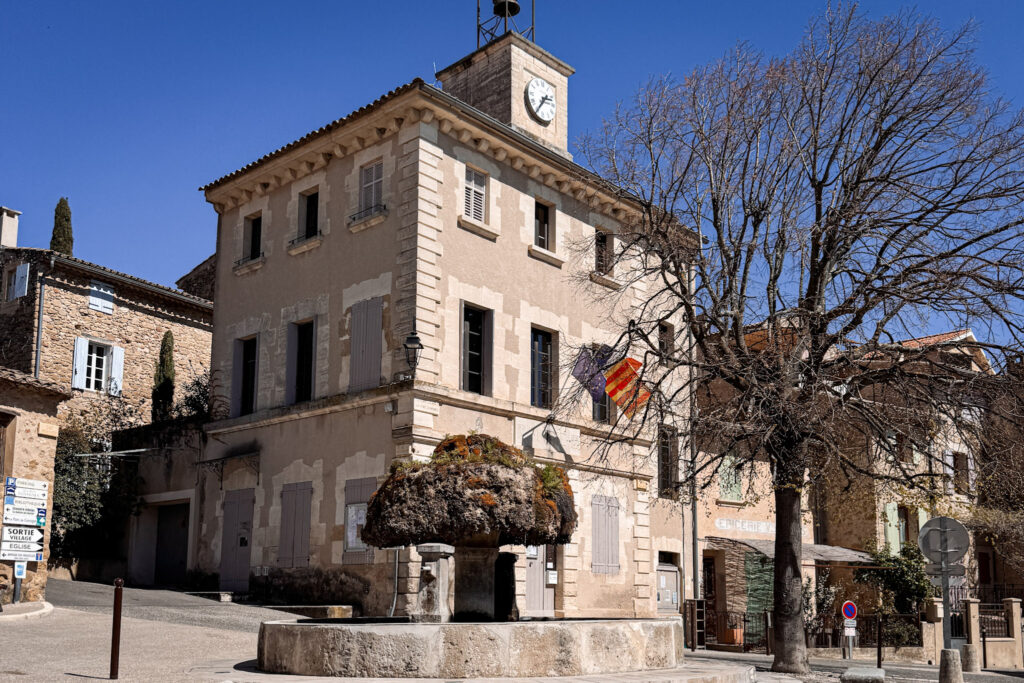
Tiny and unpolished in the best way — one quiet street, warm stone houses, and barely another visitor in sight. It’s the kind of place where you slow down without meaning to. Keep an eye out for the Romanesque Église Saint-Barthélémy and the scatter of old sundials painted onto stone house walls as you wander — small details that make the walk worth taking slowly.
9. Ansouis
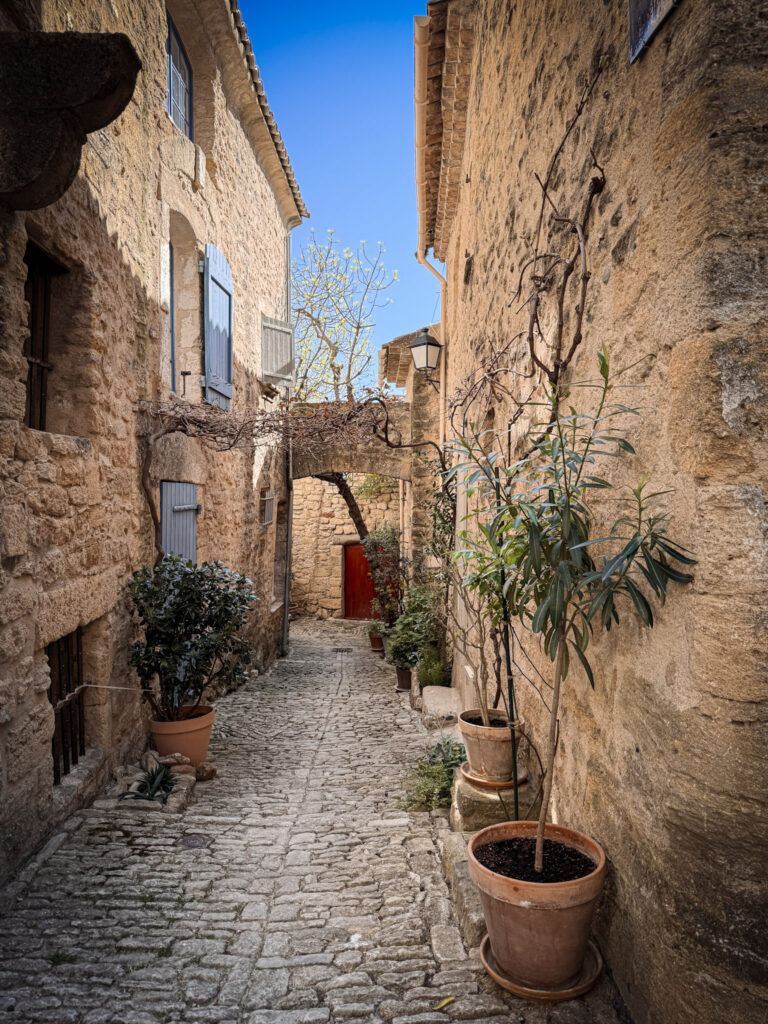
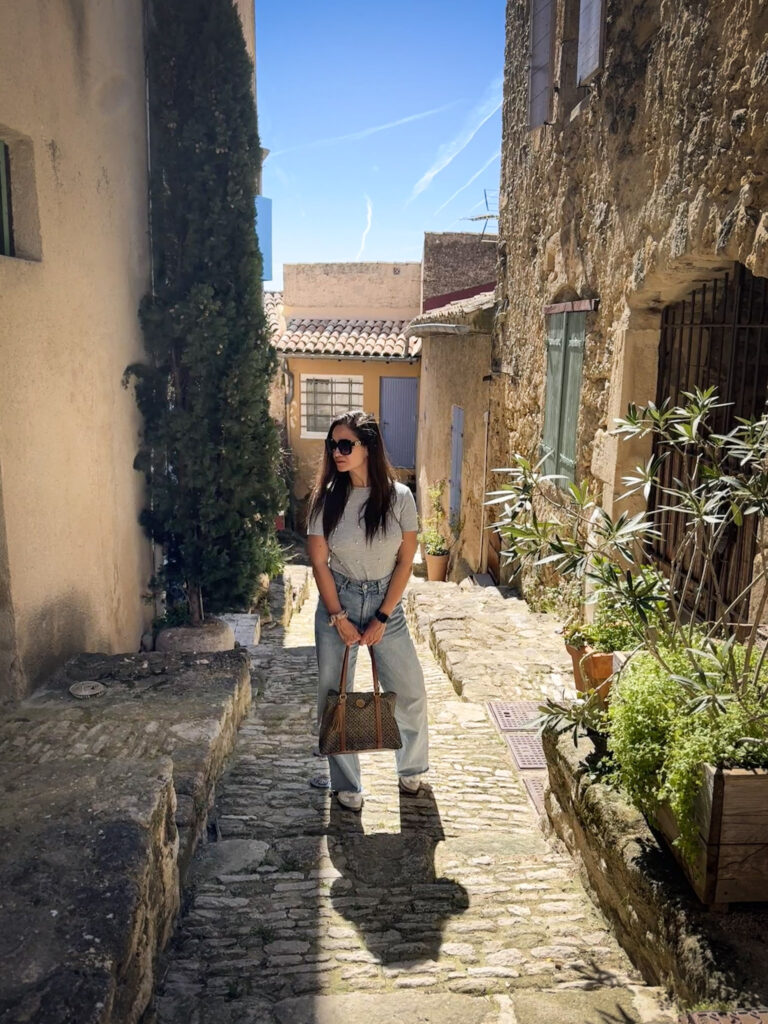
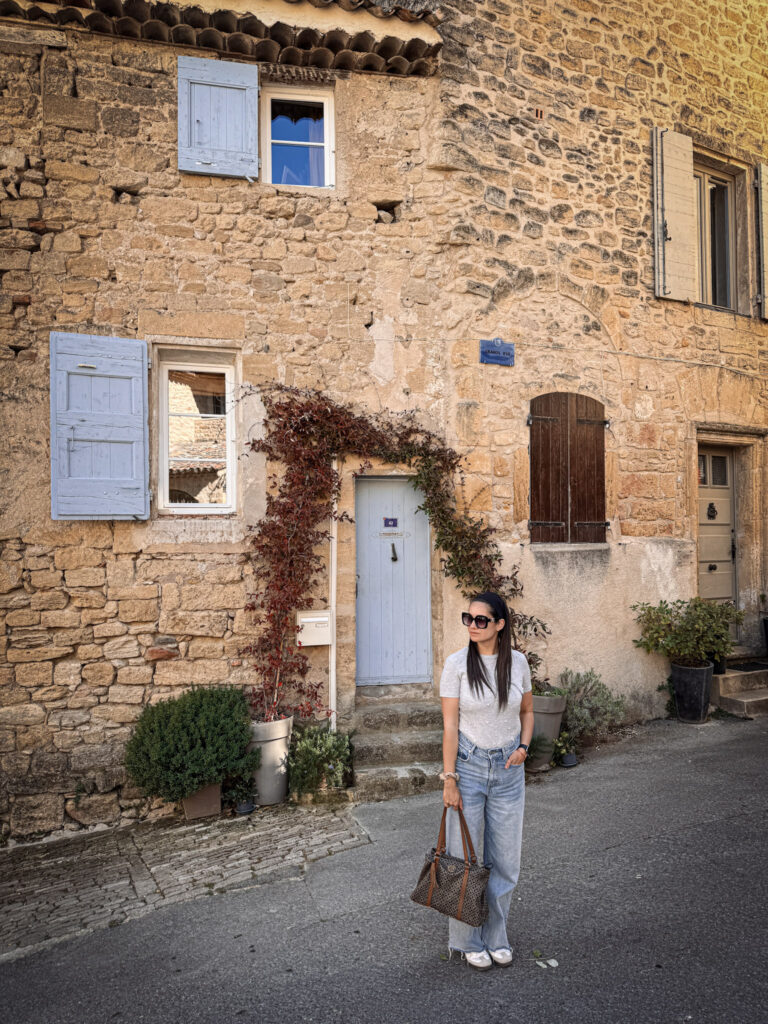
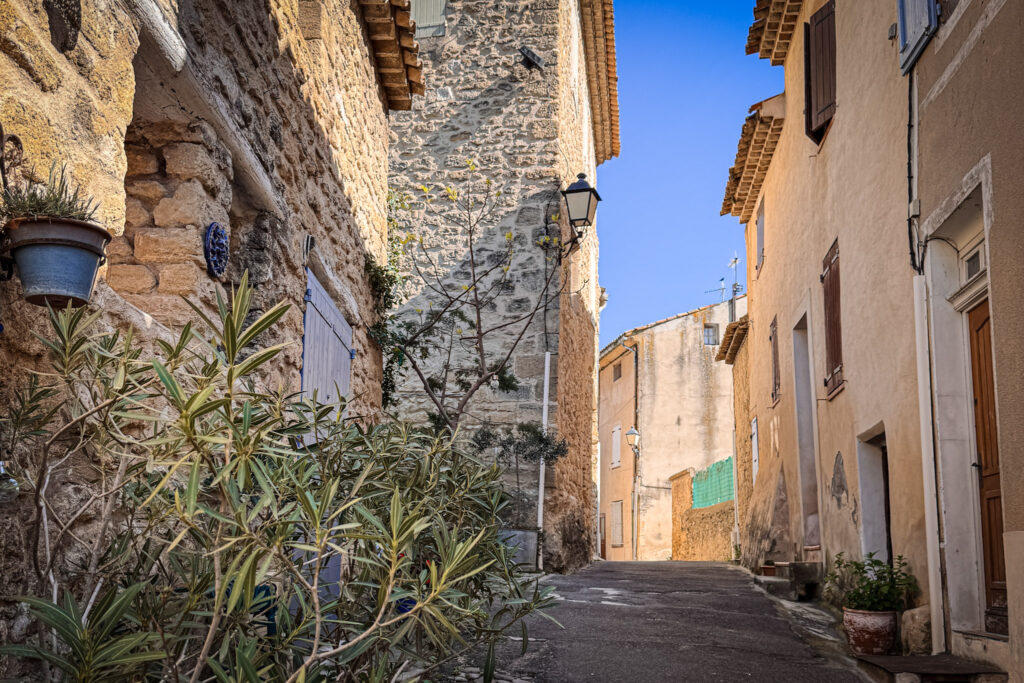
Ansouis feels like the village time forgot in the best possible way — narrow lanes of honey-colored stone, ivy climbing up doorways, and barely another soul around, even at the parts of the day when other Luberon villages are packed. Wander up through the cobbled alleys and you’ll pass an old stone church with worn steps leading up to its door, and stone archways framing little pockets of greenery along the way.
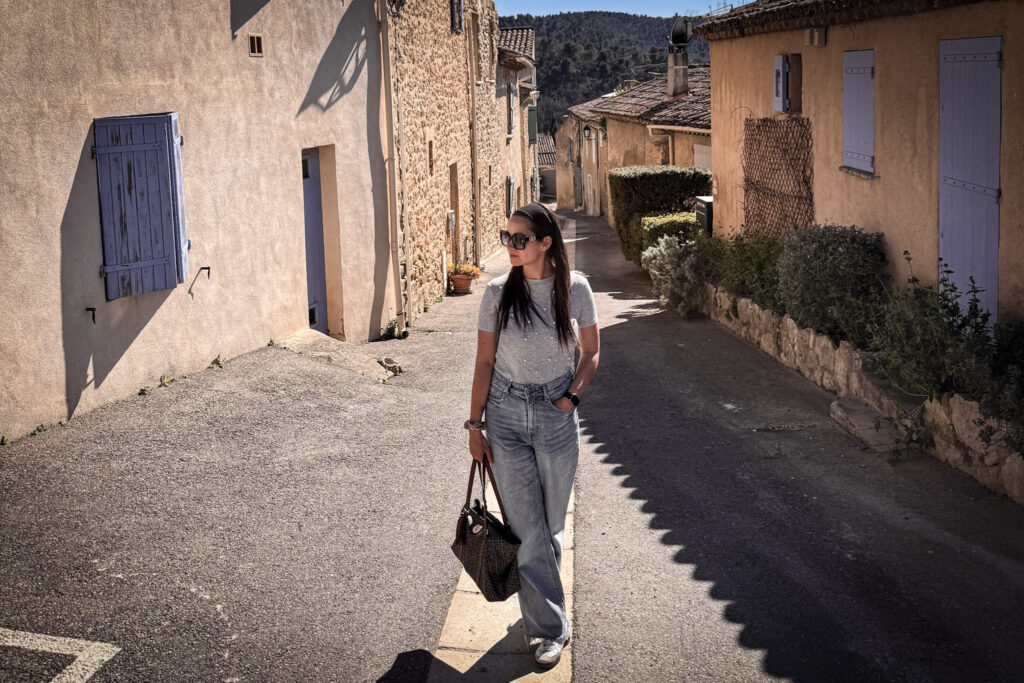
Climb high enough and the village opens up to sweeping countryside views — rolling hills and farmland stretching out below, a nice pause before heading back down through the quiet streets. It’s officially one of France’s “most beautiful villages,” and it’s easy to see why once you’re actually walking it rather than just looking at photos.
Jet Lag Jelly Tip: Ansouis is small enough to see slowly in an hour or two, which makes it a perfect quiet stop to break up a busier day of village-hopping.
10. Le Thor
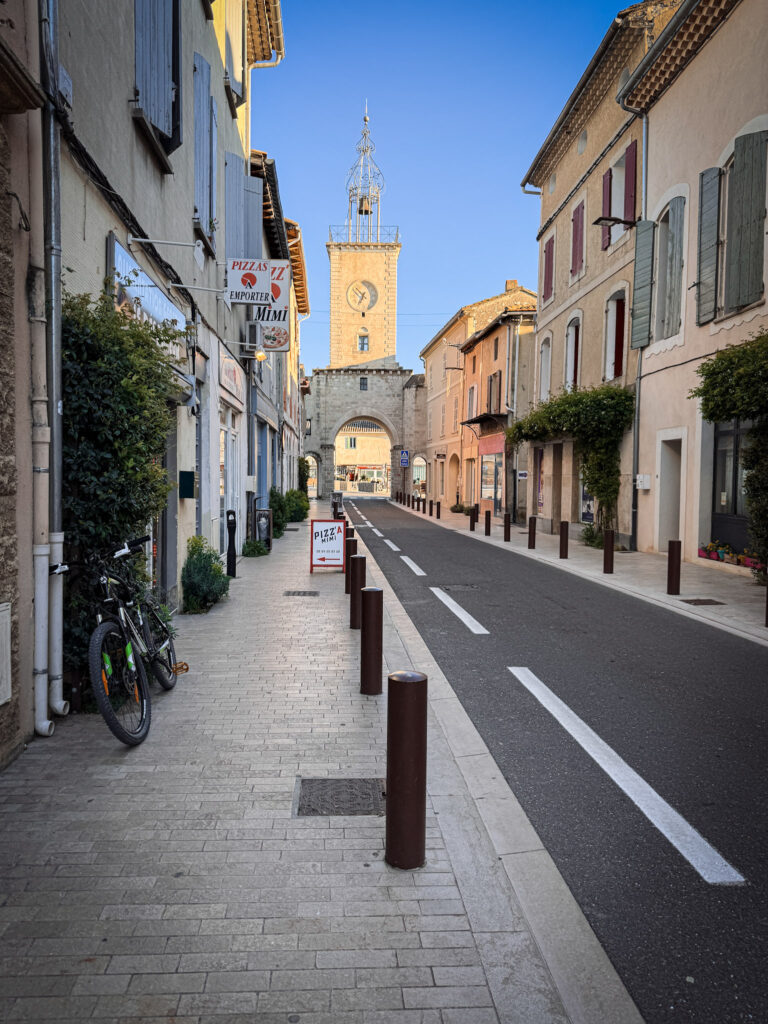
A smaller, more local stop to close the day — the kind of quiet village where you can walk down the main street without passing another tourist, just a scatter of parked bikes and pale stone houses leading up toward the old bell tower in the distance.
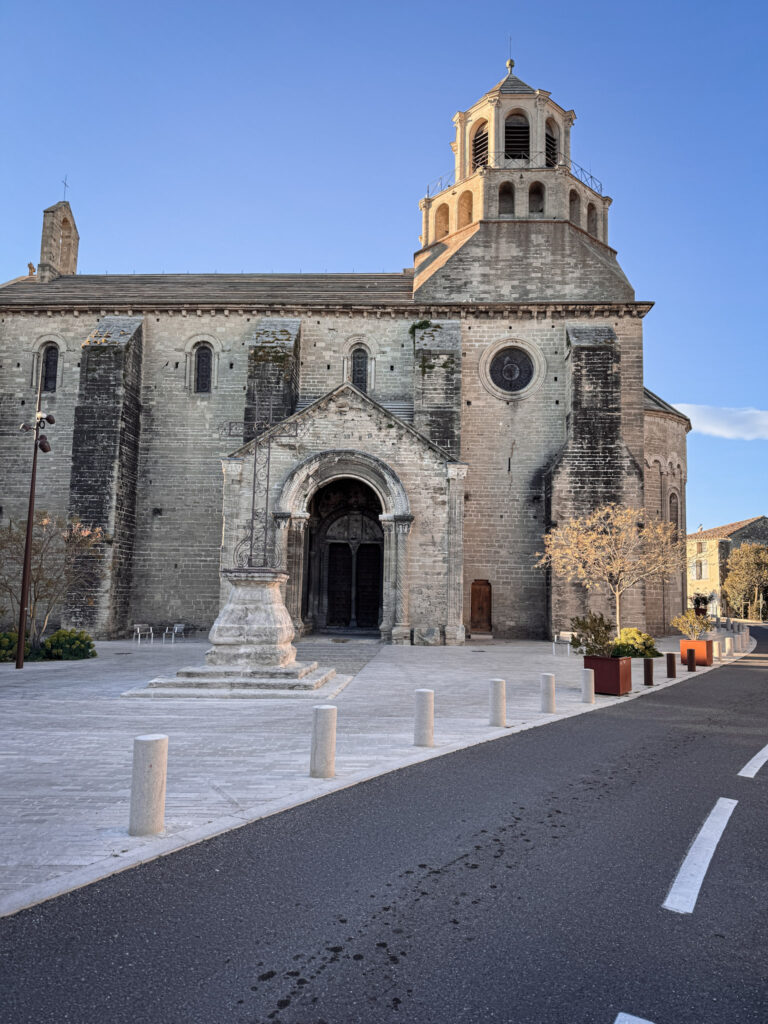
The real landmark here is the 12th-century Église Notre-Dame-du-Lac, its stone facade and rounded Romanesque doorway sitting right on a wide, quiet square. Worth it mainly for the Grottes de Thouzon, a genuine stalactite cave just outside the village, and this church in the town center. Less postcard-famous than the rest of today’s stops, but a nice change of pace.
11. Les Baux-de-Provence
Dramatic in a completely different way from the rest of Provence. Les Baux-de-Provence is a medieval village built directly into and around white limestone cliffs, topped by the ruins of a fortress that has been here since the 10th century — with sheer drops on either side and views that stretch all the way across the Alpilles mountains and the plains below.
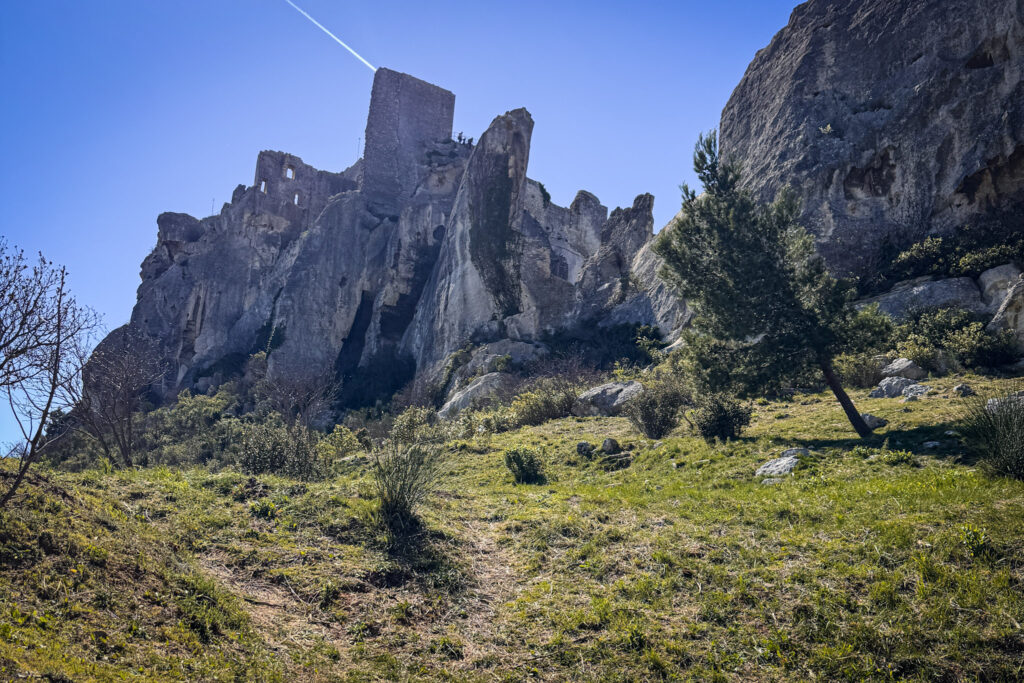
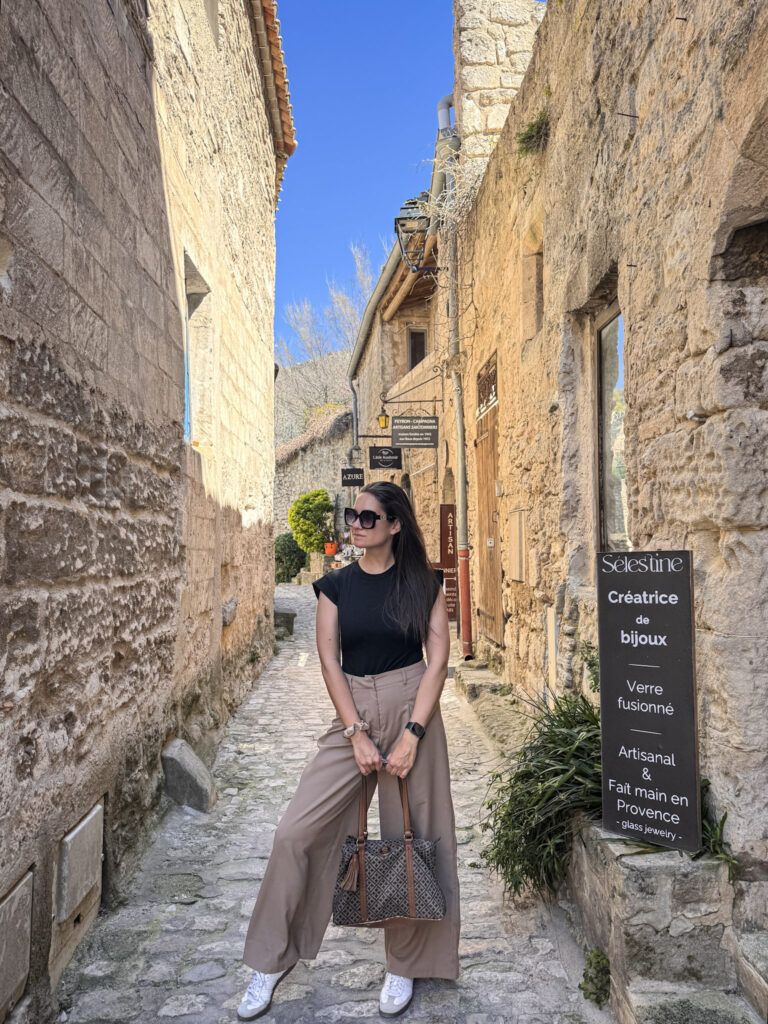
We didn’t go into any museums or exhibitions — just walked. And honestly, that was exactly the right call. The village itself is the attraction. The narrow cobbled lanes winding between stone buildings, the fortress ruins rising above everything, the wind coming off the cliffs, the silence punctuated only by other visitors stopping to take photos — it has an atmosphere that’s hard to put into words and impossible to rush through.
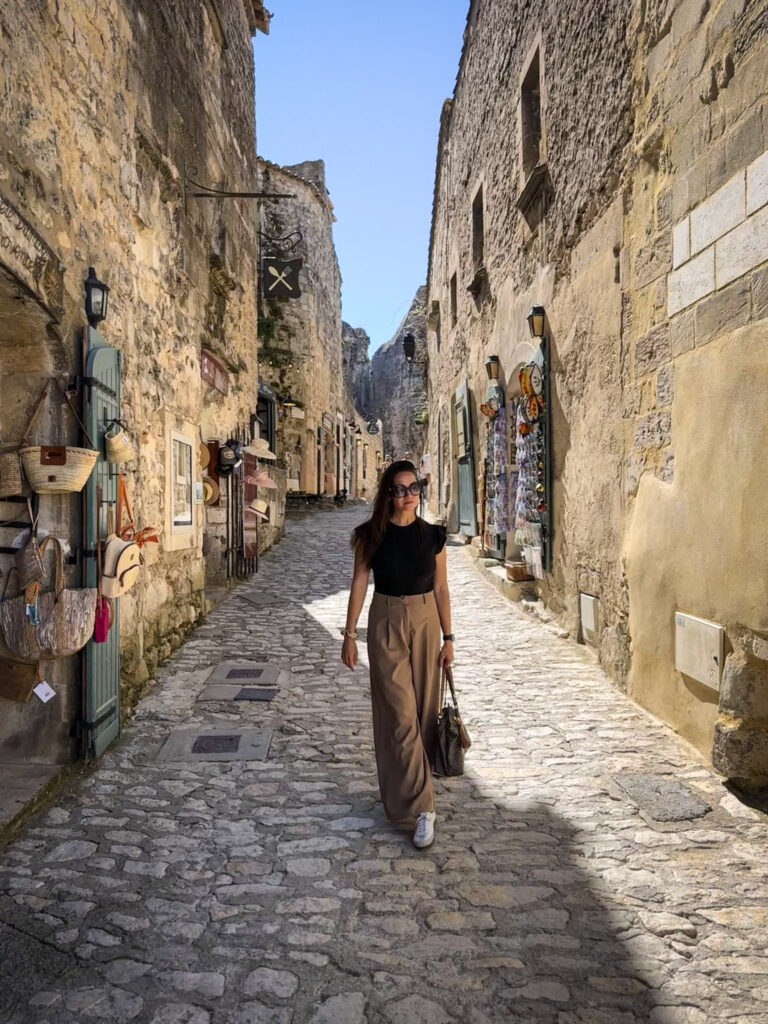
The views from the top of the fortress are extraordinary — on a clear day you can see for miles in every direction, with the silvery olive groves and lavender fields of Provence spread out below you and the dramatic white limestone of the Alpilles ridge stretching east. It’s the kind of place where you climb up meaning to spend 20 minutes and end up staying for two hours.
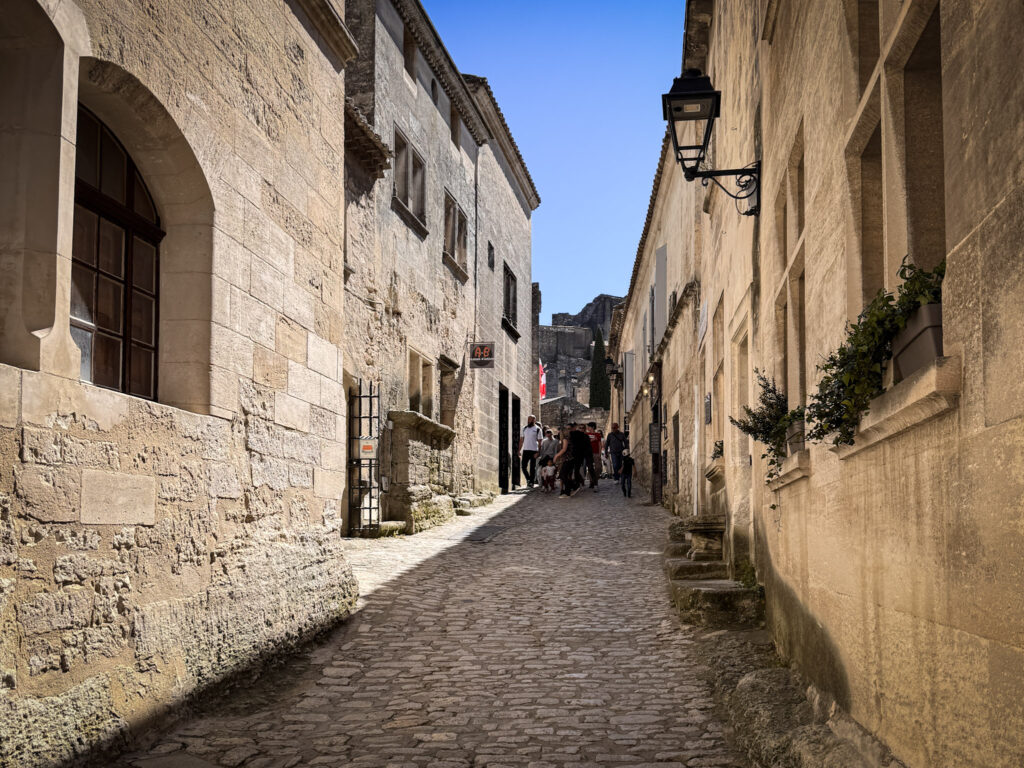
Fun Fact: Les Baux-de-Provence was once one of the most powerful lordships in southern France, controlling over 70 towns across the region at the height of its influence in the 12th and 13th centuries. The village name comes from "baou" — the Provençal word for rocky spur — and the mineral bauxite was named after this village where it was first discovered in 1821.

Useful Information: Entry to the village itself is free — you can wander the streets and take in the views at no cost. Entry to the Château des Baux fortress ruins costs €10 for adults, children under 7 free, open daily except December 25th. Opening hours vary by season: January, February, November, December 10am–5pm; March and October 9:30am–6pm; April, May, June, September 9am–7pm; July and August 9am–7:30pm. There's a paid car park at the bottom of the village — the streets are too narrow for cars to drive through. A combined Pass Baux-de-Provence covering both the Château and the Carrières des Lumières (the famous light show nearby) costs €19 for adults — worth considering if you're planning to do both

Jet Lag Jelly Tip: Go in the late afternoon when the light turns golden and hits the white limestone cliffs in the most extraordinary way — and most of the day-tripper coaches have already left. The village has a completely different, much more peaceful atmosphere after 4pm, and the views from the fortress at golden hour are worth the entire detour.
12. Eygalières
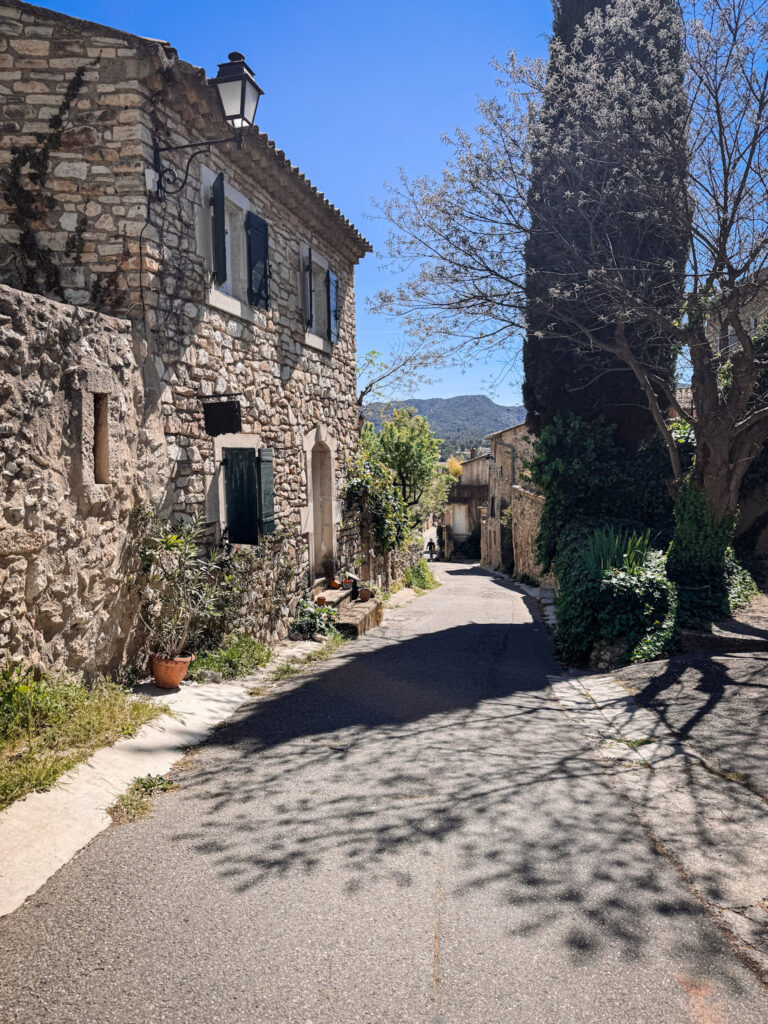
Widely considered one of the most beautiful villages in the Alpilles, and quieter than Saint-Rémy despite sitting just 10km away. The kind of village where you park the car, start walking, and immediately slow down to half your normal pace without even deciding to.
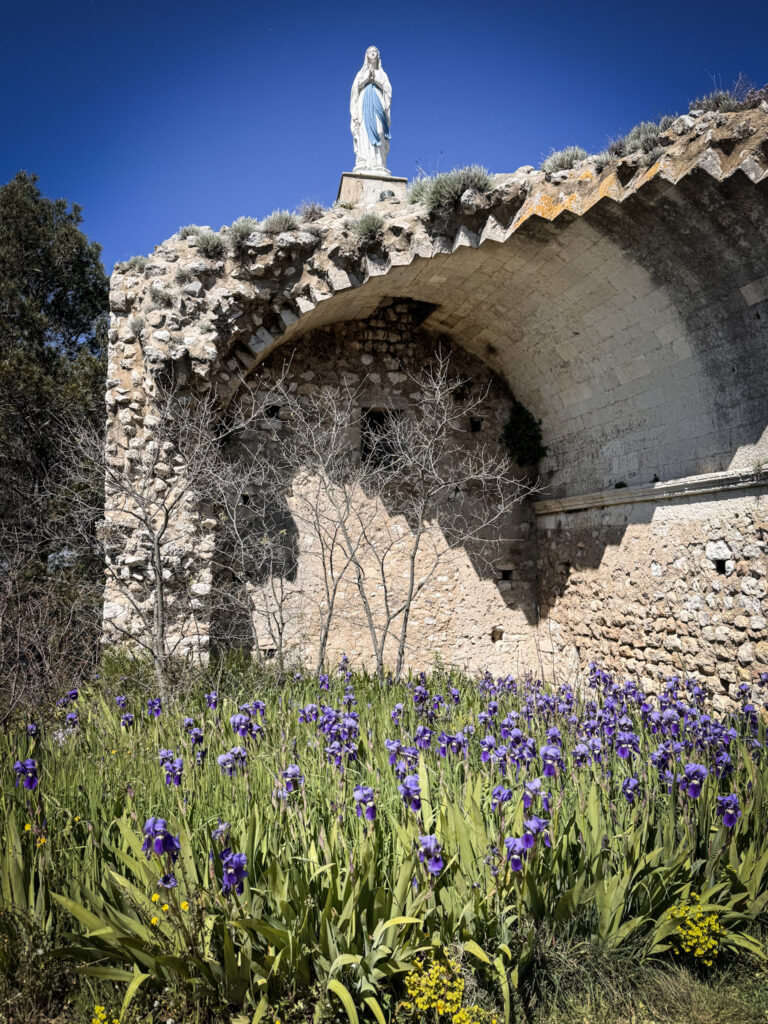
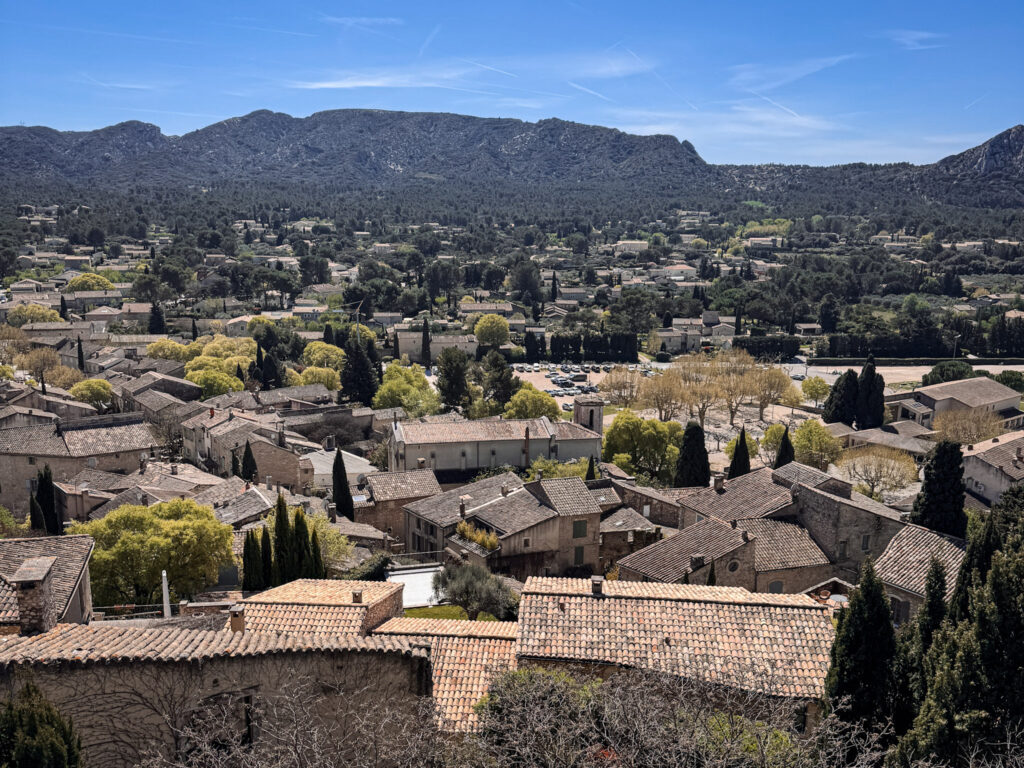
The real icon here is the Chapelle Saint-Sixte — a small Romanesque chapel on a hilltop about 2 kilometres east of the village, framed by cypress and almond trees on a rocky plateau, that’s basically the quintessential postcard image of Provence. Built in the 12th century on the site of an ancient sanctuary close to a spring, it stands on a rocky plateau surrounded by cypress trees, creating a bucolic setting that makes it one of Provence’s best-known images. It really does look exactly like every Provence travel book cover you’ve ever seen. Except quieter. And with the Mistral occasionally threatening to take your hat off.
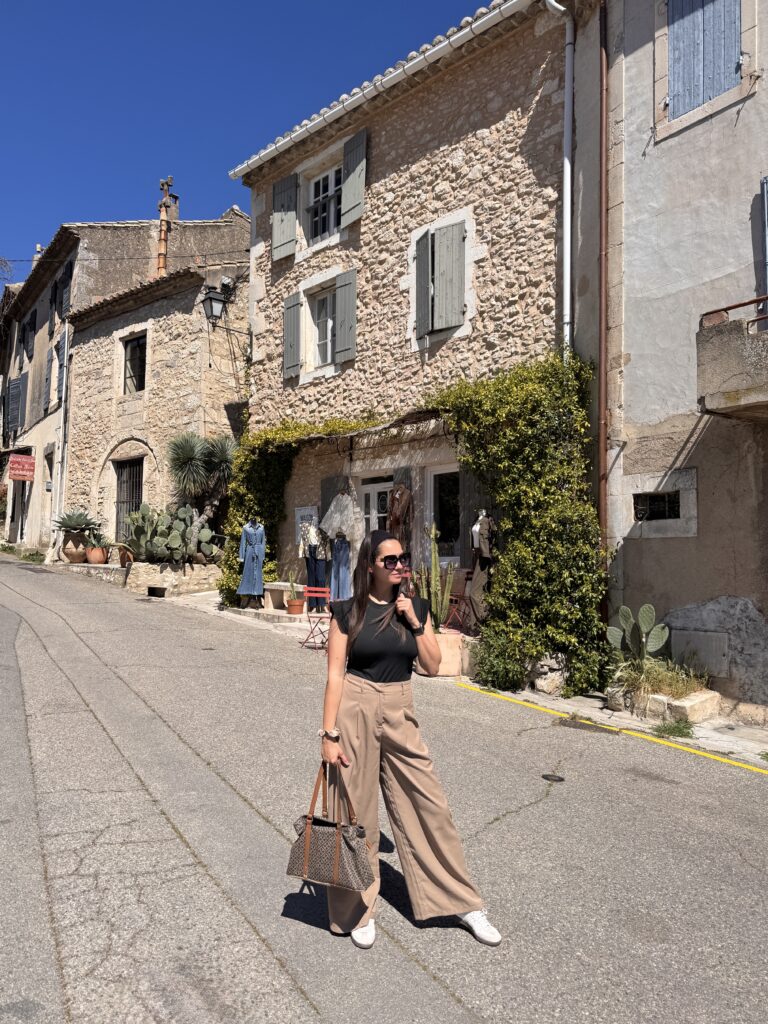
Beyond the chapel, the village itself is worth at least an hour of unhurried wandering — the medieval streets, the old donjon, the views over the olive groves, and the general atmosphere of a place that hasn’t tried too hard and is all the better for it. Brad Pitt and Angelina Jolie used to have a farmhouse nearby — which tells you something about the calibre of the countryside, even if the village itself remains refreshingly unbothered about it.
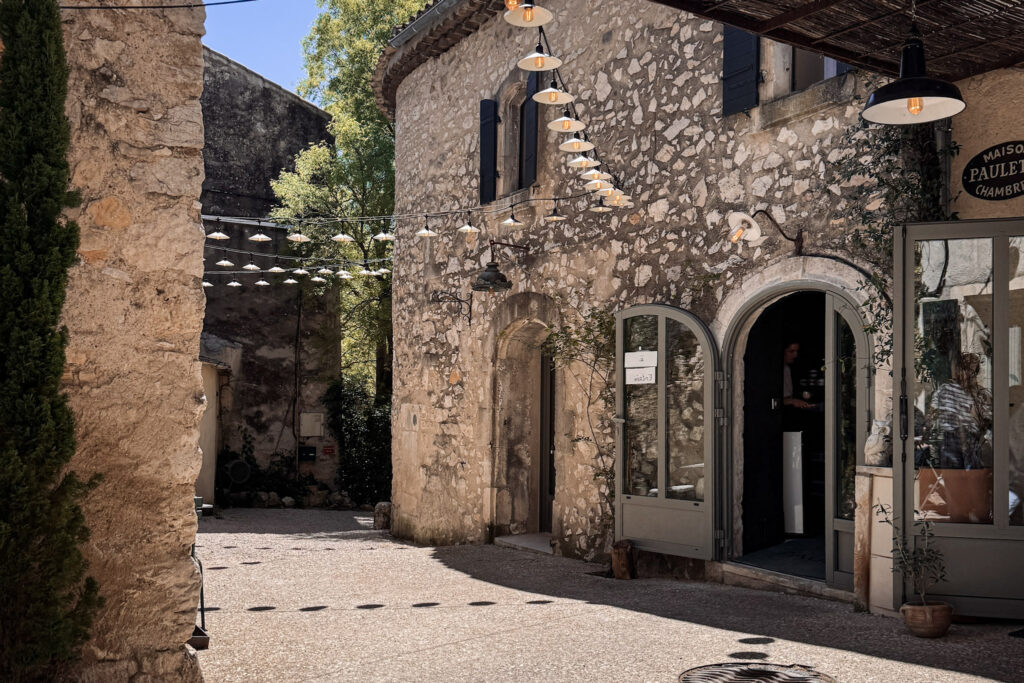
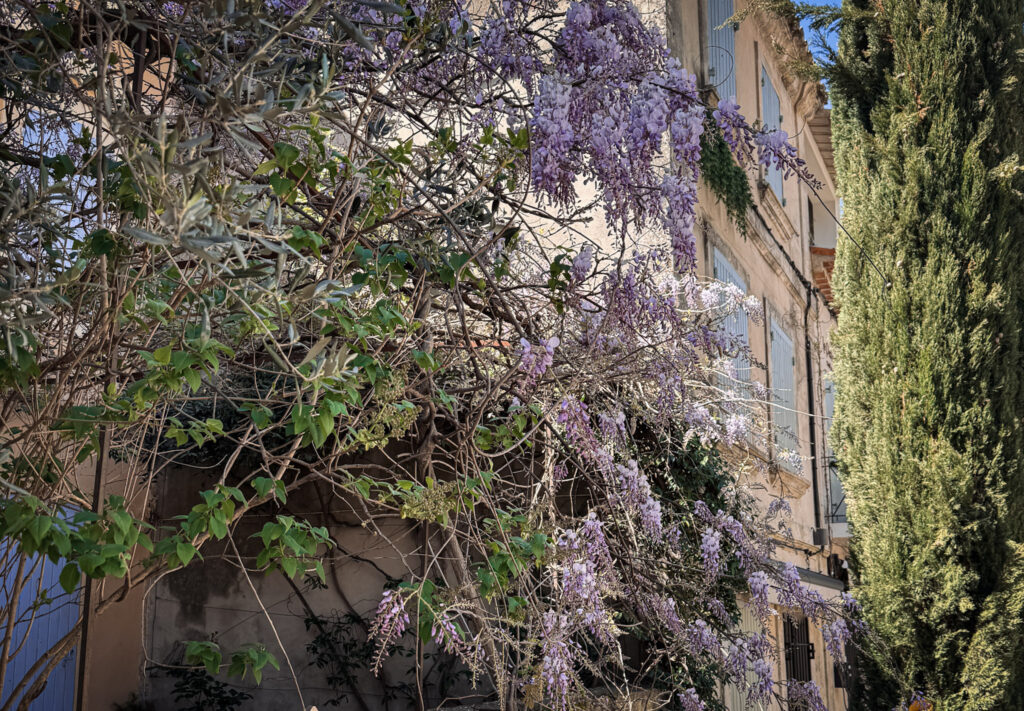
Fun Fact: A weekly mass is celebrated at the chapel on Thursday mornings from the first Thursday after Easter until All Saints' Day, and every year on Easter Tuesday the village holds a traditional pilgrimage from the parish church up to the chapel. The chapel has been standing on this hillside since before 1155 — it's mentioned in a papal bull from that year.

Useful Information: The Chapelle Saint-Sixte is free to enter and open daily, year-round. The chapel is about a 2km drive or a 25-minute walk east of the village centre toward Orgon — follow the signs from the village. Eygalières itself is about 10km from Saint-Rémy-de-Provence and 20 minutes from Les Baux-de-Provence, making it an easy addition to any Alpilles day.

Jet Lag Jelly Tip: Visit the chapel in the late afternoon when the low sun catches the limestone and turns the cypress trees golden — and most of the day visitors have already left. Outside peak season, it's entirely possible to have the whole place to yourself — just be prepared for the Mistral, which funnels through here with enthusiasm on windy days.
13. Saint-Rémy-de-Provence
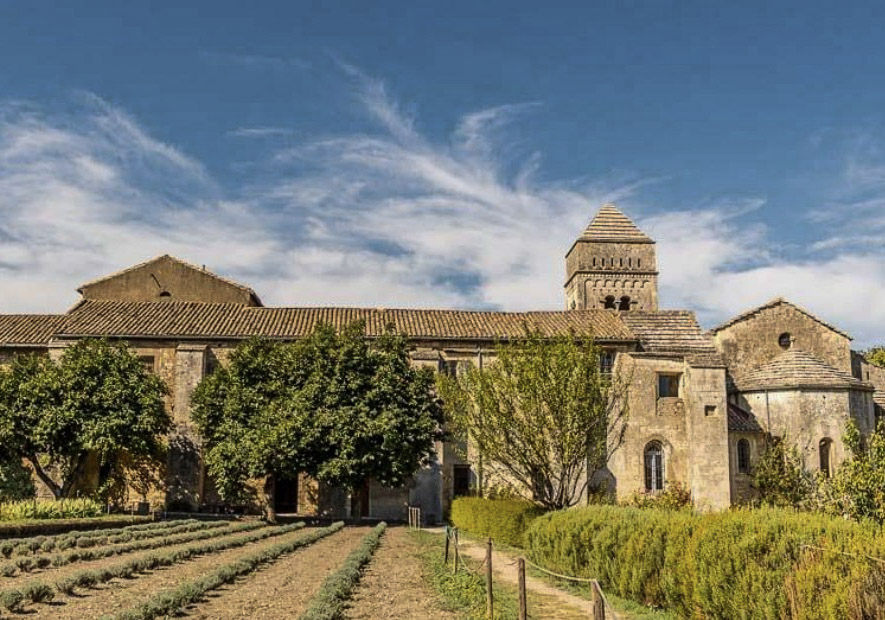
This is where Van Gogh voluntarily admitted himself to the Saint-Paul-de-Mausole asylum and painted some of his most famous works, including The Starry Night. The site is open to visitors, and the surrounding town has a relaxed, market-town feel with excellent restaurants. The Roman ruins at Glanum, just outside town, are also worth an hour if you have the time.
Useful Information:

- Adult admission around €10; combined discount tickets available with the nearby Glanum Roman site
- Budget about an hour for the cloister, the reconstructed Van Gogh room, and the Valetudo art gallery
- A free, signposted walking trail through town starting at the Estrine Museum leads to the monastery, marking the exact spots where several of Van Gogh's paintings were made — worth doing on your way there rather than driving straight in

Fun Fact: Van Gogh painted over 150 works during his year at Saint-Paul-de-Mausole — a walking trail through town marks the exact spots where several of his most famous paintings were made.
Where to Stay
We stayed in Le Thor, and it turned out to be a smart home base — central enough to reach pretty much every village on this list without spending half your trip in the car. It’s not a destination in itself, but that’s kind of the point: it’s the logistics answer to “how do I see 13 villages without losing my mind.”
If you’re mapping out your own Provence itinerary, look for something similarly central — you want easy access to the Luberon villages, L’Isle-sur-la-Sorgue, and the Vaucluse area without backtracking across the region every day.
Browse places to stay in Le Thor or the wider Provence region.
A Note on Lavender Season
No Provence post is complete without mentioning the lavender fields, even though technically none of the villages above are the main lavender destinations (those sit a bit further east, around Valensole and Sault). Still, if timing your trip around lavender season is a priority, it’s worth planning your dates carefully — the bloom window is short and varies significantly by altitude.
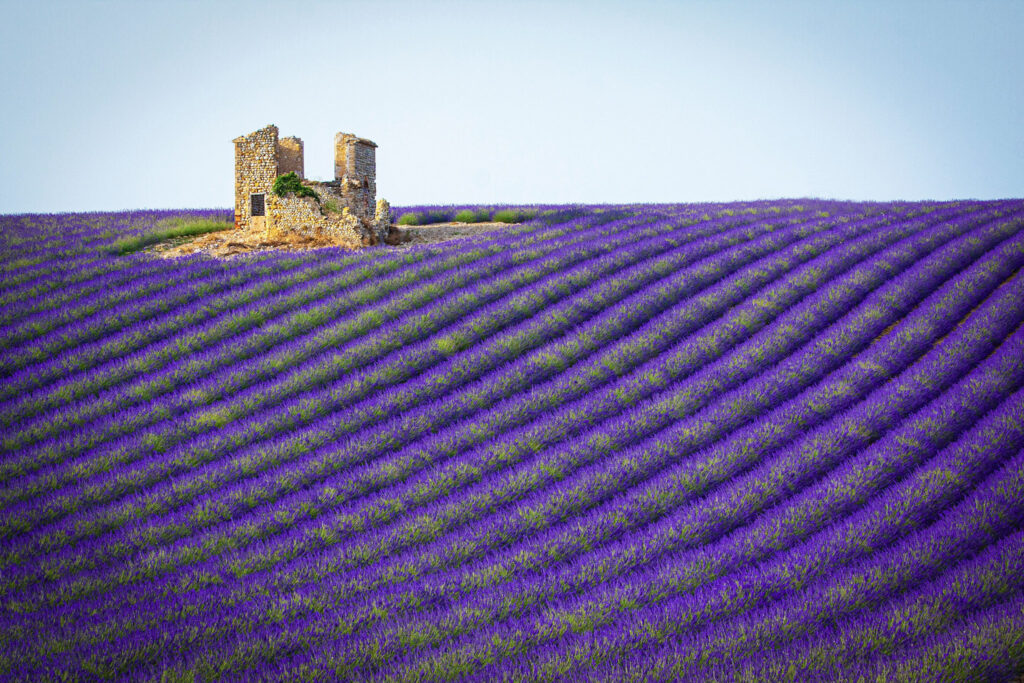
- Valensole Plateau (the most photographed, postcard-famous fields): blooms mid-June through mid-July, peaking in the first two weeks of July
- Sault (higher altitude, near Mont Ventoux, known as the "Lavender Capital"): blooms later, through July into mid-August
- Abbaye de Sénanque, near Gordes (the most convenient lavender spot if you're already doing this Luberon route): typically in bloom late June through mid-July, with the fields framing the 12th-century abbey for one of the most photographed shots in Provence

Jet Lag Jelly Tip: If lavender is the priority, aim for the first two weeks of July — it's the sweet spot where both the low-altitude fields (Valensole, Sénanque) and the higher ones (Sault) have a good chance of overlapping in bloom. Go any earlier and you risk buds instead of full purple; go into August and the lower fields are often already harvested. Early morning or golden hour also makes a genuine difference for photos — midday sun flattens the color.
FAQ
When is the best time to see lavender fields in Provence? The first two weeks of July, when both the lower-altitude fields (Valensole, Sénanque) and higher ones (Sault) tend to overlap in bloom. Earlier and you risk seeing buds instead of full purple; later into August and the lower fields are often already harvested.
Do you need a car to visit Provence’s villages? Yes — the villages sit close together but aren’t well connected by public transport. A car (and skipping the GPS shortcuts for the scenic departmental roads) is the best way to see several in one day. Renting a car from Marseille Airport is the easiest way to start.
How many days do you need to see Provence’s villages? A week gives you room to properly explore the Luberon villages, L’Isle-sur-la-Sorgue, and the Alpilles without rushing — though even a few days covers the highlights if you pick a central base.
Where should I stay to explore Provence’s villages? Somewhere central, like Le Thor — it’s not a destination in itself, but it puts nearly every village on this list within easy reach without spending half your trip in the car.
Are the Abbaye de Sénanque lavender fields near Gordes? Yes — it’s the most convenient lavender spot if you’re already doing a Luberon route, typically blooming late June through mid-July, with the fields framing the 12th-century abbey.
Summary
Provence rewards slow travel more than almost anywhere else we’ve been — these villages start looking similar if you rush between them, but give each one even an hour and they all reveal something different: a chapel here, an ochre cliff there, a castle with a scandalous past two villages over. Rent a car, skip the GPS shortcuts in favour of the scenic departmental roads, and don’t over-plan the days. The best stops on this list were the ones we almost drove past.
Exploring more of Southern Europe? Check out my Around Alicante & Costa Blanca, The Best Places to Visit Near Málaga & Costa del Sol, and Top 10 Places in Southeastern France guides too.