
This post contains affiliate links. If you book through one, I may earn a small commission at no extra cost to you — it helps keep Jet Lag Jelly running. Read my full affiliate disclosure for more.
Some destinations you ease into. Egypt is not one of them. From the moment you’re standing in front of the Great Pyramid — genuinely standing there, not looking at a photo of it — it’s clear this trip is going to be a lot to take in, in the best possible way.
Cairo Itinery
1. Pyramids of Giza
2. El Fayoum Oasis
3. Wadi El Rayan Waterfalls
4. The Egyptian Museum
5. Cruise on the Nile
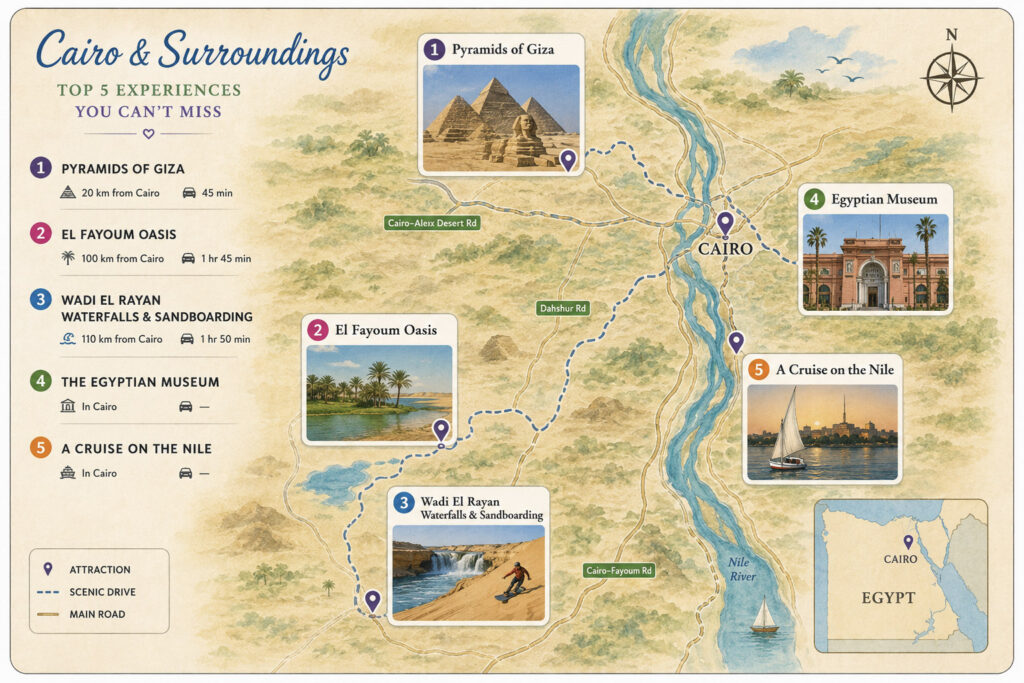
3 days in Cairo isn’t enough to see everything the country has to offer, but it’s enough to cover the essentials: the pyramids, a proper desert adventure, and a slow, golden-hour cruise down the Nile.
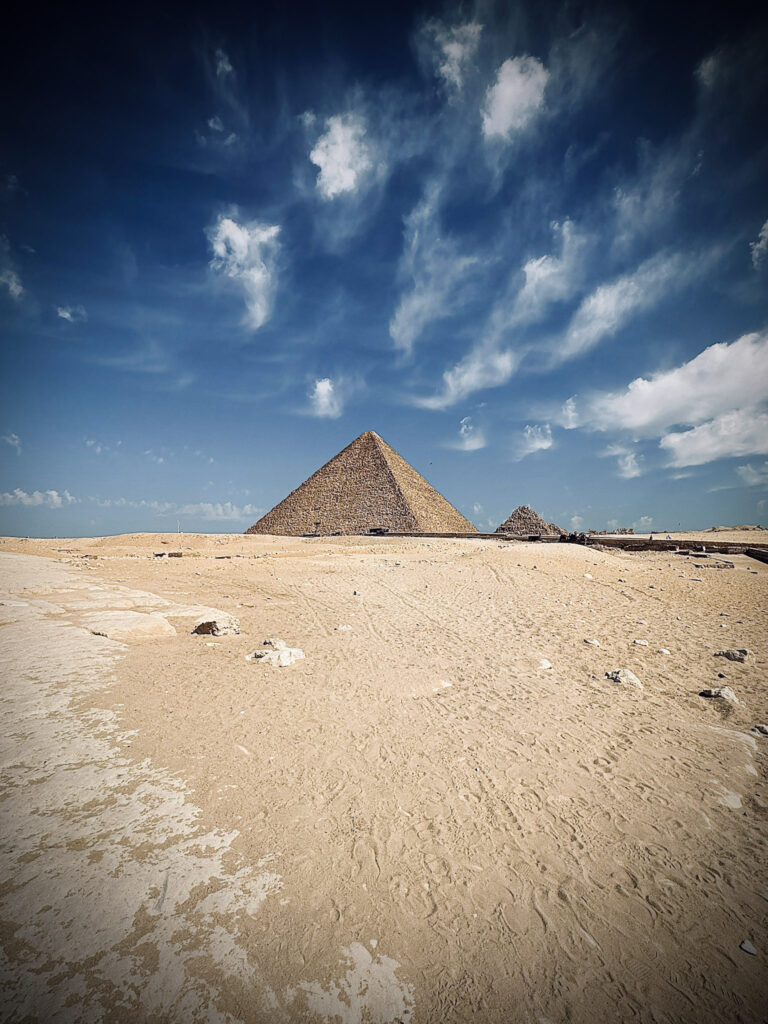
Here’s how we spent it.
Day 1: The Pyramids of Giza, with a Private Guide
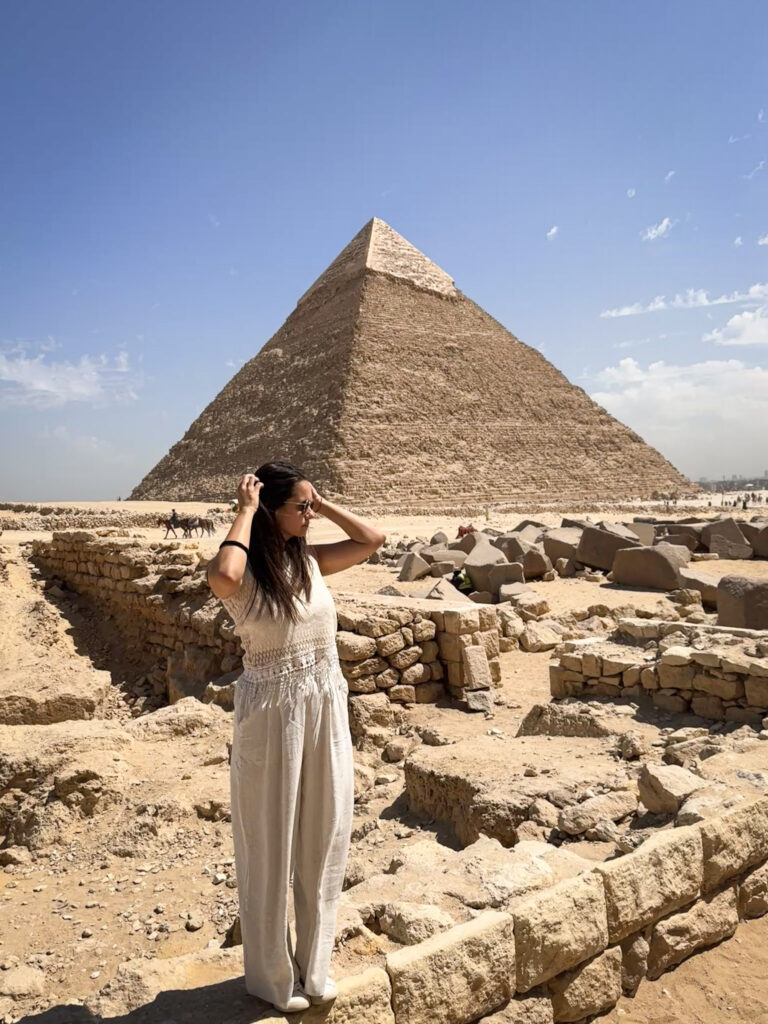
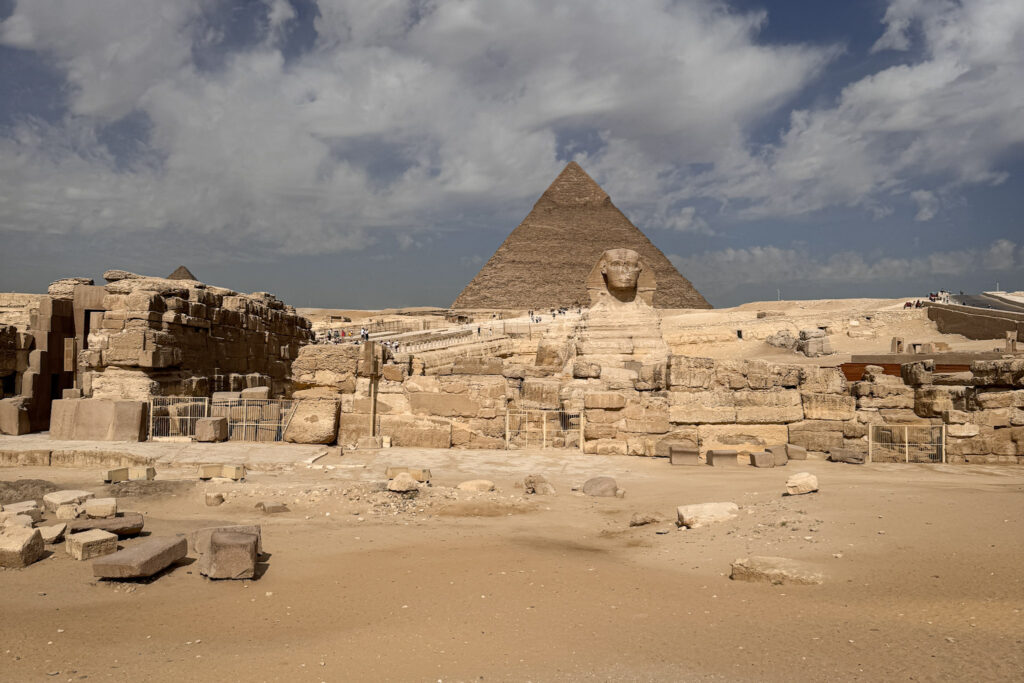
There’s no easing into this one — day one was all about the Pyramids of Giza, and we booked a private guide for it, which made a genuinely huge difference. Having someone who actually knows the history walk you through the Great Pyramid, the Sphinx, and the surrounding complex turns what could be a “big rocks, take a photo, move on” experience into something that actually sticks with you.
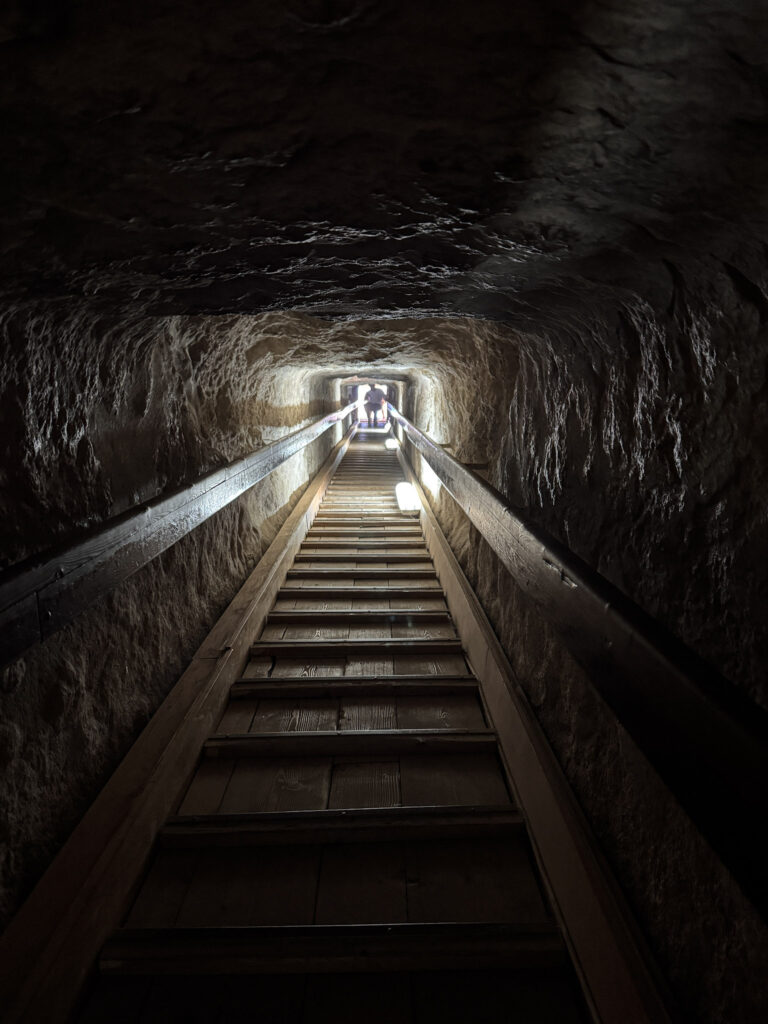
The Great Pyramid of Khufu is the oldest of the seven ancient wonders of the world, and the only one still standing — built around 2560 BC as a tomb for the pharaoh Khufu, and standing as the tallest man-made structure on Earth for almost 3,800 years. We went inside, climbing through the narrow, steeply inclined passageway up into the burial chamber — it’s not for the claustrophobic, but standing inside a structure that old, that deep into the stone, is something else entirely.
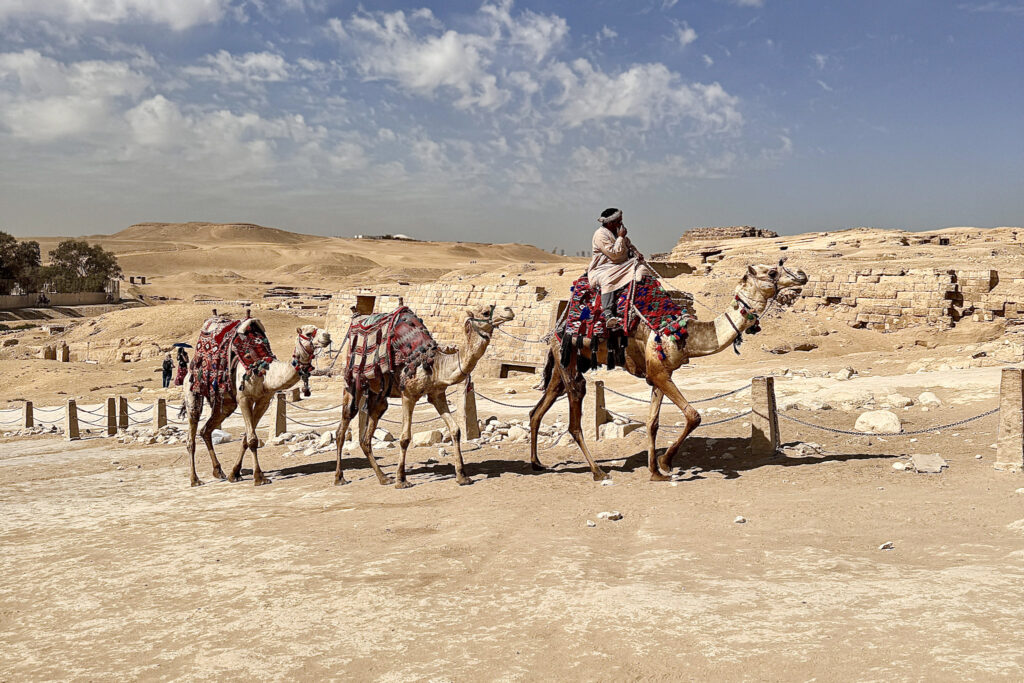
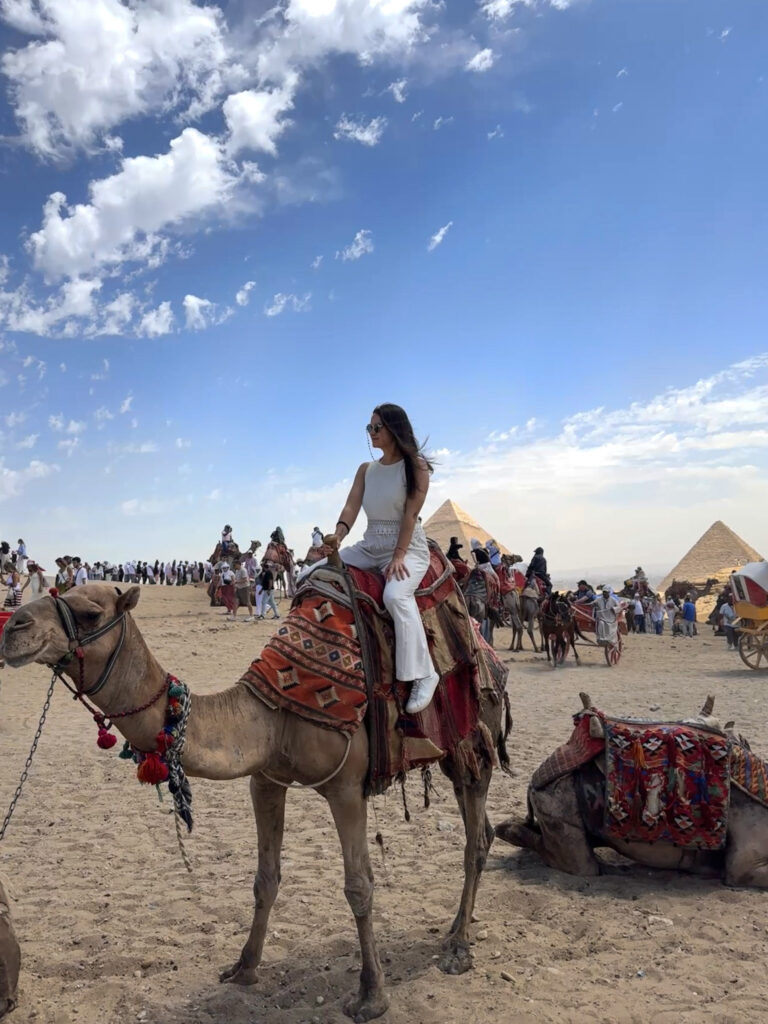
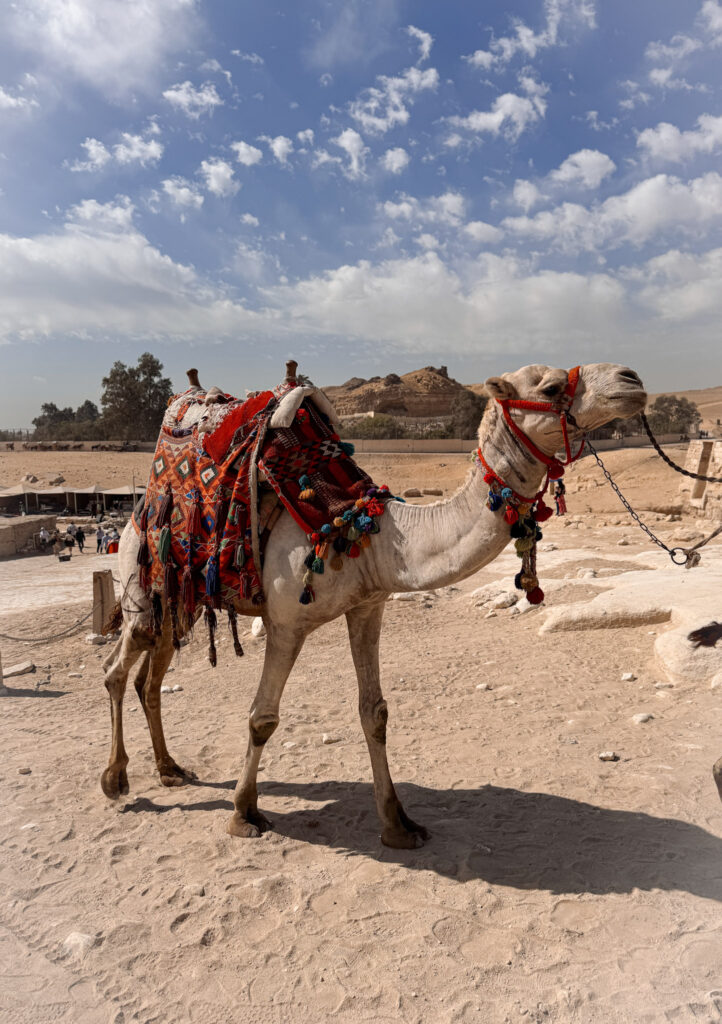
I also rode camels across the sand with the pyramids in the background, which is exactly as touristy and exactly as fun as it sounds — a slow, swaying ride that gives you a completely different vantage point of the complex than you get on foot.
From there we made our way to the Great Sphinx, the massive limestone statue with a lion’s body and a human head, believed to represent the pharaoh Khafre and thought to have been built as guardian of the pyramid complex. Despite its fame, a surprising amount about the Sphinx remains genuinely unknown — including exactly when it was built and what its original nose looked like before centuries of erosion and, according to some theories, deliberate damage took it.
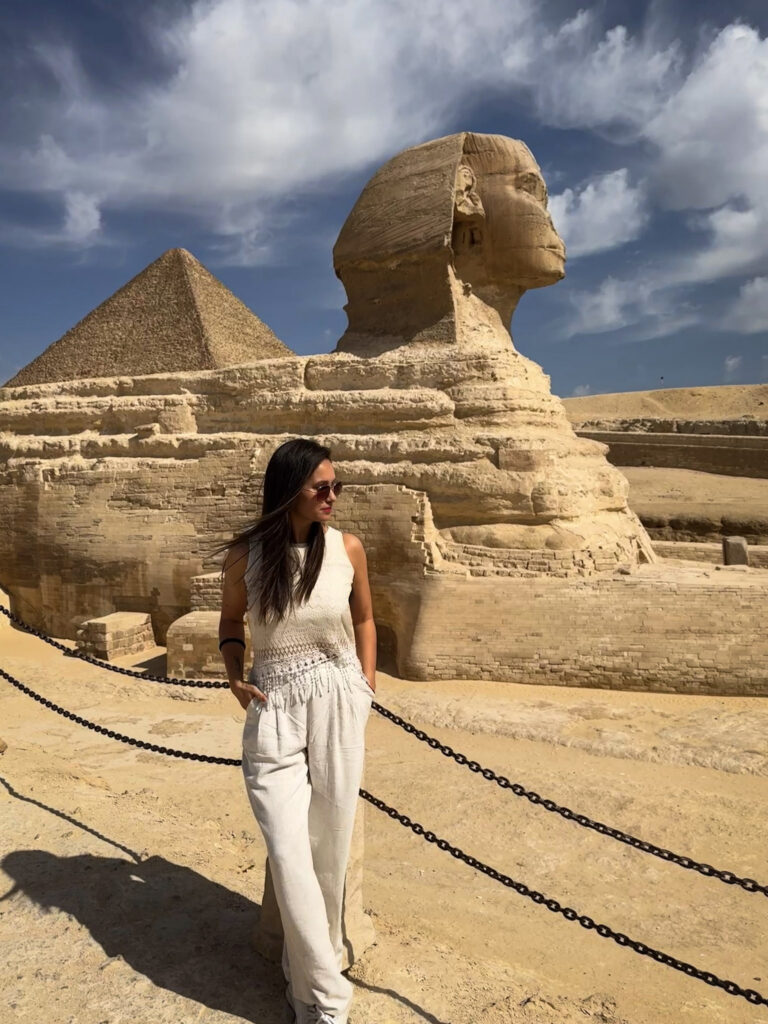
Jet Lag Jelly Tip: Go early. The heat and the crowds both build fast as the day goes on, and the light in the first couple of hours is far better for photos than the harsh midday sun. Also, entry inside the Great Pyramid itself requires a separate ticket (roughly 1,500 EGP) on top of general admission — worth confirming with your guide in advance if it's something you want to do.

We booked: Giza Pyramids and Sphinx Private Guided Tour.
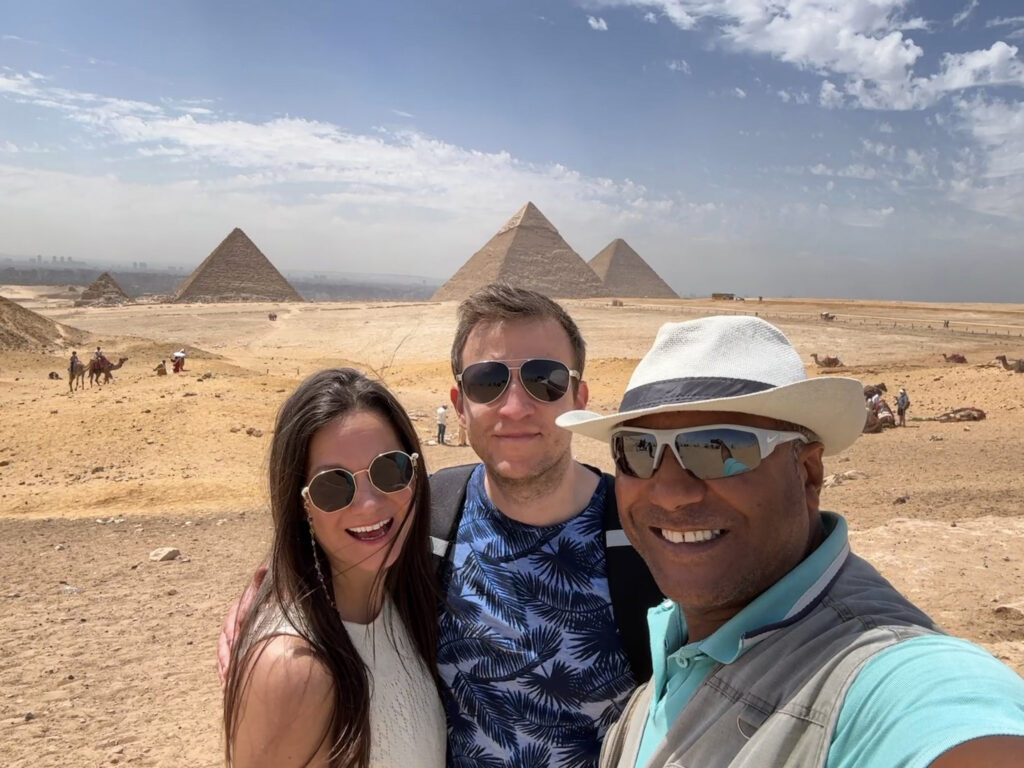
Day 2: El Fayoum Oasis, Wadi El Rayan Waterfalls & Sandboarding
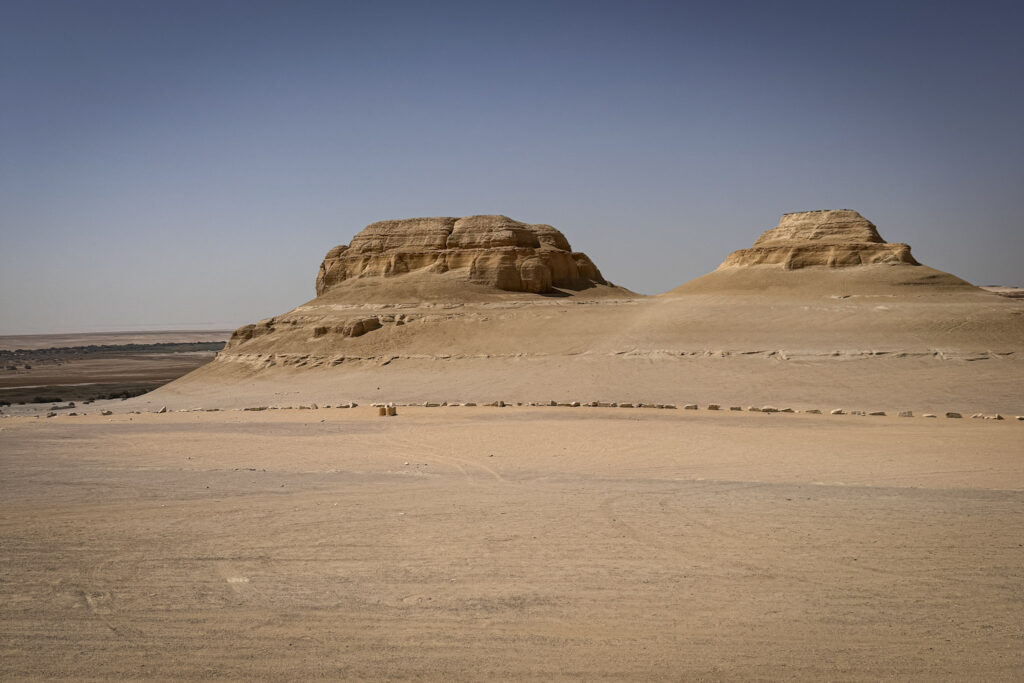
Day two was a full switch of scenery — a private tour out to El Fayoum Oasis, Egypt’s largest oasis, about 90 minutes southwest of Cairo. Unlike most oases, Fayoum isn’t fed by desert springs at all — it’s watered by the Nile via an ancient network of canals, some dug thousands of years ago, which is part of why the region has been inhabited since ancient times.
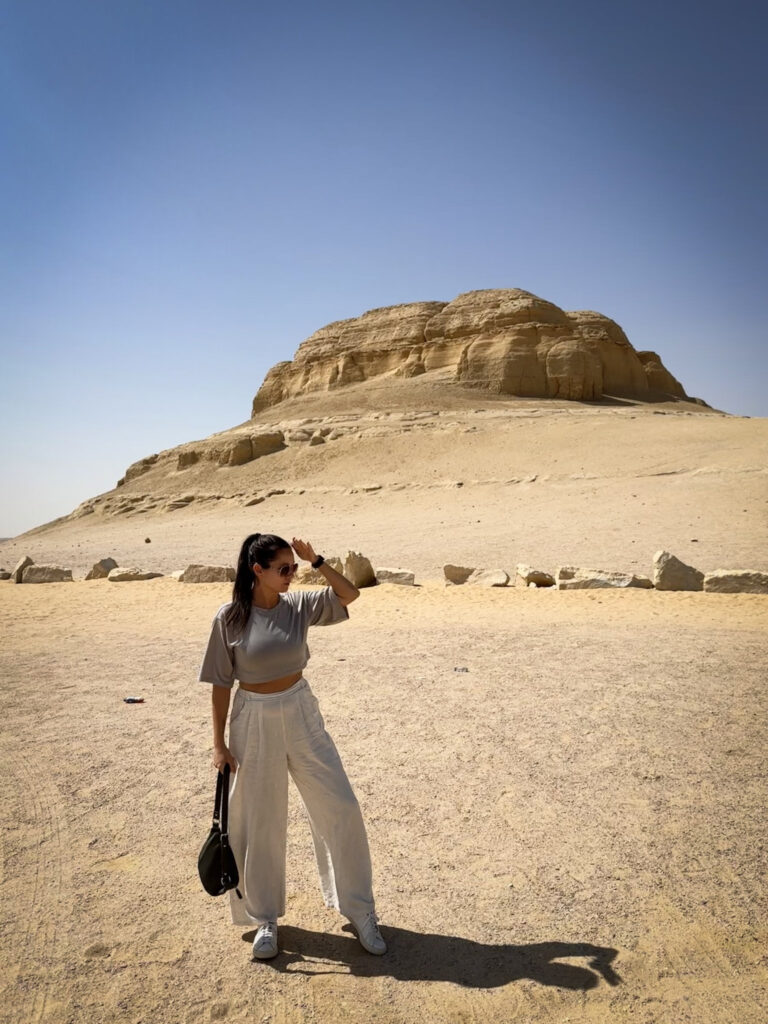
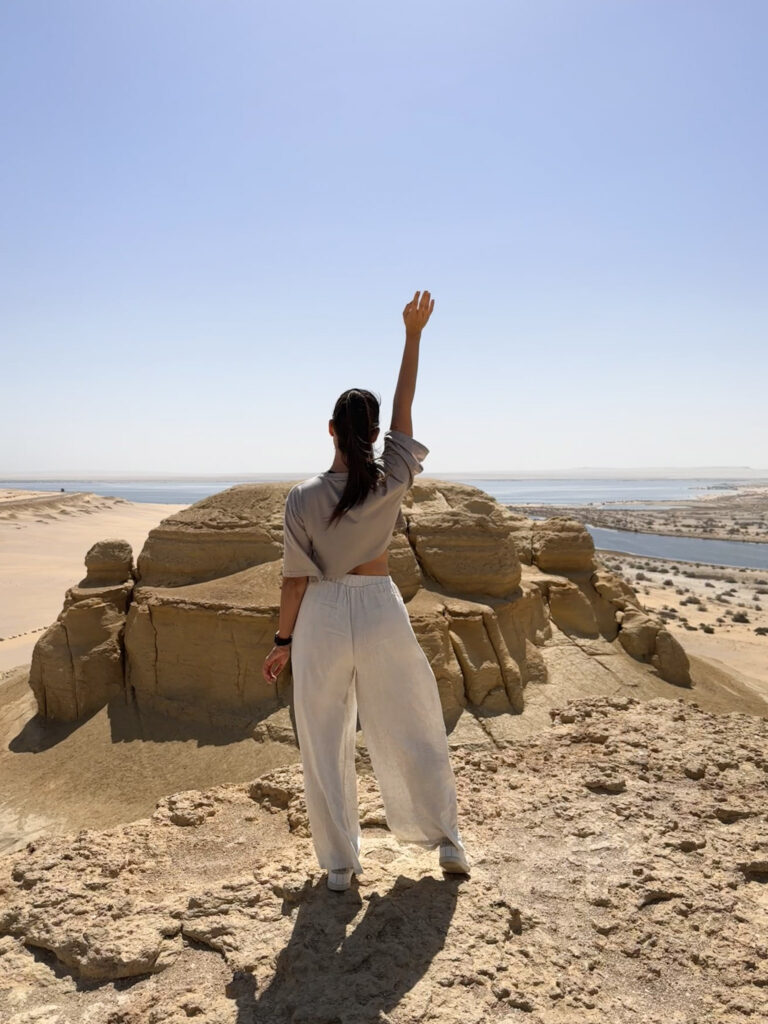
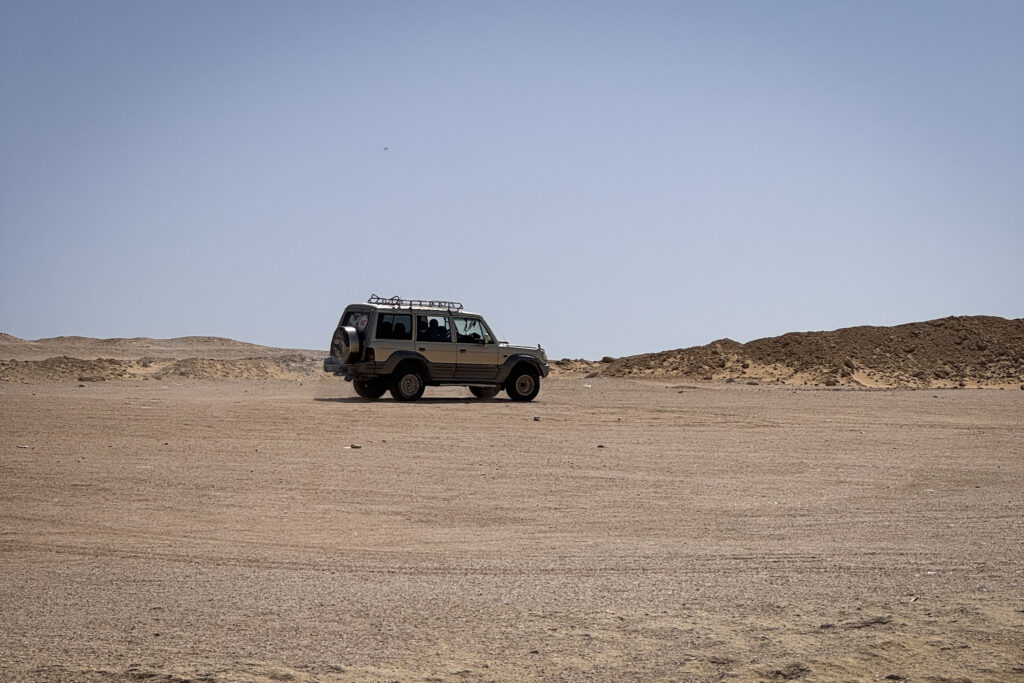
We swapped the car for a 4×4 jeep partway through the day to get out into the more remote desert stretches, bumping along past sculpted sandstone formations rising straight out of the flat desert floor — the kind of otherworldly landscape that makes you forget you’re only a couple of hours from Cairo.
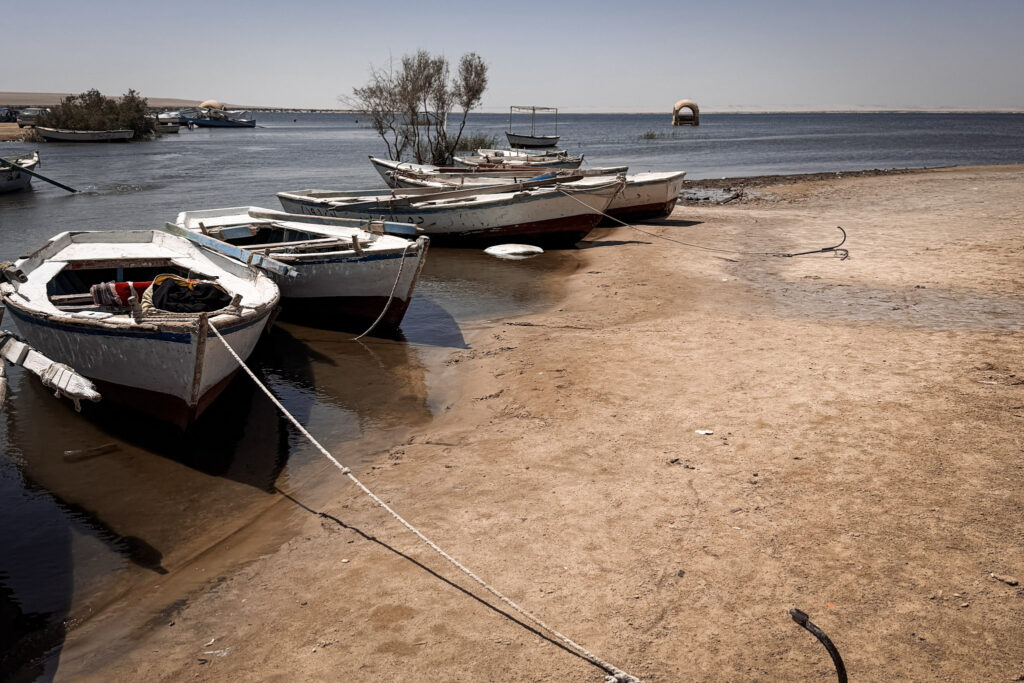
Along the way we passed Lake Qarun, with small wooden fishing boats pulled up along its shore, still very much a working lake rather than just a scenic backdrop.
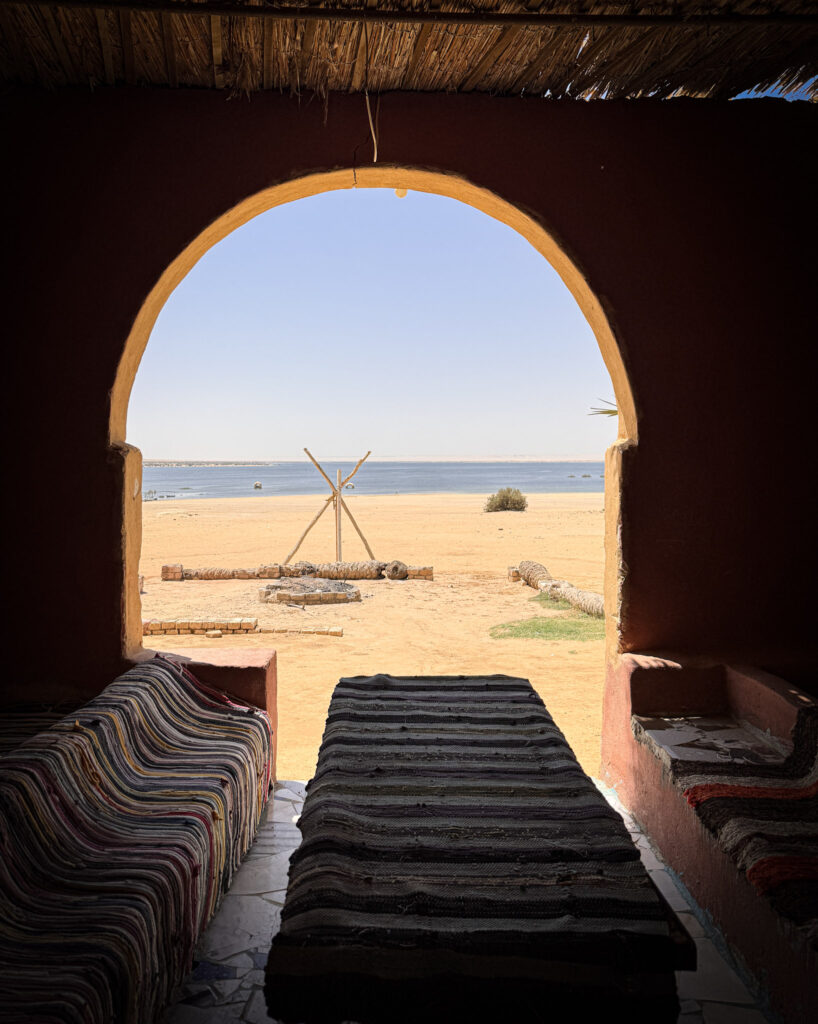
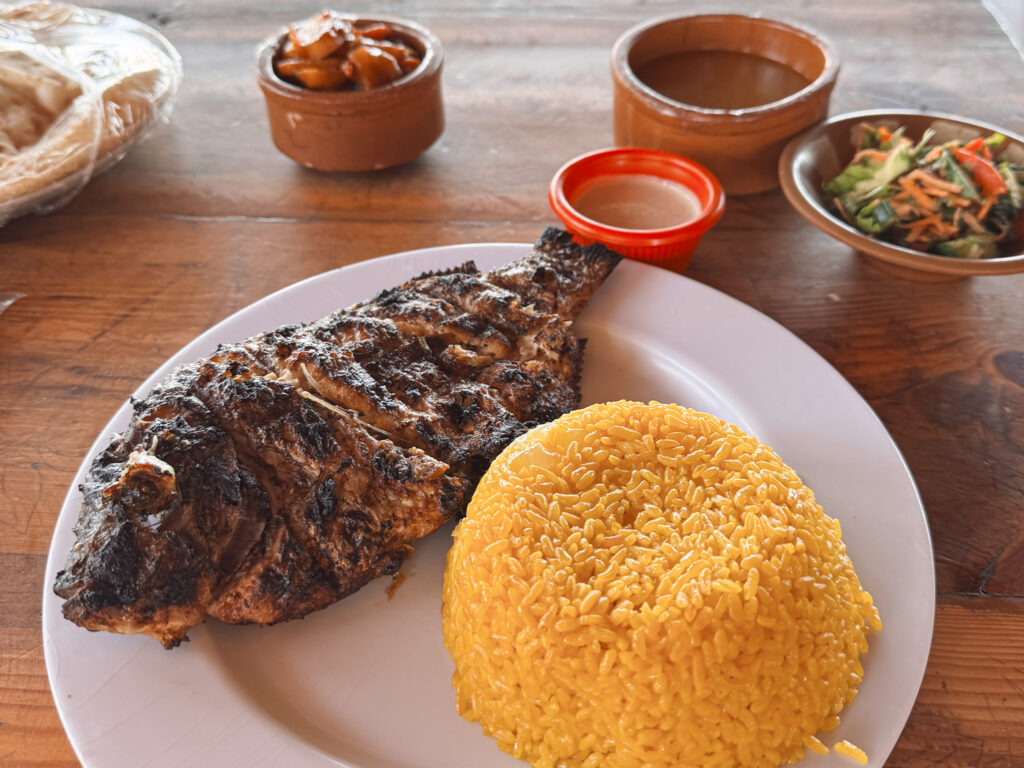
We stopped for lunch at a traditional mudbrick lodge overlooking the water — the kind of place with woven rugs for seating and a thatched roof keeping the sun out — and had genuinely delicious grilled fish and rice, fresh and simple, and exactly the kind of meal you want in the middle of a long desert day.
From there we continued on to Wadi El Rayan and its waterfalls — Egypt’s only natural waterfalls. They weren’t naturally occurring in the geological sense, though: they were formed in 1973 when engineers redirected excess agricultural drainage water, which had been overwhelming Lake Qarun, into a nearby desert depression through a 9-kilometer channel and an 8-kilometer tunnel carved through the desert. The result is two connected lakes joined by cascading waterfalls, now a protected area since 1989, home to rare wildlife like the slender-horned gazelle and fennec fox.
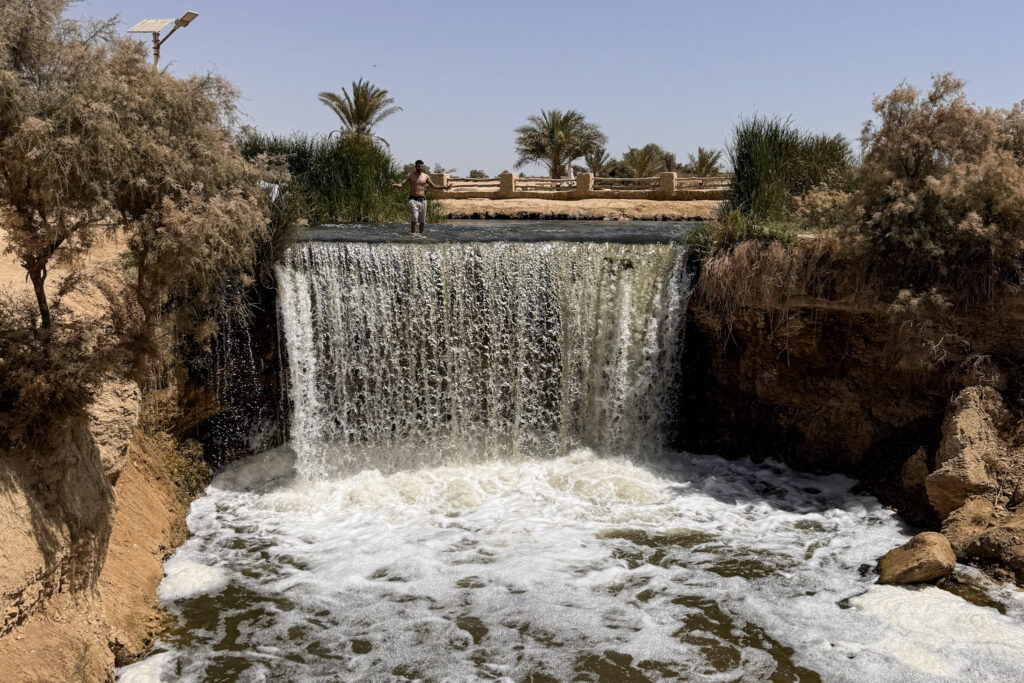
We climbed up to a rocky outcrop overlooking the whole scene — golden dunes on one side, the blue-green water of the lake stretching out on the other — before heading down to the dunes themselves for the part we didn’t expect to love as much as we did: sandboarding. Strapping in and sliding down a dune is exactly as much fun as it sounds, even if the climb back up afterward is a proper workout.
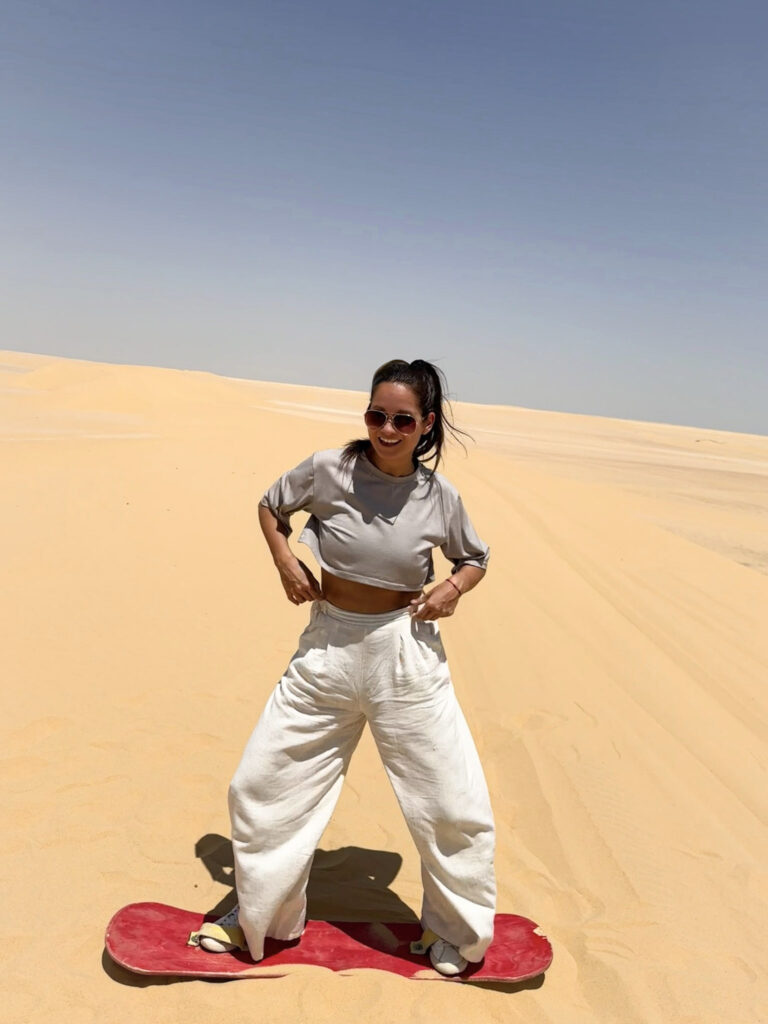
Jet Lag Jelly Tip: Wear closed shoes you don't mind filling with sand, and bring a scarf or buff for your face — the wind kicks sand around more than you'd expect, especially near the dunes.

We booked: Private Tour: El Fayoum Oasis and Wadi Rayan Waterfall from Cairo.
Day 3: The Egyptian Museum & A Cruise on the Nile
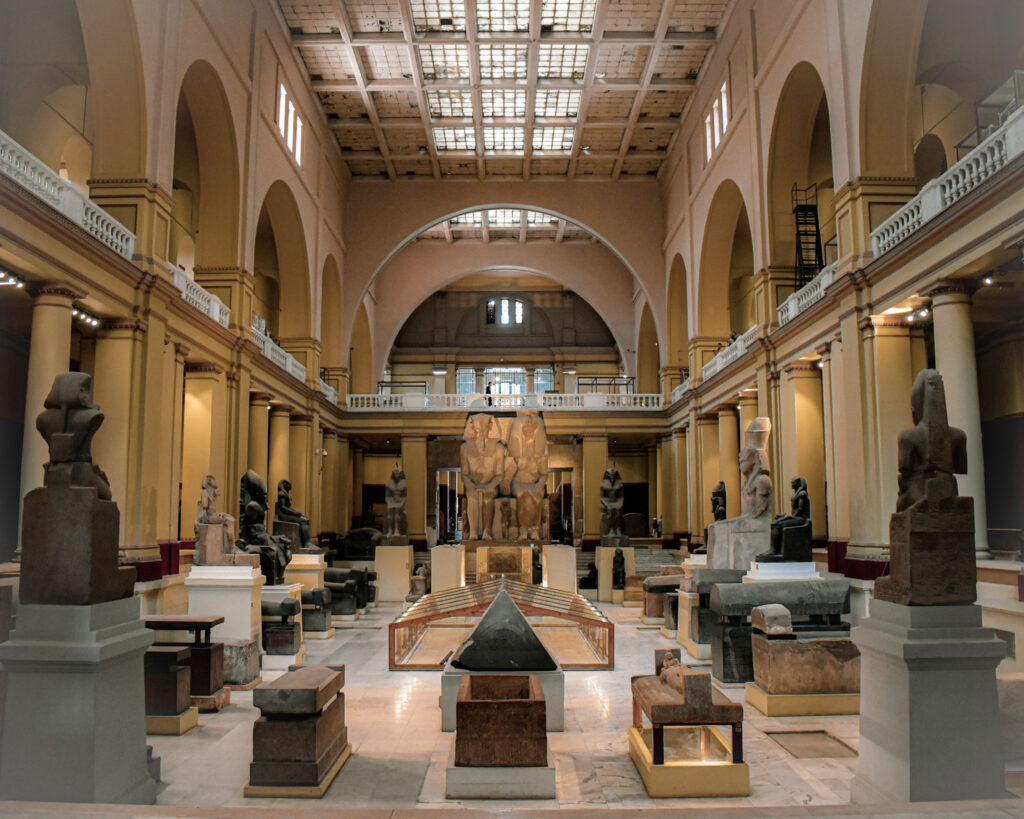
The final day slowed things down, starting with the Egyptian Museum in Cairo — home to an overwhelming collection of ancient Egyptian artifacts, including treasures from Tutankhamun’s tomb. It’s the kind of place where you could easily spend an entire day, so pick a few highlights rather than trying to see everything.
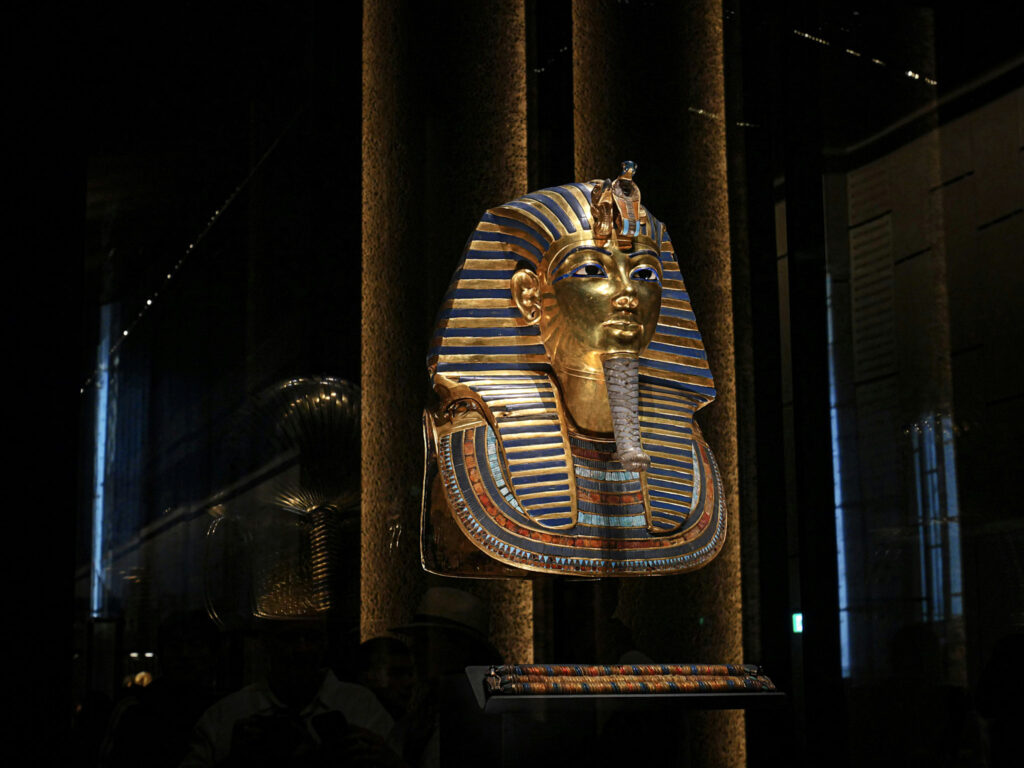
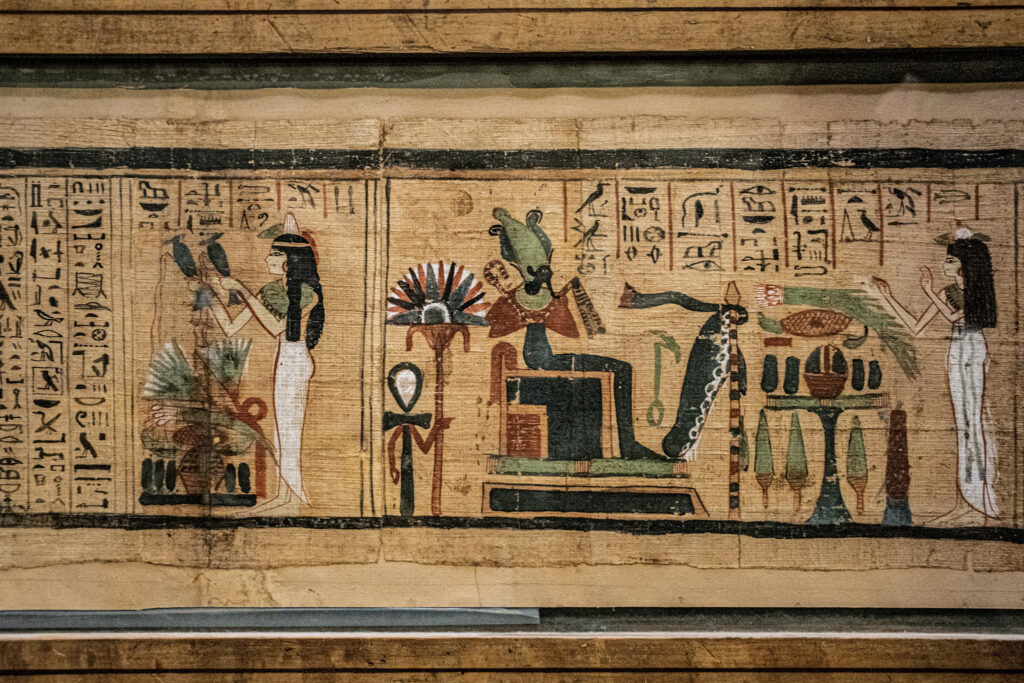
We closed the trip the way you’re supposed to close a trip to Egypt: with a cruise on the Nile. Watching the city drift by from the water, with the sun starting to set, was the perfect, calm way to wrap up three days that had been anything but calm up to that point.
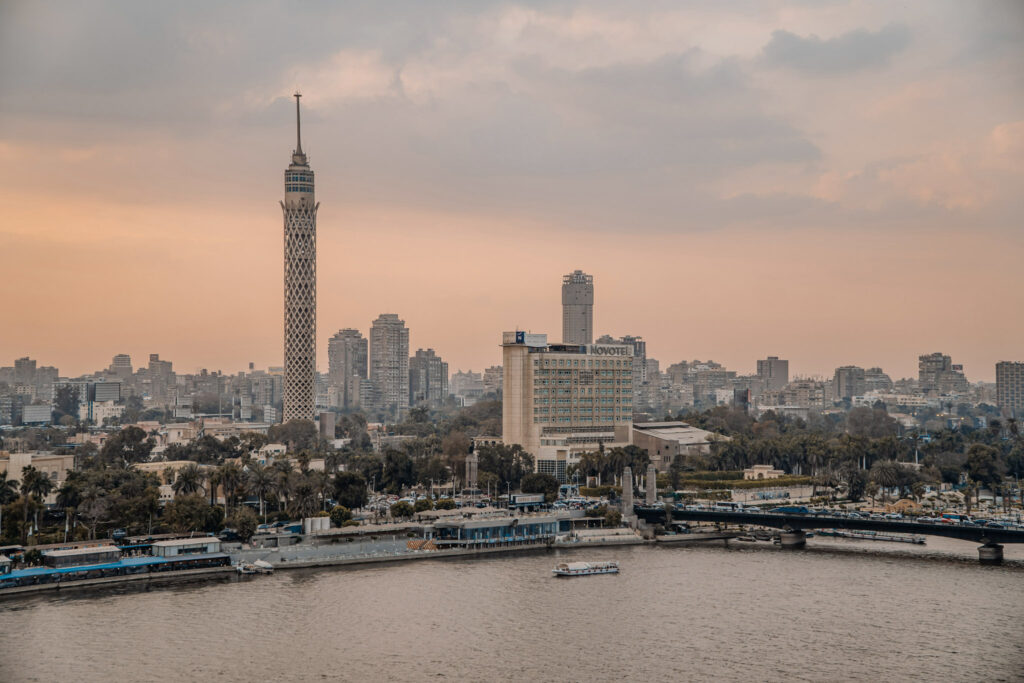
Jet Lag Jelly Tip: Book a cruise timed around sunset if you can — the light on the water at that hour turns an already nice boat ride into one of the best moments of the whole trip.
Where to Stay
Most of what’s on this list is easiest to reach from a hotel in central Cairo or Giza — Giza especially, if you want to wake up close to the pyramids rather than sitting in Cairo traffic to get there each morning.
A couple of practical things worth knowing before you book: aim for a 4- or 5-star hotel if you’re used to European standards. Star ratings in Egypt don’t always translate directly — a 3-star here can feel more basic than a 3-star back home, so going a category or two higher tends to bridge that gap comfortably. And if you can swing it, book somewhere with a pyramid view — there are a handful of hotels in Giza where you can genuinely watch the sun rise or set over the pyramids from your room or rooftop, which is a pretty unbeatable way to bookend the trip.
Book places to stay in Cairo or Giza.
Best Time to Visit Cairo
October to April is the sweet spot — cooler, more comfortable temperatures for walking around the pyramids and old town without melting. Within that window:
- December–February (peak season): The most pleasant weather, but also the busiest and most expensive, with average highs in the mid-60s to low 70s°F (18-22°C). Mornings can be genuinely chilly, especially inside stone temples, so bring layers.
- March–May and September–November (shoulder season): Our pick if you want the best balance — comfortable weather, thinner crowds, and better prices than peak winter. Just watch out for khamsin sandstorms, which can blow through anytime from mid-March to mid-May.
- June–August (off-season): Genuinely hot, with daytime temperatures regularly hitting 97-104°F (36-40°C). Doable if you’re budget-focused and disciplined about scheduling outdoor sightseeing for early morning or after sunset, saving midday for museums or your hotel pool — but not a comfortable choice if heat isn’t your thing.
A Few Practical Tips
Cash is still king. Major hotels and restaurants take cards, but for markets, small purchases, tipping, and most day-to-day spending, you’ll want Egyptian pounds in cash. ATMs are widely available in Cairo, so withdrawing as you go is easy enough.
Budget varies wildly depending on style. Egypt can be done on a shoestring or in real comfort, and prices for tours, hotels, and even entry tickets shift noticeably between peak and off-season — worth factoring into when you go if cost matters as much as comfort.
Expect to be approached, a lot. Around the pyramids, markets, and other major sights, people will offer you everything — camel rides, guiding services, “gifts,” photos, you name it — often quite persistently. It’s part of the experience rather than something to be alarmed by, but a polite, firm “no, thank you” (and just continuing to walk) goes a long way. Don’t feel obligated to engage, and be cautious about accepting anything “free,” since it often comes with an expected tip or payment afterward.
Walking without distraction is genuinely difficult in busy areas. Between vendors, offers, and general hustle, it can feel like nonstop attention wherever you go, especially near major tourist sites. Going with a private guide (like we did) helps a lot here — they tend to run interference and keep things moving smoothly.
FAQ
Is 3 days enough to see Cairo? It’s enough to hit the essentials — the pyramids, a desert day trip, the Egyptian Museum, and a Nile cruise — but not enough to see everything Egypt offers. It’s a whirlwind, not a relaxed pace.
What’s the best time of year to visit Cairo? October to April, with March–May and September–November offering the best balance of good weather, thinner crowds, and better prices than peak winter season.
Should I stay in Cairo or Giza? Giza, if you want to wake up close to the pyramids instead of sitting in Cairo traffic each morning. Aim for a 4- or 5-star hotel, since star ratings in Egypt run more modest than European equivalents.
Do I need cash in Cairo? Yes — cards work at major hotels and restaurants, but markets, tipping, and day-to-day spending run on Egyptian pounds. ATMs are widely available.
Is it worth hiring a private guide in Cairo? Yes — beyond the historical context, a guide helps run interference with the near-constant offers and vendors around major sites, which can otherwise make walking around without distraction genuinely difficult.
Summary
Three days in Cairo is a whirlwind — ancient history, desert adventure, and a slow float down one of the most famous rivers in the world, all packed into 72 hours. It’s not a relaxing trip in the traditional sense, but it’s the kind of trip that reshuffles your sense of scale a little, in the best way.
Exploring more of the Mediterranean? Check out my Top 10 Beaches in Tenerife, The Best Places to Visit Near Málaga & Costa del Sol, and 3 Days in Istanbul, Turkey guides too.