
This post contains affiliate links. If you book through one, I may earn a small commission at no extra cost to you — it helps keep Jet Lag Jelly running. Read my full affiliate disclosure for more.
Andalusia is one of those regions that makes you question every other travel decision you’ve ever made. White villages clinging to cliffsides, gorges that look like they were designed by someone who wanted to break the internet, beaches that actually live up to the photos, and a laid-back energy that gets under your skin within about twenty minutes of arriving.
Costa del Sol Itinerary
1. Malaga
2. Fuengirola
3. Mijas
4. Desfiladero de los Gaitanes
5. Setenil de las Bodegas
6. Ronda
7. Marbella
8. Granada
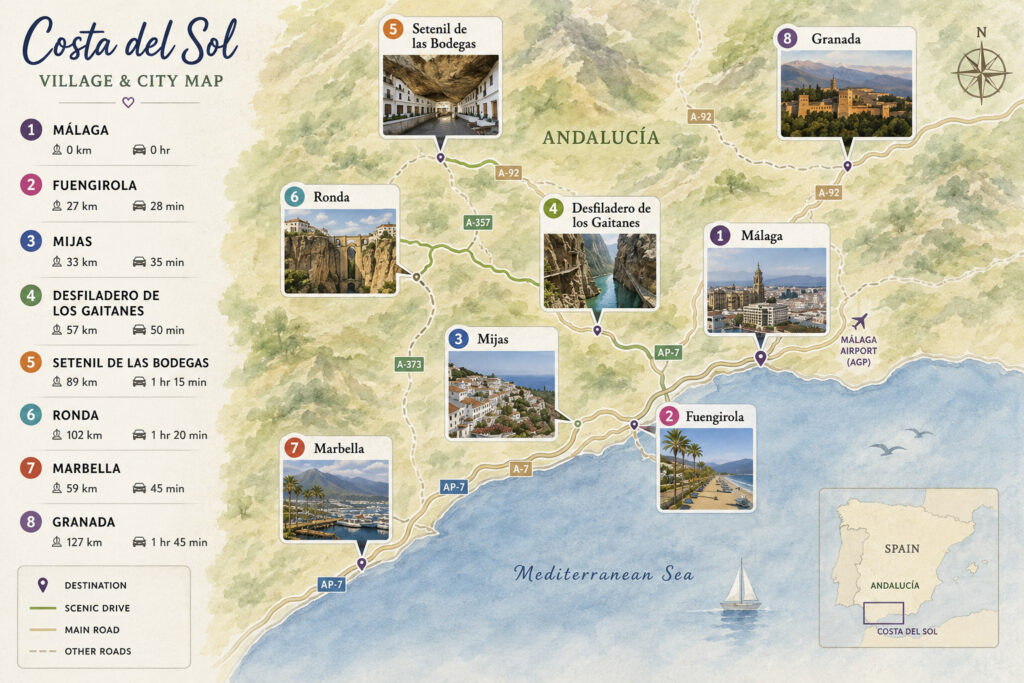
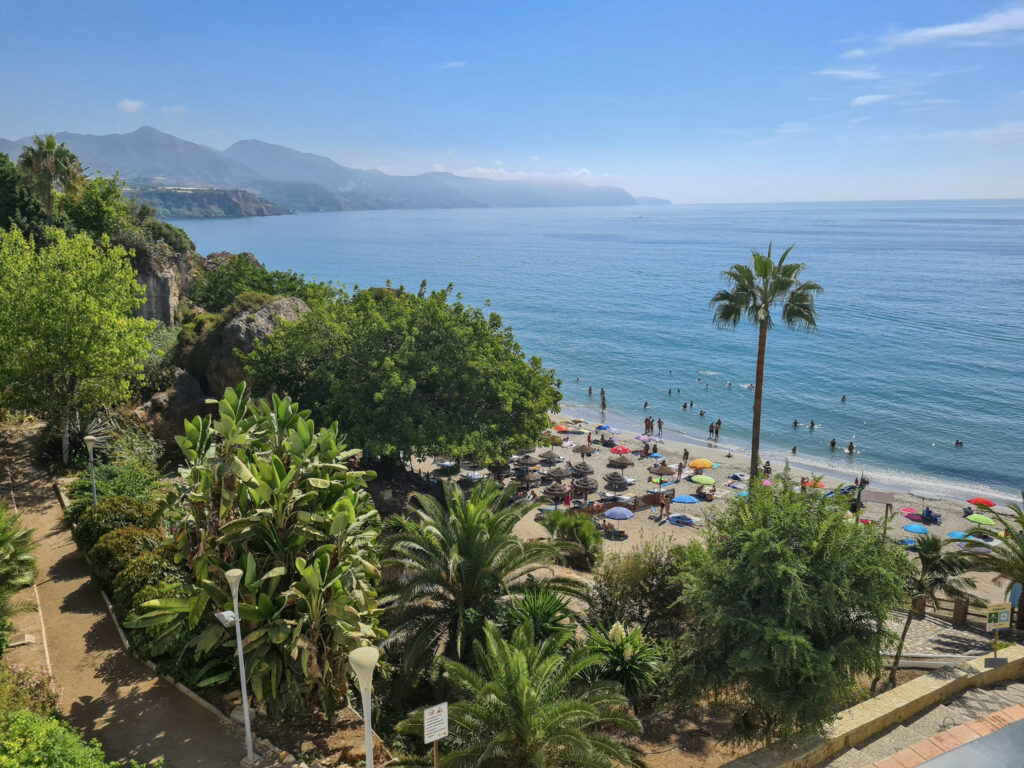
Based around Malaga and the Costa del Sol, one of the most popular places in the Andalusia region, this is your guide to the best places worth visiting in the area — from buzzing beach towns to some of the most dramatic landscapes in all of Spain.
1. Malaga — Where the Trip Begins
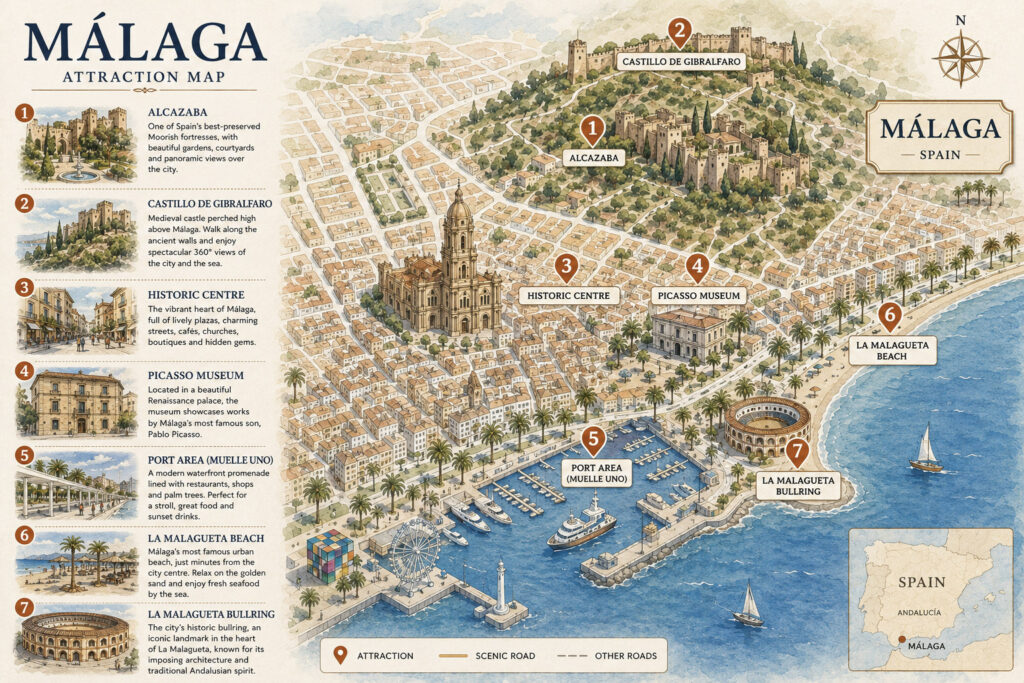
Malaga is more than just an airport you pass through. Spain’s sixth-largest city is vibrant, walkable, and packed with history — and it deserves at least a day of your time before you head anywhere else.
The Alcazaba is the city’s crown jewel — a stunning Moorish fortress rising above the city with sweeping views over the port and the Mediterranean.
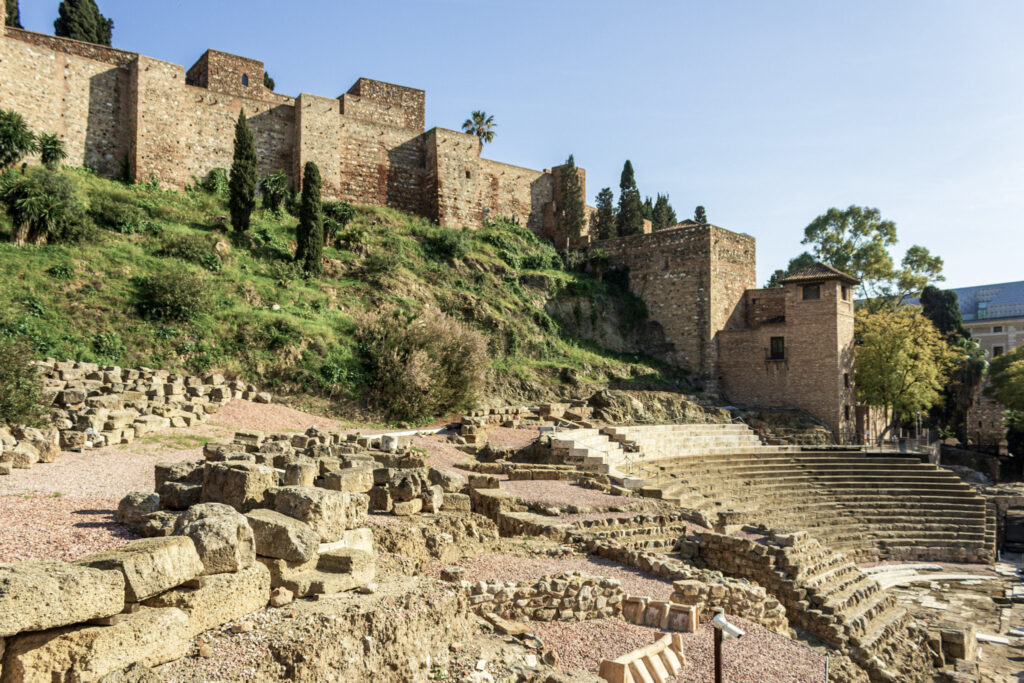
Just above it sits the Castillo de Gibralfaro, connected by a winding path and offering some of the best panoramic views in the city.
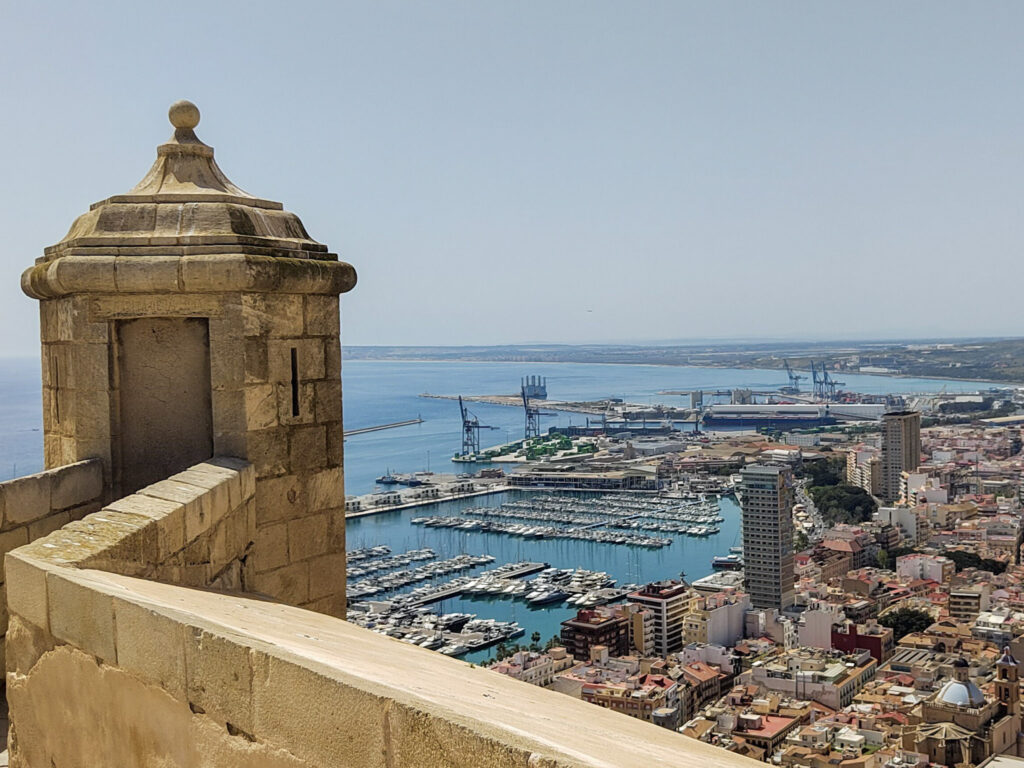
Down below, the historic centre is a maze of narrow streets, tapas bars, and sun-drenched plazas. Málaga is also the birthplace of Pablo Picasso — the Picasso Museum is right in the heart of the old town and well worth a visit.

The port area (Muelle Uno) is perfect for an evening stroll — lined with restaurants, bars, and that warm Andalusian light that makes everything look like a painting.
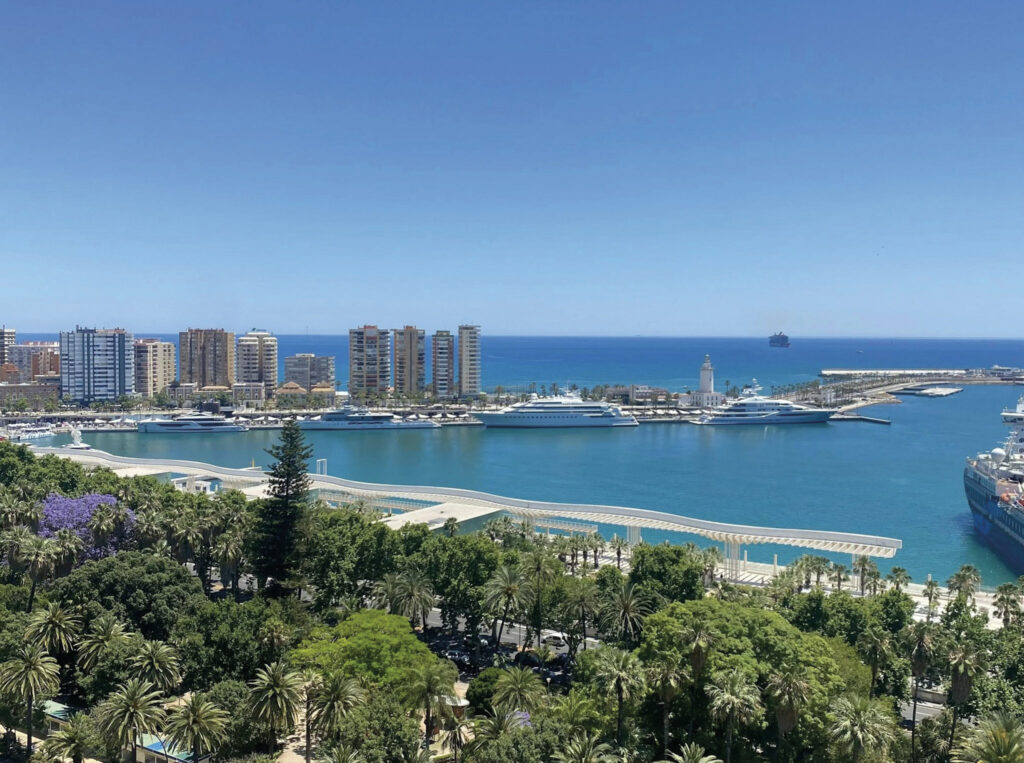
La Malagueta Bullring is worth a stop too. Built in 1874, it’s one of the most iconic bullrings in Spain — a circular, neo-Mudéjar arena sitting right by the sea, with the city’s high-rises stacked up behind it and the port just beyond.
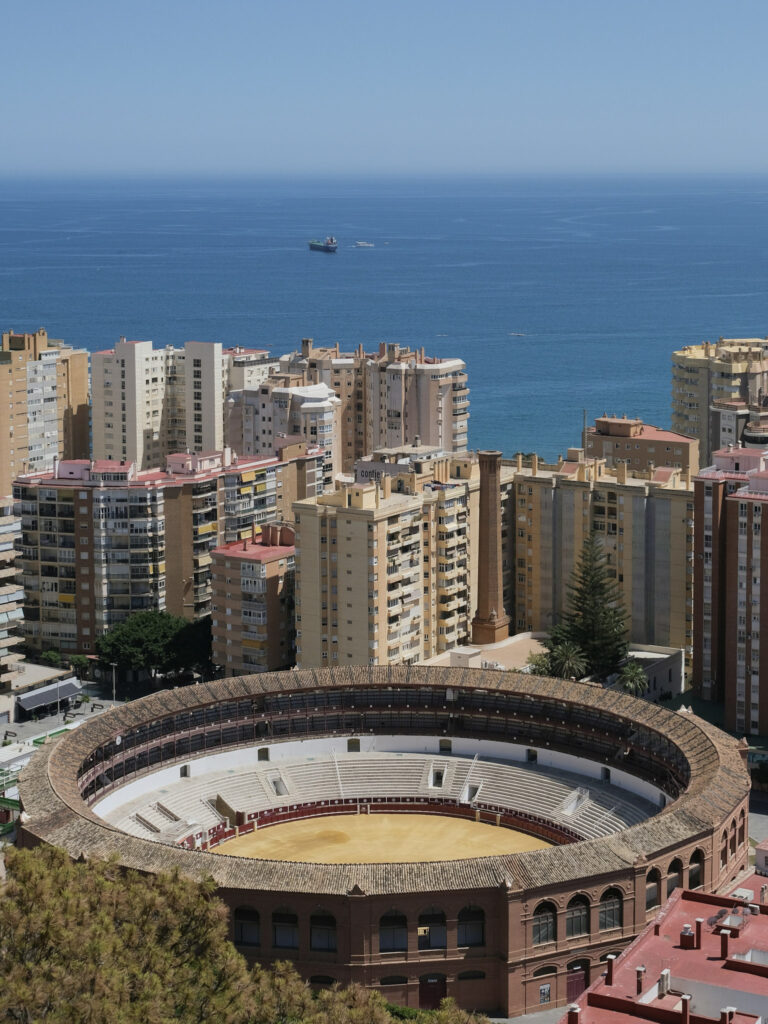
You don’t need to attend a bullfight to visit — La Malagueta offers guided tours with access to an immersive bullfighting museum through La Malagueta Tour. The ticket takes you through the stadium, stables, and even into the center of the bullring itself, with a free audio guide covering points like the infirmary and the toreador chapel, plus the Antonio Ordóñez Bullfighting Museum. Tickets can be bought at the door, but booking online is recommended in high season (summer, Easter, and local holidays) to skip the wait.
Jet Lag Jelly Tip: It's an easy add-on if you're already exploring La Malagueta beach or the port area — all within a short walk of each other. Book tickets on La Malagueta Tour's official site.
2. Fuengirola — Easy Beach Vibes
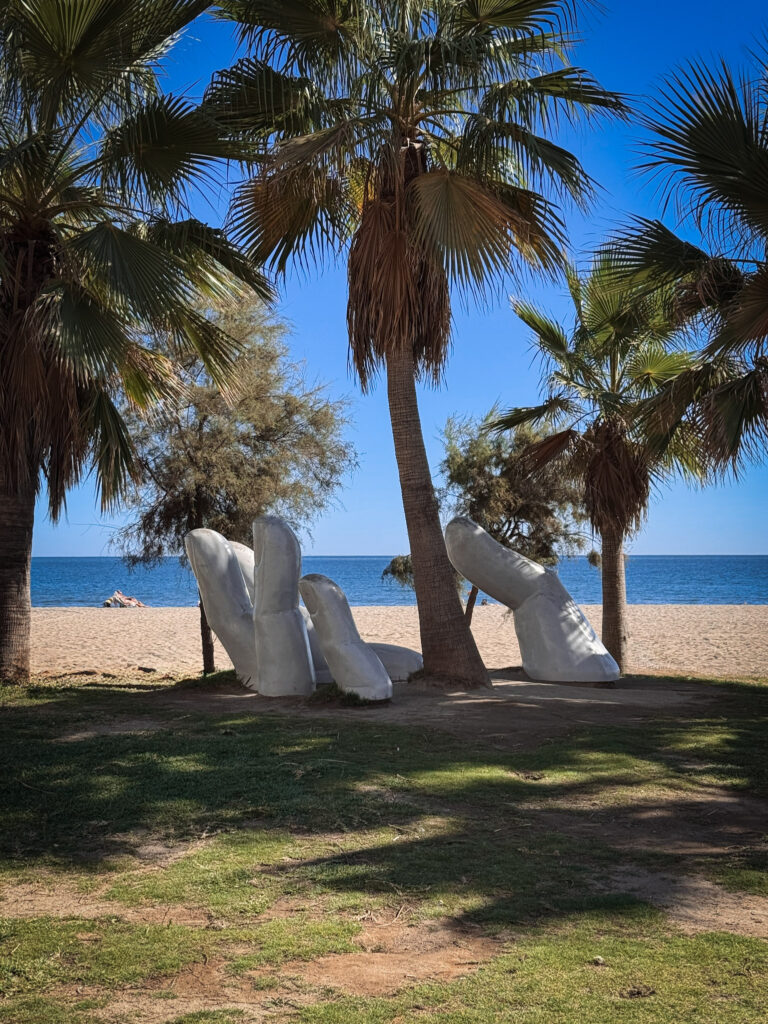
Just 30 minutes from Malaga by train along the coast, Fuengirola is the kind of place where the pace of life slows right down and nobody seems to mind.
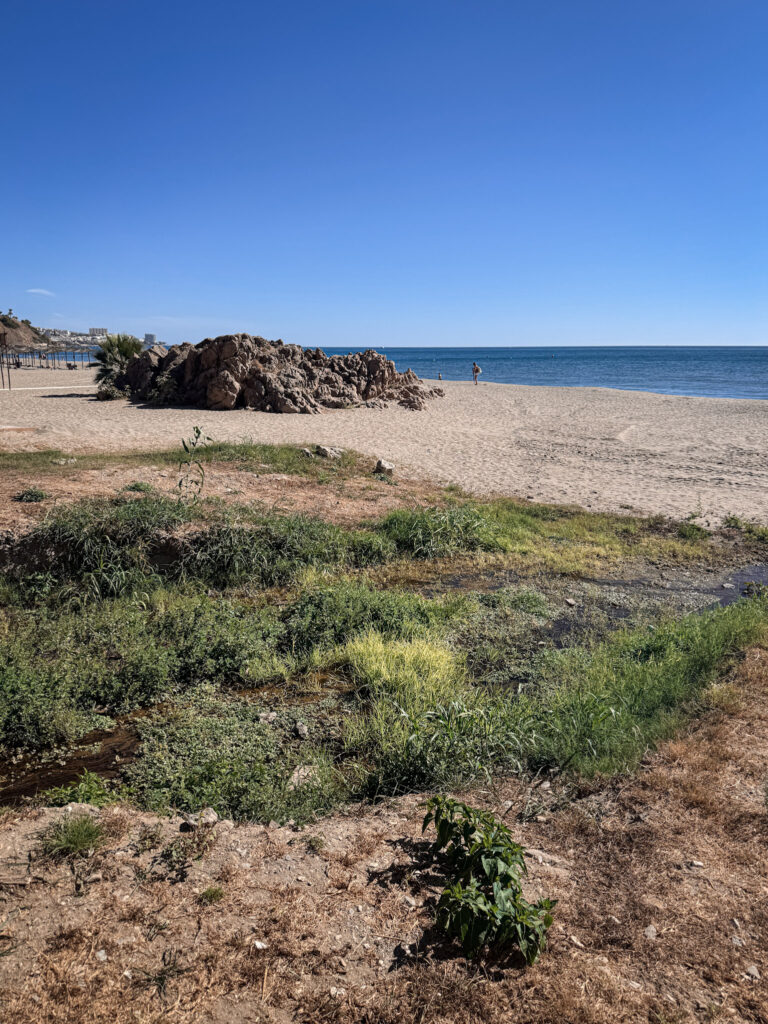
The promenade stretches along a long, wide beach — perfect for a morning walk or an afternoon of doing absolutely nothing in the best possible way. The town itself is charming to wander through — a mix of local life, good restaurants, and that classic Costa del Sol energy.
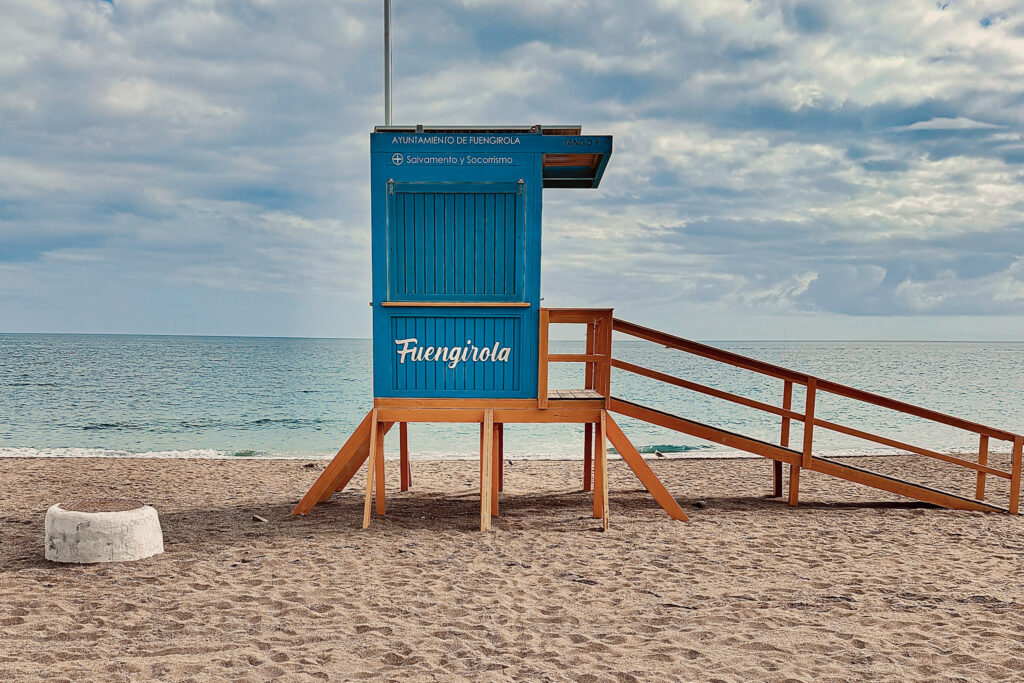
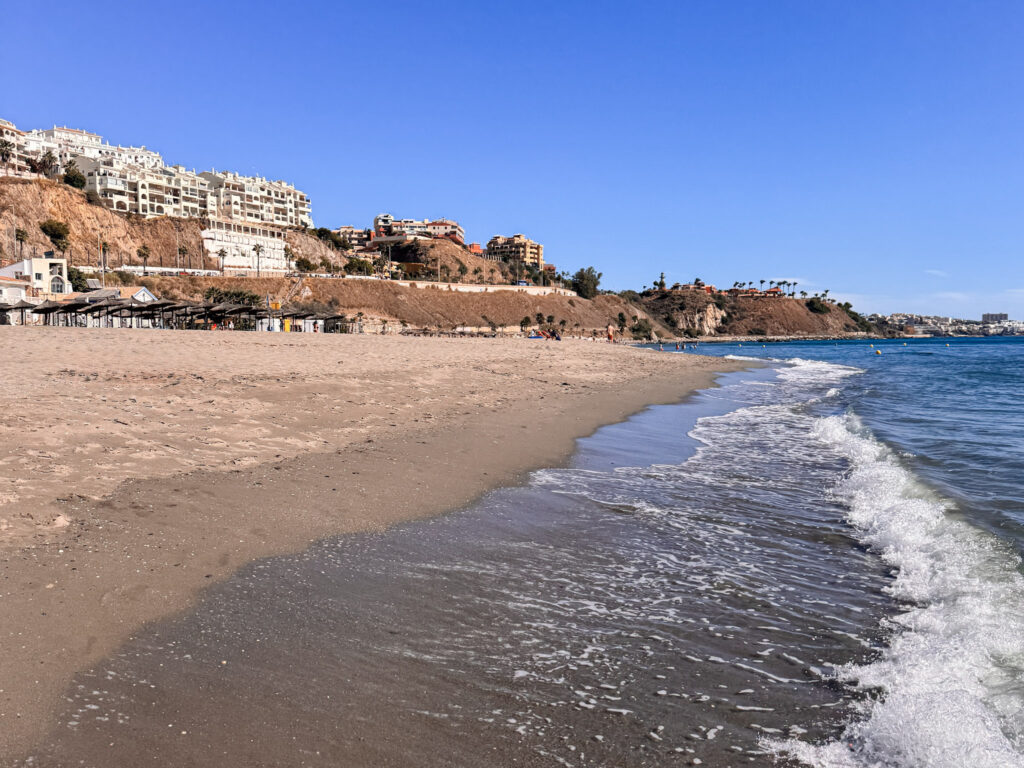
It’s not the most dramatic stop on this list, but sometimes you just need a beach, a cold drink, and the sound of waves. Fuengirola delivers all three without any fuss.
Jet Lag Jelly Tip: Fuengirola is easily accessible by train from Málaga — cheap, quick, and no parking stress.
3. Mijas — The White Village That Earns Its Reputation

How to Get There from Malaga:

By car: Take the A-7 towards the coast — it's about a 29-minute drive, covering roughly 31 km. Easiest, most flexible option, though heads up: the road up to Mijas Pueblo is a bit windy since it's on a hilltop, and parking isn't always easy once you're there. Compare rental options on Discover Cars.

By train + bus: Mijas has no train station, so you'll need to take the Cercanías C1 line to Fuengirola first, then connect with the local bus M-122 to Mijas Pueblo, which takes another 20–25 minutes and is a popular route, so arrive a bit early for the bus. Check train times on Renfe's official site.

By taxi/rideshare: A taxi from central Malaga to Mijas Pueblo runs around 35–45 euros, which isn't unreasonable if you're splitting it between a few people. You can also check the Uber app for potentially better rates, or book ahead through a local service like Taxi Malaga.

Jet Lag Jelly Tip: If you don't want to deal with train/bus transfers, look into an organized day tour from Malaga — some combine Mijas with Marbella and Puerto Banús in one trip, with pickup and drop-off included.
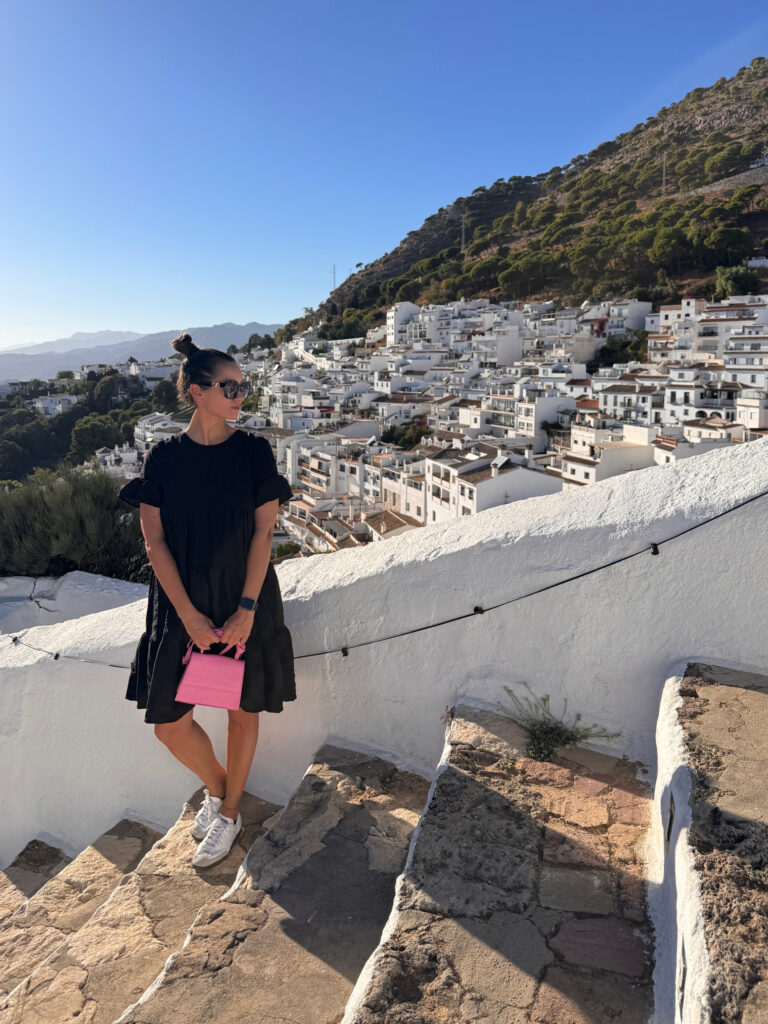
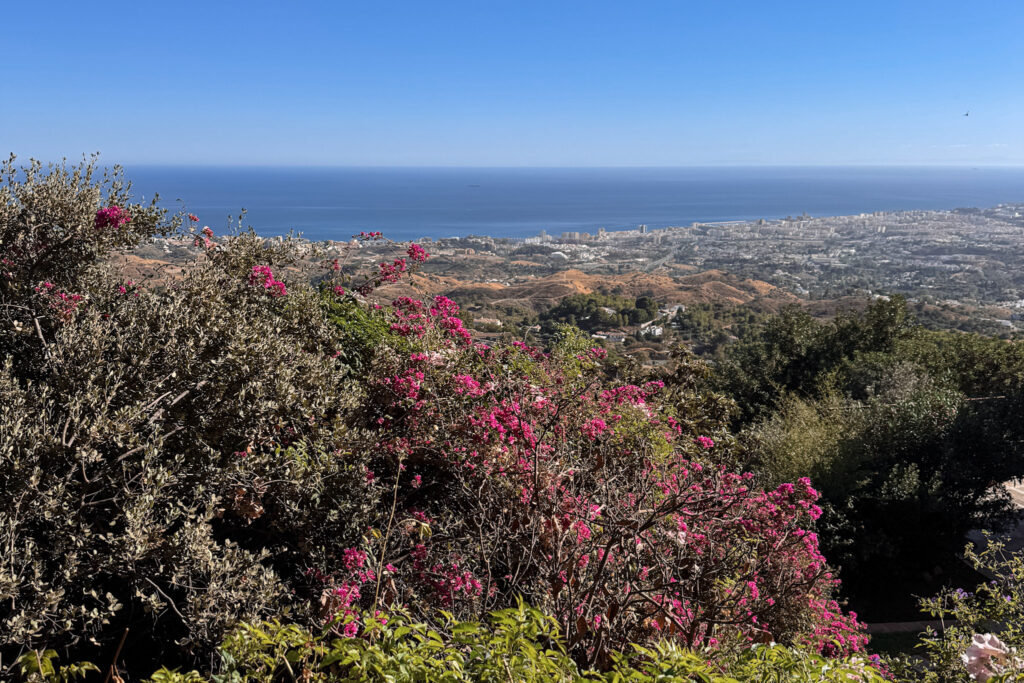
Perched in the hills above the Costa del Sol, Mijas is one of those places that looks almost too perfect to be real. And then you arrive and realize it actually is that perfect. Everything is white. Brilliantly, impossibly white — whitewashed walls, white flower pots, white churches against a perfectly blue sky. The narrow cobblestone streets wind upward through the village past little boutiques, craft shops, and viewpoints that suddenly reveal the entire coastline below you.
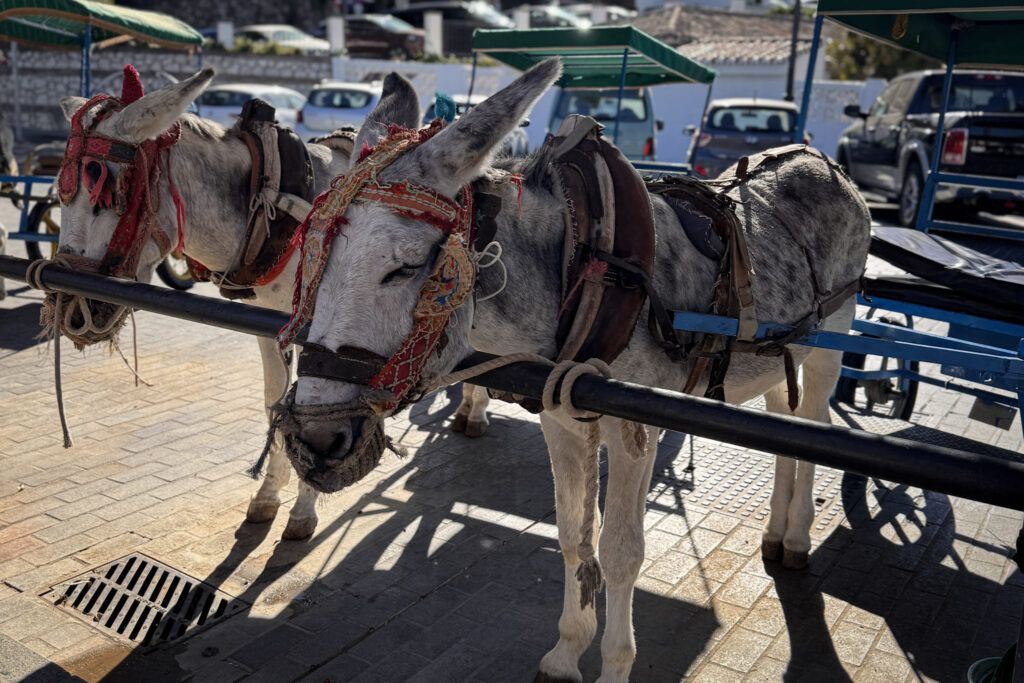
The famous donkey taxis are a Mijas institution — you can hire a donkey for a ride around the village, which is either charming or slightly chaotic depending on your donkey. Either way, very photogenic.
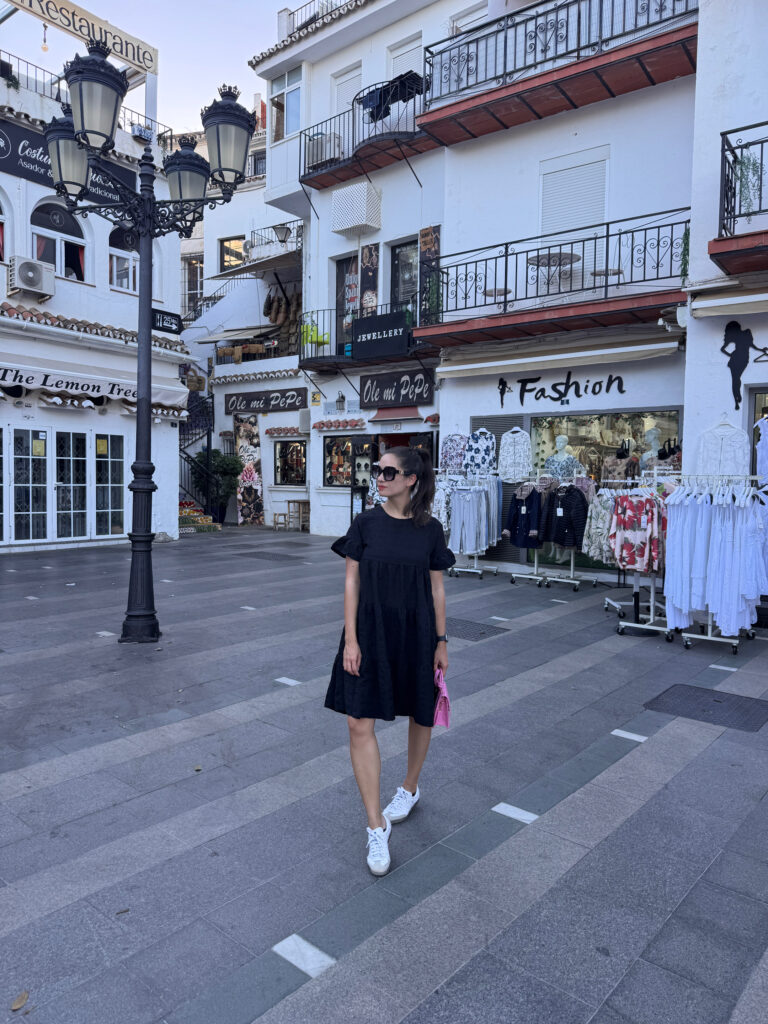
The Plaza de la Constitución is the heart of the village — grab a coffee, sit down, and just take it all in.
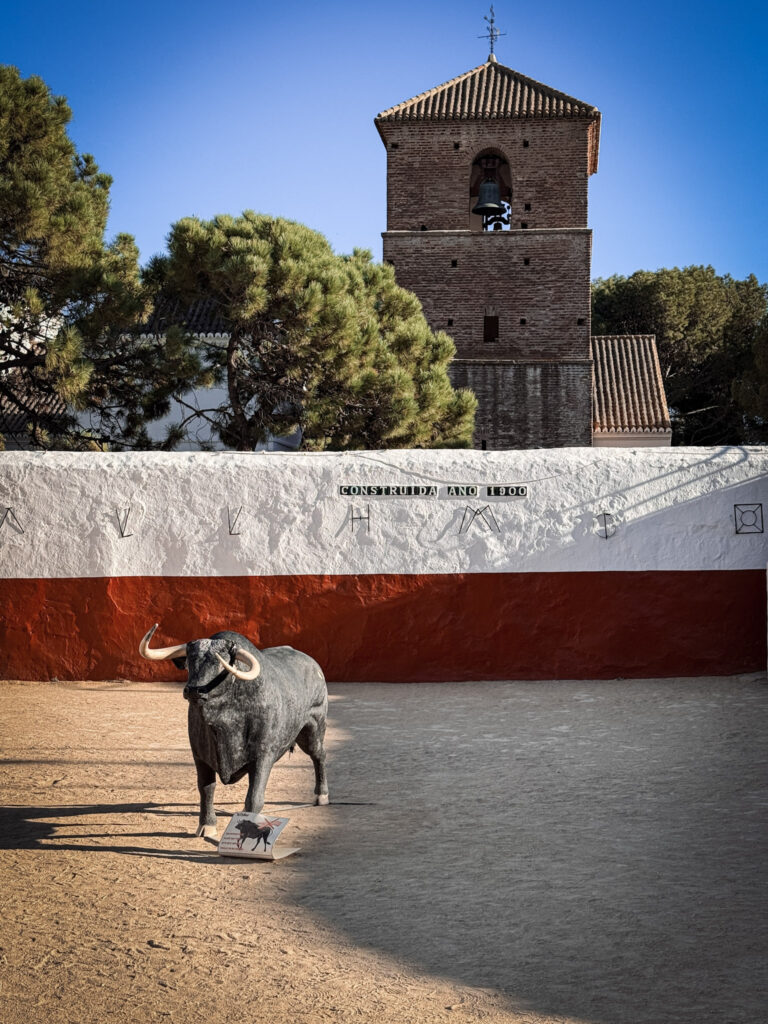
The bullring is worth a look too — even if bullfighting isn’t your thing. The Plaza de Toros de Mijas is one of the oldest bullrings in Spain, and it’s got a quirk that bullring nerds (or just curious travelers) will appreciate: it’s oval, not round, which is rare enough to be its own little claim to fame.
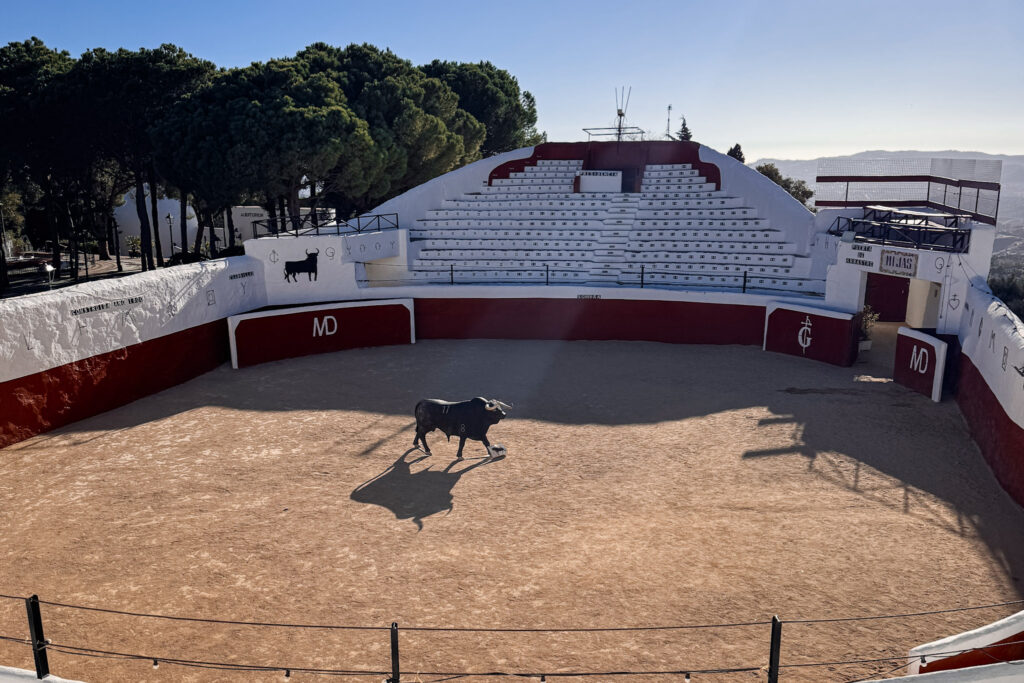
Entrance is through the small souvenir shop, and it only costs a few euros — no need to book ahead, just show up. You don’t need to attend an actual event to visit — you can walk through, check out the arena, and get a feel for the history without any of the parts that might make you squeamish. It sits right near the village center, so it’s an easy add-on before heading up to the chapel.
Don’t skip the walk up to the Ermita del Calvario. It’s a small, unassuming chapel on the edge of the village, but the path to get there is the real reason to go — a short, slightly sweaty climb along a whitewashed trail lined with viewpoints. Every few meters you’ll want to stop, not because you’re tired (okay, partly because you’re tired), but because the view over the coast keeps getting better.
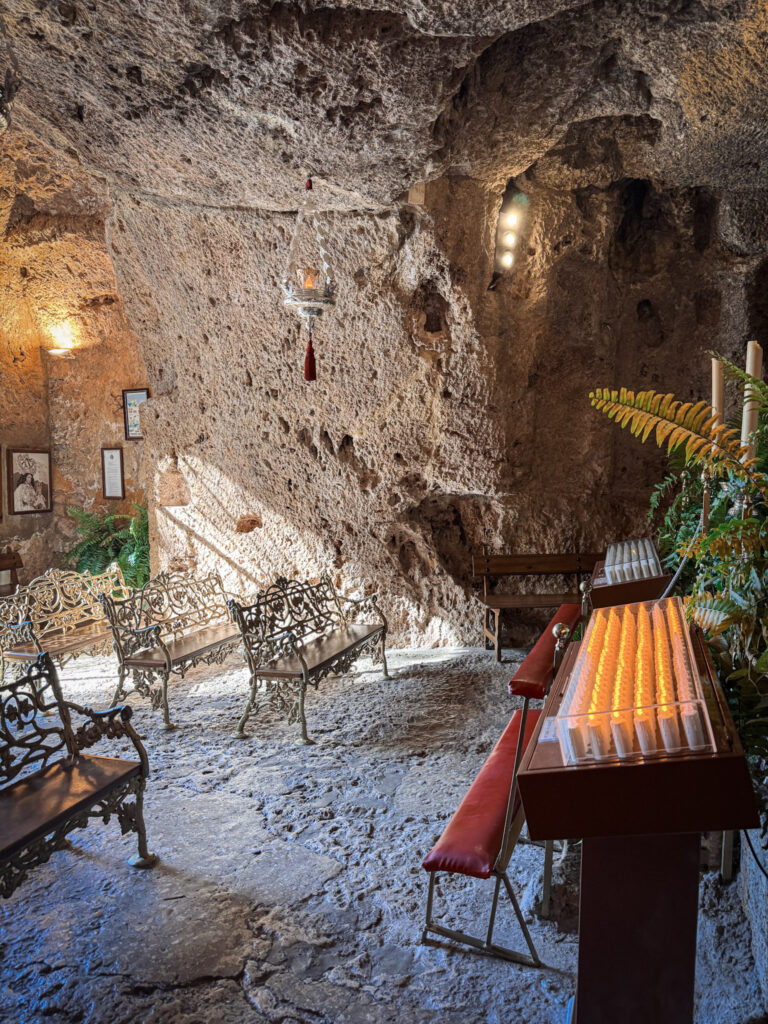
The chapel itself is tiny and simple, which is honestly part of the charm. No crowds, no ticket booth, just a quiet spot to catch your breath and take in the kind of view that makes you understand why people fall in love with this coastline.
Jet Lag Jelly Tip: Go early — Mijas gets busy by mid-morning. The views and the light are best in the early hours anyway.
4. Desfiladero de los Gaitanes — Caminito del Rey
How to Get There from Malaga

You've got three real options here, and the right one depends on how much you value your own sanity.

By car: Take the A-357 towards Campillos, following signs for El Chorro and Ardales — it takes around 50 to 60 minutes, and there's a free car park near the northern entrance in Ardales. Most flexible option, but you'll need to plan your return since you'll end up at a different point than where you started.

By train: The Renfe C2 Cercanías line runs several trains a day between Málaga María Zambrano and El Chorro-Caminito del Rey station, so this is a solid option if you don't want to drive. Check timetables on Renfe's official site before you go, since your entry ticket is tied to a fixed time slot — plan your return train around your hike, not the other way around.

By organized tour: Honestly, the easiest option if you don't want to deal with logistics or ticket-booking stress. Book at least 6–8 weeks ahead in spring and summer, since the daily cap fills fast and there are no tickets at the gate. Organized tours from the Costa del Sol typically run €45–€65 per person and bundle the return coach transfer, entrance ticket, and shuttle bus into one booking — you just show up, walk, and get dropped back off. The easiest option if you don't want to deal with logistics. A couple of solid options:
- Caminito del Rey Full-Day Tour from Malaga
- Caminito del Rey with Pickup from Malaga

Tickets (if going independently): Book directly through the official Caminito del Rey site to avoid markups from resellers — this is where a lot of people get tripped up.
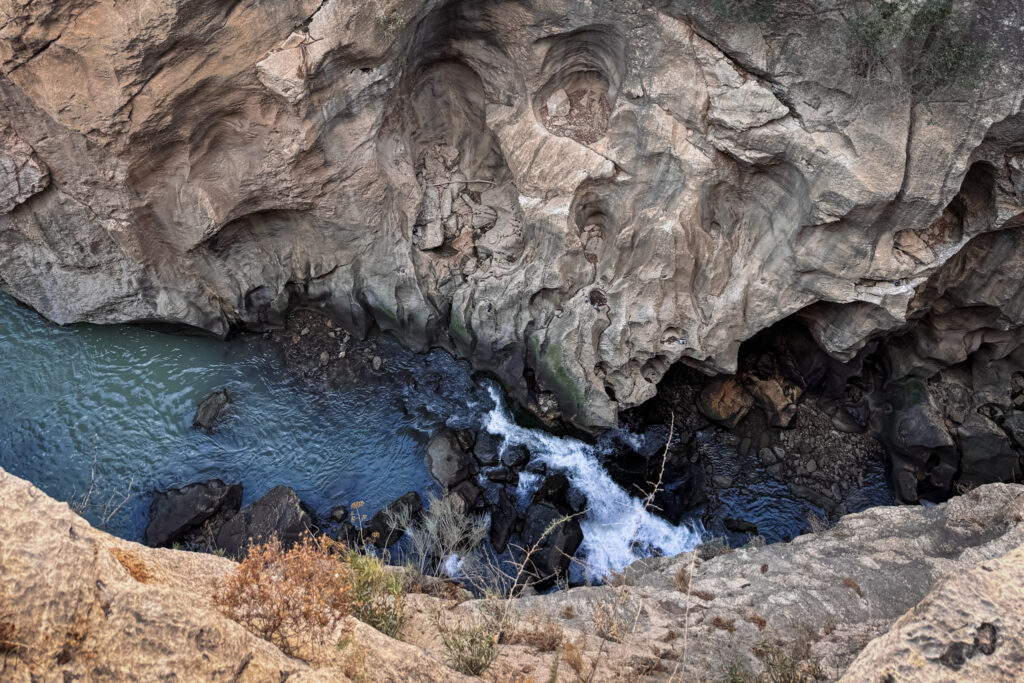
If you only do one outdoor activity near Malaga, make it this one.
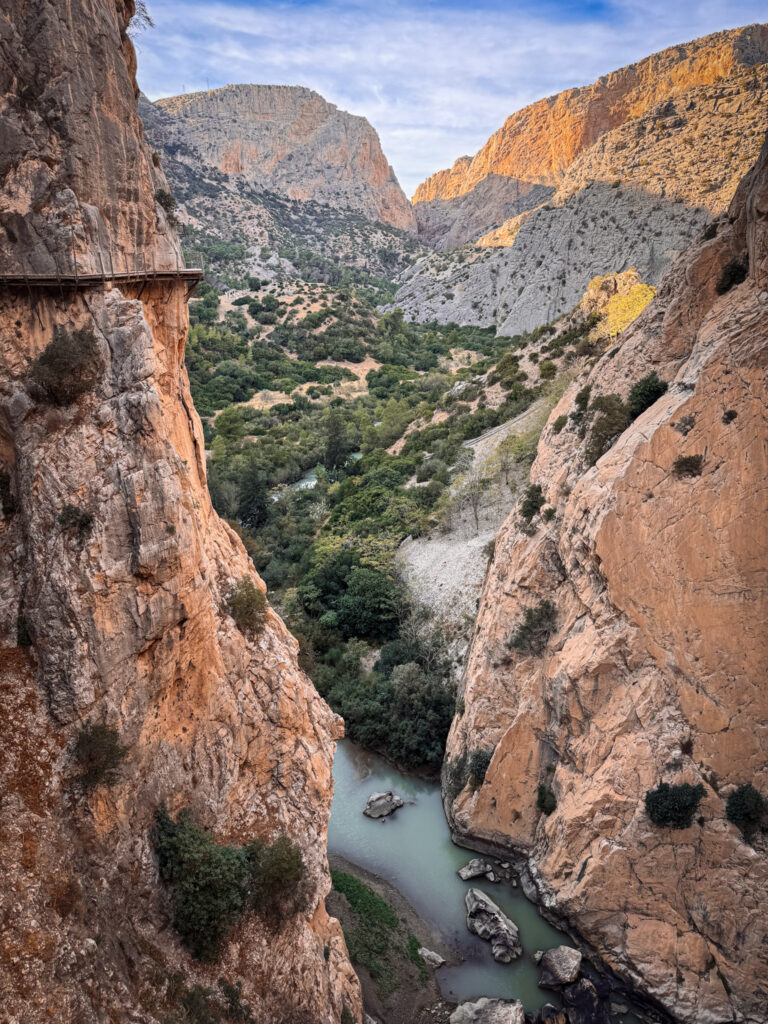
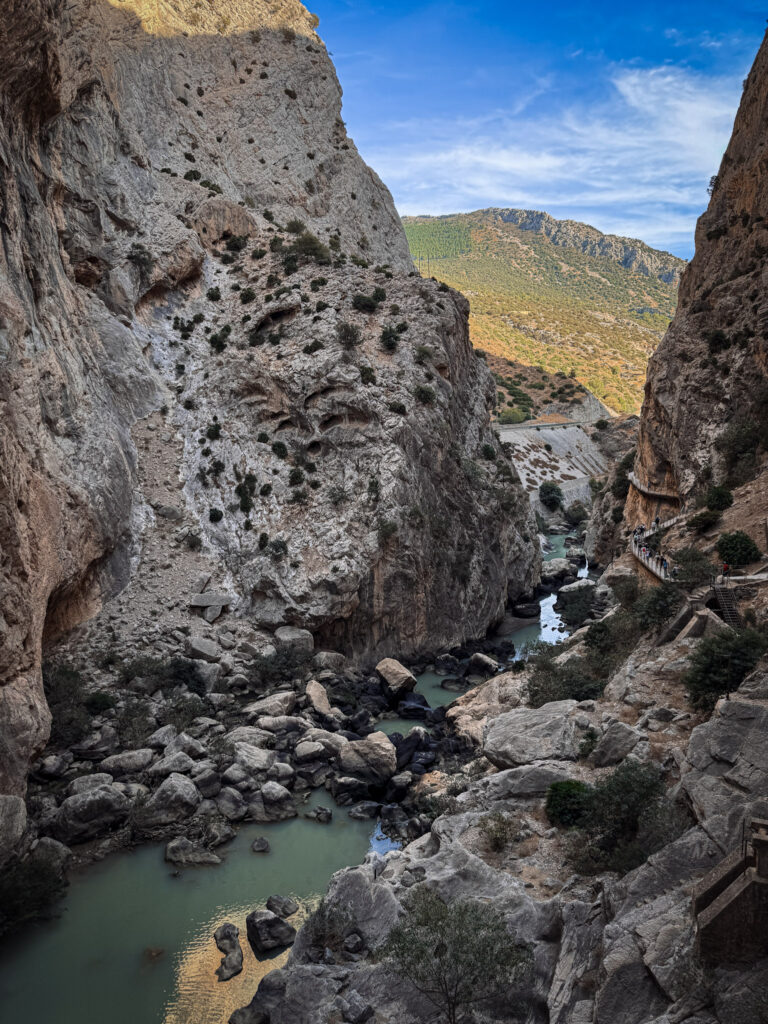
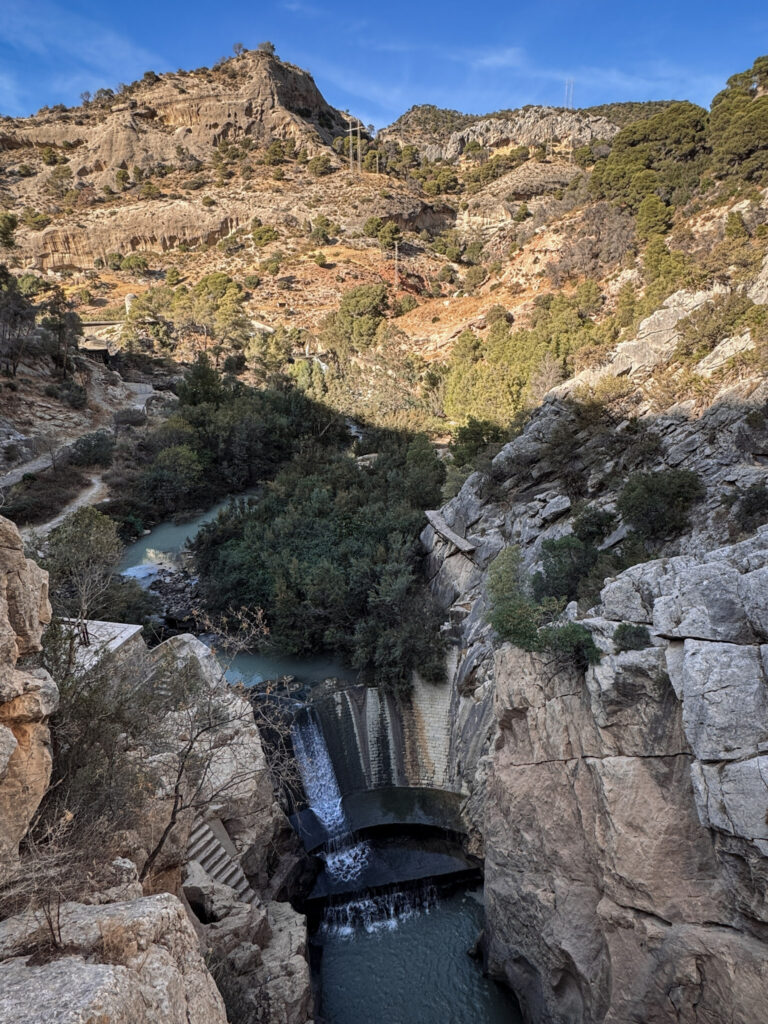
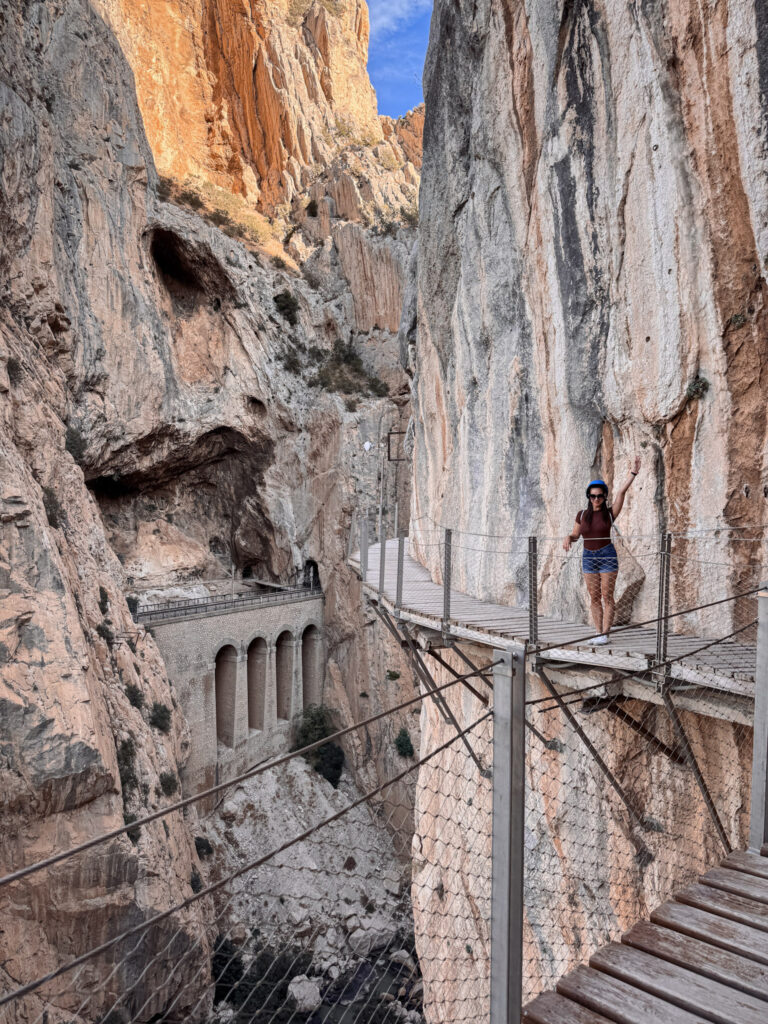
The Caminito del Rey — the “Little Path of the King” — is a spectacular walkway pinned to the walls of the Desfiladero de los Gaitanes gorge, threading its way through one of the most dramatic canyon landscapes in Europe. Towering limestone walls rise hundreds of meters on either side, the river runs far below, and the path itself clings to the rock face in a way that feels genuinely unreal.
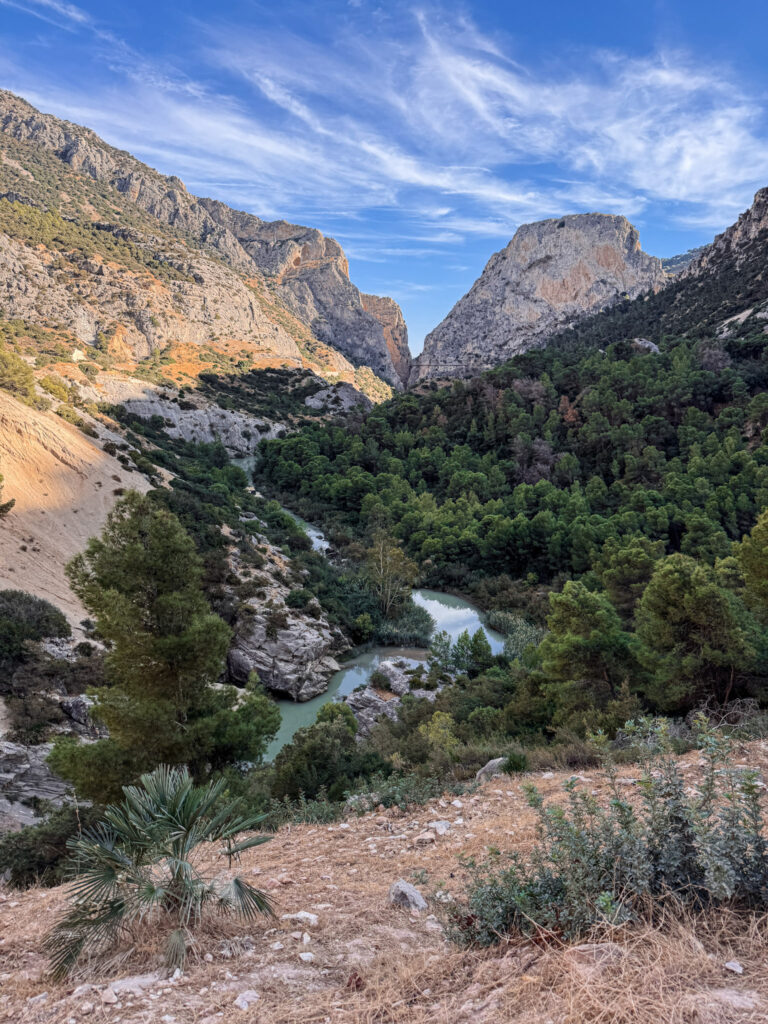
The walk takes a few hours in total and the scenery is jaw-dropping from start to finish. You’ll be issued a helmet at the start — which tells you everything you need to know about the nature of the experience. Was it scary? Not particularly. But would I recommend it to anyone with a serious fear of heights? Probably not. For everyone else — absolutely, without hesitation.
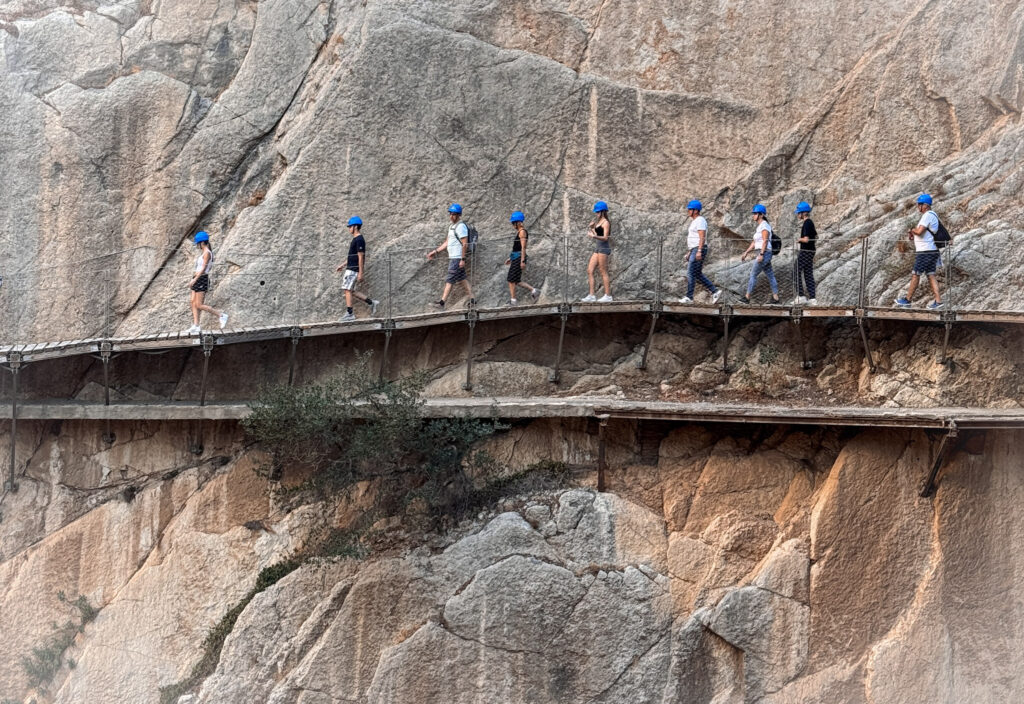
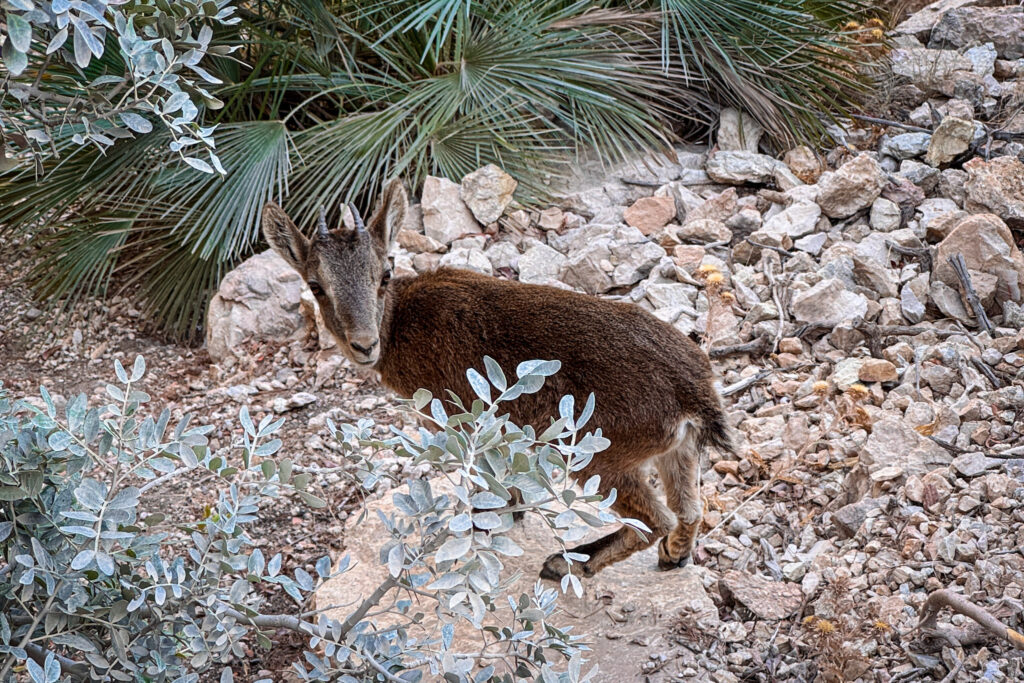
Keep an eye out for the wildlife. The gorge is home to Iberian ibex, and it’s not unusual to spot one perched on a rocky ledge, completely unbothered by the hikers passing a few meters away. They blend in well with the rocks, so keep your camera ready — you’ll usually see them before you hear them, if you see them at all.
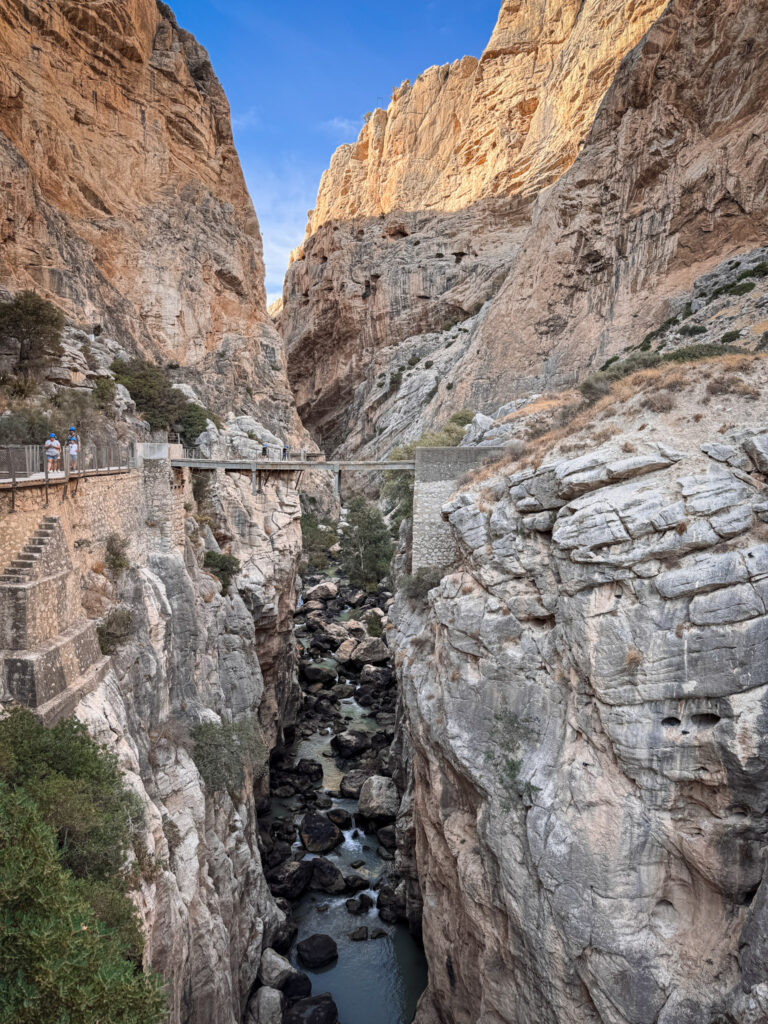
The suspension bridge is the moment that gets everyone’s heart rate up. Partway through the walk, the boardwalk leads you to a swaying suspension bridge crossing high above the gorge, with the river winding far below and sheer rock walls on either side. It’s sturdy and completely safe, but it does move a little as you walk, which is either thrilling or terrifying depending on how you feel about heights.
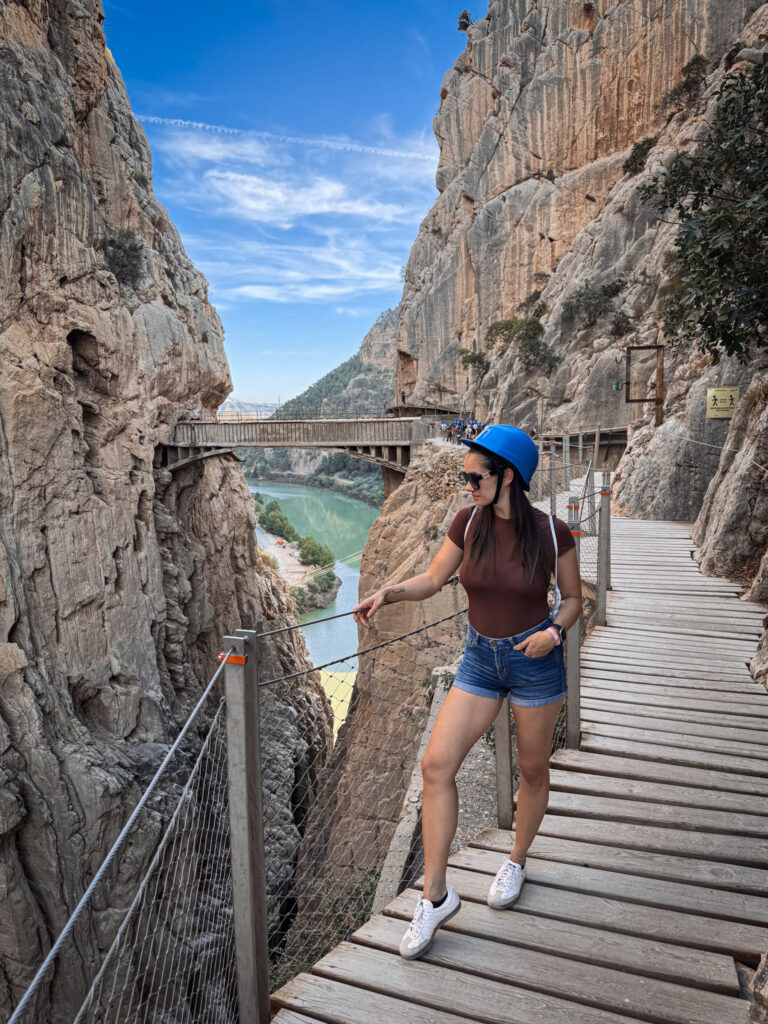
Not recommended if you’re afraid of heights. There’s no way around it — you will look down, and you will see just how far down “down” is. If heights aren’t your thing, take it slow, keep your eyes on the horizon instead of your feet, and remember everyone else on the bridge is having the same internal crisis you are.
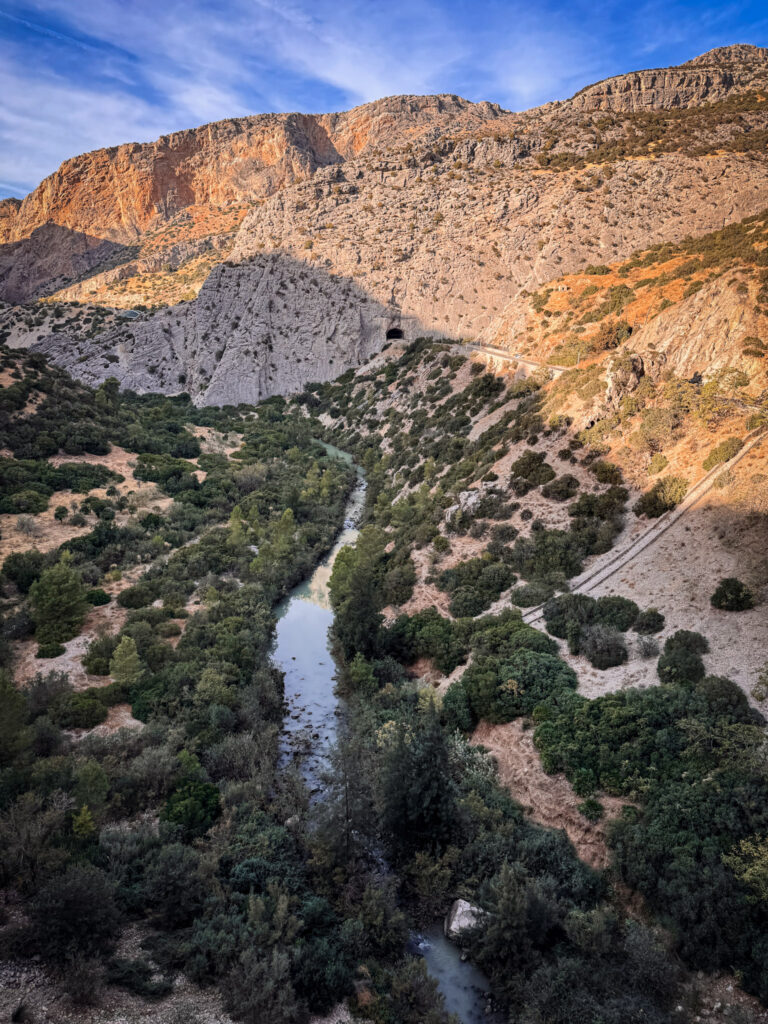
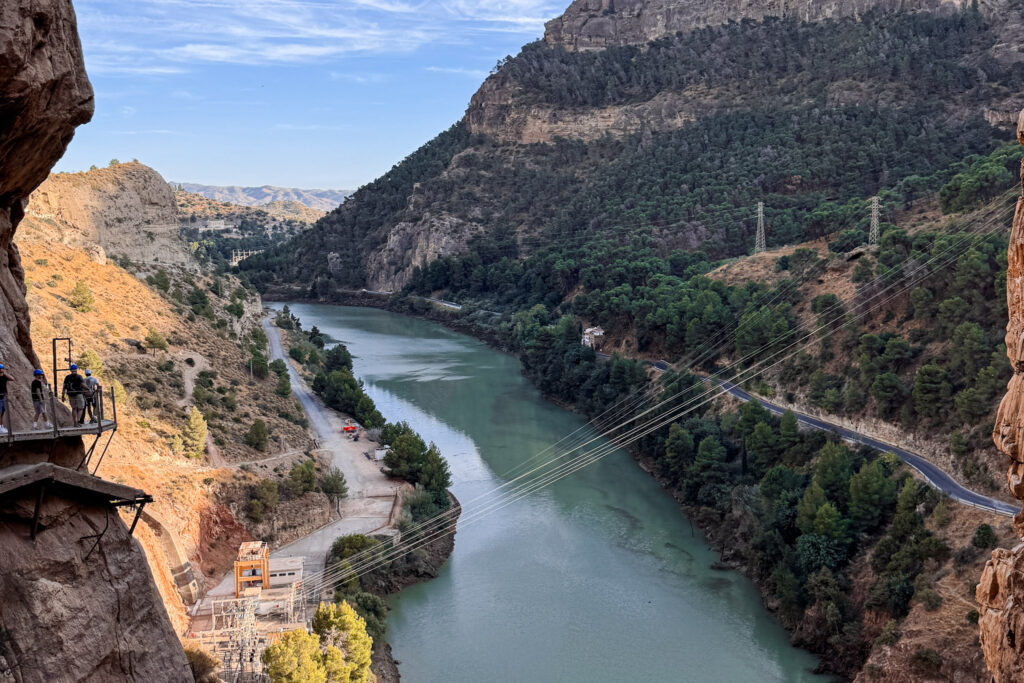
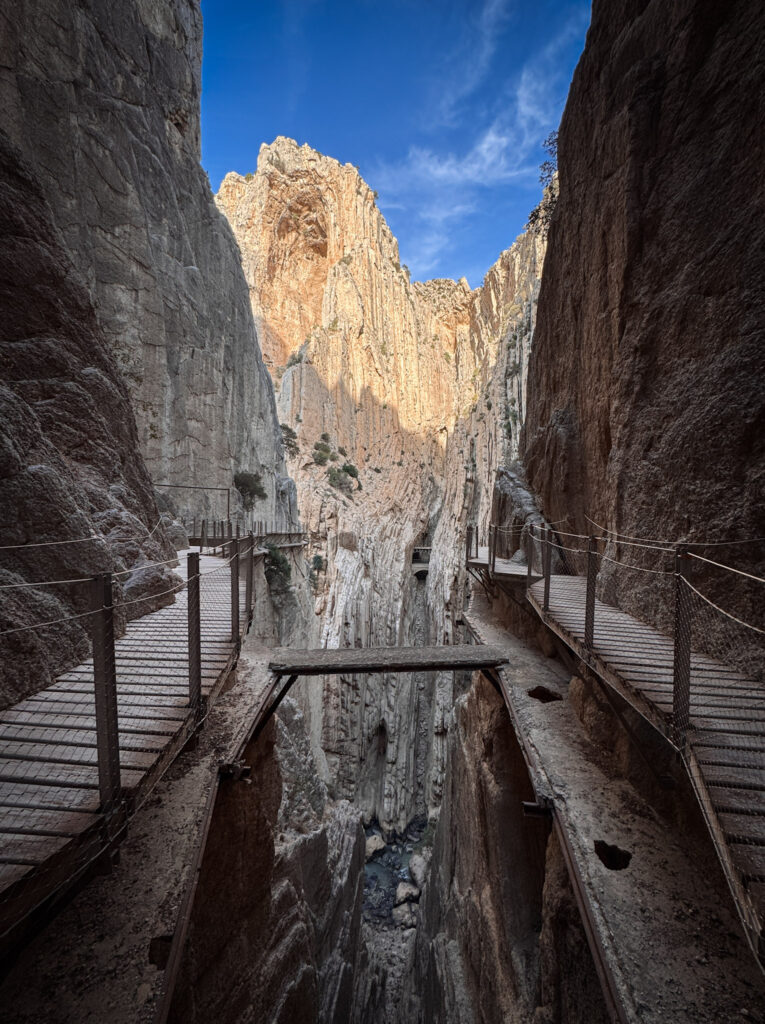
This is the view that ends up on everyone’s camera roll. At one point, the boardwalk opens up to show just how narrow and deep the gorge really is — sheer rock walls rising straight up on both sides, the river cutting through far below, and the walkway threading along the cliff face like it barely belongs there. It’s one of those moments where photos genuinely don’t do it justice, but you’ll take about 40 of them anyway.
Jet Lag Jelly Tip: Book your tickets well in advance — the Caminito del Rey is extremely popular and slots fill up fast. Go with a group tour if you want the logistics handled for you.
5. Setenil de las Bodegas — The Village Built Under Rocks
How to Get There from Malaga:

By car: Setenil is about 100 km (60 miles) from Malaga, roughly a 1 hour 15 minute drive through scenic Andalusian countryside. This is by far the easiest option — you can even combine it with a stop in Ronda on the same trip — though be ready for narrow, winding streets as you get close to the village. Compare rental options on Discover Cars.

By bus: Direct buses do run, but they're infrequent — around 5 times a week, taking anywhere from 1h35m to 3h15m depending on the route and stops. Check timetables and book on Omio or Rome2Rio.

By train + bus/taxi: The nearest train station is in Ronda, with regular Renfe connections from Malaga. From there, it's fastest to grab a local taxi straight from Ronda station to Setenil. Check routes on Renfe's official site.

Jet Lag Jelly Tip: If you don't want to deal with limited bus schedules, an organized day tour is the easiest option — many combine Setenil with a stop in Ronda and offer free pickup from Malaga and nearby towns. This Ronda and Setenil de las Bodegas day trip from Malaga is a solid option that covers both.
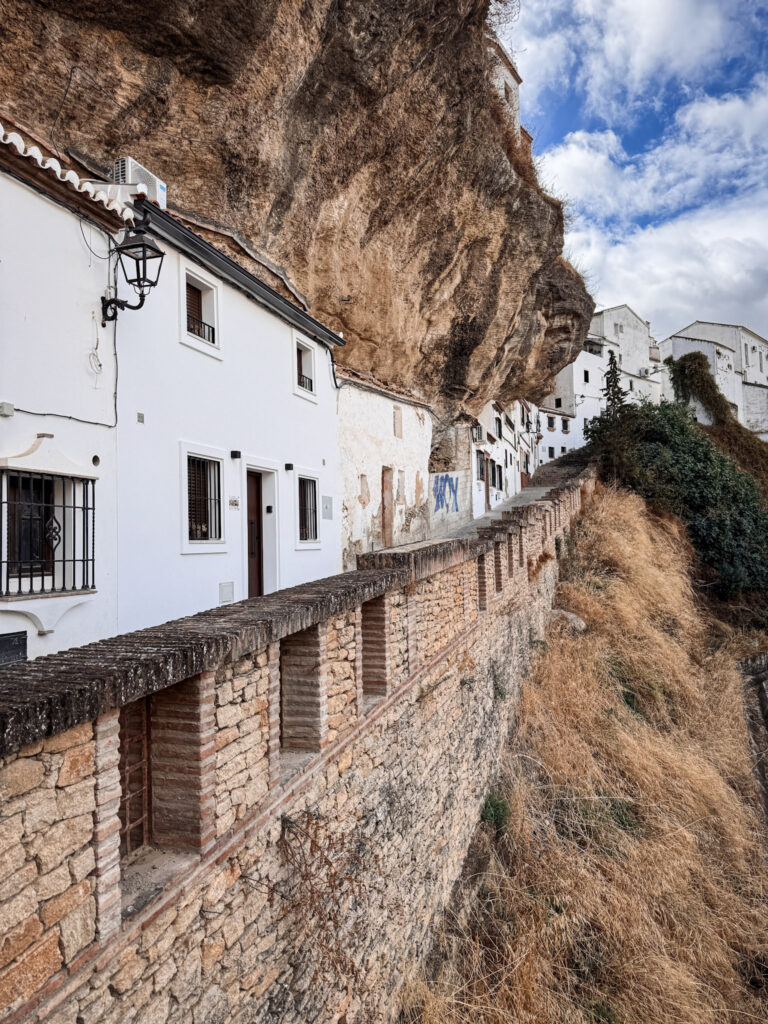
Setenil de las Bodegas is one of those places that makes you stop and ask — who looked at a rock overhang and thought “perfect place to build a village?” And then actually did it.
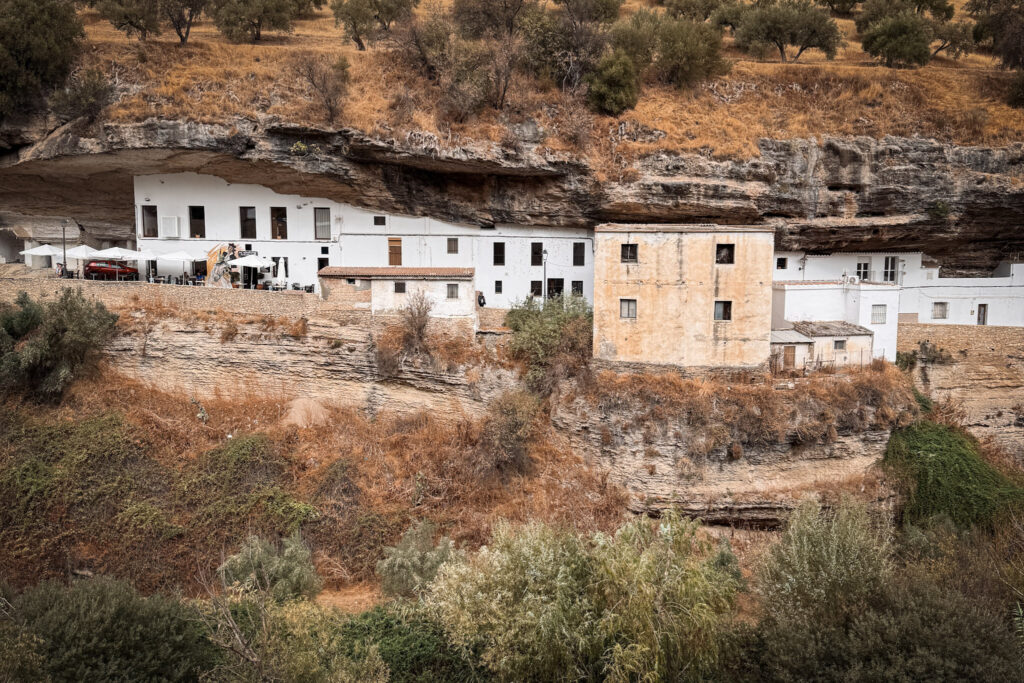
The answer, of course, is the Spanish — and the result is extraordinary. Houses, restaurants, bars, and shops are built directly into and beneath massive rock overhangs, creating a surreal streetscape unlike anything else in Andalusia. Walking through Setenil feels like stumbling onto a movie set that forgot to tell anyone it was there.
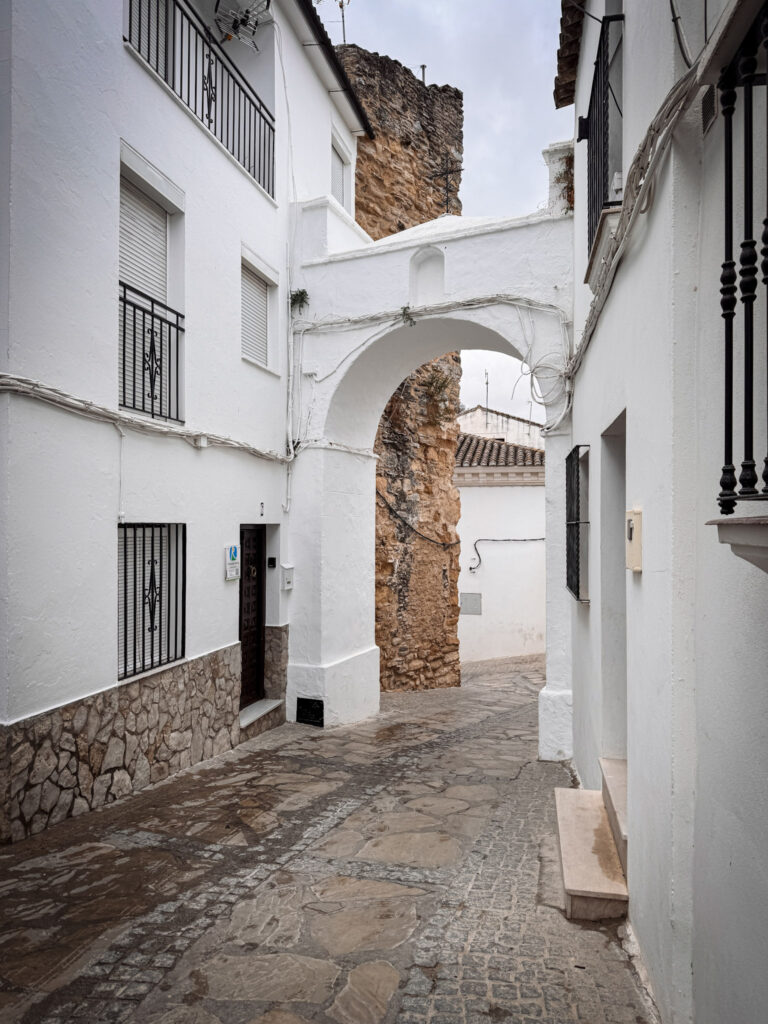
Spend half a day wandering the narrow streets, ducking under rock ceilings, and stumbling across viewpoints that reveal just how dramatically the village sits in its gorge. And definitely stop for tapas under the rocks — eating lunch with a cave ceiling above you and the village life buzzing around you is an experience that’s hard to beat.
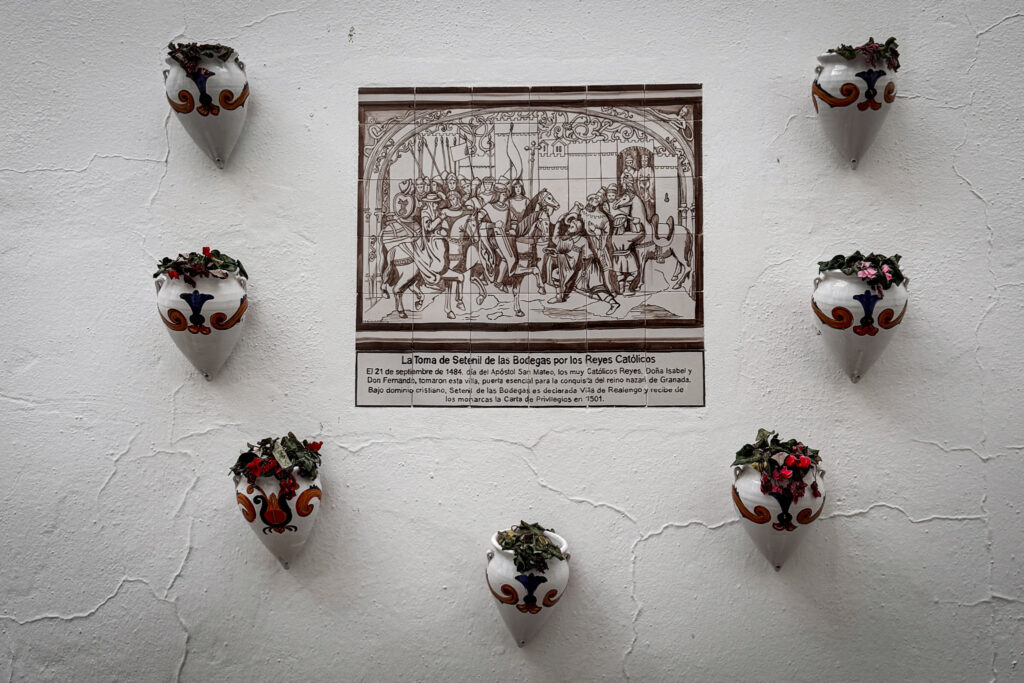
Jet Lag Jelly Tip: Setenil is a perfect stop on the way to or from Ronda — they're less than 20 minutes apart by car. Combine them into one day or give each its own time.
6. Ronda — The Most Beautiful Place in Andalusia
How to Get There from Malaga:

By car: Take the A-357 towards Campillos then onto the A-367 — the drive takes around 1 hour 20 minutes. It's the fastest and most flexible option, though the road climbs hard through the mountains and gets curvy. One thing to know: don't drive into the old town, since the ZTL cameras issue automatic fines to non-resident vehicles. Park on the newer side of town instead. You can compare rental options on Discover Cars if you need to book one.

By bus: The Damas/Avanza bus runs from Malaga's Estación de Autobuses (next to Maria Zambrano train station) directly to Ronda, taking roughly 1h45m to 2h15m depending on the route. It's an easy, no-fuss option if you don't want to drive.

By train: Worth noting this one's a bit more of a hassle than you'd expect — the train from Malaga to Ronda usually requires a transfer at Antequera-Santa Ana, which stretches the journey out. Check routes and timetables on Renfe's official site if you want to go this way anyway.

Jet Lag Jelly Tip: If you're driving, don't try to park in the historic center — it's a maze of tiny one-way streets. Park at one of the newer-town car parks and walk the 10 minutes to the bridge instead.
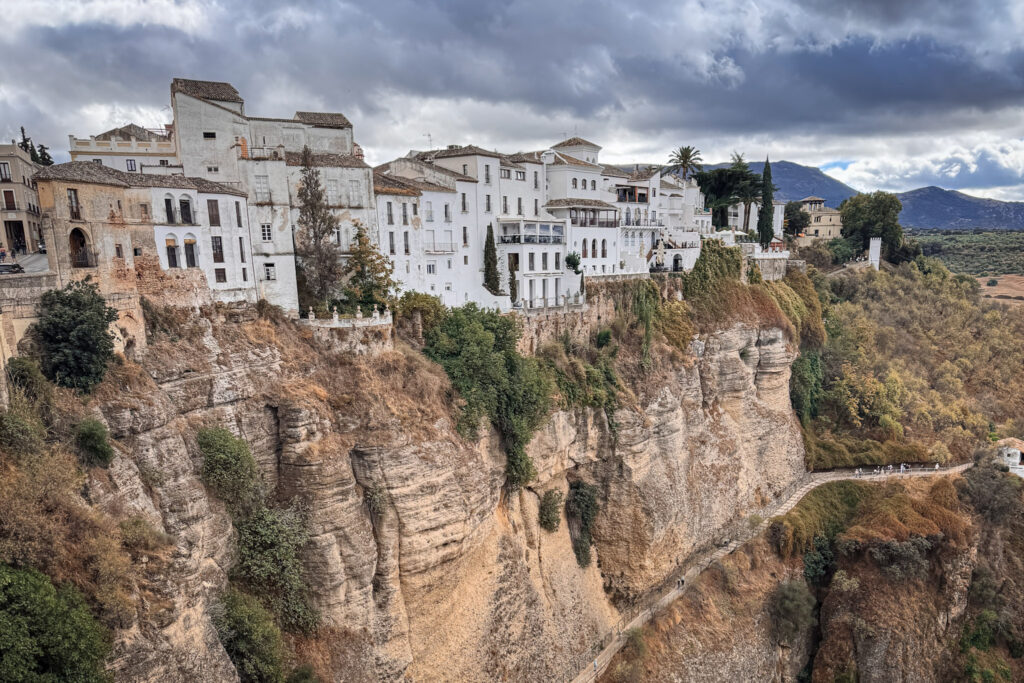
I’ll just say it — Ronda is the most beautiful place I visited on this entire trip. And given the competition, that’s saying something.
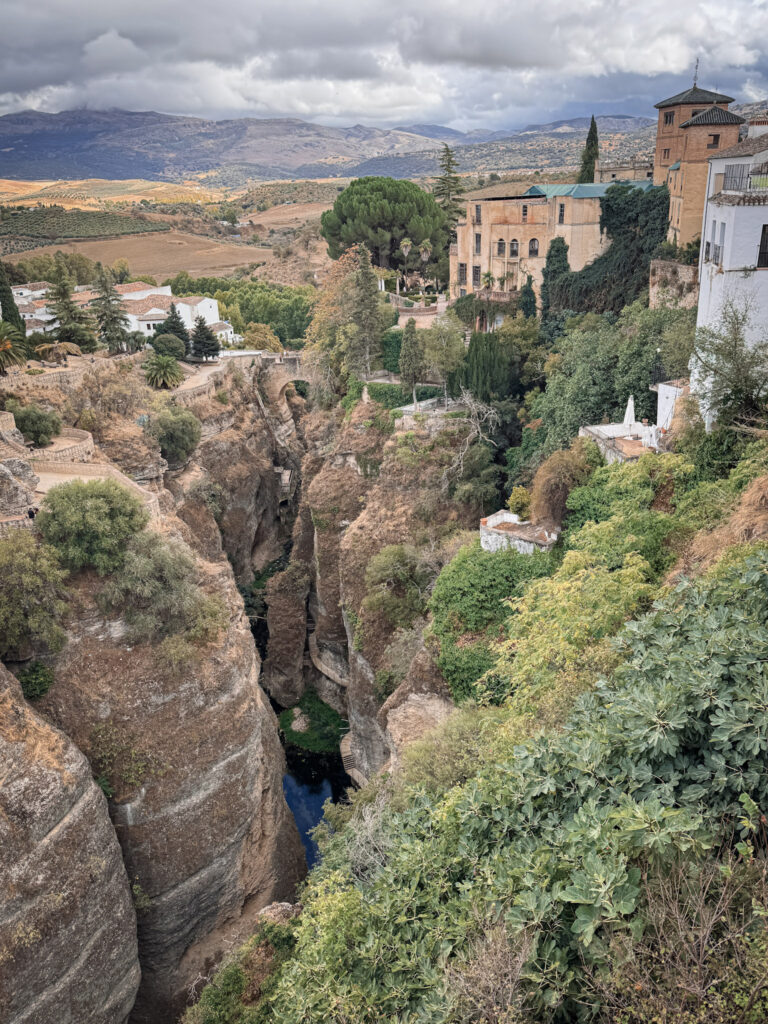
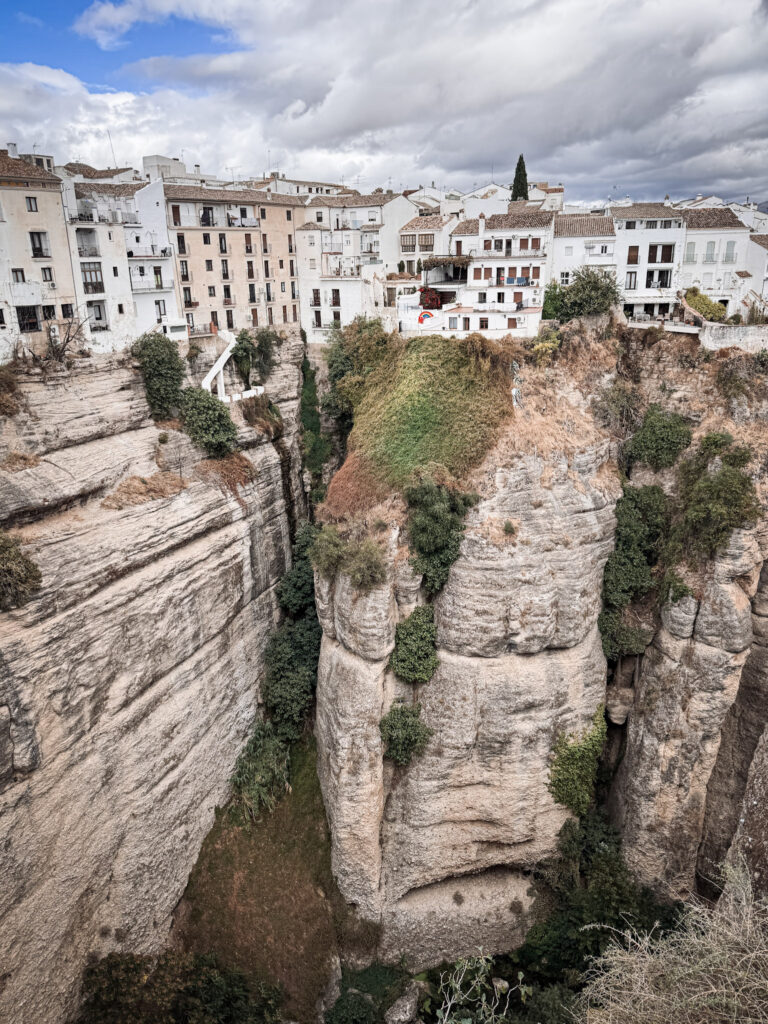
Ronda sits dramatically on top of a sheer cliff, split in two by the El Tajo gorge — a 120-meter deep chasm that cuts straight through the city. Spanning it is the Puente Nuevo — the “New Bridge” — which despite its name was completed in 1793 and is one of the most breathtaking pieces of architecture you’ll ever see. Standing on it and looking down into the gorge is one of those moments where your brain briefly refuses to process what your eyes are seeing.
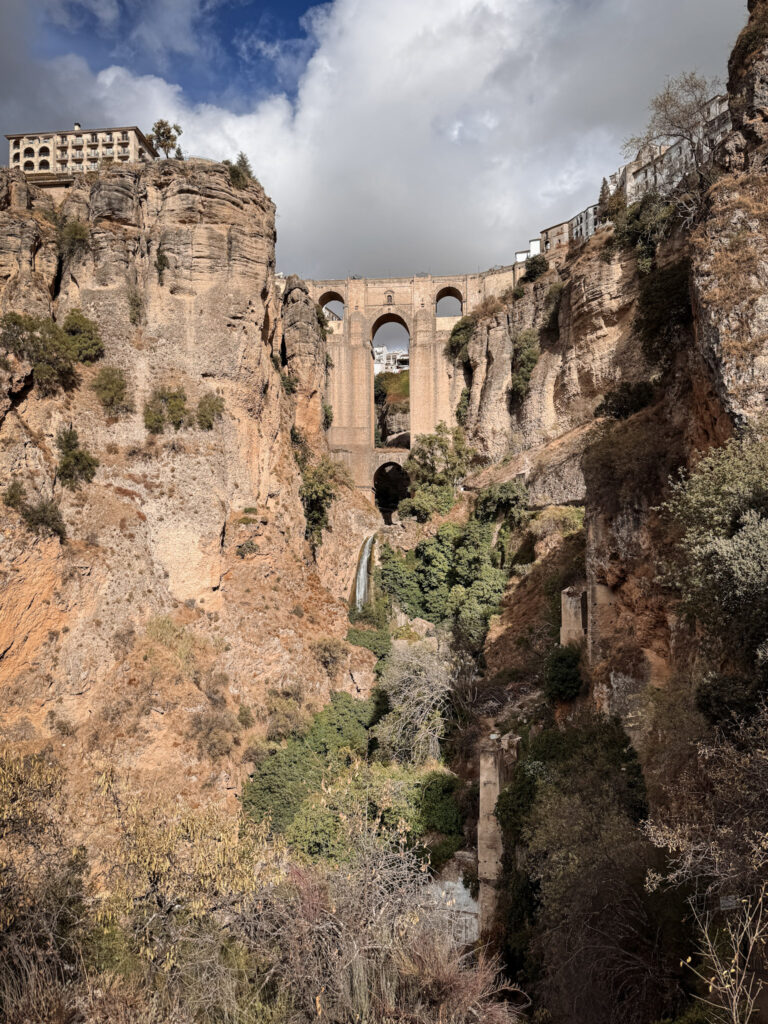
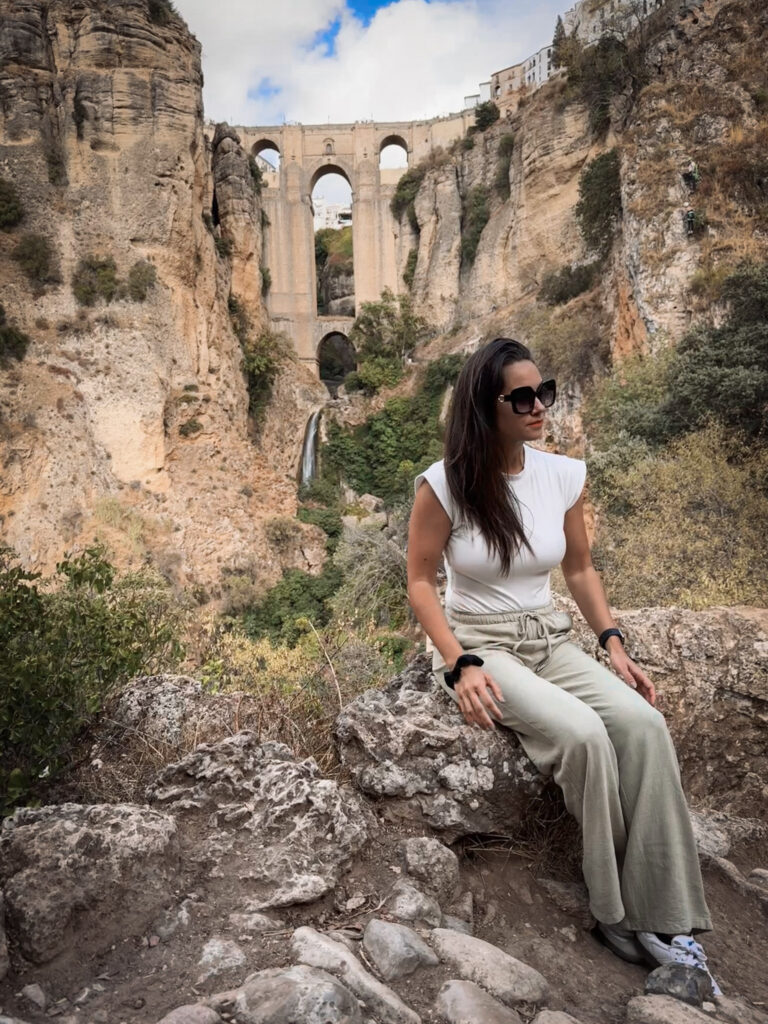
But Ronda isn’t just about the bridge. The old town (La Ciudad) is a winding maze of white buildings, Moorish architecture, palaces, and hidden viewpoints. The Arab Baths are beautifully preserved. The views from the cliff edges over the surrounding countryside are endless and extraordinary.
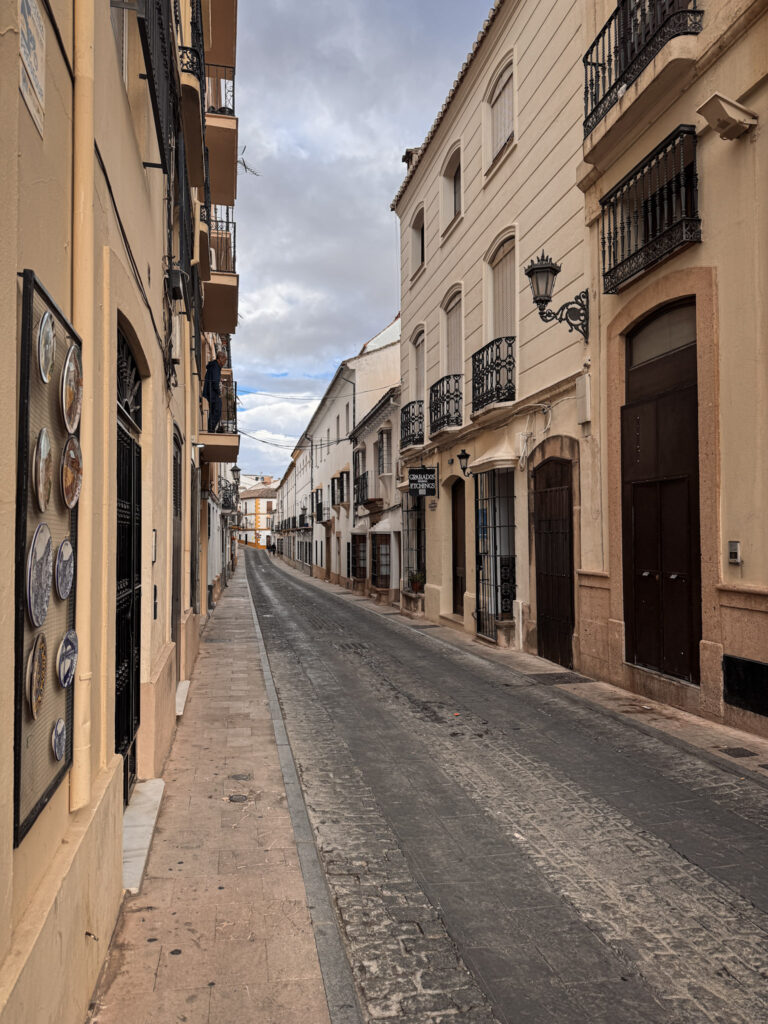
And then there’s the gorge itself — because yes, you can walk down into it. The path descends steeply through the rock, giving you a completely different perspective on the city above and the bridge that seems to float impossibly between the two cliff faces. It’s a workout on the way back up. Worth every step.
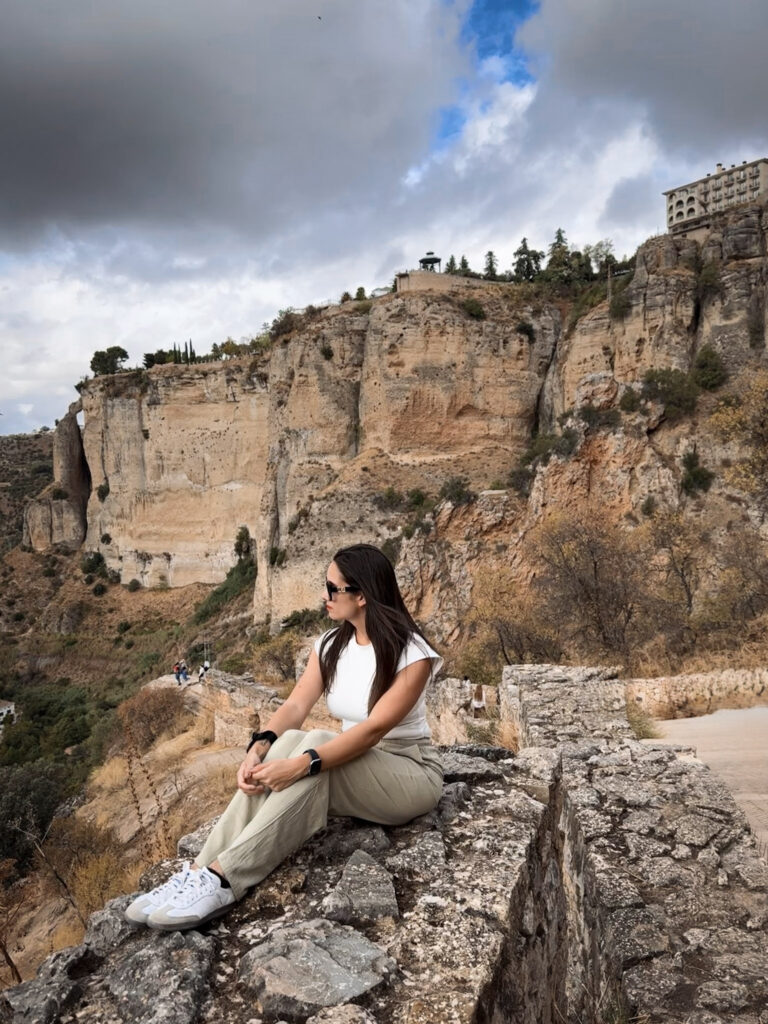
Give Ronda a full day — it earns every minute of it.
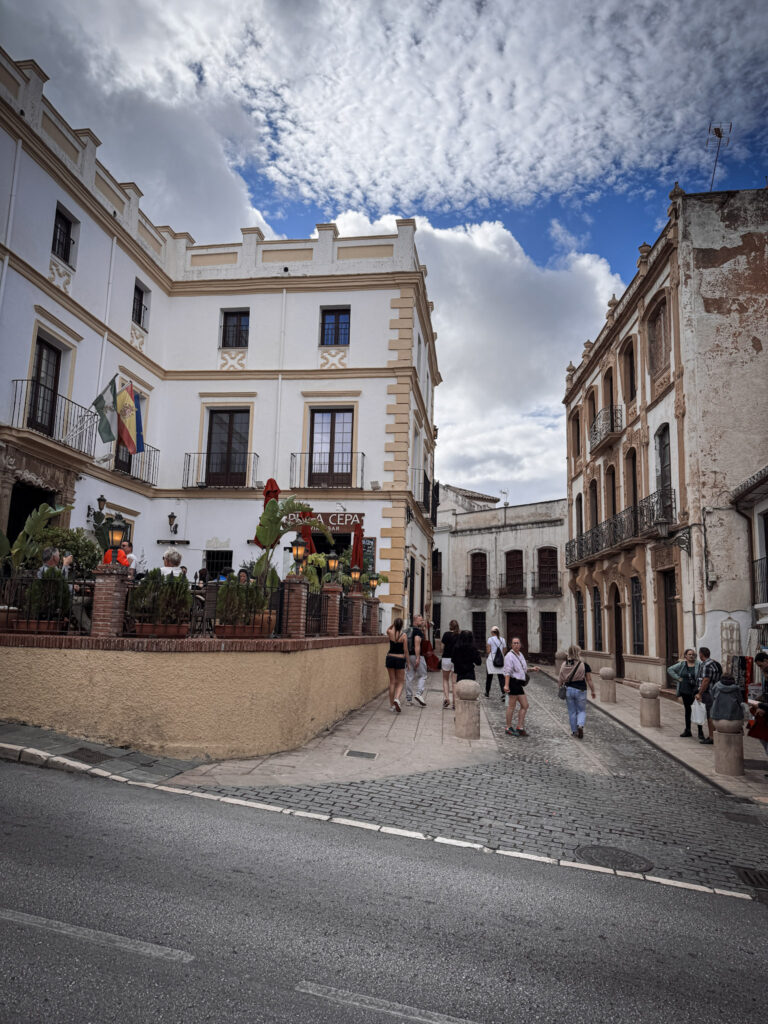
Jet Lag Jelly Tip: The viewpoint directly below the Puente Nuevo gives you the most iconic angle for photos — arrive early morning for the best light and fewer people.
7. Marbella — Old Town Charm & Beach Days

How to Get There from Malaga:

By car: The distance from Malaga to Marbella is 60.9 km, about a 45-minute drive. The A-7, the "carretera vieja," is the most scenic route, taking you past other Costa del Sol towns like Benalmádena, Mijas, and Fuengirola, with great coast views along the way.

By bus: There isn't a direct train from Malaga to Marbella, so the bus is the more straightforward public transport option, departing from the Estación de Autobuses next to Maria Zambrano train station. Check routes and timetables on Avanza's official site.

By train + bus combo: Take the Cercanías C1 train from Malaga to Fuengirola (around 45 minutes), then transfer to a bus for the final stretch to Marbella (about half an hour). Check the Renfe website for train timetables.
How to Get There from Fuengirola:

If you're already based in Fuengirola, getting to Marbella is simple: the bus station is just a few minutes' walk from the main train station, so you can hop straight from one to the other. There's both a slower local bus and a faster L60 bus — the fast option also stops right in Marbella town centre on Avenida Ricardo Soriano, not just at the outskirts bus station, which is handy if your accommodation is near the old town. Bus schedules are on Avanza's site as well.

Jet Lag Jelly Tip: If you're heading to Puerto Banús specifically, none of the buses stop there directly — you'll need a taxi or a local bus for that last stretch.

Marbella has a reputation for glamour and excess — and while Puerto Banús certainly delivers on that front — the Old Town is a different story entirely.
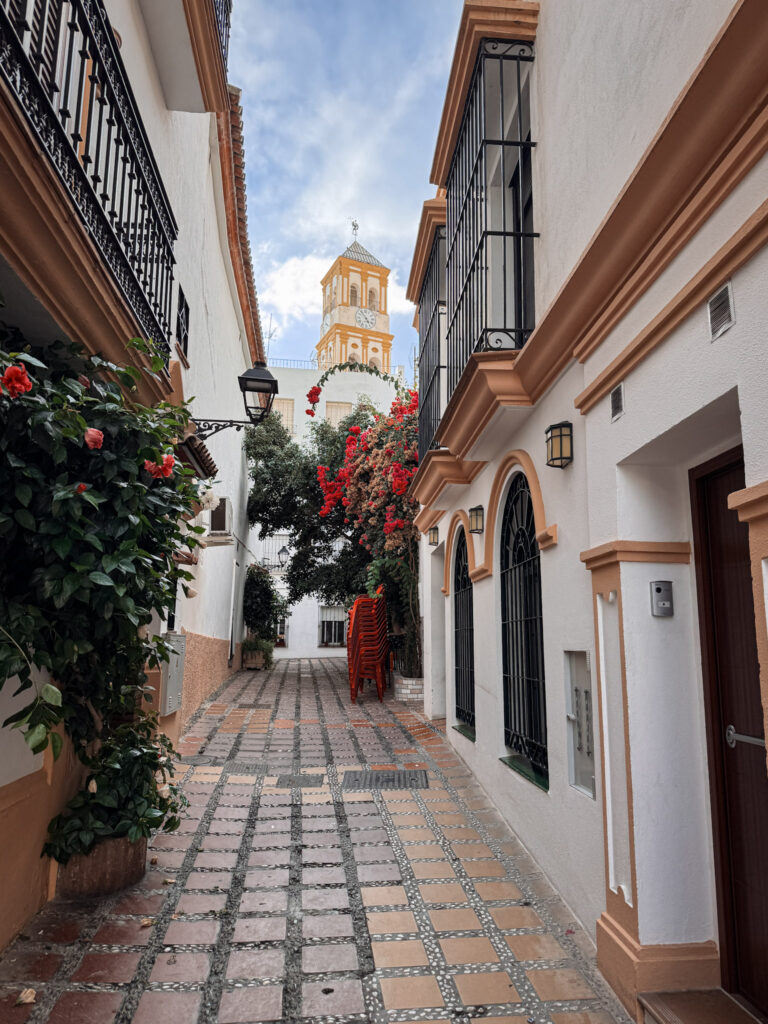
The Casco Antiguo is a beautifully preserved Moorish quarter of narrow whitewashed streets, flower-filled balconies, and sun-drenched plazas. The Plaza de los Naranjos — the Orange Square — is the heart of it all, surrounded by restaurants and historic buildings that have been there for centuries.


After exploring the old town, the beach is the natural next stop. Marbella’s coastline is long, well-maintained, and lined with beach clubs and chiringuitos (beach bars) where you can spend the afternoon with a cold drink and the Mediterranean stretching out in front of you.
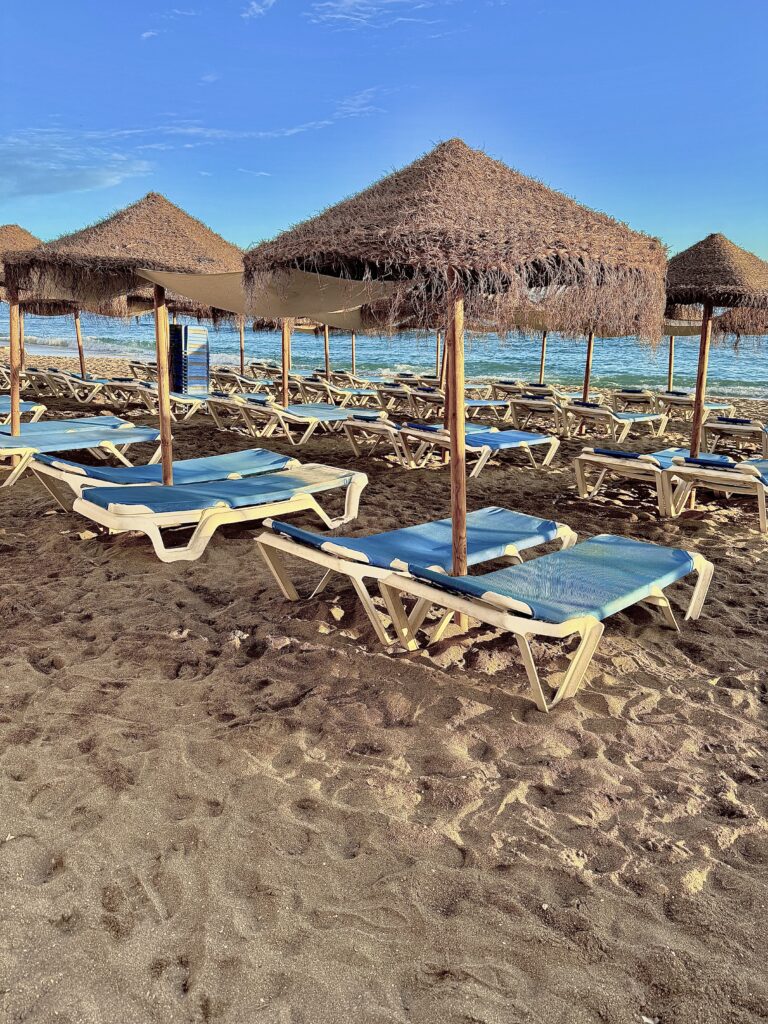
Jet Lag Jelly Tip: Don't skip the Old Town in favor of just the beach — it's genuinely one of the most charming historic centres on the Costa del Sol and takes only a couple of hours to explore properly.
8. Granada — Alhambra & the Magic of Albaicín
How to Get There from Malaga:

By car: The drive takes around 1 hour 40 minutes, with the fastest route running through the interior of Andalusia via the A-92. If you're not in a rush, you can also take the coastal route back via the A-44 and A-7, which takes about 2 hours but gives you scenic Andalusian coast views along the way. Compare rental options on Discover Cars.

By bus: Perhaps surprisingly, the bus is actually faster and more efficient than the train for this route, and cheaper too — taking around 1 hour 30 to 45 minutes. Over 30 direct buses run from Malaga to Granada every day, all operated by ALSA, with Malaga's bus station a 20-minute walk from the cathedral, and Granada's bus station about 2.5 km from the old town (a short bus or taxi ride in). Check routes and book on ALSA's official site.

By train: The fastest option on paper, taking around 1 hour 15 to 22 minutes on the AVE high-speed service. You can also travel on Renfe, Avant, and Alvia trains, though these run less frequently, so check timetables on Renfe's official site in advance.

Jet Lag Jelly Tip: If you don't want to deal with logistics at all, a guided day tour from Malaga is the easiest option — most bundle transport and Alhambra tickets together, which saves you the separate ticket-booking headache (Alhambra tickets sell out fast and need to be booked well in advance).
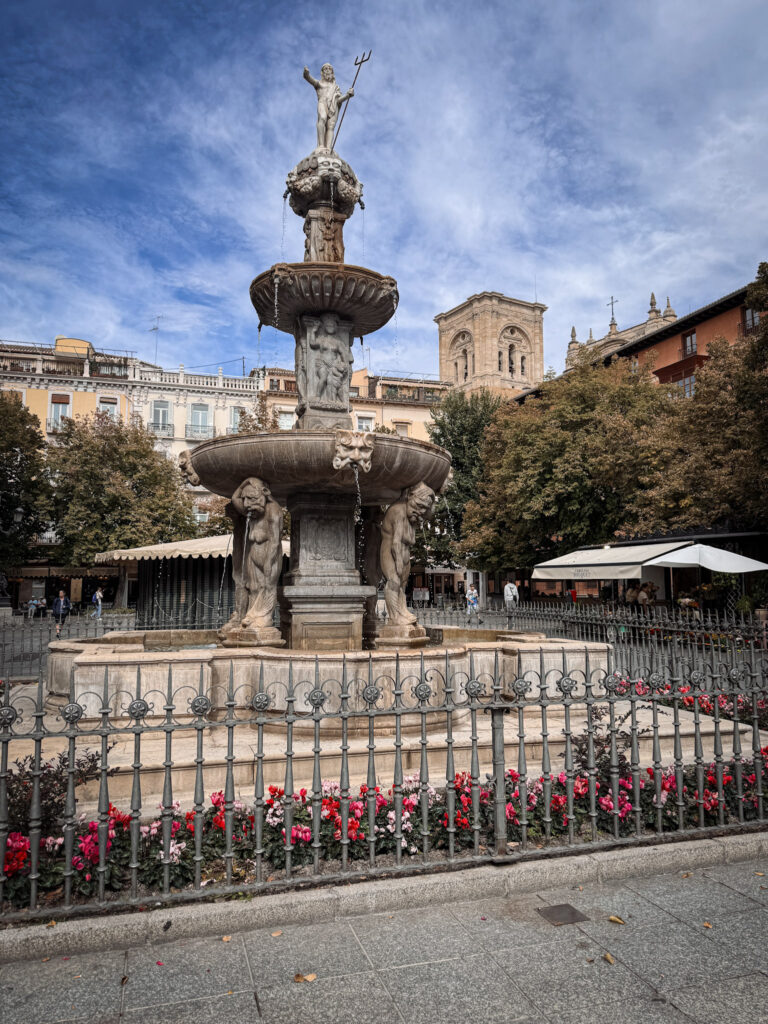
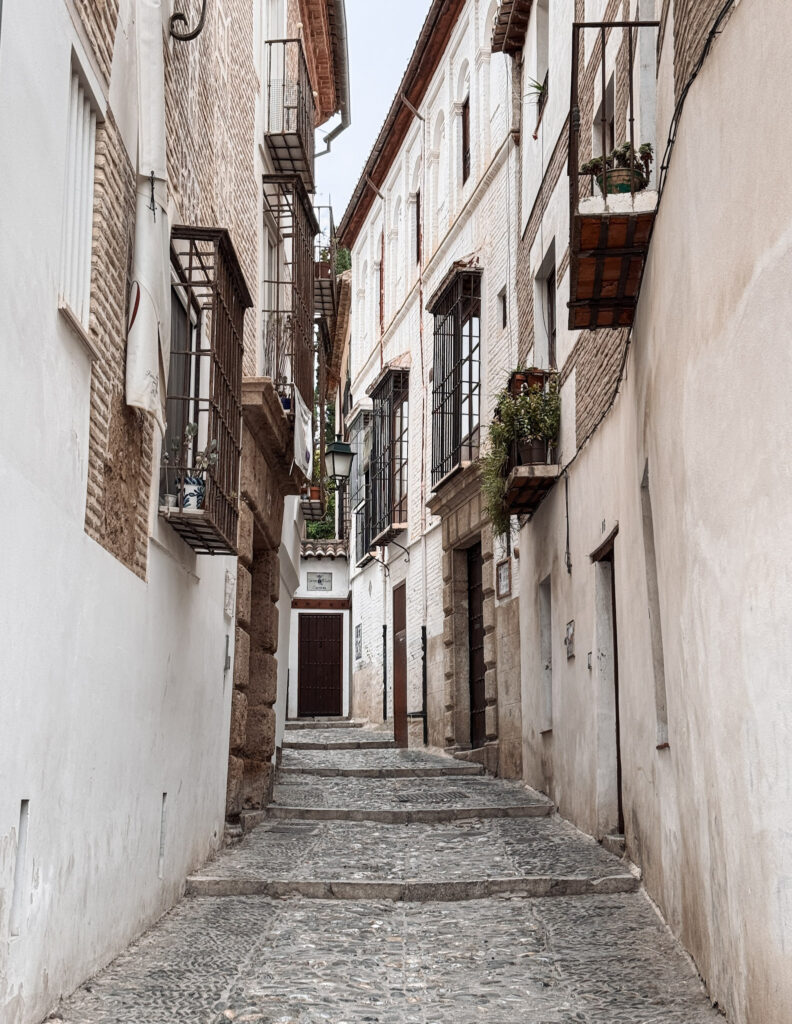
Honestly, just walking through the old city center is an experience in itself. You don’t need a checklist of sights to enjoy Granada — wander the narrow streets around the Alcaicería and Calle Elvira, where balconied buildings lean in close overhead and every corner seems to open onto another little plaza, another fountain, another café spilling out onto the cobblestones.

Let the streets pull you along without a plan. You’ll stumble onto ornate old fountains framed by iron railings and flowers, tucked-away restaurants with hand-painted signs, and enough architectural detail on the balconies alone to keep you looking up the whole walk.
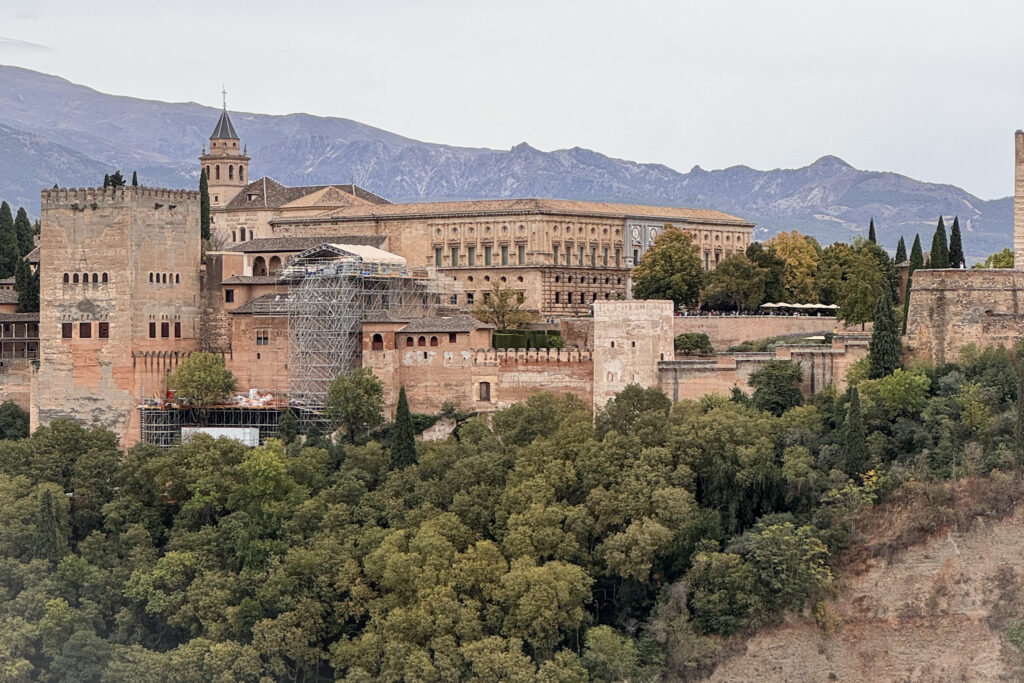
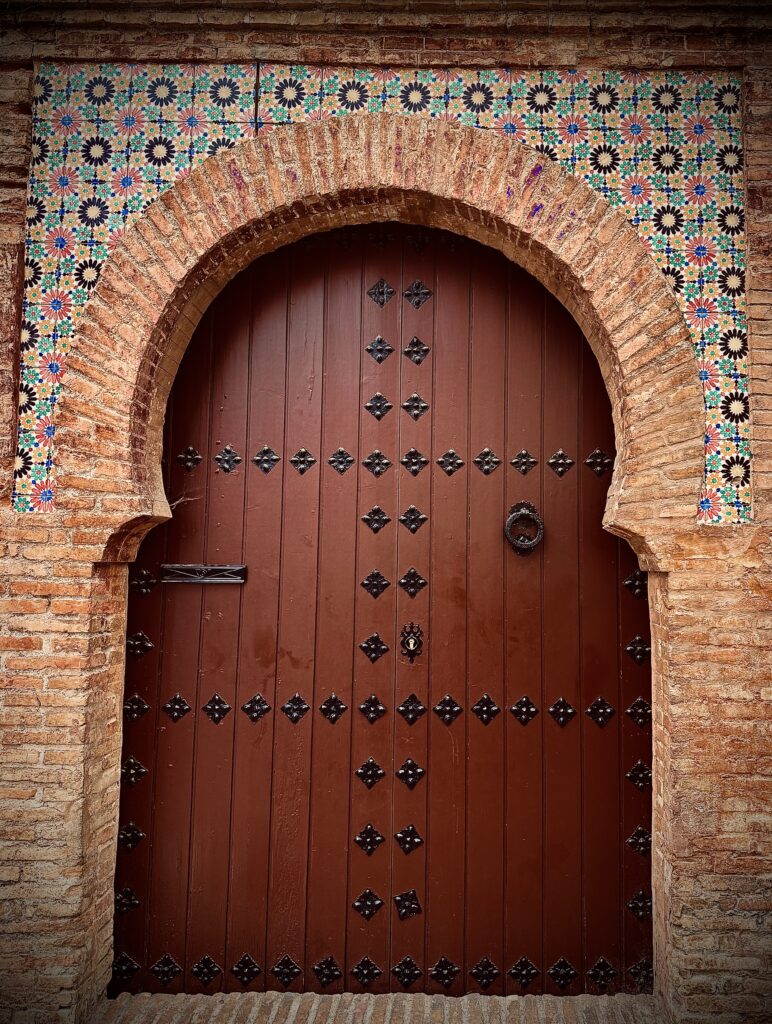
The Alhambra is one of the greatest architectural achievements in human history. A vast Nasrid palace complex perched above the city, filled with breathtaking Islamic art, intricate geometric tilework, ornate archways, and gardens that feel designed to make you forget the outside world exists. No photo does it justice. No description fully prepares you. You just have to go.
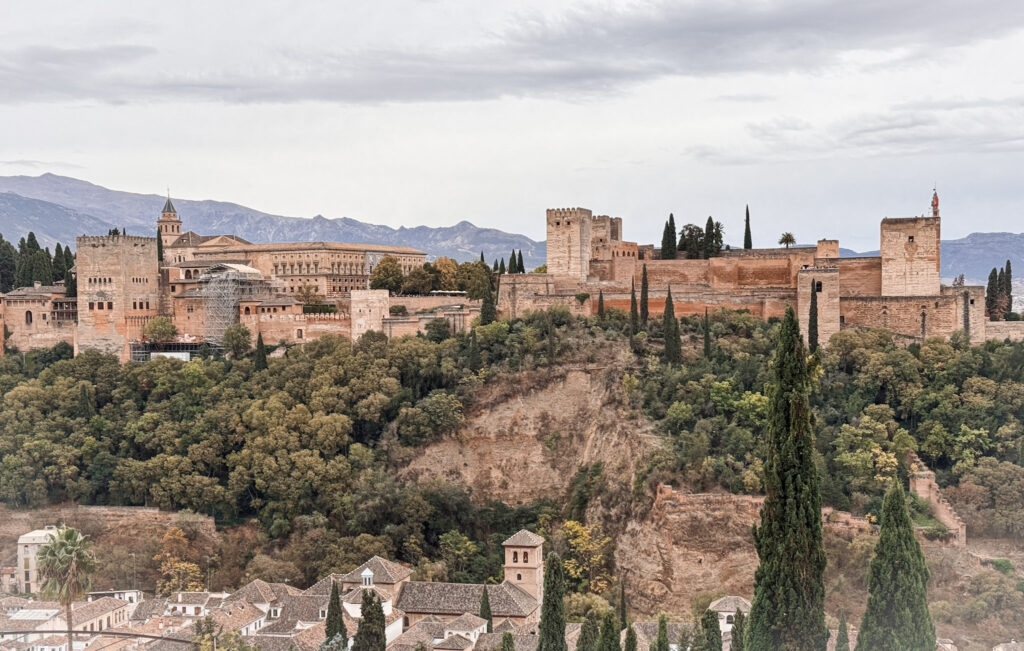

And you absolutely must book tickets in advance — the Alhambra is one of the most visited monuments in the world and sells out weeks or even months ahead. Book directly through the official Alhambra ticketing site to avoid resale markups. Don’t leave this to chance. If official tickets are sold out for your dates, a guided Alhambra tour through GetYourGuide can sometimes secure access when the direct site has run dry, often bundled with a knowledgeable local guide.
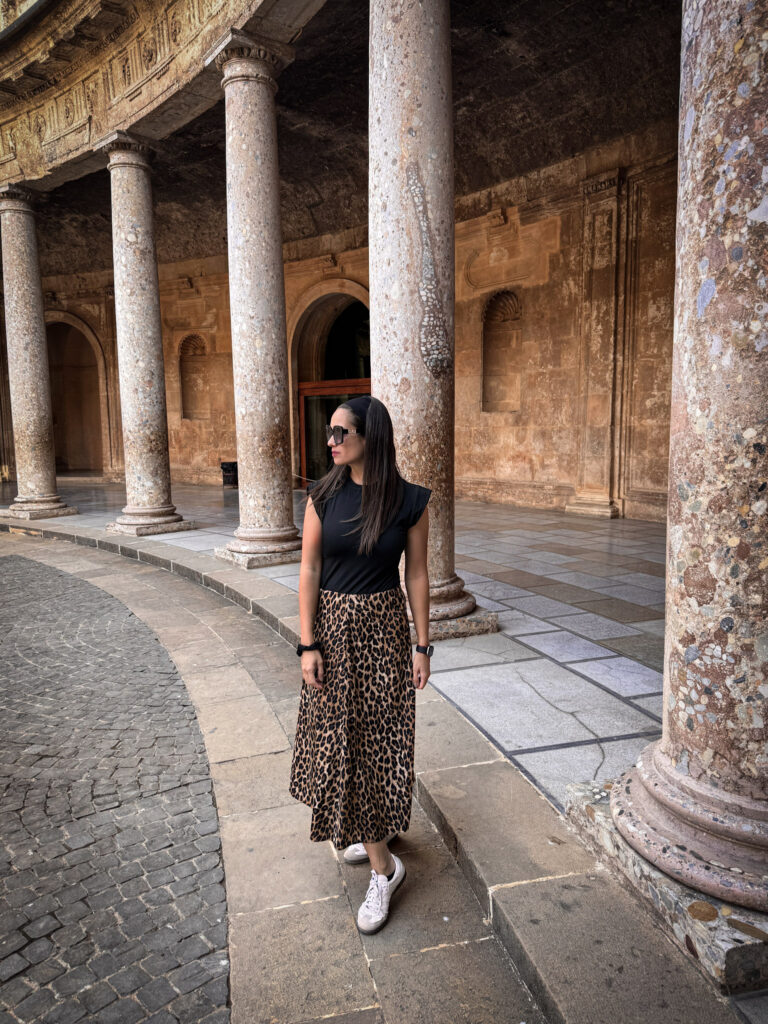
After the Alhambra, head down into the Albaicín — Granada’s ancient Moorish quarter, a UNESCO World Heritage Site of steep winding streets, whitewashed houses, and hidden carmen gardens. Climb up to the Mirador de San Nicolás as the sun starts to lower — the view across to the Alhambra with the Sierra Nevada mountains behind it is one of the most beautiful urban panoramas in all of Europe.
Jet Lag Jelly Tip: Book Alhambra tickets as far in advance as possible — seriously, weeks ahead minimum. The official website is the only safe place to buy — beware of third-party resellers charging inflated prices.
Best Time to Visit
Spring (April–May) and fall (September–November) are the sweet spot for the whole Costa del Sol — Malaga, Mijas, Marbella, Ronda, Caminito del Rey, and the Granada day trip all sit comfortably in this window. Mild enough for hiking the Caminito del Rey without overheating, and warm enough to still enjoy the beach in Malaga or Marbella.
November deserves a special mention — still mild, gorgeous golden light for photos, and noticeably fewer tourists everywhere from Malaga’s old town to Ronda’s viewpoints to the Alhambra.
Summer (June–August) means serious heat, especially inland at Ronda and Granada, where temperatures push past 35°C. The coast, including Malaga, is more bearable but beaches and towns get packed. If summer’s your only option, do outdoor activities like Caminito del Rey early morning.
Winter is quiet and mild on the coast (think 15–18°C in Malaga and Marbella), though it’s cooler and can be rainy inland at Ronda and Granada. Good for budget travel and empty streets, less good for beach time.
Jet Lag Jelly Tip: Alhambra tickets and Caminito del Rey slots both sell out weeks ahead in peak season. Book both the moment you have your dates.
Budget
Costa del Sol is generally affordable, though Marbella nudges prices up compared to Malaga, Mijas, Ronda, or Granada.
Full day, comfortably: €50–80/person excluding accommodation and car
Caminito del Rey ticket: ~€10–18 (official ticket)
Alhambra ticket: ~€19 (general admission)
Malaga attractions: Alcazaba + Gibralfaro combined ticket ~€5.50, Picasso Museum ~€12
Tapas + drink: €2–5, often with a free tapa included in Malaga and Granada
Budget hotel/hostel: €25–50/night (Malaga, Mijas, Ronda, Granada) / €40–70/night (Marbella)
Mid-range hotel: €70–120/night, more in Marbella
Car rental: essential for this route — figure €25–40/day
Jet Lag Jelly Tip: Renting a car is non-negotiable for this trip — the towns are close together but public transport between them is patchy at best, though Malaga itself is very walkable on its own.
Where to Stay
With so many towns covered in this guide, you don’t need to hop hotels every night — basing yourself in one central spot and doing day trips from there is honestly the easier (and often cheaper) way to see the Costa del Sol and beyond.
Malaga and Fuengirola are both solid choices as a base. Malaga puts you right in the middle of the action with easy train and bus connections to most of the towns on this list, plus its own great restaurants, beaches, and nightlife to come back to. Fuengirola is a bit more laid-back and beachy, with the added bonus of quick access to Mijas, Marbella, and the rest of the coast.
Which one makes sense for you really comes down to vibe: pick Malaga if you want a city buzz with day trips built in, or Fuengirola if you’d rather slow down and treat the beach as home base.
Browse places to stay in Malaga or Fuengirola.
FAQ
Do you need a car for a Costa del Sol road trip? Yes — it’s essentially non-negotiable. The towns sit close together, but public transport between them is patchy, though Malaga itself is very walkable on its own. Picking up a rental car at Málaga Airport as soon as you land is the easiest way to start the trip.
How many days do you need for Malaga and Costa del Sol? Give Malaga at least a full day, Ronda a full day on its own, and budget half-days for Mijas, Setenil, and Marbella. Add a full day for Granada as a day trip. A week covers the route comfortably without rushing.
Should I stay in Malaga or Fuengirola? It depends on the vibe you want. Malaga puts you in the middle of the action with easy connections and its own nightlife and restaurants; Fuengirola is more laid-back and beachy, with quick access to Mijas and Marbella.
Is Granada worth a day trip from Malaga? Yes — the Alhambra alone justifies it, and the train gets you there in as little as 75 minutes. Just book Alhambra tickets weeks in advance, since it sells out.
What’s the best time of year to visit Costa del Sol? Spring (April–May) and fall (September–November), with November standing out for mild weather, great light, and noticeably fewer crowds. Summer brings serious heat inland at Ronda and Granada.
Summary
Andalusia is one of those regions that gets under your skin and stays there. From the dramatic gorges of Caminito del Rey to the jaw-dropping beauty of Ronda, the surreal streets of Setenil, and the timeless magnificence of the Alhambra — this corner of Spain delivers extraordinary experiences at every turn.
Based in Malaga, all of these destinations are within easy driving distance — making it one of the most rewarding road trip regions in all of Europe.
Exploring more of Spain? Check out my Around Alicante & Costa Blanca, The Best Places to Visit Near Málaga & Costa del Sol, and Top 10 Beaches in Tenerife guides too.