
This post contains affiliate links. If you book through one, I may earn a small commission at no extra cost to you — it helps keep Jet Lag Jelly running. Read my full affiliate disclosure for more.
Bavaria is the version of Germany most people picture before they’ve even been — fairy-tale castles, alpine lakes, and mountain villages that look almost too perfect to be real. The Füssen and Ostallgäu region, right at the Austrian border, is where that picture actually comes together: Neuschwanstein’s turrets rising over a lake, a royal grotto tucked into the Alps, and a village so covered in painted houses it looks hand-illustrated.
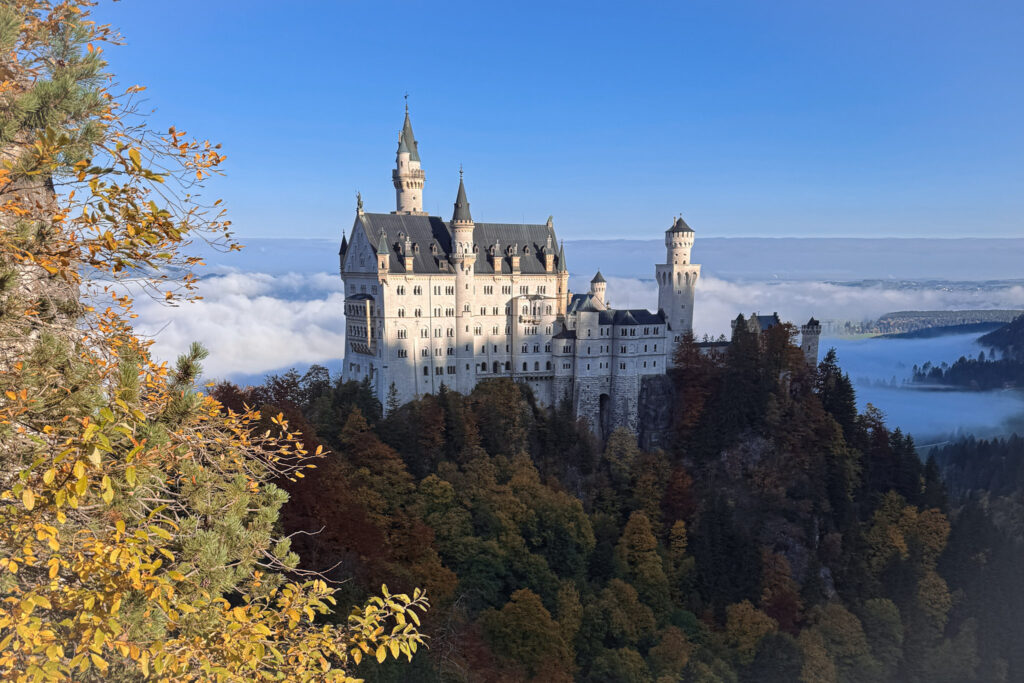
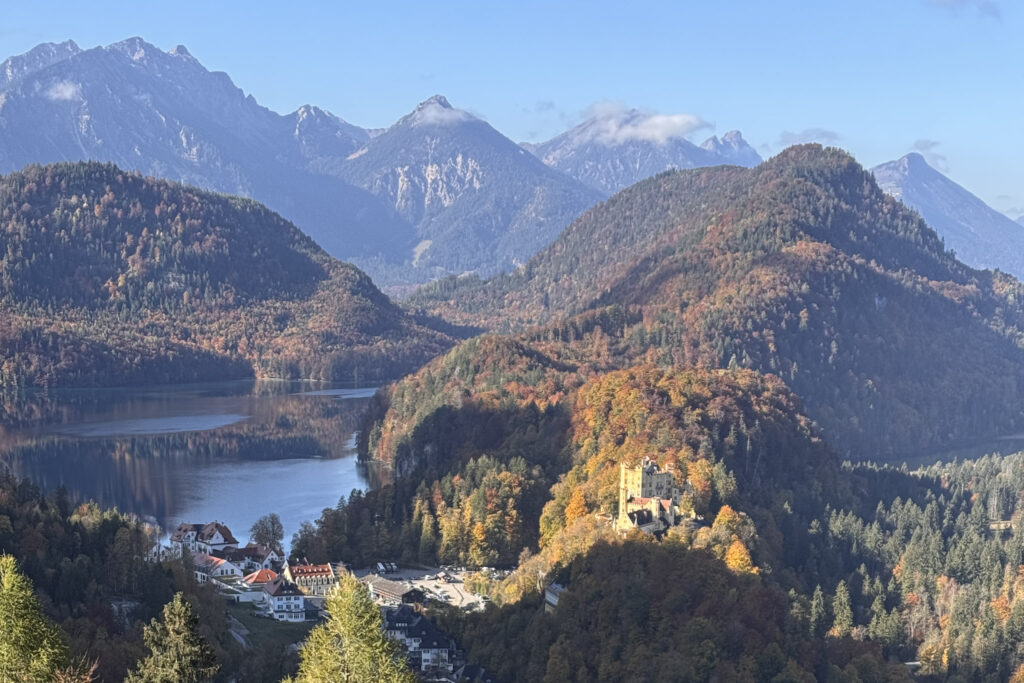
3 days in Bavaria is enough to cover the essentials without rushing — the castles, the lakes, and a walk through the treetops for good measure. Here’s how we did it.
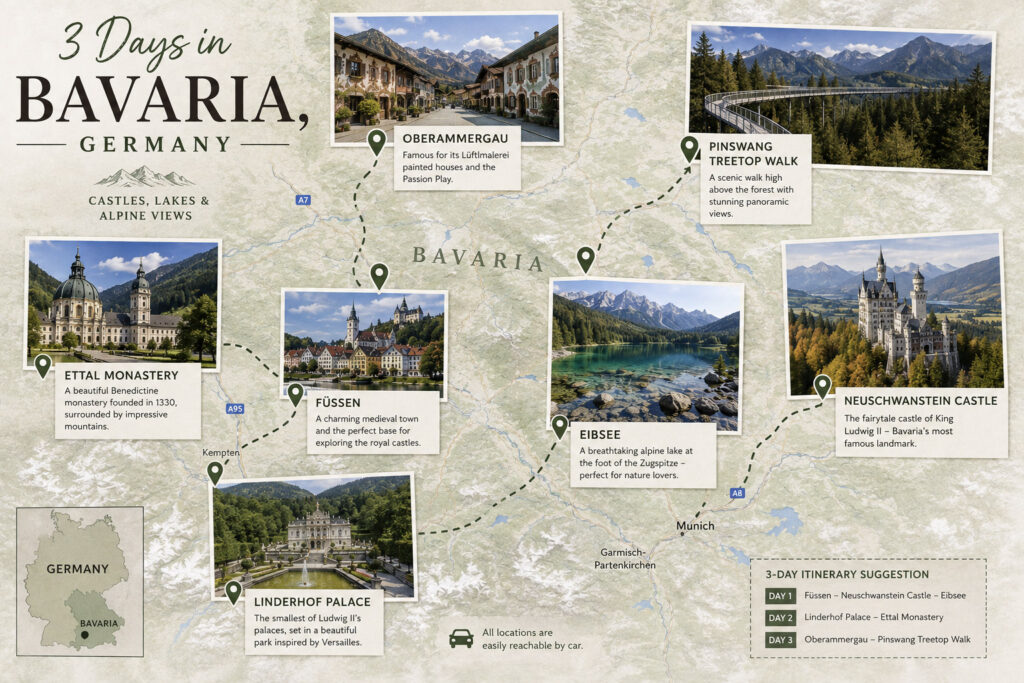
Bavaria Itinerary
1.Füssen
2. Schwangau and the Alpsee
3. Neuschwanstein Castle
4. Ettal Monastery
5. Linderhof Palace
6. Oberammergau
7. Eibsee
8. Pinswang Treetop Walk
Day 1: Füssen, Schwangau, and Neuschwanstein Castle
Start in Füssen, the small Bavarian town that anchors the whole region and sits just minutes from the castles.
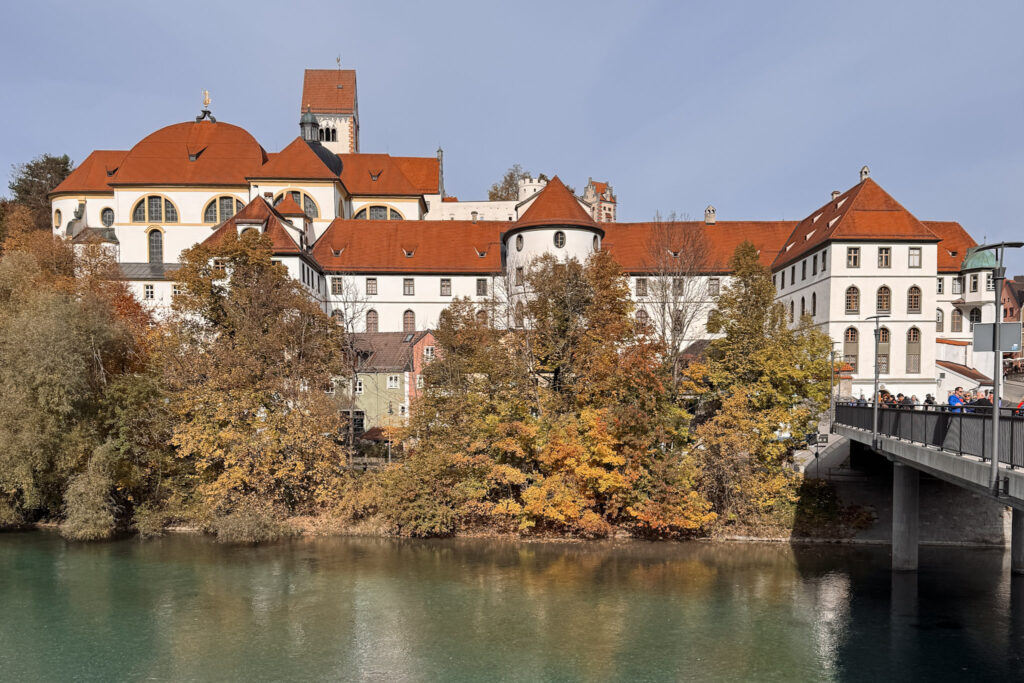
1. Füssen
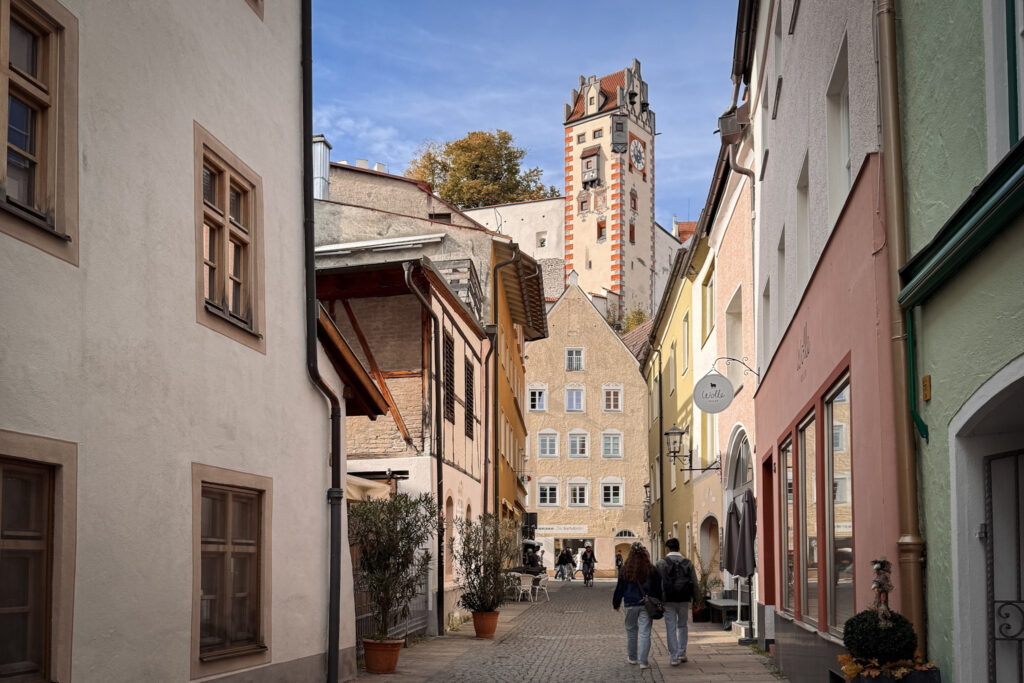
A charming, walkable old town with a Gothic hilltop castle of its own (Hohes Schloss) and a colorful, low-key main street — a good base for the whole three days, and worth an hour or two of wandering on its own.
2. Schwangau and the Alpsee
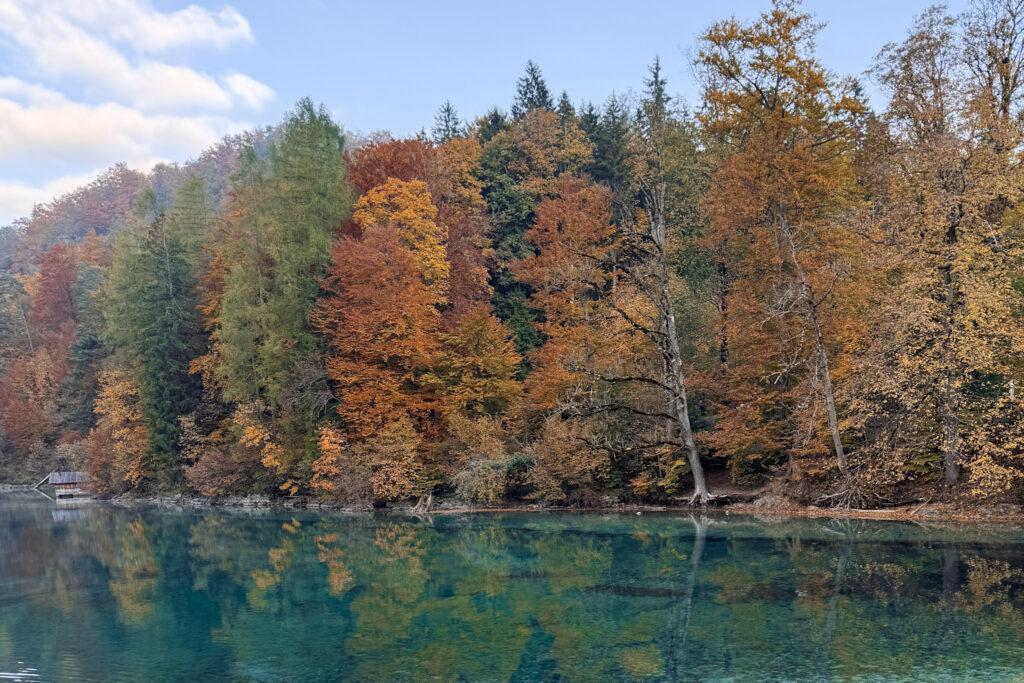
Just outside Füssen, the village of Schwangau sits beside the Alpsee — a strikingly clear alpine lake with Neuschwanstein visible rising above the trees on one side. A walk around the lake, or simply sitting by the shore, is one of the best low-effort ways to take in the whole area.
3. Neuschwanstein Castle
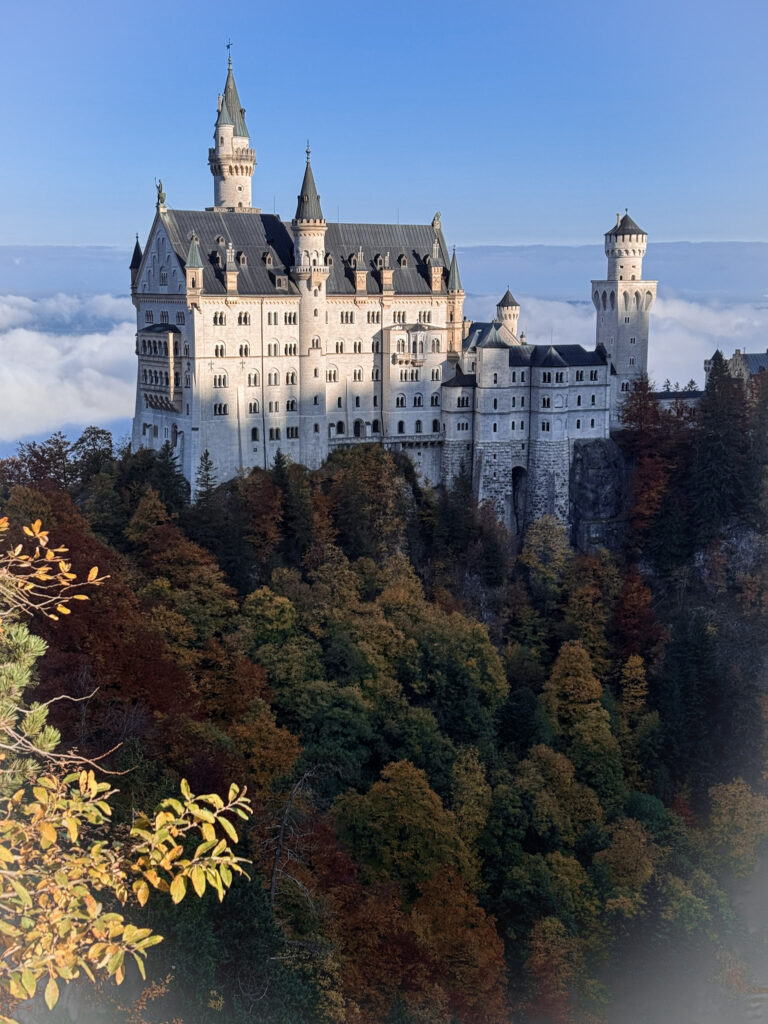
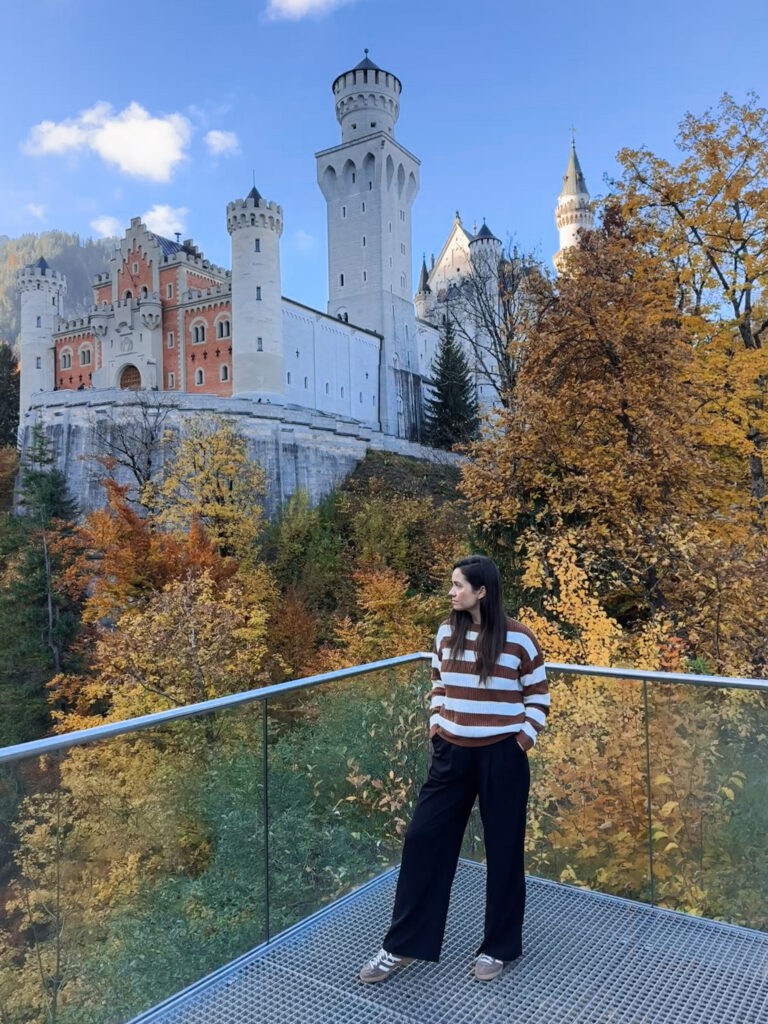
King Ludwig II’s fantasy castle, and the reason most people come to this corner of Bavaria in the first place — perched dramatically above the village, with the kind of storybook silhouette that barely looks real in person, even once you’re standing in front of it.
Jet Lag Jelly Tip: Tickets are timed-entry only and sell out days in advance in peak season — book online before you go, and give yourself buffer time to walk or shuttle up from the village. Book Neuschwanstein Castle tickets via GetYourGuide.
Day 2: Ettal, Linderhof Palace, and Oberammergau
4. Ettal Monastery
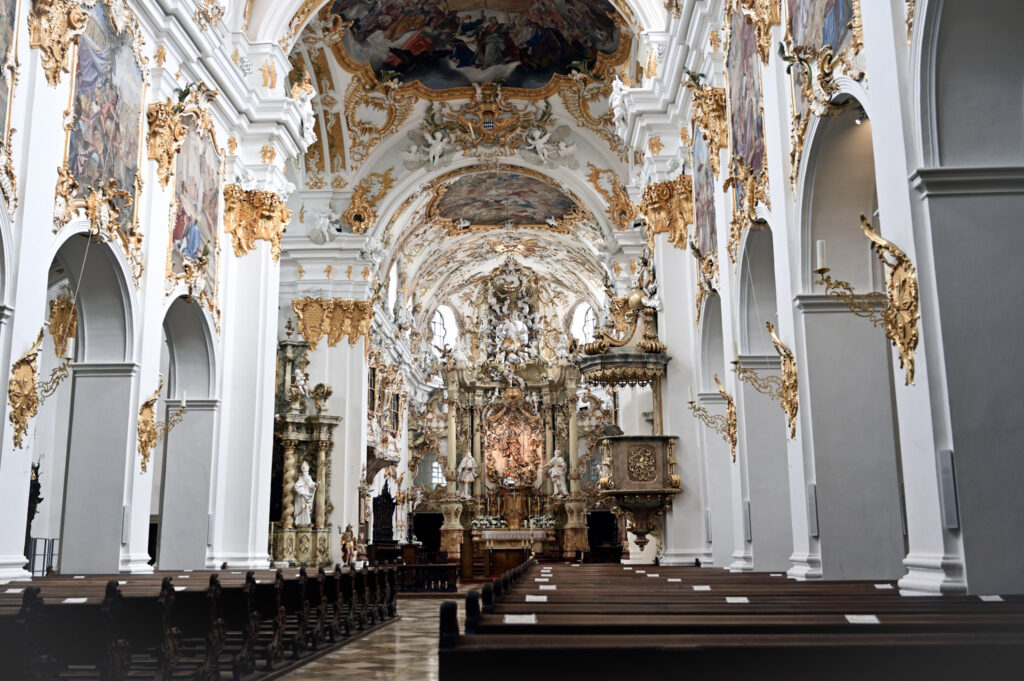
A working Benedictine monastery, still active today, with a striking Baroque church interior that feels almost theatrical compared to the plain exterior — and a small brewery and distillery on-site if you want a taste of what the monks actually produce.
5. Linderhof Palace
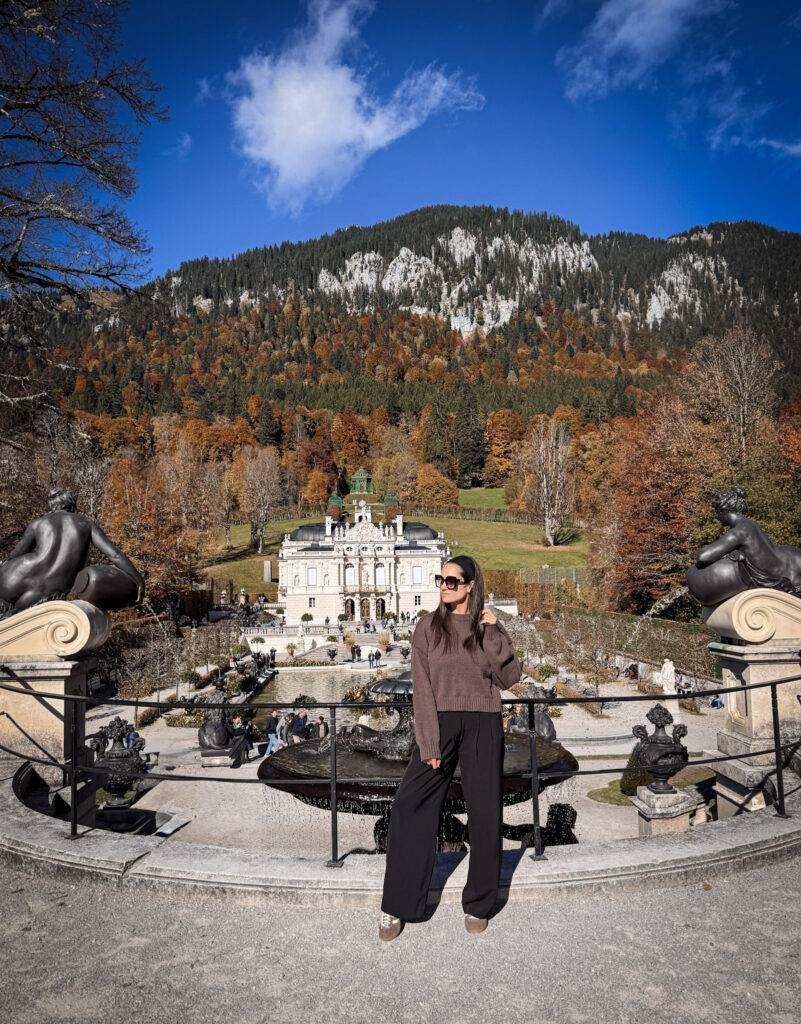
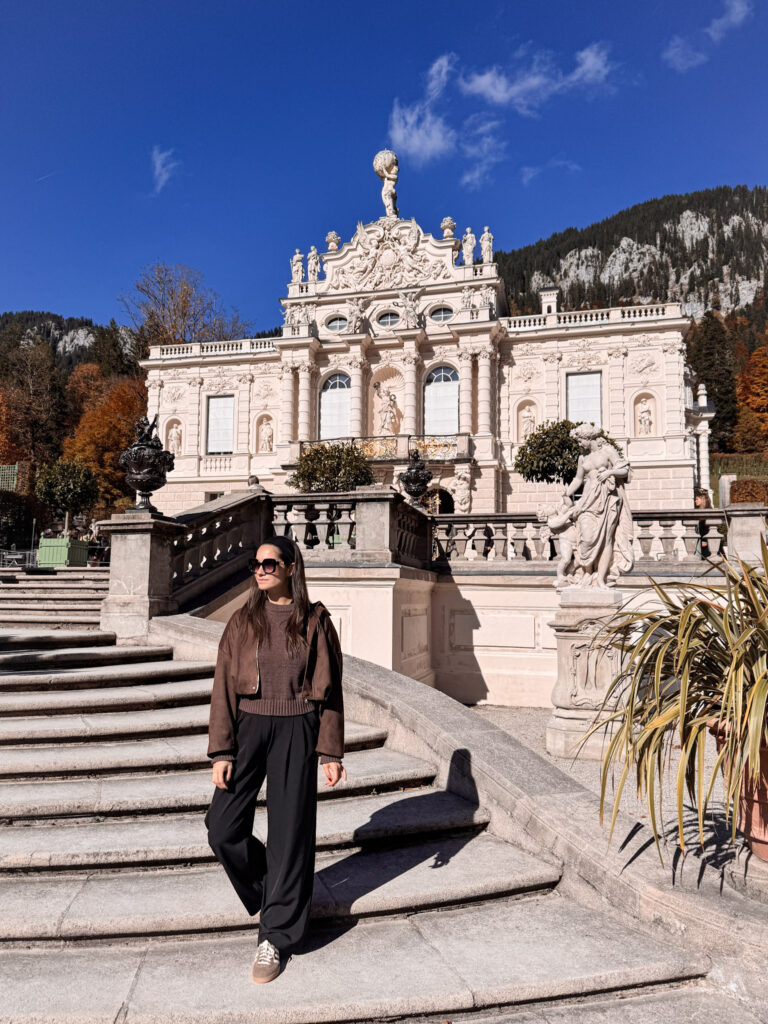
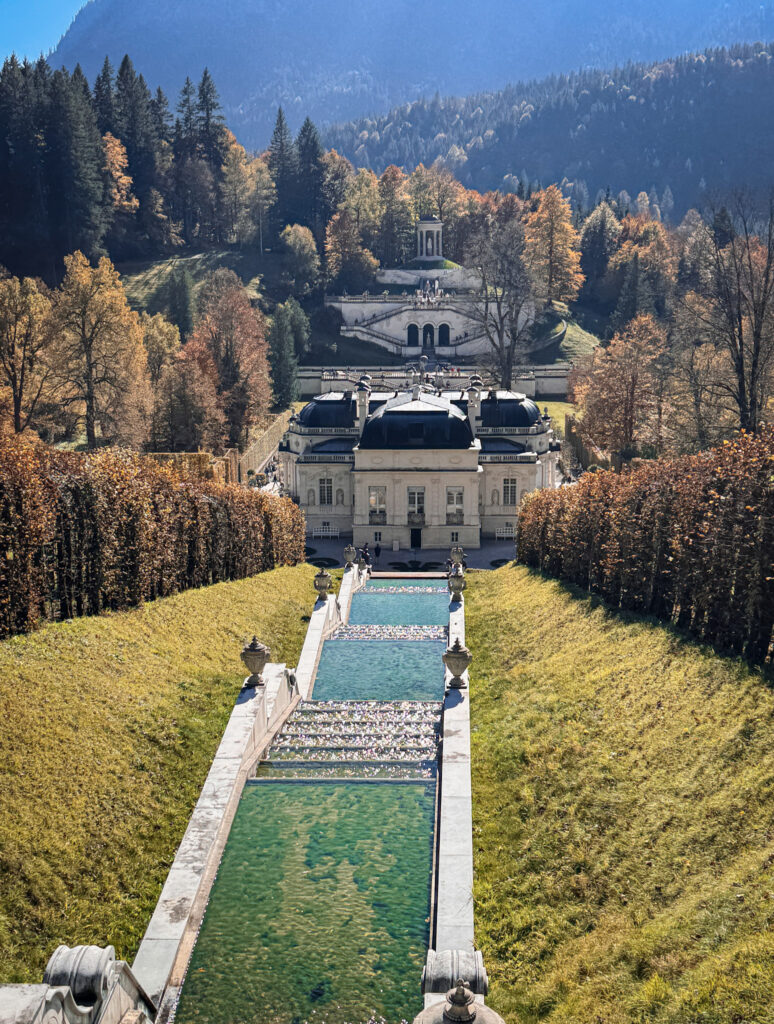
Ludwig II’s smallest but most personal palace — an ornate, Rococo-style retreat surrounded by fountains and formal gardens, with a genuinely bizarre highlight: a man-made grotto built to resemble a scene from Wagner’s operas, complete with an artificial lake inside.
Jet Lag Jelly Tip: Book Linderhof Palace tickets via the official site. If you'd rather skip planning the logistics yourself, GetYourGuide also offers Linderhof Palace day trips — worth noting these run as full-day tours departing from Munich, so factor that into your schedule if you're not already based there.
6. Oberammergau
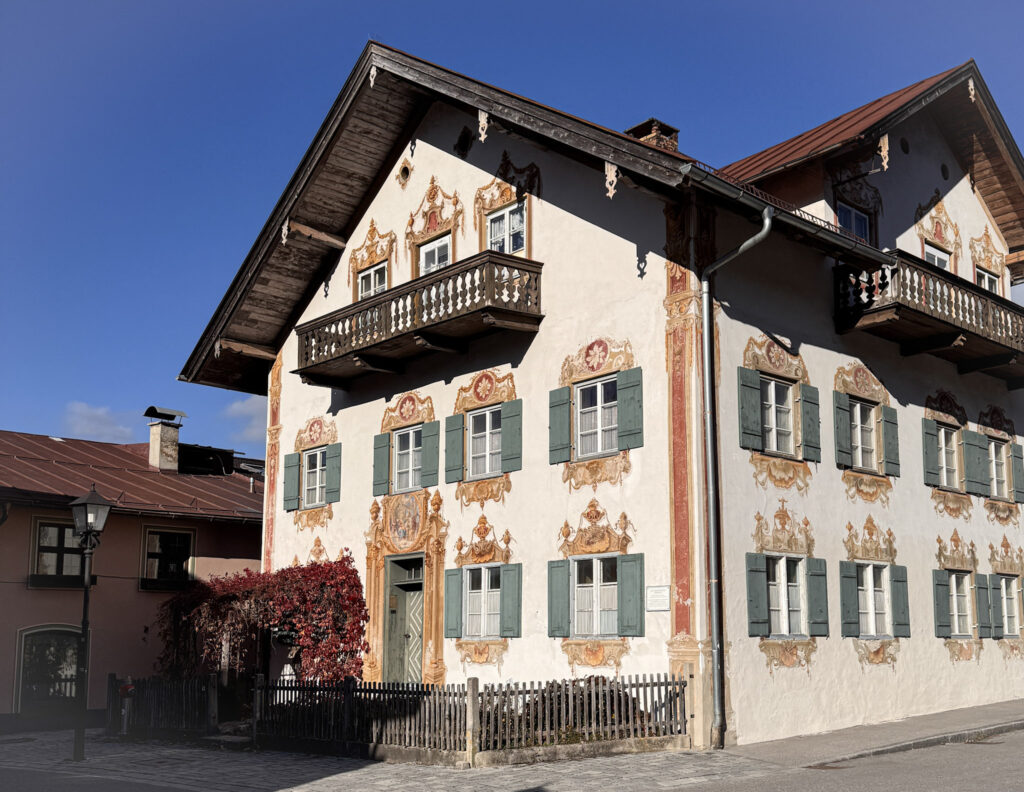
A village that looks almost too perfect to be real — house after house covered in Lüftlmalerei, traditional painted frescoes depicting biblical and folk scenes. It’s also famous for the Oberammergau Passion Play, performed only once every ten years by the village’s own residents.
Day 3: Eibsee and the Pinswang Treetop Walk
A day mixing an alpine lake with a walk through the forest canopy, crossing briefly into Austria.
7. Eibsee
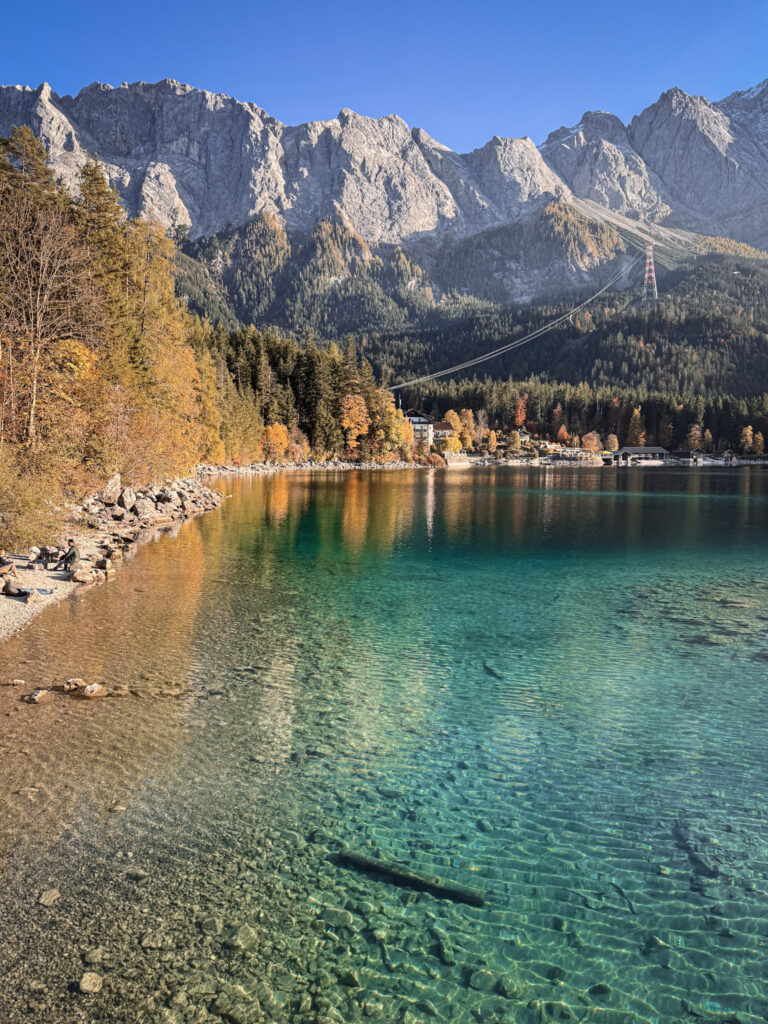
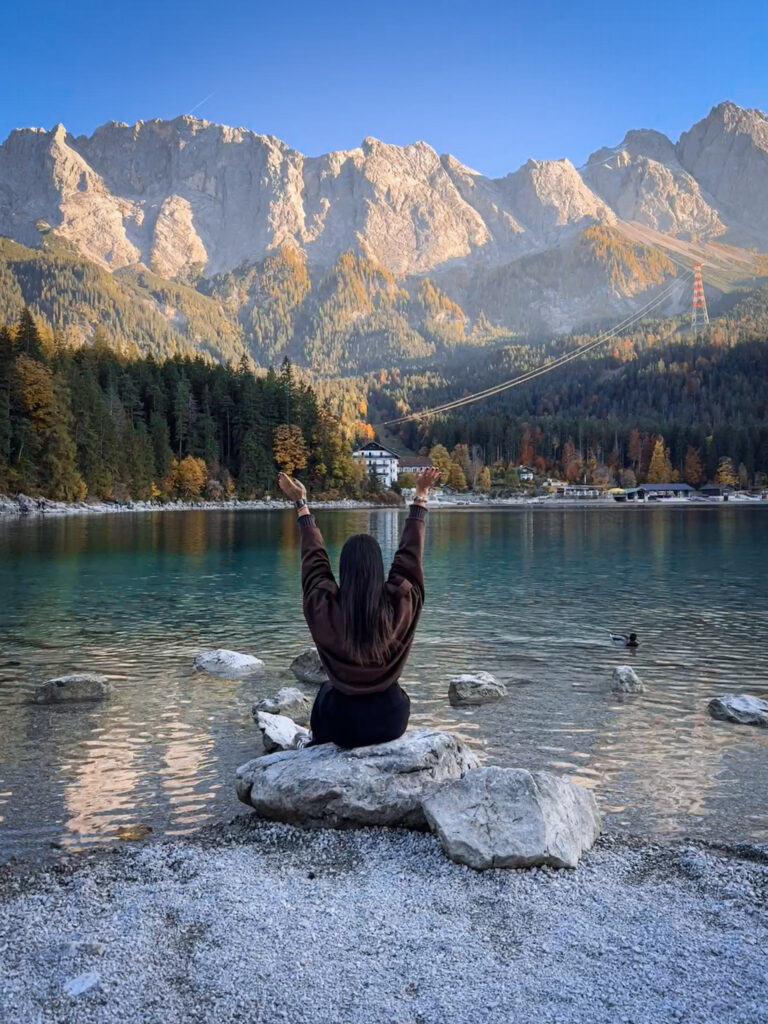
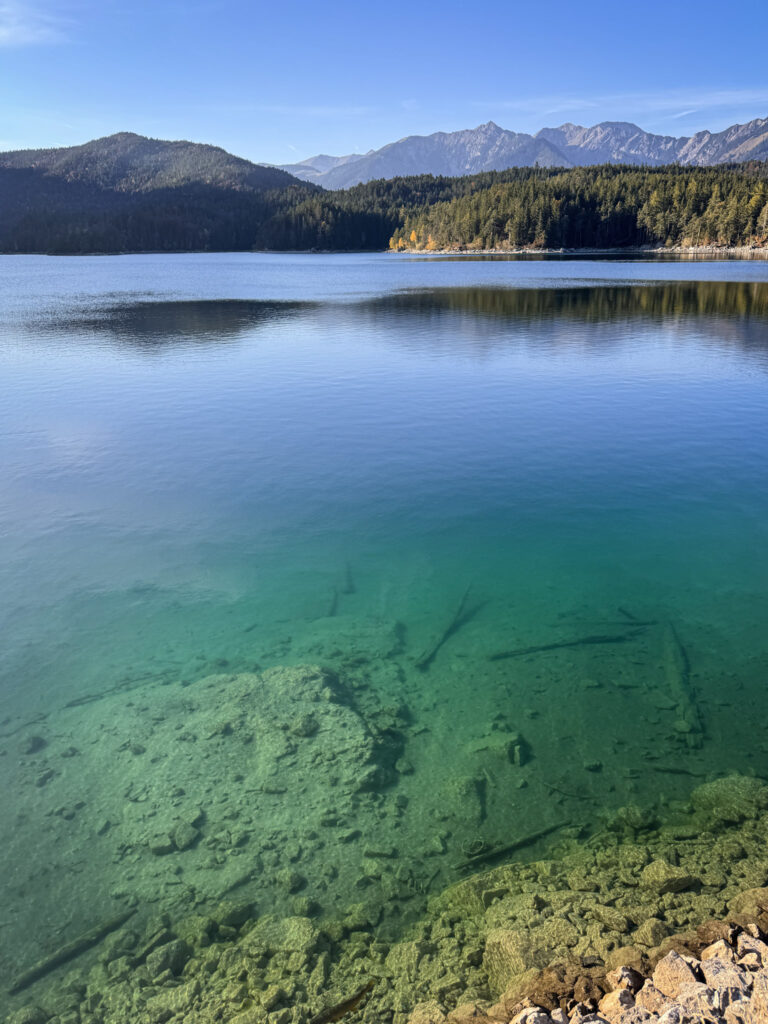
A postcard-perfect alpine lake at the base of the Zugspitze, Germany’s highest peak — turquoise water, tiny forested islands, and a walking trail that circles the entire lake if you want to make a proper morning of it.
Jet Lag Jelly Tip: The Zugspitze cable car departs right from Eibsee if you want to add Germany's highest peak onto the same day — check ahead, since weather can close the summit with little notice. Book Zugspitze cable car tickets via the official site.
8. Pinswang Treetop Walk
Just across the border in Austria, Pinswang shares a forest adventure area with Füssen — a treetop walkway (Baumkronenweg) winding through the Lech river forest, offering a completely different, canopy-level perspective on the landscape you’ve been driving and hiking through for two days.
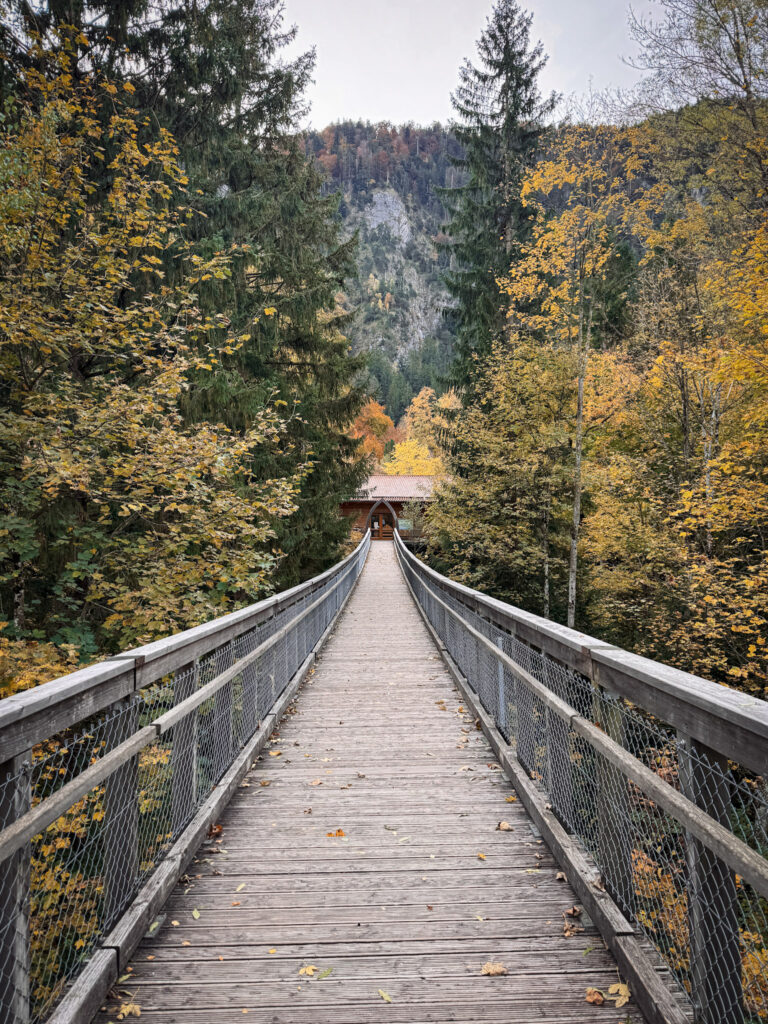
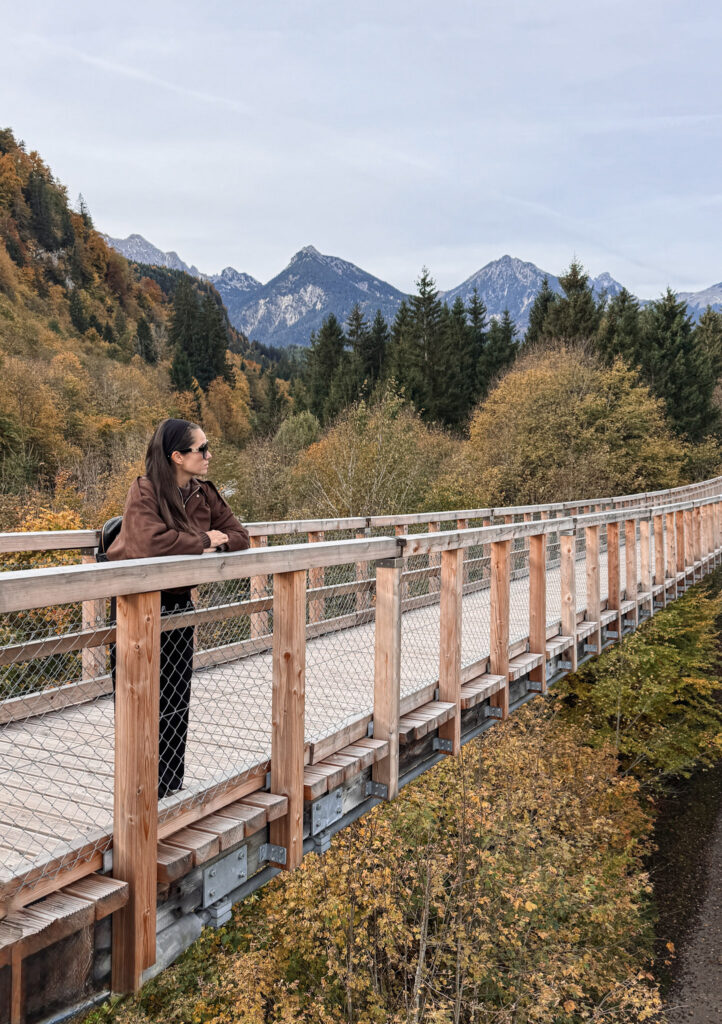
Jet Leg Jelly Tip: Ticket prices and more info on the Füssen-Ziegelwies Treetop Trail via the official site.
What to Eat in Bavaria
Bavarian food is hearty, comforting, and exactly what you want after a day of castles and mountain air. Here’s what’s worth ordering.
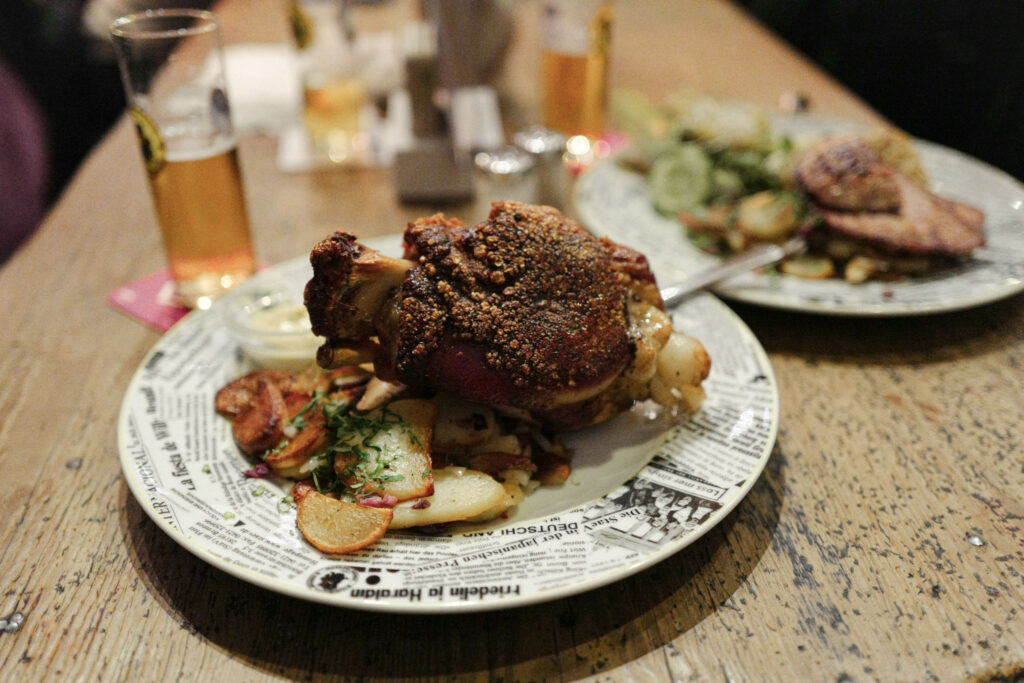
Schweinshaxe — Roasted pork knuckle, crispy-skinned on the outside and tender inside, usually served with a mountain of potato dumplings or sauerkraut. Order it once you’re genuinely hungry — portions are enormous.
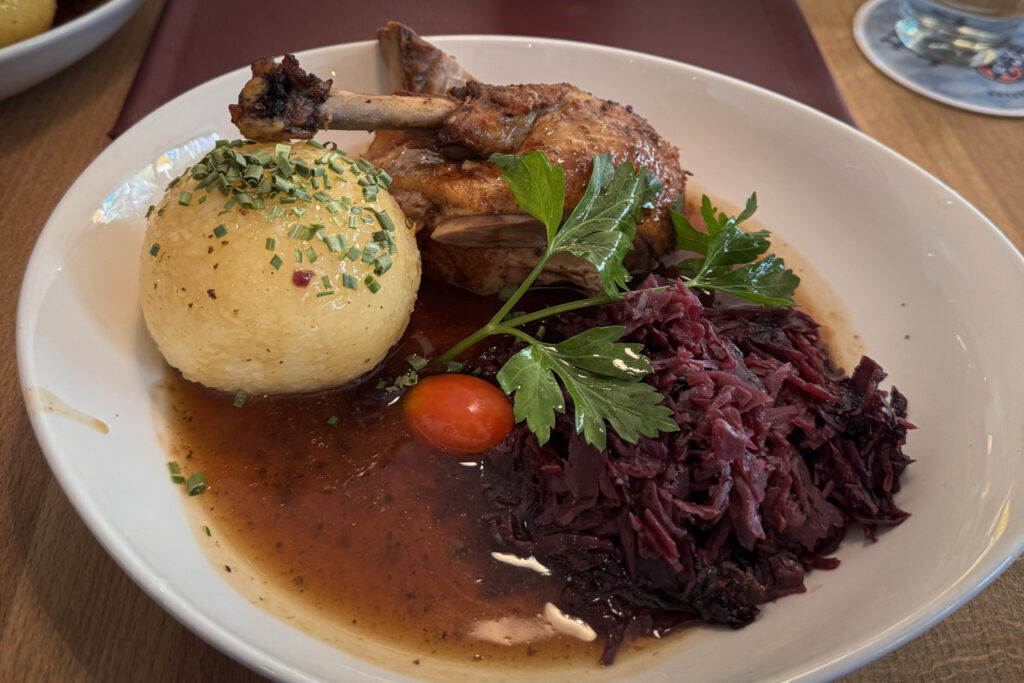
Gebratene Ente (Bavarian Roast Duck) — Typically served as a rich half-duck with deep mahogany, ultra-crisp seasoned skin and remarkably juicy meat. It is traditionally paired with sweet braised red cabbage (Blaukraut) and a large potato dumpling to soak up the savory duck jus.
Weisswurst — A traditional Bavarian white sausage, mild and delicate, classically eaten before noon with sweet mustard and a pretzel, and traditionally never with the skin.
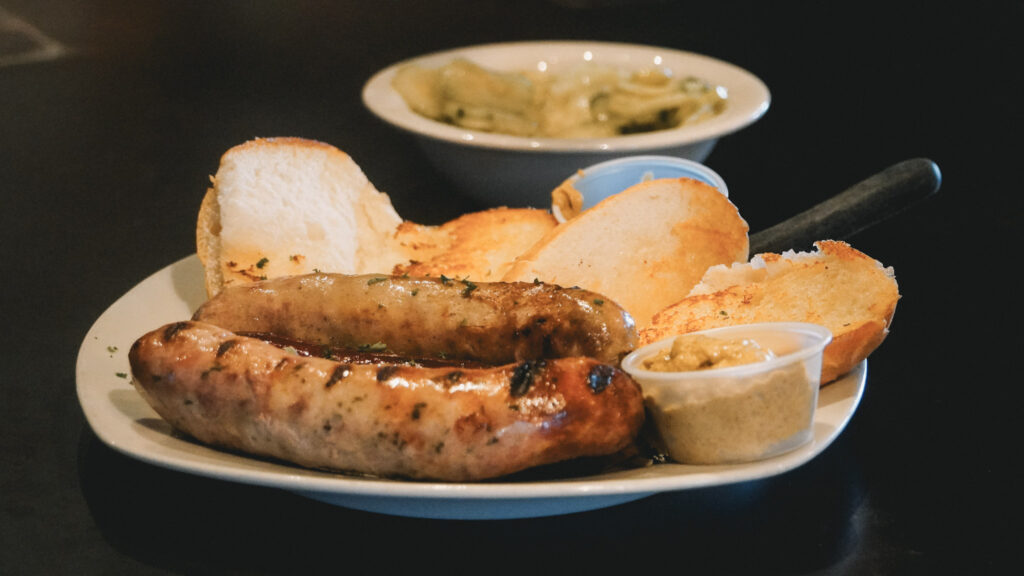
Käsespätzle — Bavaria’s answer to mac and cheese — soft egg noodles baked with melted cheese and topped with crispy fried onions. Simple, rich, and completely worth it.
Schnitzel — While historically Viennese, breaded pork or chicken cutlets pounded thin, fried to a golden crisp, and served with a lemon wedge are a total staple on almost every Bavarian menu.
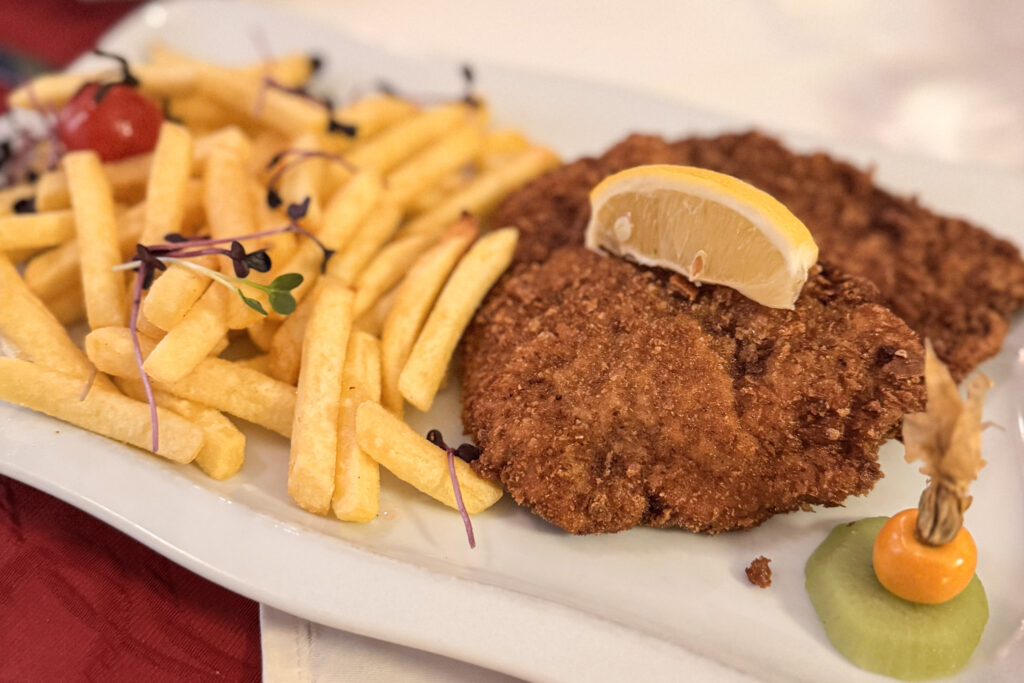
Brezn (Bavarian pretzel) — Not the snack-cart version — a proper Bavarian pretzel is soft, chewy, dark-crusted, and best eaten fresh with a smear of butter or alongside a beer.
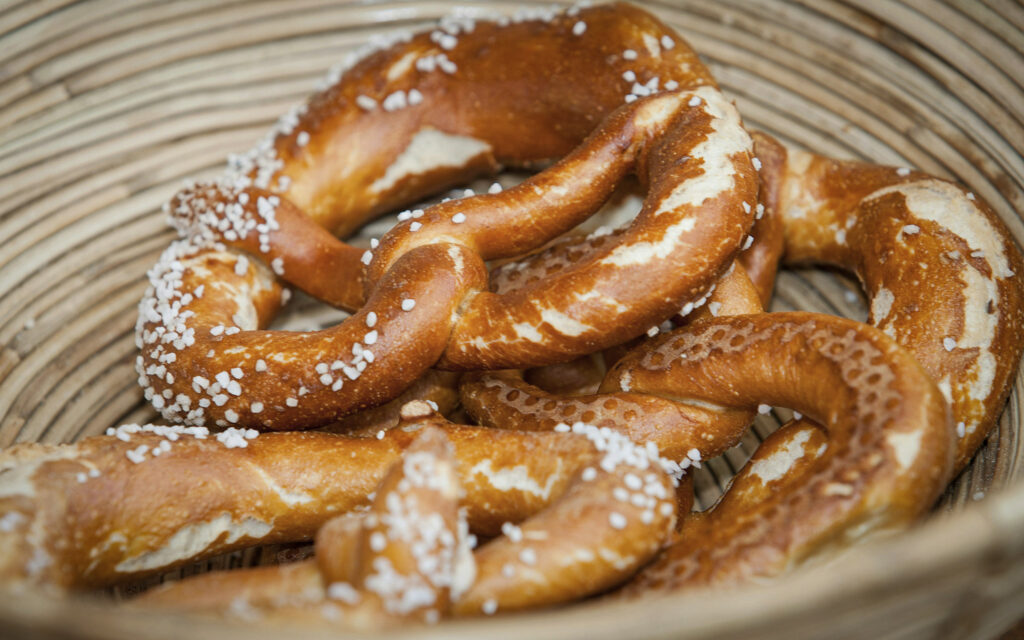
Kaiserschmarrn — A fluffy, shredded pancake dusted with powdered sugar and usually served with stewed fruit or applesauce — dessert, but hearty enough to double as a meal after a day of hiking.

Bavarian beer — Not optional. Look for a Weissbier (wheat beer) or a Helles (pale lager) at any local Gasthaus — beer in this region isn’t just a drink, it’s a genuine point of local pride.
Where to Stay
Füssen is the natural base for all three days — close to Neuschwanstein and Schwangau, with easy driving distance to Ettal, Oberammergau, Eibsee, and Pinswang. Browse Füssen hotels via Booking.com.
Best Time to Visit This Part of Bavaria
May–June and September–October hit the sweet spot — green alpine scenery, mild hiking weather, and thinner crowds than peak summer at Neuschwanstein. Winter brings snow-covered castle views but limits some hiking and lake activities.
Getting There and Around
Compare flights to Munich via Skyscanner — Munich Airport (MUC) is the closest major hub, about 1.5–2 hours’ drive from Füssen.
A car is close to essential for this itinerary — Ettal, Linderhof, Oberammergau, Eibsee, and Pinswang are all a scenic drive apart, with limited public transport connecting them directly. Compare rental car prices via DiscoverCars.
Budget
Backpacker: ~€50–70/day — guesthouse or hostel stay, self-catering or simple local meals, one or two paid castle tickets
Mid-range: ~€100–160/day — mid-range hotel, rental car, castle and palace tickets, sit-down Bavarian meals
Luxury: €250+/day — upscale alpine hotel, private guided tours, Zugspitze cable car add-on
FAQ
Is 3 days enough for Neuschwanstein and the Füssen area? Yes — three days covers Neuschwanstein, Ettal, Linderhof, Oberammergau, Eibsee, and Pinswang comfortably without feeling rushed, especially with Füssen as a central base.
Do you need to book Neuschwanstein Castle tickets in advance? Yes — tickets are timed-entry only and regularly sell out days ahead in peak season. Book online before you travel.
Do you need a car to visit Ettal, Linderhof, and Oberammergau? Yes — while some of these are connected by regional bus, a car makes the day significantly easier and lets you add stops like Eibsee and Pinswang without being tied to bus schedules.
Can you visit Austria and Germany in the same day from Füssen? Yes — Pinswang sits just across the Austrian border, only a short drive from Füssen, making it an easy add-on to a day otherwise spent in Germany.
Summary
This corner of Bavaria packs an outsized amount of scenery into three days — a fairy-tale castle above a lake, a royal grotto in the mountains, a village painted top to bottom in frescoes, and a walk through the treetops to finish it off. Füssen makes an easy, central base for all of it, and a car is the only real requirement for making the most of the region.
Exploring more of Europe? Check out my Top 5 Villages in the Cotswolds and 3 Days in Istanbul, Turkey guides too.