
This post contains affiliate links. If you make a booking or purchase through one of these links, I may earn a small commission at no extra cost to you. Your support helps keep Jet Lag Jelly running. Thank you!
After the otherworldly emptiness of Death Valley, Zion National Park feels like stepping into a completely different kind of extreme — towering red and white sandstone cliffs rising hundreds of metres above the canyon floor, the Virgin River winding through it all, and some of the most dramatic hiking in the American Southwest right at your feet. It’s the most visited of Utah’s “Mighty 5” national parks, and after spending a day here, it’s very easy to understand why.
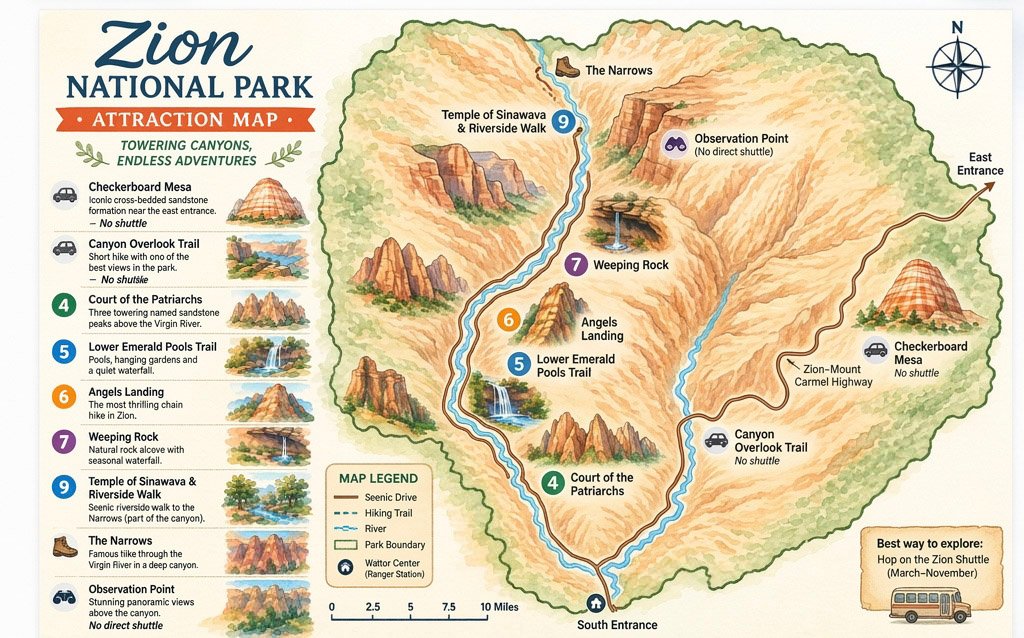
Zion National Park: Scenic Itinerary
- Checkerboard Mesa: Iconic cross-hatched sandstone formation near the east entrance
- Canyon Overlook Trail: Short hike with one of the best views in the park
- Court of the Patriarchs: Three towering named sandstone peaks above the Virgin River
- Lower Emerald Pools Trail: Pools, hanging gardens and a quiet waterfall
- Angels Landing: The most thrilling chain-assisted hike in the US (permit required)
- Weeping Rock: Spring-fed rock alcove with lush hanging gardens
- Observation Point: Highest canyon overlook — looking straight down on Angels Landing
- Temple of Sinawava & Riverside Walk: End of the scenic drive, gateway to The Narrows
- The Narrows: Hike through the Virgin River in the narrowest slot canyon in Zion
Did you know?
- Zion is Utah’s most visited national park, welcoming over 4.5 million visitors a year
- The Navajo Sandstone cliffs rise up to 900 metres above the canyon floor
- The Virgin River carved Zion Canyon over millions of years — and is still cutting deeper today
- Located in southwestern Utah, about 260 kilometres from Las Vegas
- Best seasons: March–May and September–November (avoid peak summer heat and crowds)
- In winter, private vehicles can drive the full scenic canyon road — no shuttle required
Getting There: From Las Vegas, it's about 2.5 to 3 hours via I-15 N, roughly 260 kilometres one way. Plan around the time zone change — you'll lose an hour crossing from Pacific into Mountain Time when you enter Utah, which catches most people off guard. Most visitors enter through the south entrance near Springdale. Renting a car from Las Vegas is the simplest way to make this drive.

Prefer not to drive? Book a tour instead.

- Las Vegas: Zion National Park Group Tour with Lunch (a full day from Vegas, with the driving handled for you)
- From Salt Lake City: Zion National Park Tour (for those who starting from Utah rather than Vegas)

Entrance Fee: $35 per car for 7 days, or free with an America the Beautiful pass. As of 2026, non-US residents aged 16+ also pay a $100 per-person fee unless covered by an annual pass.

Summer vs. Winter: From March to November, private cars are banned on Zion Canyon Scenic Drive and you must use the free shuttle. In winter, you can drive your own car right through the canyon—we visited in February and had the road mostly to ourselves.

How Long to Spend: One day hits the major highlights, while two days leaves plenty of time for iconic hikes like Angels Landing or The Narrows.
Checkerboard Mesa
Driving in from the east entrance, you immediately see Checkerboard Mesa—a huge sandstone peak covered in a natural grid pattern. Ancient sand dunes created the horizontal lines, and millions of years of freezing and thawing carved the vertical cracks.
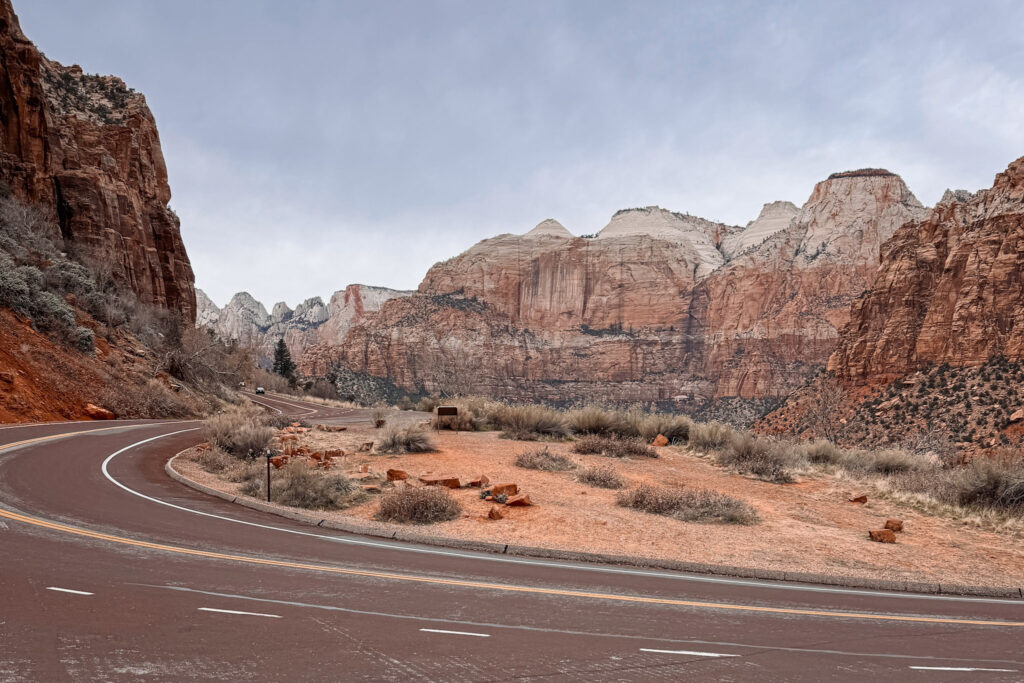
Rising 270 metres above the road, it looks huge the second you pull over. After rainstorms, water collects in the canyon below and gives local bighorn sheep a vital place to drink.
Fun Fact: Once known as Rock Candy Mountain, it was renamed in the 1930s. Over time, erosion will slowly break this giant sandstone peak back down into sand dunes.

Useful Information: Easy roadside pullouts require no hiking at all. From the viewpoint lot, hikers can also tackle a strenuous 3.2-kilometre round-trip trail climbing 270 metres to the summit.

Jet Lag Jelly Tip: Walk from the parking area toward the base of the rock rather than just taking photos from the road—the grid pattern looks much cooler up close
Canyon Overlook Trail
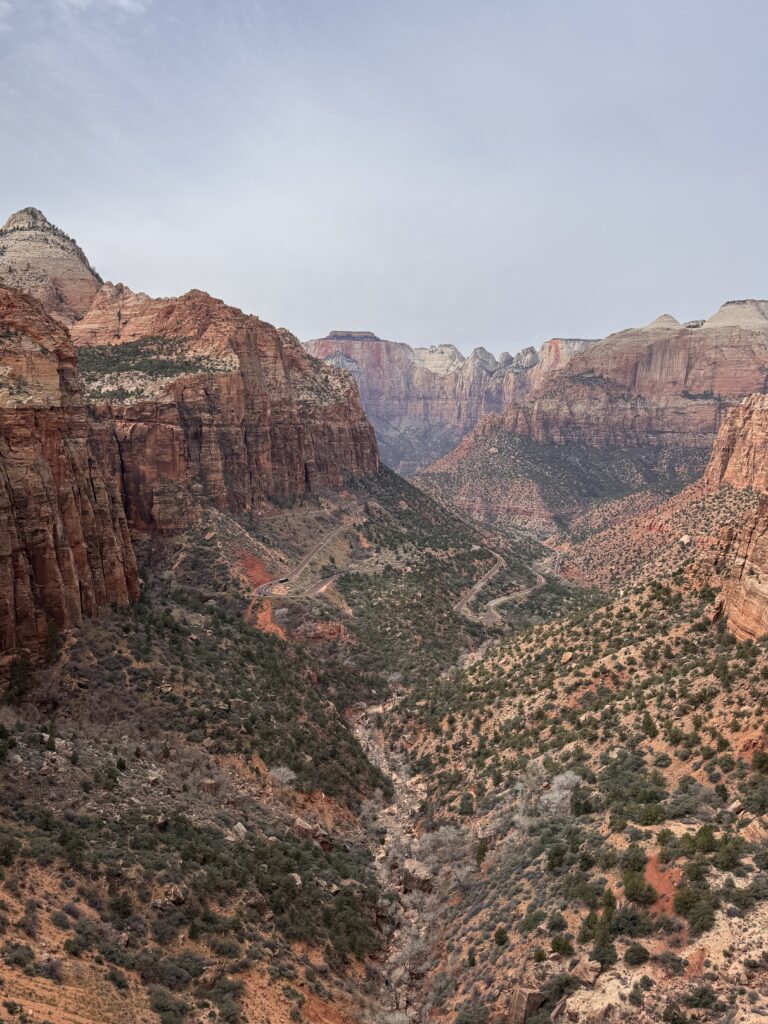
Just past the 1.6-kilometre Zion-Mount Carmel Tunnel, this short trail climbs through a narrow rocky canyon to an incredible lookout. From the top, you get sweeping views of Zion Canyon’s red and white cliffs with the winding road far below—easily making the climb worth the effort.
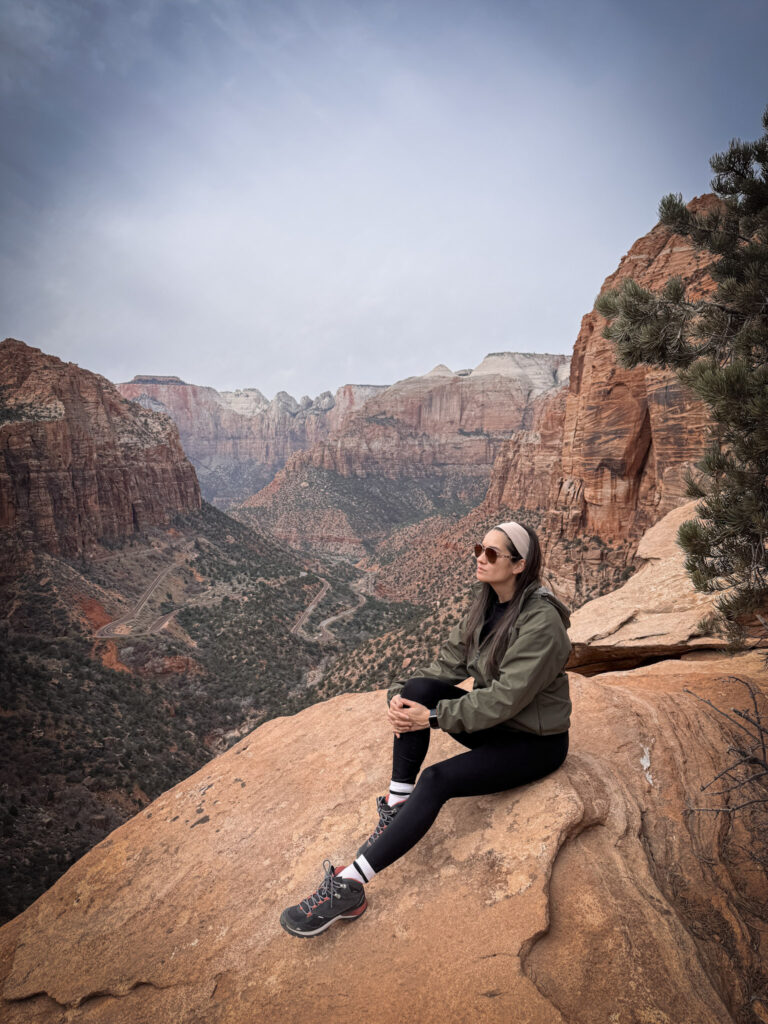
The trail itself is varied and interesting — winding through a slot canyon section, past natural windows in the rock, before the final open viewpoint at the end.
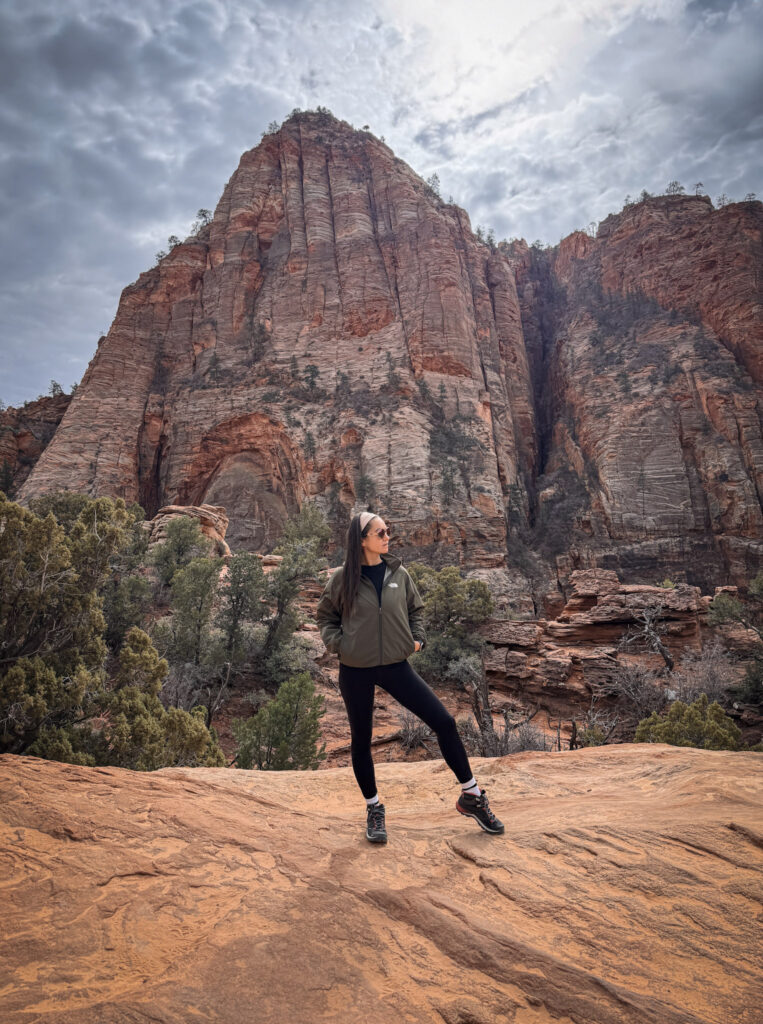
Fun Fact: Built in 1930, the 1.6 km Zion-Mount Carmel Tunnel below the trailhead was once the longest tunnel in the US and a major feat of engineering.

Useful Information: Find the trailhead right past the tunnel exit on the east side of the park (no permit needed). The 1.6 km round-trip walk takes 45 minutes to an hour, and the small parking area fills fast even in winter.

Jet Lag Jelly Tip: Keep going past the first viewpoint. The final lookout at the very end of the trail gives you a way better, wider view of the switchbacks below.
Court of the Patriarchs
Named Abraham, Isaac, and Jacob, three towering sandstone peaks rise shoulder to shoulder above the Virgin River, joined by Mount Moroni on the right. Seeing the river and trees below puts their massive size into perspective right away.
The mix of red cliffs, cottonwood trees, and blue sky looks almost too good to be real—and it gets even better in autumn when the leaves turn gold.
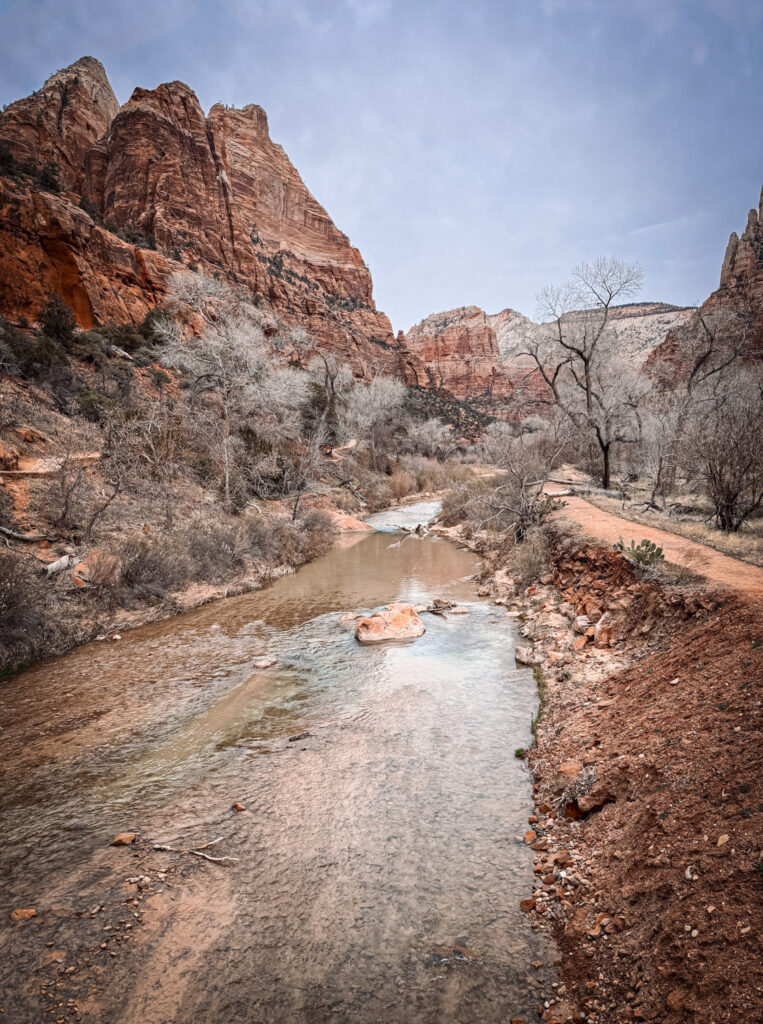
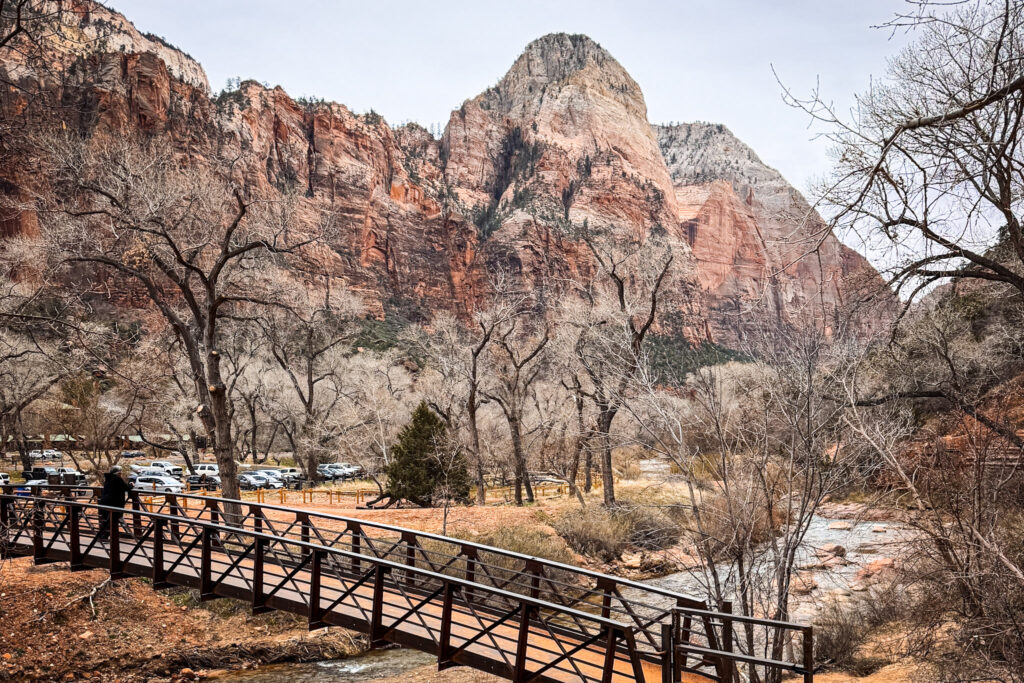
Fun Fact: A visiting minister, Reverend Frederick Fisher, gave these cliffs their biblical names in 1916—two years before Zion became a national park.

Useful Information: An easy walk of under 0.5 kilometres connects the main road to the viewpoint (Shuttle Stop 4 in peak season, or accessible by car in winter).

Jet Lag Jelly Tip: Walk down toward the Virgin River below the main platform—framing the river in front of the three peaks makes a much stronger photo than the standard viewpoint.
Lower Emerald Pools Trail
Winding through canyon woodland, this easy trail leads to quiet pools and a waterfall hidden beneath a massive rock overhang. Compared to Zion’s big panoramic viewpoints, Emerald Pools feels cozy and close—with canyon walls rising on either side and the sound of water all around you
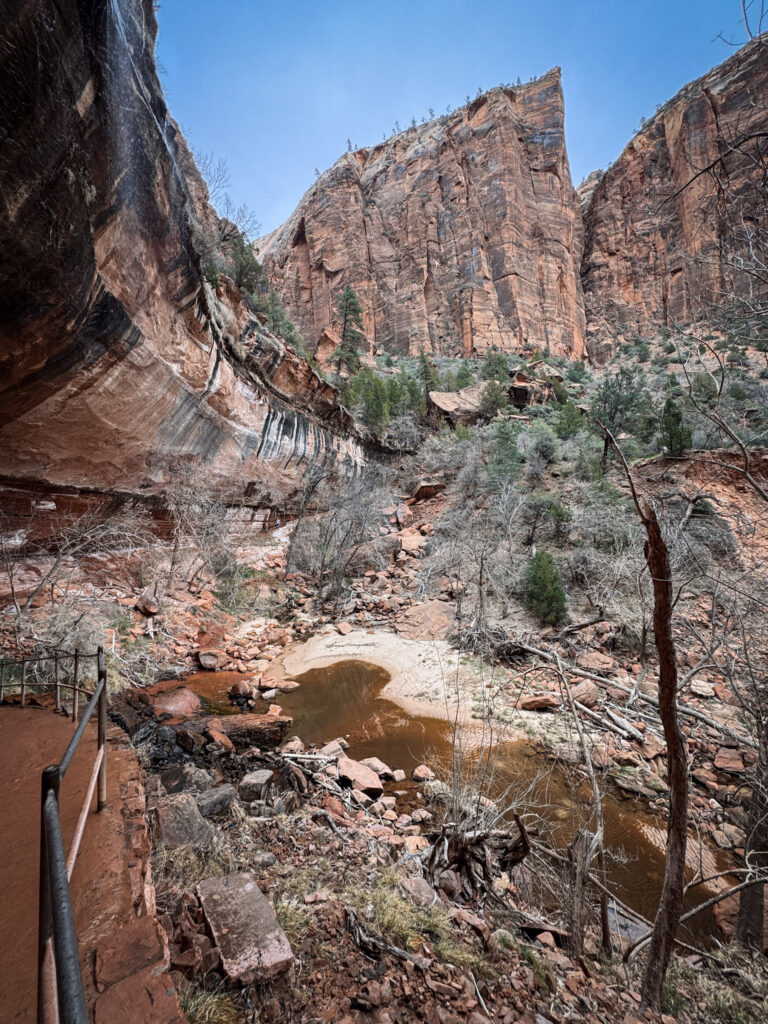
On calm days, the lower pool reflects the surrounding cliffs, and the waterfall above creates a refreshing mist in warm weather.
Fun Fact: The trail gets its name from green algae growing in the still water, which turns the pools a rich emerald color in certain light. Water dripping down the cliff walls also feeds hanging gardens of wildflowers and ferns.

Useful Information: Reaching the lower pool is an easy, well-maintained 2.4-kilometre round-trip walk from Shuttle Stop 5 at Zion Lodge. Continuing up to the middle and upper pools adds more climbing and is rated moderate.

Jet Lag Jelly Tip: Visit in the late afternoon to catch warm light glowing under the overhang and reflecting in the lower pool. Early morning is also great for glassy water reflections before crowds arrive.
Angels Landing
Easily one of the most thrilling hikes in any US national park, Angels Landing climbs steeply up the canyon wall via 21 tight switchbacks called Walter’s Wiggles. From Scout Lookout, the final 800-metre stretch crosses a narrow, exposed rock fin using metal chains bolted into the stone for support.
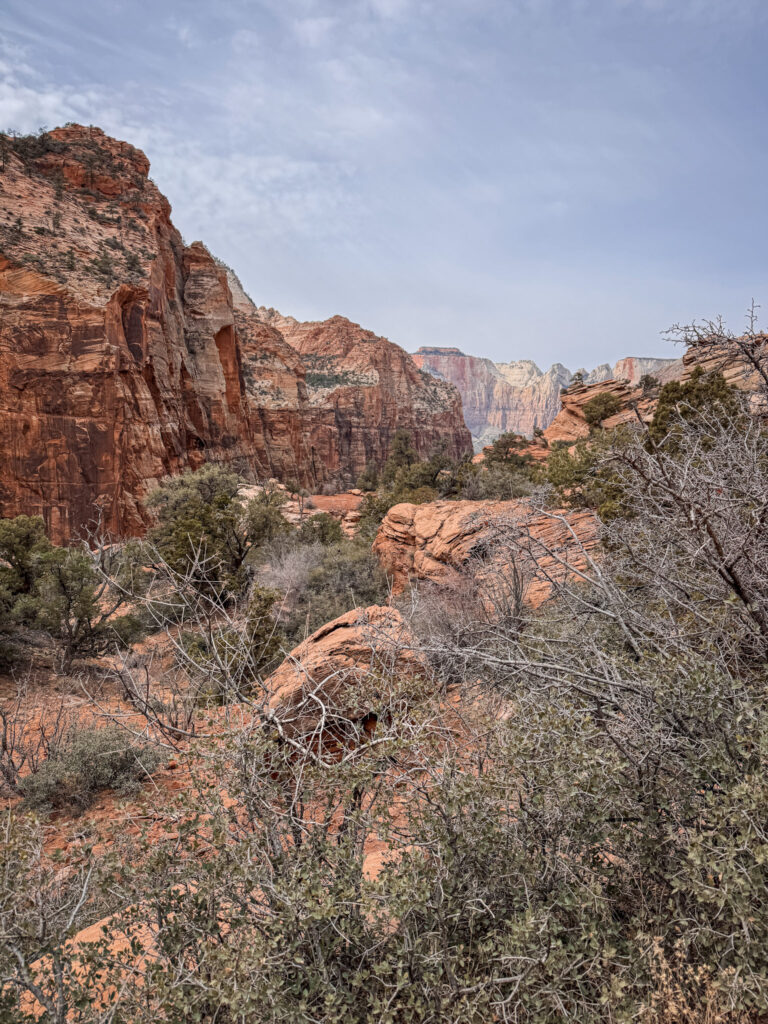
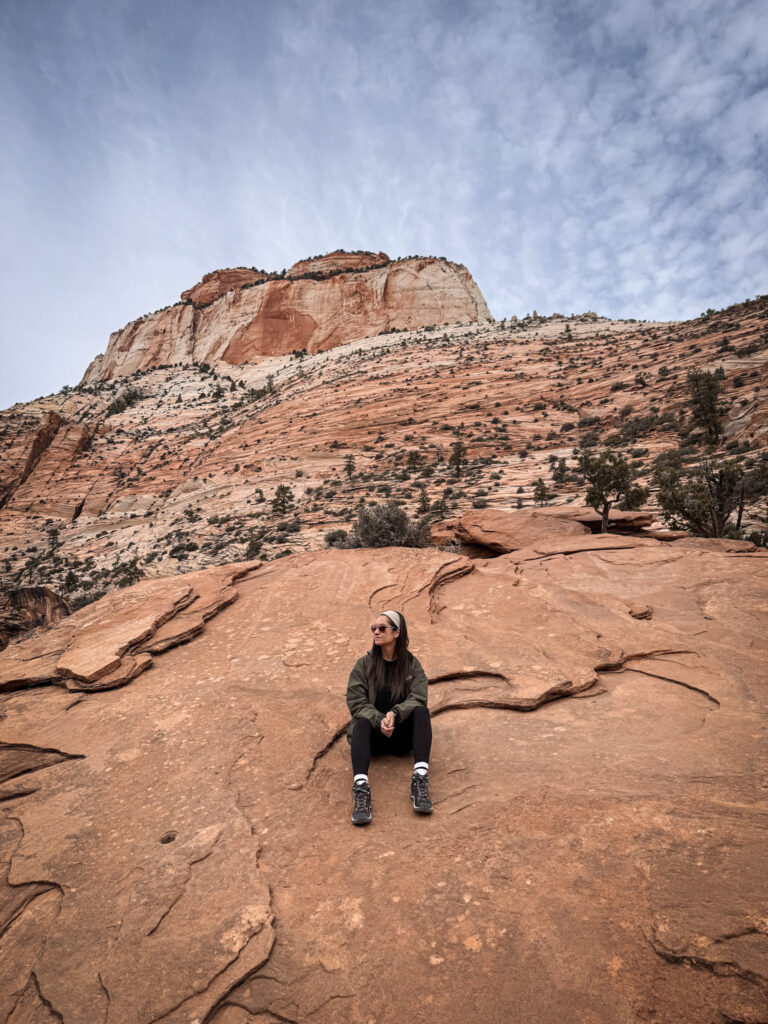
At 454 metres above the canyon floor, the summit delivers an unforgettable 360-degree view across Zion Canyon. However, this hike demands serious caution—narrow rock sections feature sheer 300-metre drops on either side, and 13 hikers have fallen to their deaths here since 2000. Only tackle the chains if you are fit and unafraid of heights.
Fun Fact: Carved into the rock in 1926, this peak was named in 1916 by minister Frederick Fisher, who said only an angel could land on a spot so high.

Useful Information: The 8.7 km round-trip hike climbs 460 metres. You only need a permit for the final chains past Scout Lookout—enter the seasonal or day-before lottery on Recreation.gov ($6 application fee, $3 per person if selected).

Jet Lag Jelly Tip: Apply for Tuesday–Thursday hikes or visit in winter for much better lottery odds (pack microspikes for icy patches). Even if you do not win a permit, Scout Lookout is worth the climb.
Weeping Rock
One of Zion’s coolest stops is a short, steep walk to a huge alcove in the cliff wall. Water seeps directly through the rock to create a gentle, constant rain—feeding a green hanging garden of ferns, moss, and wildflowers under the overhang.
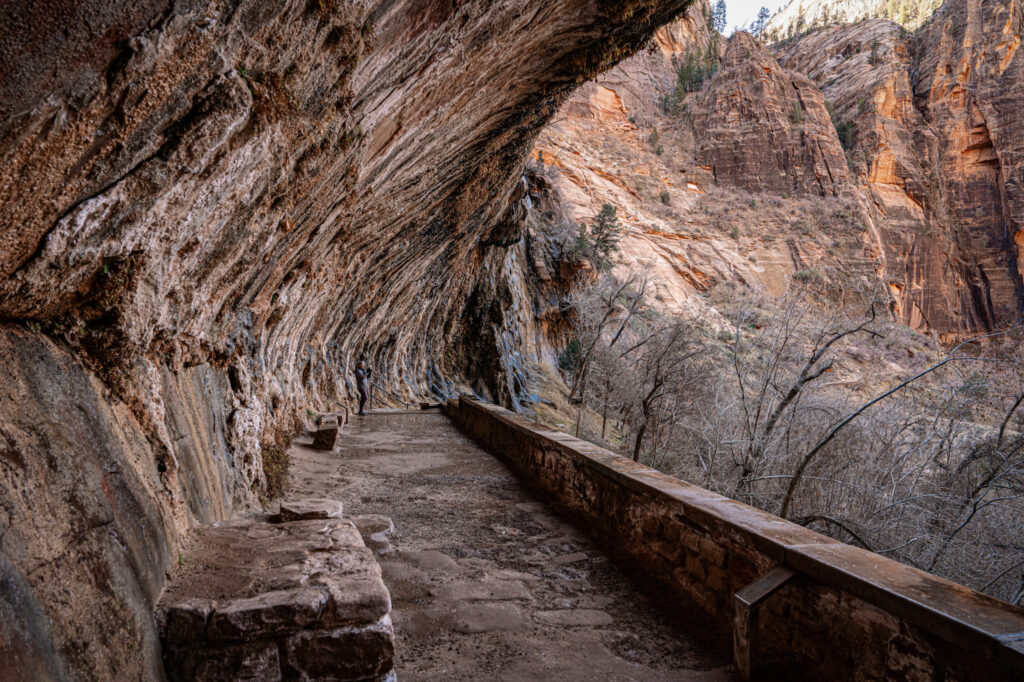
The water that seeps out of the rock here has filtered through the Navajo Sandstone for around 1,200 years before emerging at the point where it meets the harder Kayenta Shale below. Standing under the dripping overhang looking back at the canyon spread out below you is one of those simple moments that stays with you.
Fun Fact: After a November 2023 rockfall shut the trail down for nearly two years, Weeping Rock only officially reopened in September 2025. Because rockfalls happen here occasionally, always check the National Park Service website before you go.

Useful Information: Located at Shuttle Stop 7, this permit-free trail is just 0.6 km round-trip, though it climbs 30 metres via steep steps. Pack a light jacket—it feels noticeably cooler under the alcove, and you will get lightly sprinkled by dripping water.

Jet Lag Jelly Tip: Visit in the late afternoon when sunlight hits the falling water droplets, making them sparkle beneath the overhang.
Observation Point
At 2,100 metres above sea level, Observation Point offers the highest trail view on Zion’s east rim. Looking down the full sweep of Zion Canyon, you can see Angels Landing perched on its thin ridge far below. Many seasoned hikers rank this unique vantage point as the absolute best view in the park.
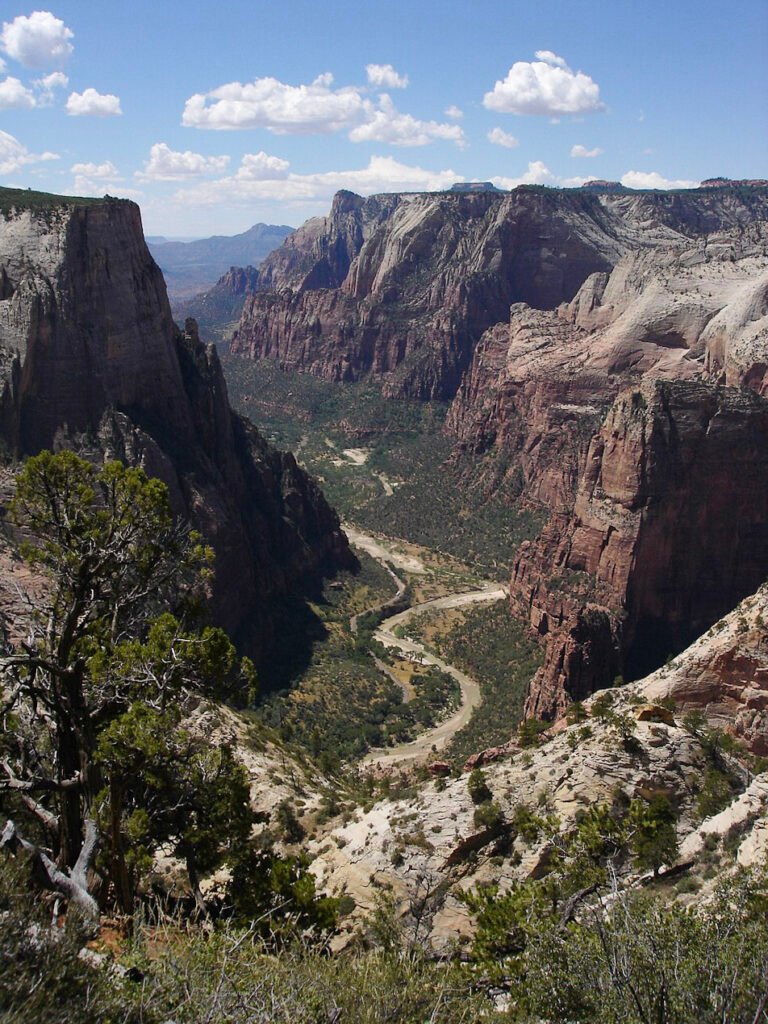
The trail climbs steeply through Echo Canyon — a beautiful narrow slot canyon section — before emerging onto the canyon rim for the final approach to the viewpoint. The canyon section alone is worth the hike even if the viewpoint weren’t there.
Fun Fact: From Observation Point, famous Angels Landing looks tiny far below—showing just how enormous Zion Canyon truly is.

Useful Information: The steep 13.5 km trail from Weeping Rock remains closed due to rockfalls, so hikers must use the flatter East Mesa Trail (about 11 km round-trip). Check the National Park Service website before visiting.

Jet Lag Jelly Tip: Most hikers prefer the East Mesa Trail since it is much easier than the old climb, though you need a car to reach the trailhead outside the shuttle route.
Temple of Sinawava and the Riverside Walk
At the end of the scenic drive, the canyon narrows sharply where the Virgin River cuts between towering cliffs hundreds of metres high. The Temple of Sinawava is both this dramatic canyon section and the starting point for the Riverside Walk—an easy, paved 3.2 km trail leading right up to The Narrows.
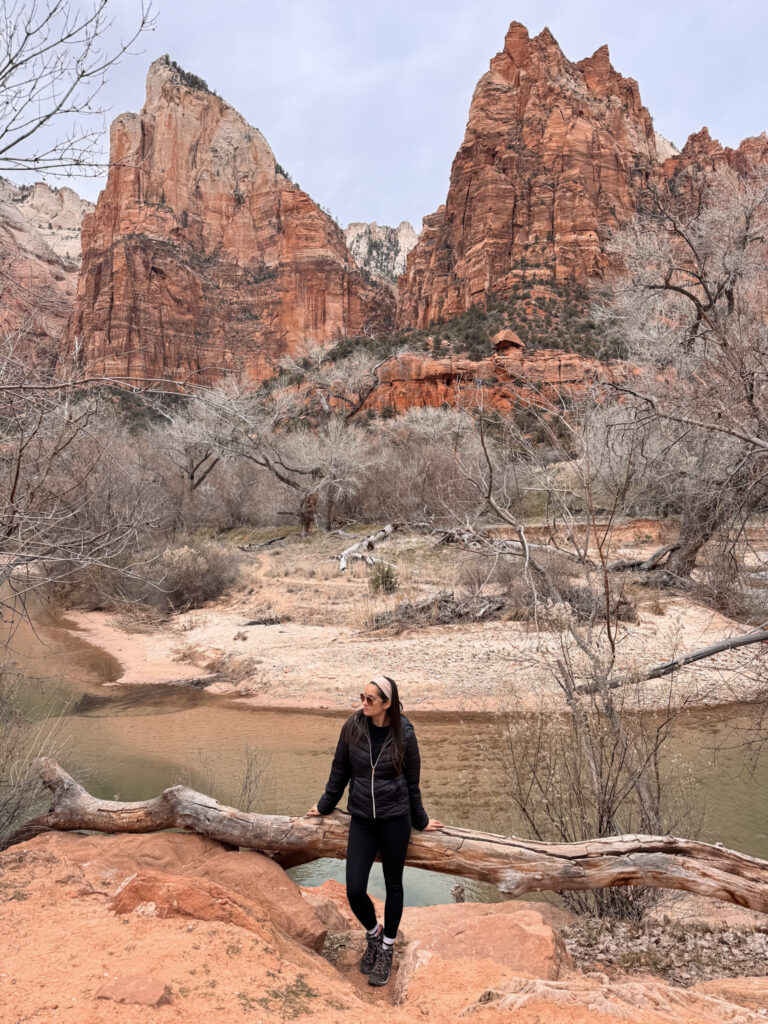
Even without going into The Narrows, the Riverside Walk is one of the most atmospheric trails in the park — the canyon walls closing in above you, the river rushing alongside, the willows and cottonwoods lining the banks. In winter, the bare trees and lower water levels give it a quieter, more austere beauty.
Fun Fact: "Sinawava" is a coyote deity in Southern Paiute mythology, though early visitors named this natural rock amphitheatre a "temple" for its towering walls.

Useful Information: Reach it via Shuttle Stop 9 (the last stop). The flat, paved Riverside Walk needs no permit and is accessible for pushchairs and mobility aids.

Jet Lag Jelly Tip: Visit in the late afternoon for golden canyon light, and walk all the way to the end of the paved path—the most dramatic canyon narrows appear in the final kilometre before The Narrows.
The Narrows
Zion’s most iconic hike, The Narrows lets you wade directly up the Virgin River at the bottom of a towering slot canyon. With no dry trail to follow, you walk right through the water—sometimes chest-deep—as 300-metre rock walls narrow to just 6 metres apart overhead.
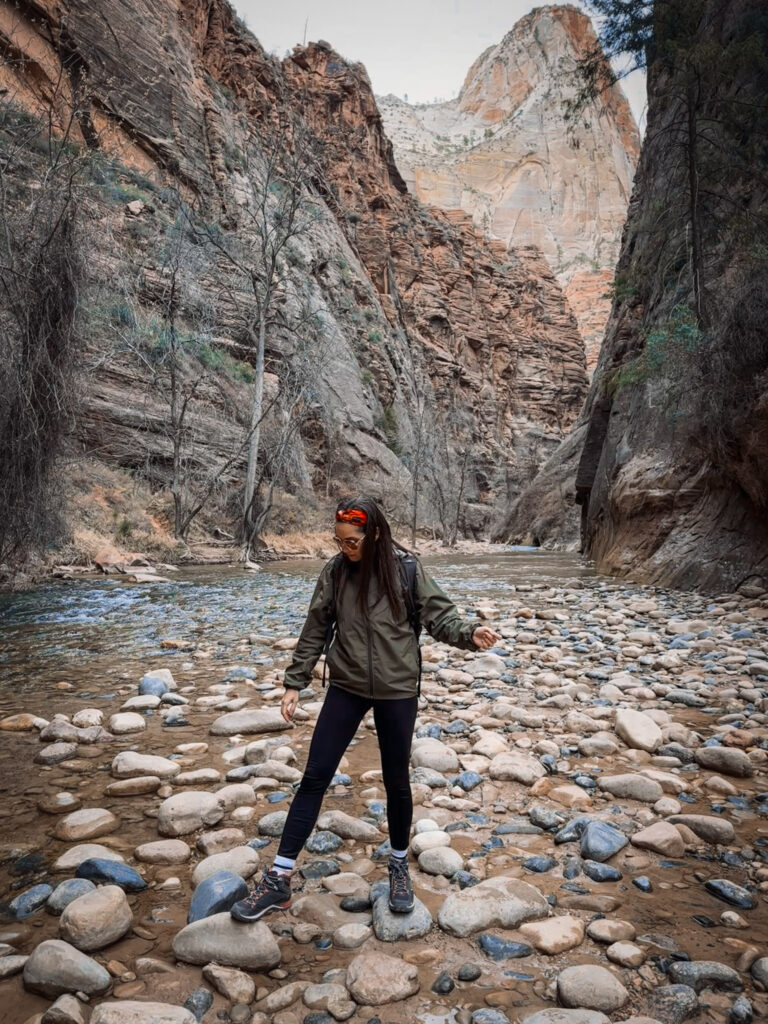
The bottom-up route from Temple of Sinawava requires no permit and no advance planning — you simply walk in as far as you want and turn around. The top-down 26-kilometre through-hike from Chamberlain’s Ranch does require a permit and serious preparation.
Fun Fact: Millions of years of Virgin River erosion carved this Navajo Sandstone slot canyon, where tight cliff walls block the sun and keep the water cool all summer.

Useful Information: No permit is needed to hike bottom-up from Temple of Sinawava (only the 26-kilometre top-down route requires a Recreation.gov permit). Wear canyoneering boots with neoprene socks, and check the visitor center first—the trail closes if river flow exceeds 150 cubic feet per second.

Jet Lag Jelly Tip: Rent canyoneering boots and a walking stick in Springdale to stay steady on the slippery riverbed—even walking just the first kilometre is unforgettable.
Best Time to Visit
Zion is doable almost year-round, but conditions swing a lot. Spring (April-May) and fall (September-October) hit the sweet spot — mild temps, flowing water for The Narrows, and the canyon isn’t packed. Summer (June-August) gets brutally hot (35°C+/95°F+) and crowded, especially at Angels Landing and The Narrows. Winter (December-February) is quiet and beautiful with possible snow on the rim, but The Narrows can be too cold/icy to hike without a wetsuit.
Jet Lag Jelly Tip: If you want to hike The Narrows, check the Virgin River flow rate before you go — anything above 150 cubic feet per second and the park may close the trail for safety.
Activities I’d Recommend
If you want to add a guided experience to your trip, here are a few standout activities in and around Zion worth checking out:
- East Zion: 1-Hour White Mountain Horseback Tour (a quieter, scenic way to see the east side of the park)
- Zion National Park: 10 or 20-Minute Scenic Helicopter Tour (a bird’s-eye view of the canyons)
- Zion National Park: The Narrows Private Guided Hike (wading through the river canyon with a guide)
- Zion Canyoneering and Rappelling Experience (a more adventurous option for anyone who wants to get off the trail)
Where to Stay
Springdale is the obvious base — it sits right at the south entrance, so you can walk into the park without dealing with parking or the shuttle from farther out.
Right at the entrance: Cliffrose Springdale, Desert Pearl Inn, and Zion Park Motel are all within easy walking distance of the park gate, with several backing right onto the Virgin River.
Inside the park: Zion Lodge is the only in-park accommodation, and it’s the only way to skip the shuttle entirely if you’re staying overnight — but it books out extremely far in advance, especially spring through fall.
Budget-friendly: a handful of motels and smaller inns are scattered along Zion Park Blvd in Springdale, generally cheaper than the riverside properties but still walkable to the entrance.
Browse places to stay in Springdale as early as you can if Zion Lodge is the plan — often 6+ months ahead for peak season.
Budget
Backpacker: ~$35–55/day — camping (Watchman or South Campground), gas, park fee, self-catered food
Mid-range: ~$100–160/day — rental car, hotel in Springdale, mix of dining
Luxury: $250+/day — upscale lodges near the park entrance, guided canyoneering tours, private transfers
Fun Fact: Zion's shuttle system is mandatory during peak season (spring through fall) — private vehicles aren't allowed into the main canyon, so budget a little extra time for parking and shuttle waits.
FAQ
Do you need a permit for Angels Landing? Yes — a permit is required for the chain section from Scout Lookout to the summit, awarded through a seasonal lottery on Recreation.gov. Winter months have much better odds since fewer people apply.
Is The Narrows hard to hike? The bottom-up route from Temple of Sinawava requires no permit — you just walk as far into the river as you’re comfortable with and turn around. It’s not technically hard, but you’re wading through water, sometimes chest-deep, so proper footwear matters.
Do you need a car to get around Zion? Not during peak season — private vehicles aren’t allowed on the main canyon road from March through November, so the free shuttle is mandatory. In winter, the shuttle pauses and you can drive yourself.
What’s the best time of year to visit Zion? Spring (April–May) and fall (September–October) — mild temperatures, flowing water for The Narrows, and thinner crowds than summer.
Is one day enough to see Zion National Park? It covers the highlights, but Zion rewards more time — two days lets you add a longer hike like Angels Landing or The Narrows without rushing.
Summary
Zion is the kind of park you spend a day in and immediately start planning how to come back. Every trail feels different from the last, every viewpoint reveals something new about the canyon, and every bend in the river shows you another angle of those extraordinary red and white walls.
Here’s the quick rundown of everything covered:
Checkerboard Mesa — The first impression, and a good one. Look closely at the grid pattern in the rock.
Canyon Overlook Trail — Best view-to-effort ratio in the park. Do not skip this one.
Court of the Patriarchs — Walk down to the river for the best angle on the three peaks.
Lower Emerald Pools — The most peaceful stop in the park. Go late afternoon.
Angels Landing — Enter the lottery. If you don’t get a permit, Scout Lookout is still worth every step.
Weeping Rock — Short, strange, and genuinely beautiful. Check it’s open before you go.
Observation Point — The view that puts everything else in perspective.
Temple of Sinawava and Riverside Walk — Walk all the way to the end. Every time.
The Narrows — Rent the boots. Go in. Even for just an hour.
One day is enough for the highlights. But Zion deserves more than one day.
Sleep later. Explore now.
Part of my Southwest national parks series — check out my Exploring Antelope Canyon, Horseshoe Bend Overlook Guide, Grand Canyon South Rim Guide, Valley of Fire Day Trip from Las Vegas, and Death Valley Must-See Stops posts too if you’re building out a bigger Arizona/Nevada itinerary — or start with my Best National Parks You Can Visit From Las Vegas roundup for the full picture.