
This post contains affiliate links. If you book through one, I may earn a small commission at no extra cost to you — it helps keep Jet Lag Jelly running. Read my full affiliate disclosure for more.
Madeira doesn’t do subtle. One minute you’re driving through a tunnel carved straight through a mountain, the next you pop out to a cliff dropping into the Atlantic like the road just gave up on caution altogether. It’s Portugal, technically, but it feels like its own tiny, dramatic universe — laurel forests, volcanic pools, terraced vineyards clinging to slopes that should not be farmable, and villages that look like someone shook Switzerland and dropped it in the ocean.
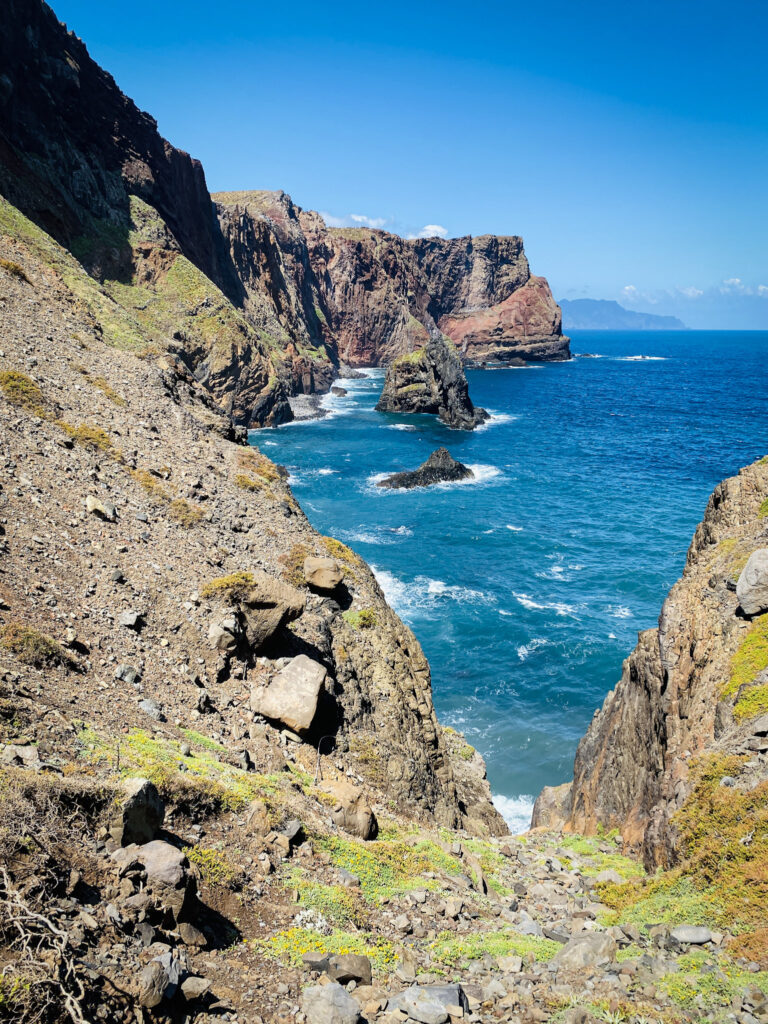
I spent my time here bouncing between coastlines, chasing waterfalls, and getting mildly obsessed with a hiking trail that made me question my life choices halfway across a ridge. This Madeira Travel Guide covers everything worth seeing, roughly organized so you’re not zig-zagging across the island like I did on day one.
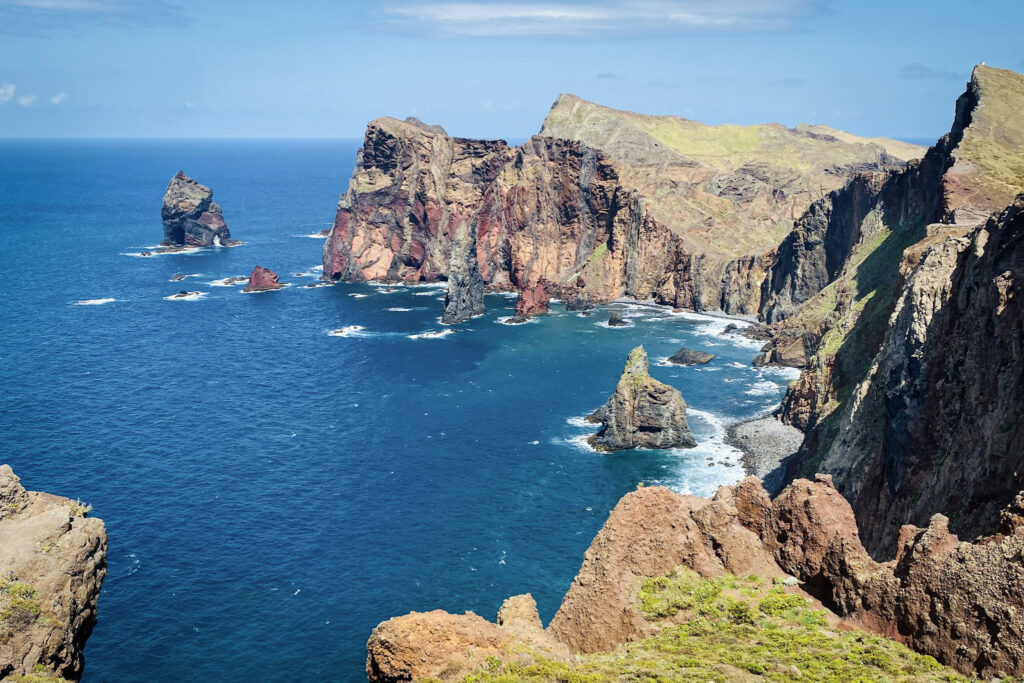
Madeira Itinerary
1. Ponta do Sol
2. Câmara de Lobos
3. Monte Palace Tropical Garden
4. Seixal
5. Porto Moniz
6. Ponta do Pargo
7. PR8: Vereda da Ponta de São Lourenço
8. Santana
9. Miradouro da Rocha do Navio
10. Porto da Cruz
11. Ponta Delgada
12. PR1: Vereda do Arieiro
13. Fanal Forest and Cascata do Risco
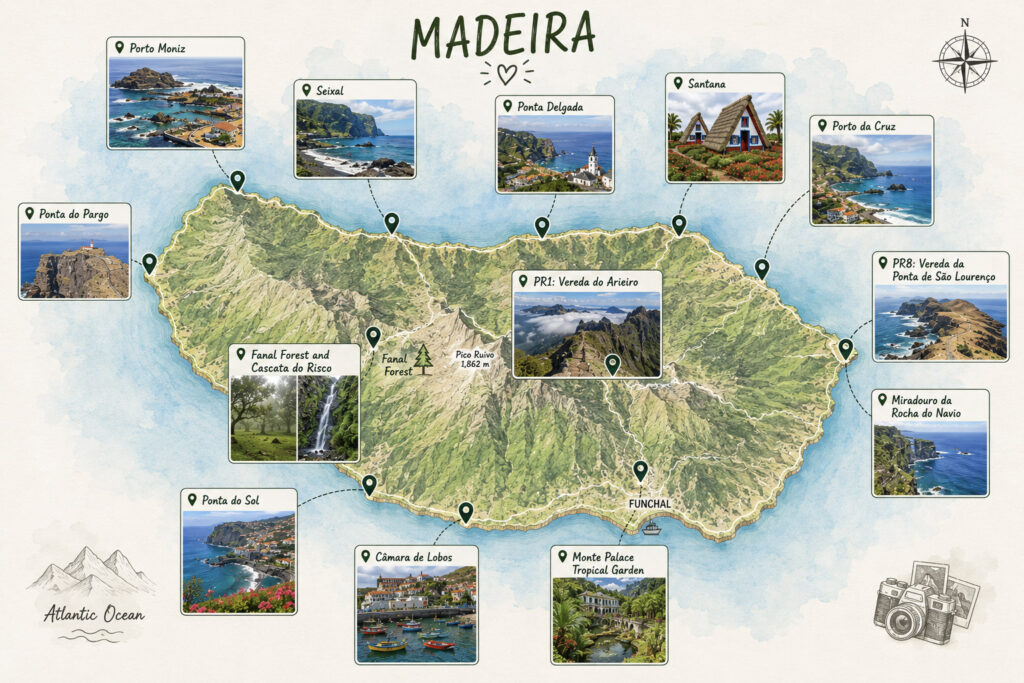
1. Ponta do Sol
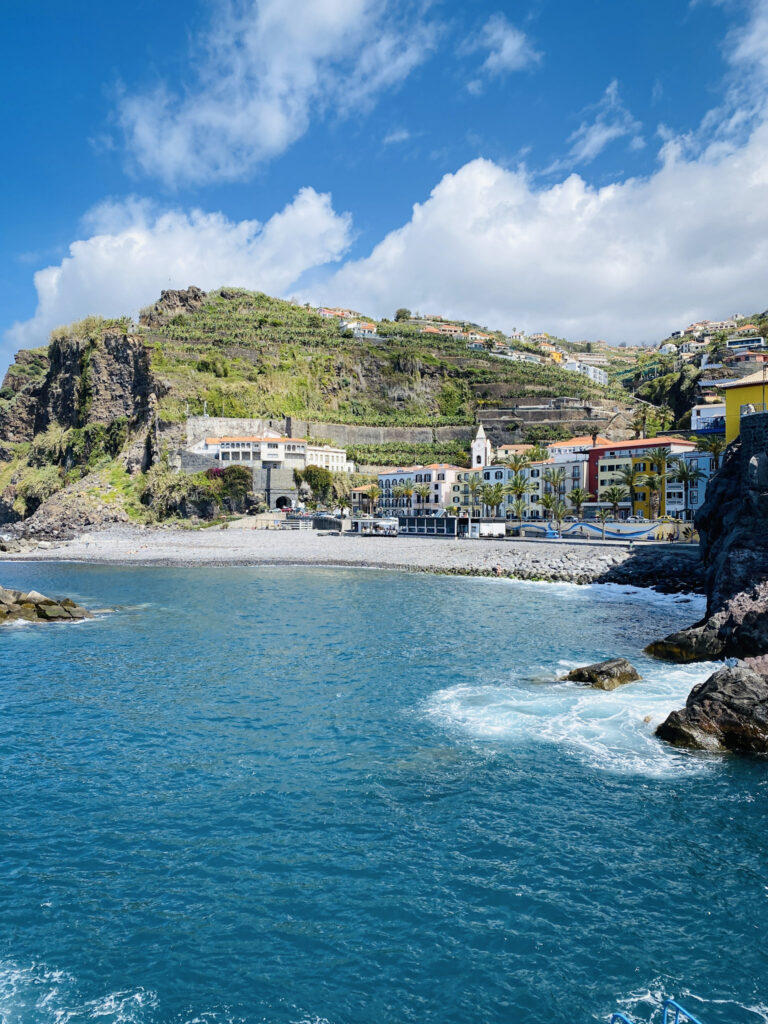
Ponta do Sol is a sleepy little town wedged into a valley, with a black pebble beach and some genuinely stunning sunset views — the name is not subtle about what it’s good for. It used to be one of the sunniest spots on the island, back when farmers tracked daylight hours for banana crops, and that reputation still holds today. Locals will tell you it gets more sun than almost anywhere else on Madeira’s south coast.
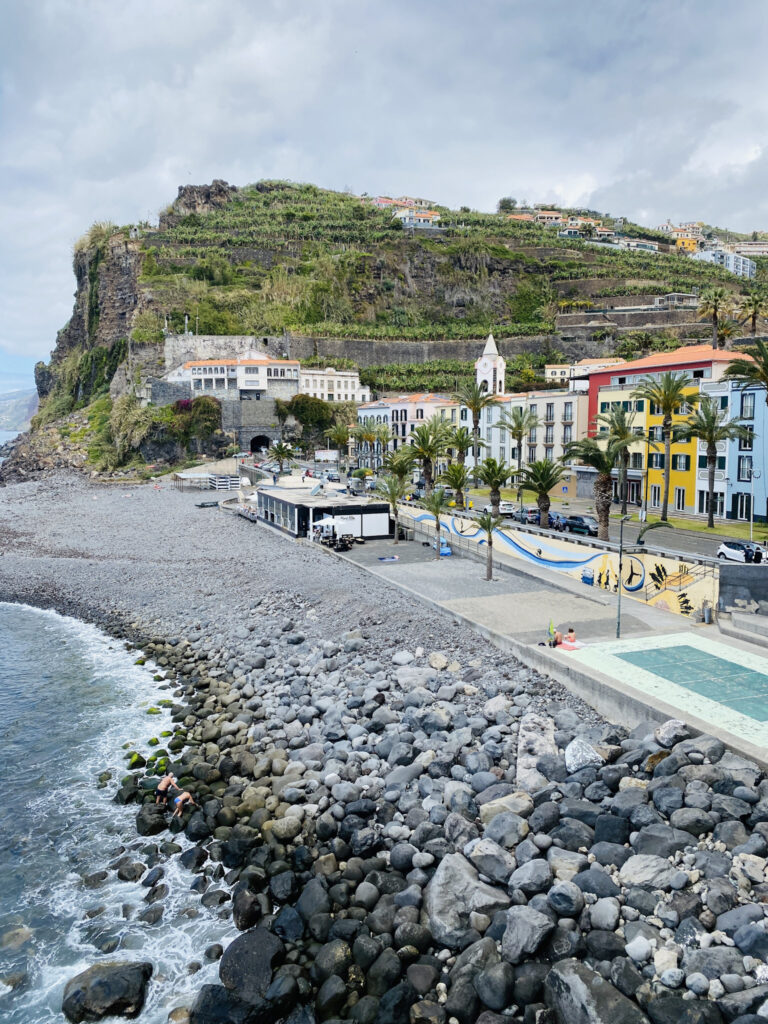
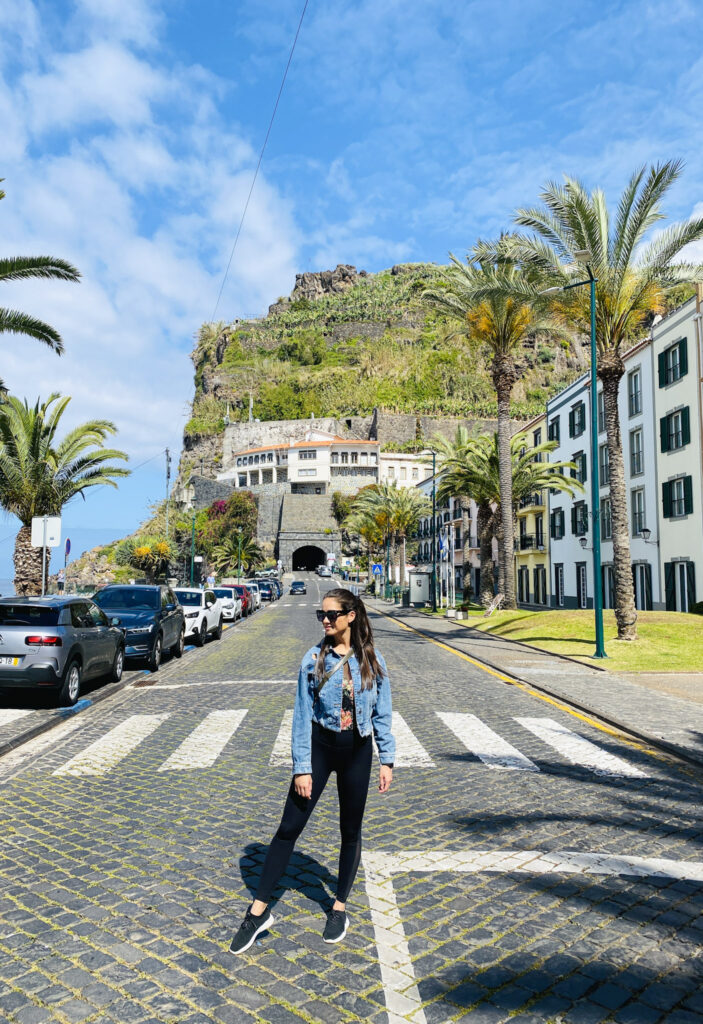
It’s the kind of place where nothing much happens, and that’s exactly the point. Cafés spill out onto the seafront, old stone buildings lean into narrow lanes, and there’s a low-key, unhurried energy that’s rare on an island this dramatic. Give yourself an afternoon here to just sit, order a coffee, and watch the light change over the valley.
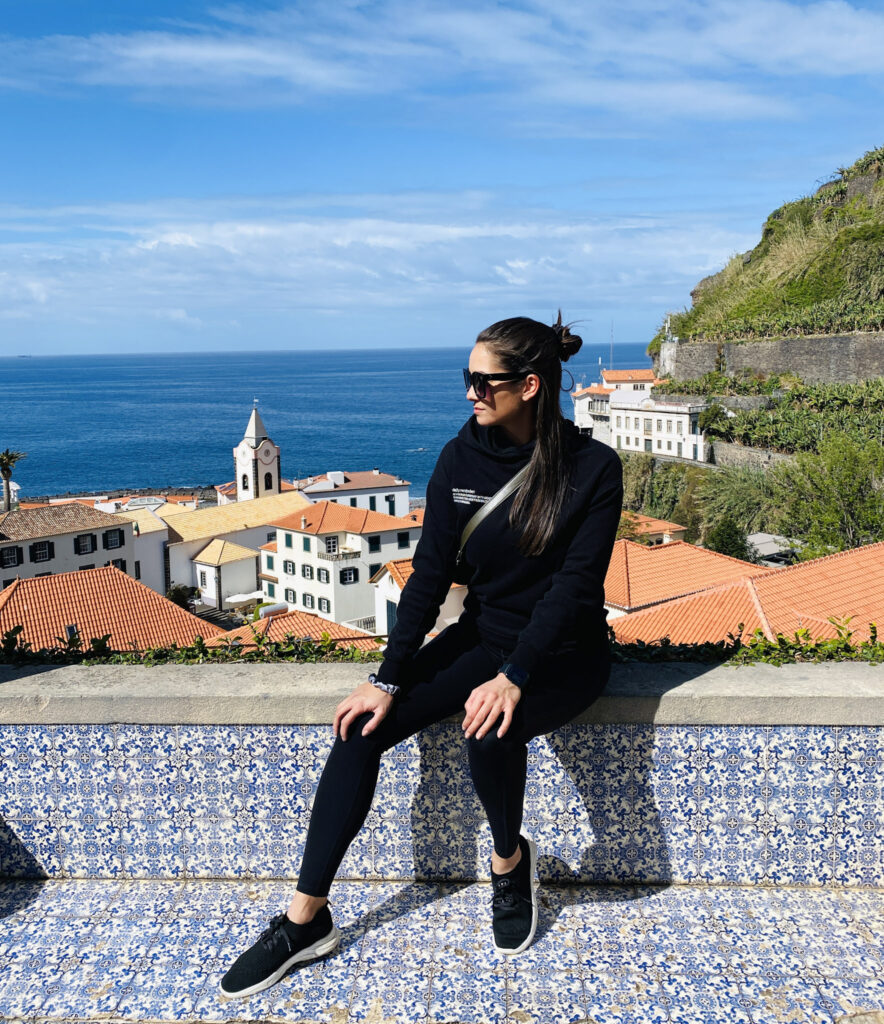
Jet Lag Jelly Tip: Time your visit for late afternoon and stay through sunset — Ponta do Sol's west-facing valley makes it one of the best low-key sunset spots on the island, with none of the crowds you'll find elsewhere.
2. Câmara de Lobos
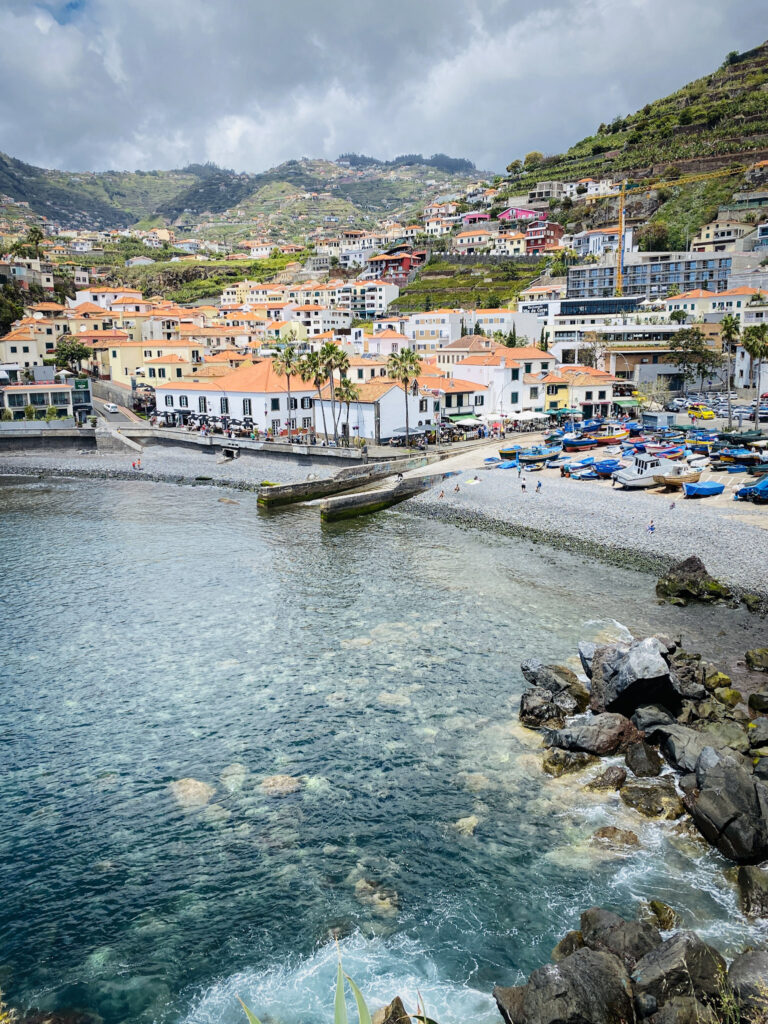
Câmara de Lobos used to be a humble fishing village, and it still has that DNA even though it’s become one of the island’s most photographed spots. Colorful fishing boats bob in the harbor, cliffs rise dramatically on either side, and the town has deep roots in Madeira’s poncha culture — this is where a lot of locals will tell you to try the drink first, away from the tourist bars of Funchal.
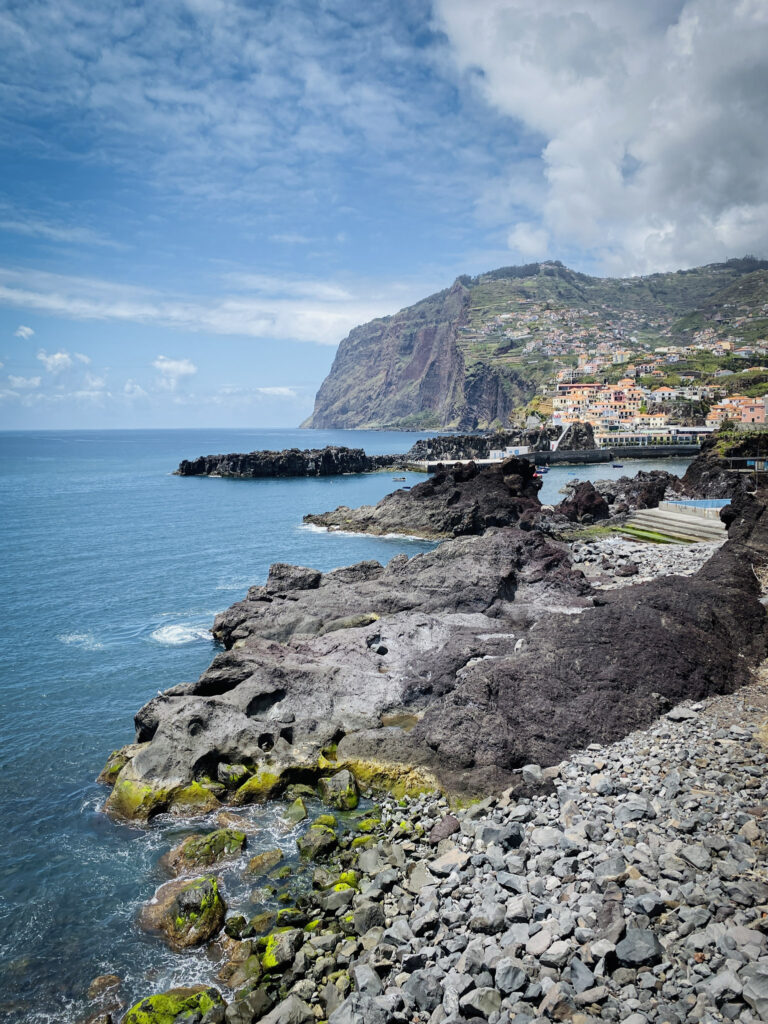
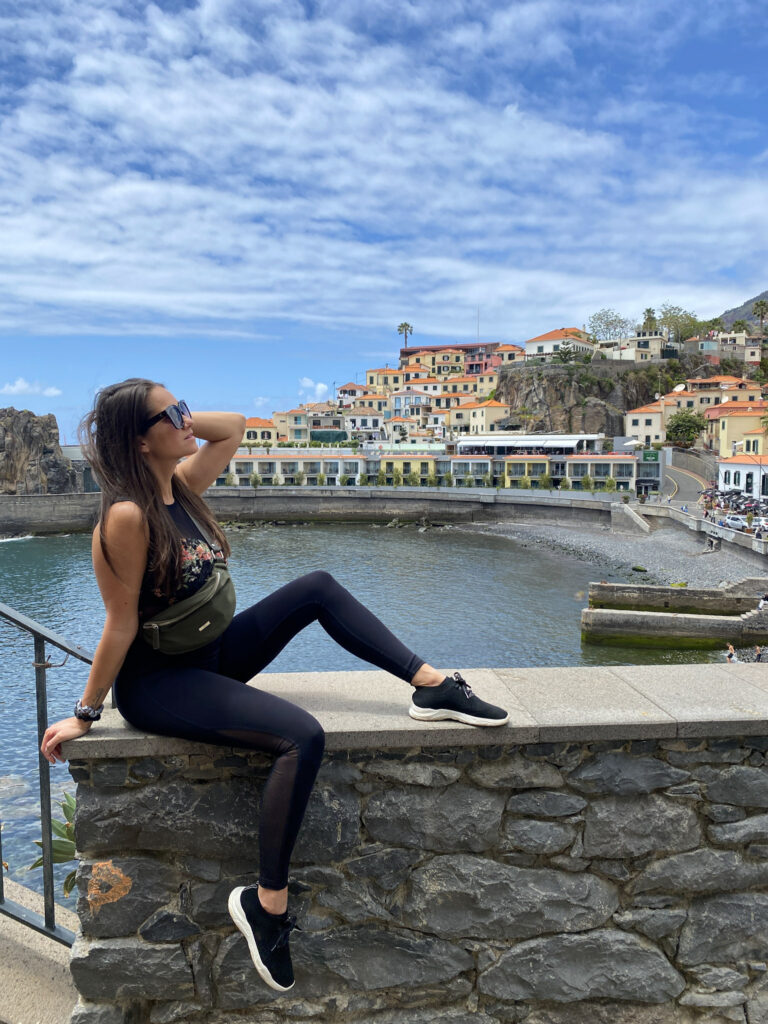
Fun fact: this is where Winston Churchill used to come to paint, setting up his easel by the harbor during visits in the 1950s. There’s a small plaque marking the spot, and it’s easy to see why he picked it — the interplay of boats, cliffs, and light here is genuinely paintable. The harbor views alone are worth the stop, especially with a coffee (or a poncha, if you’re feeling it) in hand at one of the cliffside cafés.
Jet Lag Jelly Tip: Grab a table at one of the harborside cafés right at golden hour — the cliffs behind the village catch the light in a way that makes even a phone photo look professionally shot.
3. Monte Palace Tropical Garden
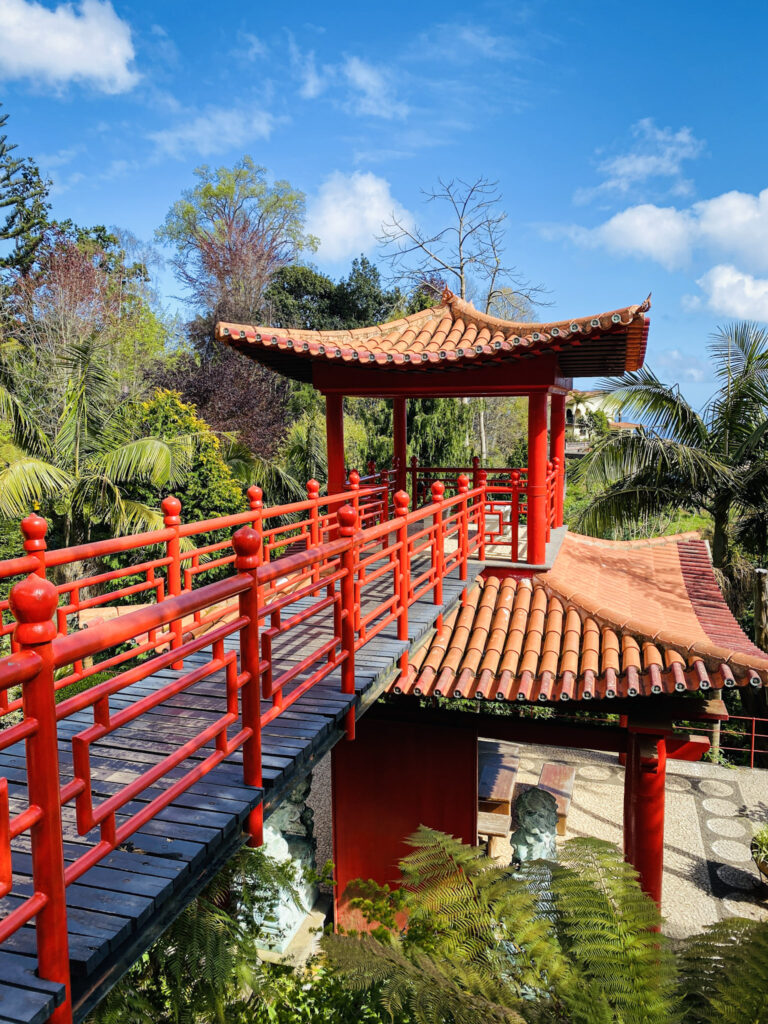
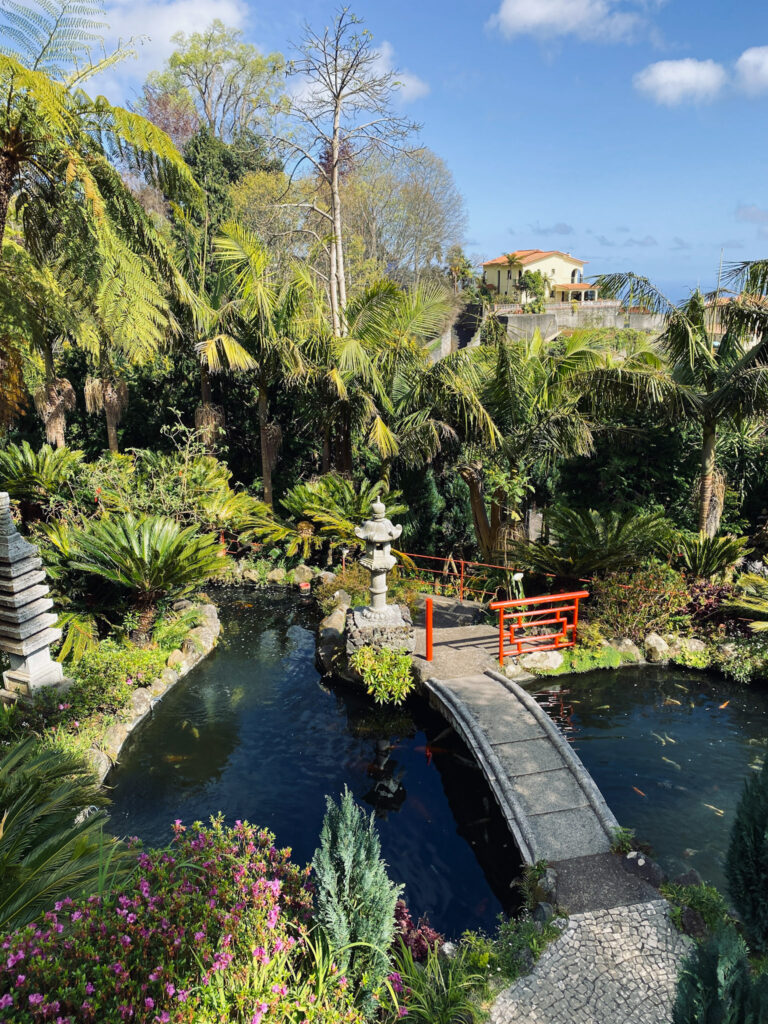
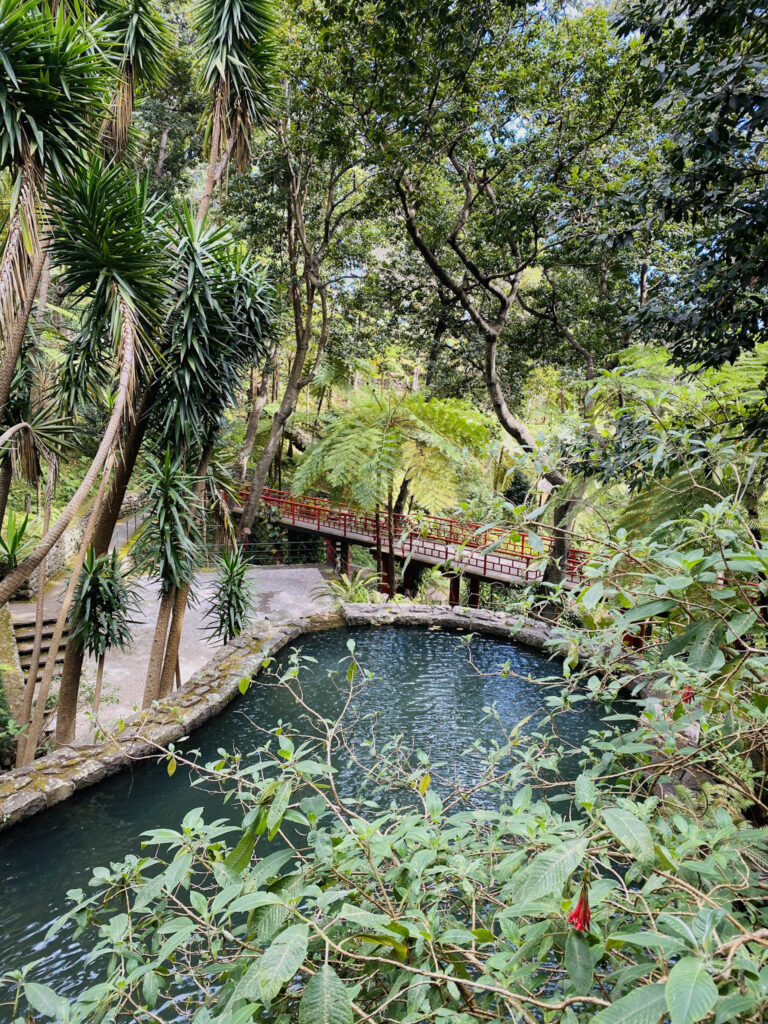
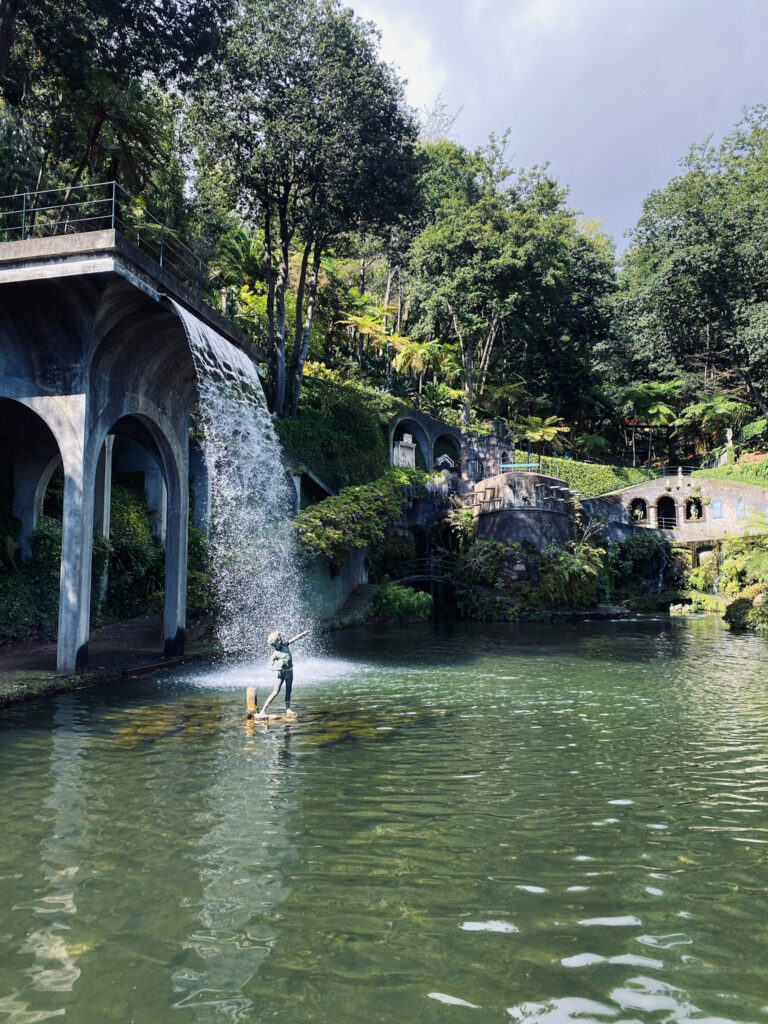
Monte Palace Tropical Garden, up above Funchal, is a different kind of overwhelming. Exotic plants from around the world, koi ponds, Portuguese tile panels (azulejos) telling old stories along the walkways, volcanic rock features, and an old mansion turned museum with an eclectic art and mineral collection. It’s less “hike” and more “wander around slack-jawed for two hours.”
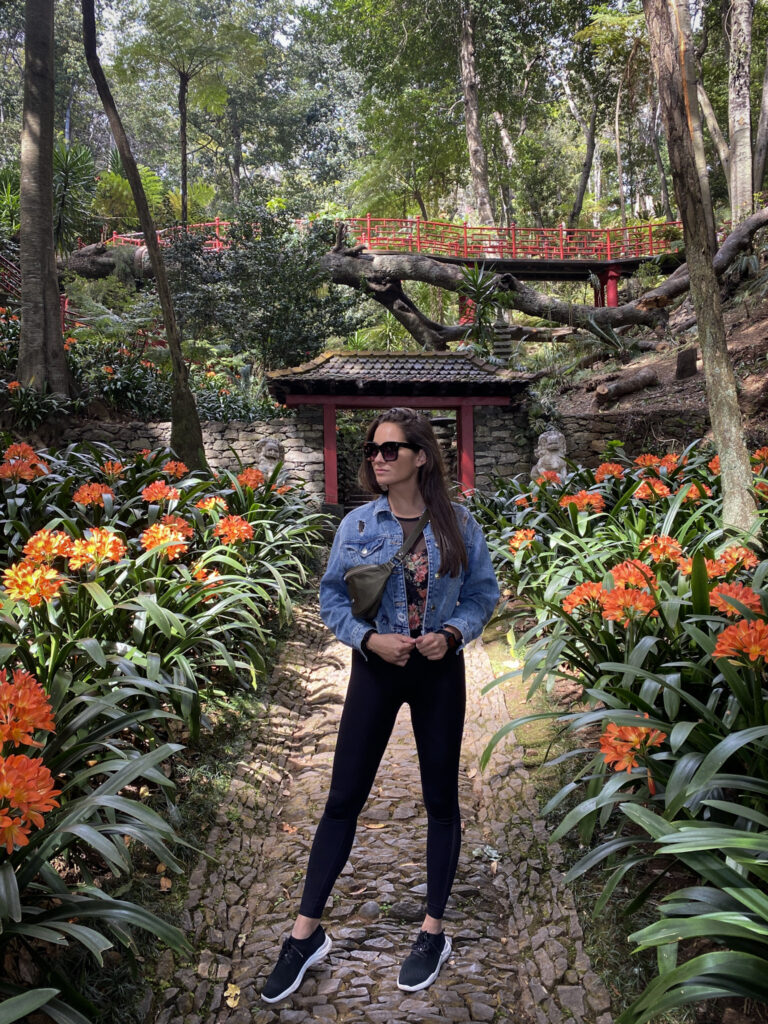
The garden spans a genuinely large area, so there’s more to cover than you’d expect from photos alone — and the upper terraces, where the best panoramic views over Funchal and the harbor open up, are easy to miss if you rush. Budget more time than you think; this isn’t a quick photo-stop kind of place.
Jet Lag Jelly Tip: Pair Monte with the cable car up from Funchal, then take the famous wicker toboggan ride back down. Yes, it's a sled. Yes, two men in straw hats push you down a hill. Yes, do it anyway.

Book ahead: Monte Palace tickets can be bought online in GetYourGuide.
4. Seixal: Beach, Natural Pools, and Harbor
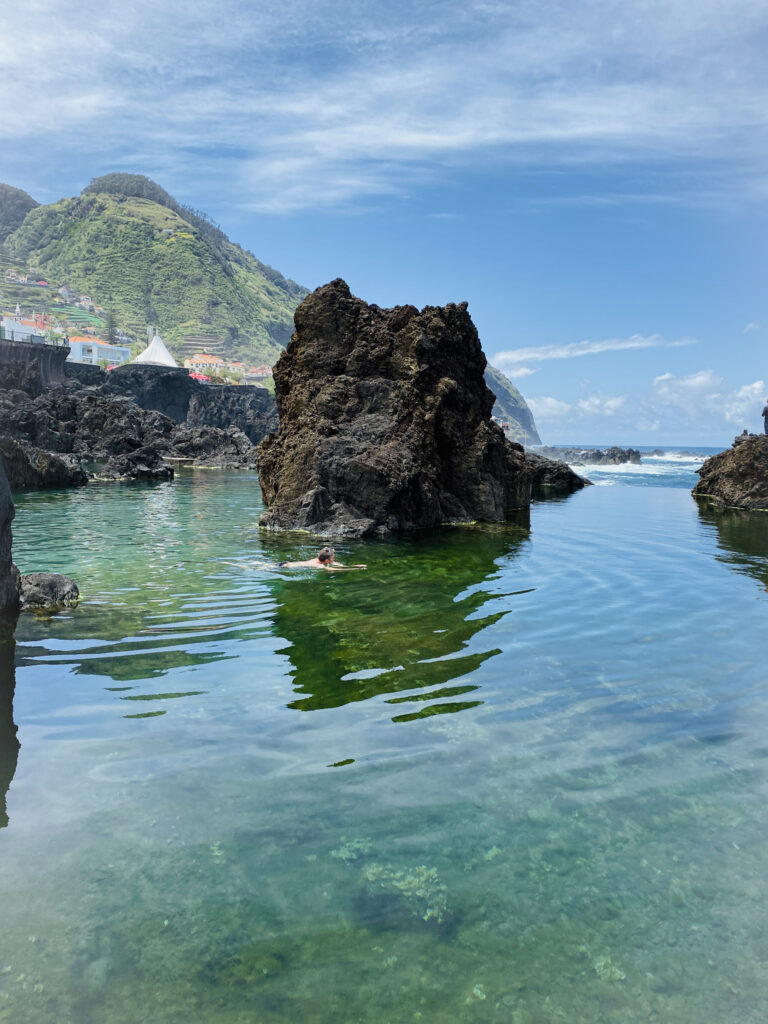
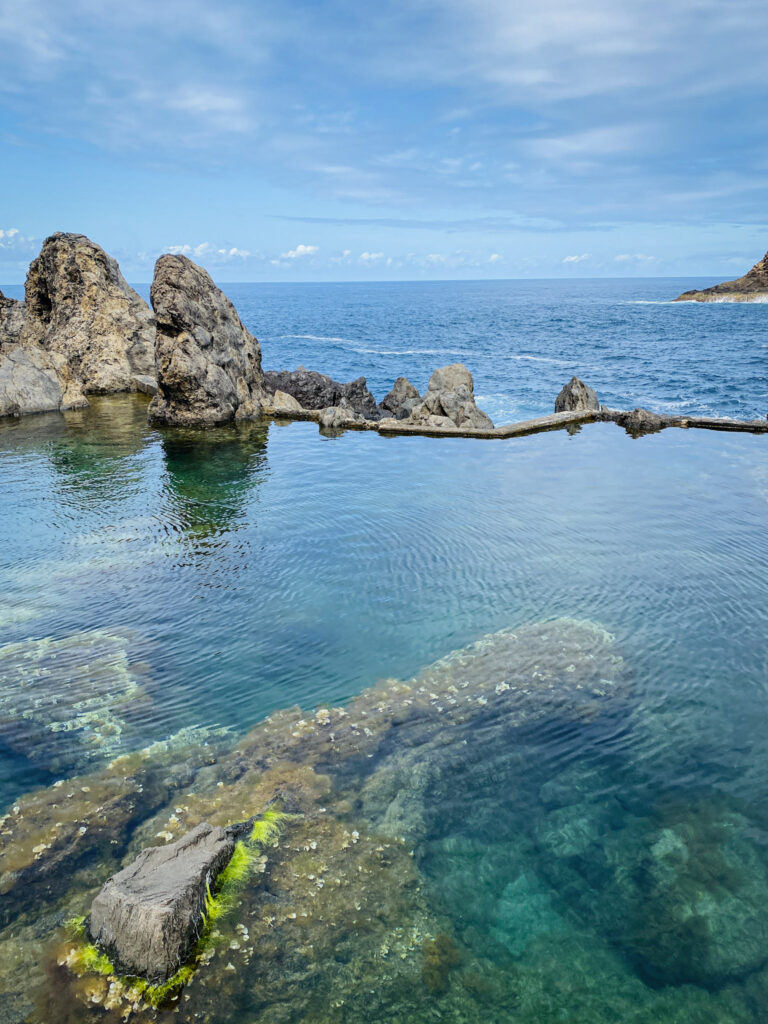
The north coast is where Madeira starts flexing, and Seixal is a perfect first stop.
Praia do Porto do Seixal (Seixal Beach) has that rare black-sand-meets-turquoise-water combo that looks fake in photos. It’s small, it’s dramatic, and it’s backed by cliffs so green they look painted on.
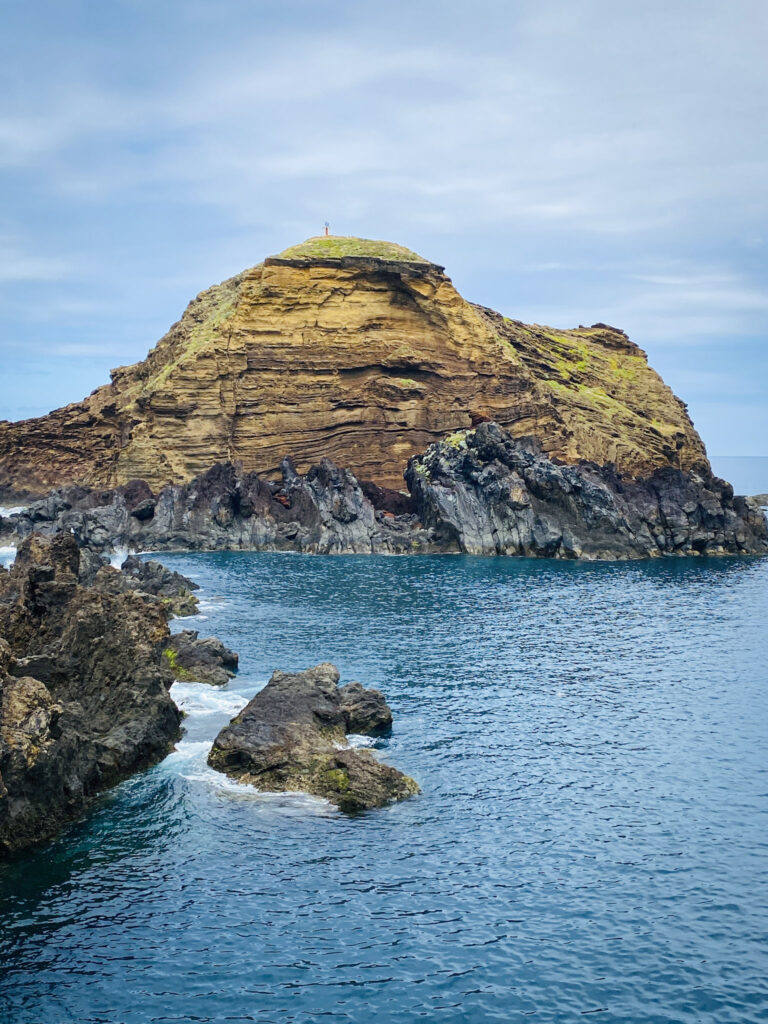
Right nearby, Piscinas Naturais do Seixal (the natural pools) are volcanic rock formations that trap seawater into calm little pools, perfect for a swim without wrestling the Atlantic’s actual waves. They’re less crowded than Porto Moniz’s version, which is a plus if you want the natural-pool experience without the tour buses.
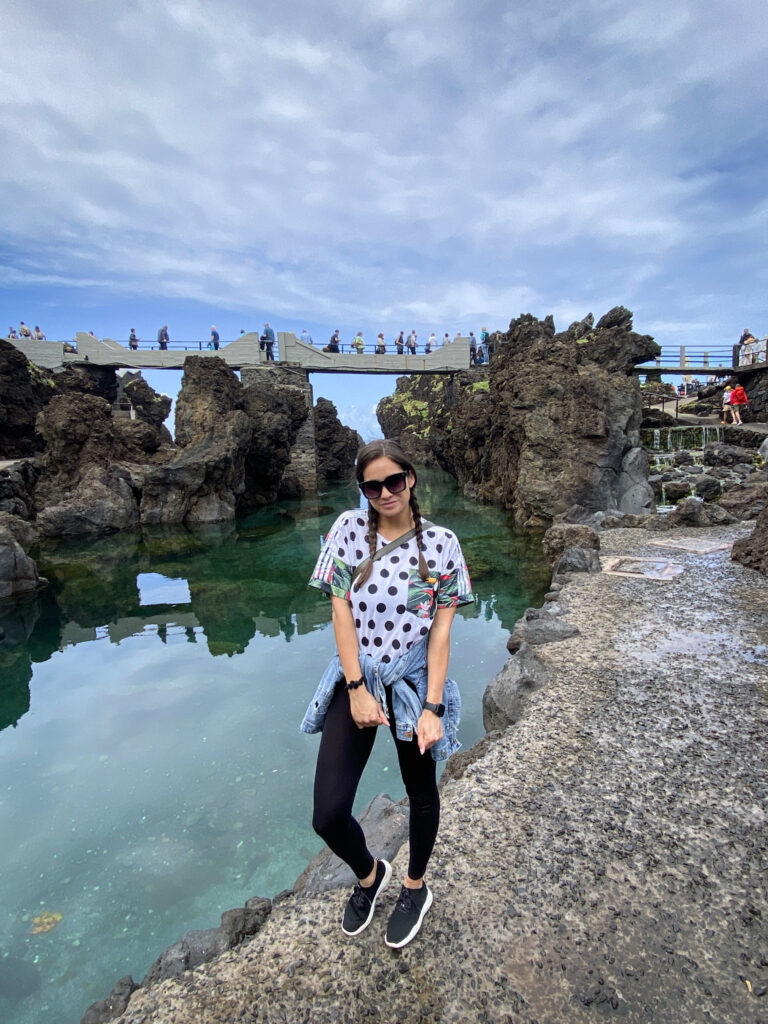
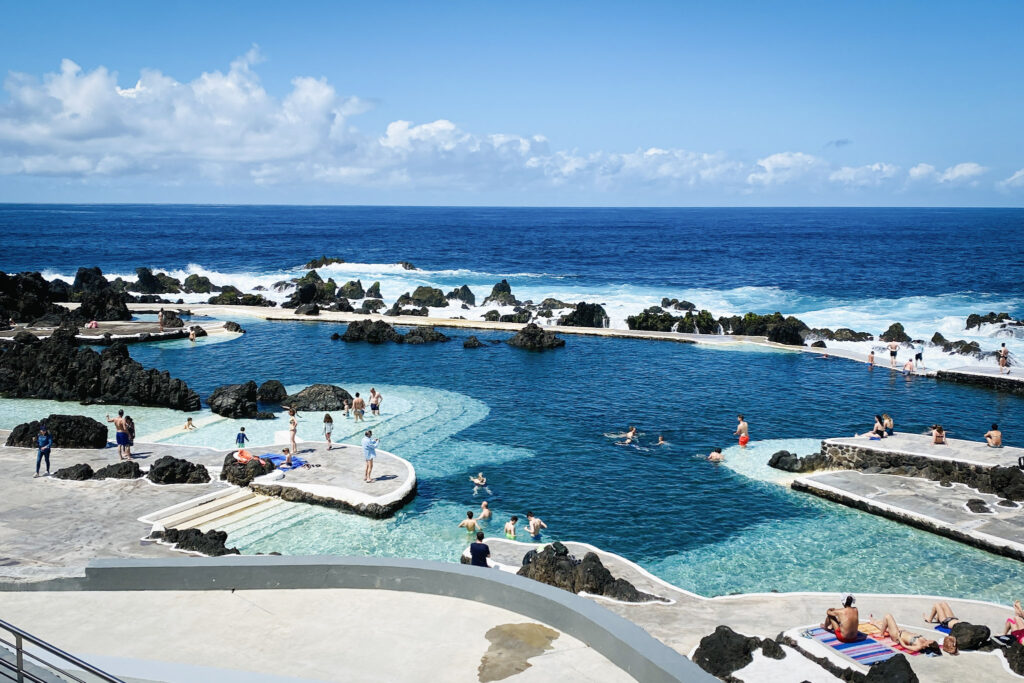
Porto do Seixal (Seixal Harbor) rounds things out — a small, working harbor that’s easy to combine with the beach and pools since they’re all within walking distance of each other.
Jet Lag Jelly Tip: Visit Seixal early morning if you can. The light hits the cliffs just right, and you'll beat the crowds heading to Porto Moniz down the road.
5. Porto Moniz and Its Famous Natural Swimming Pools
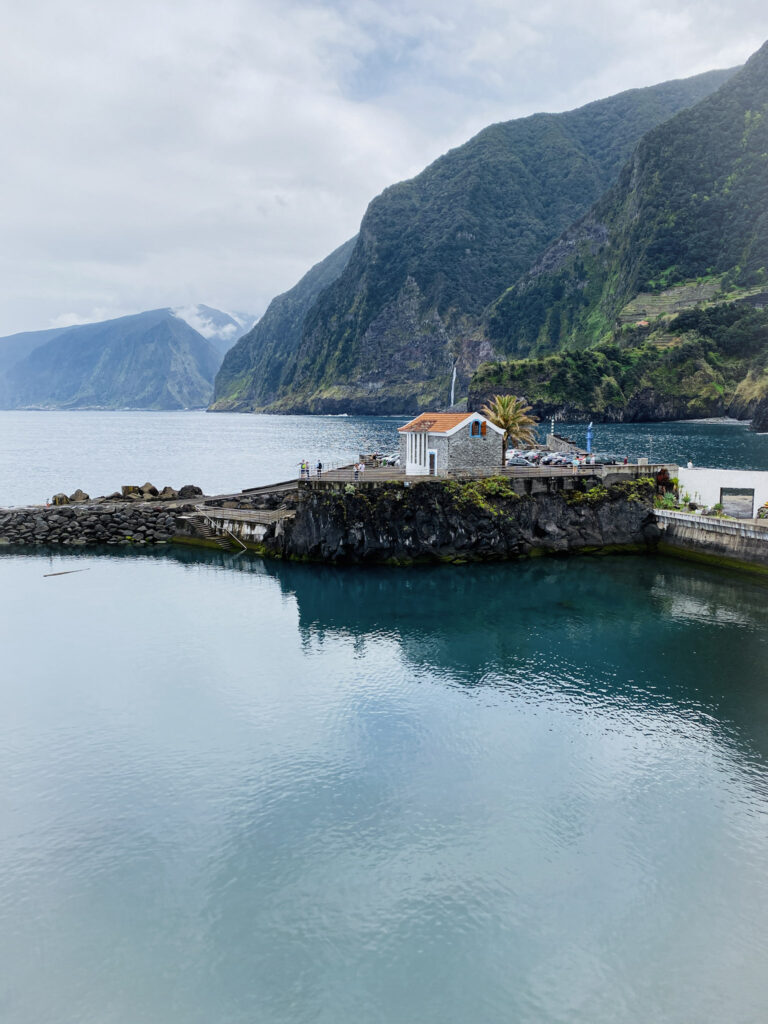
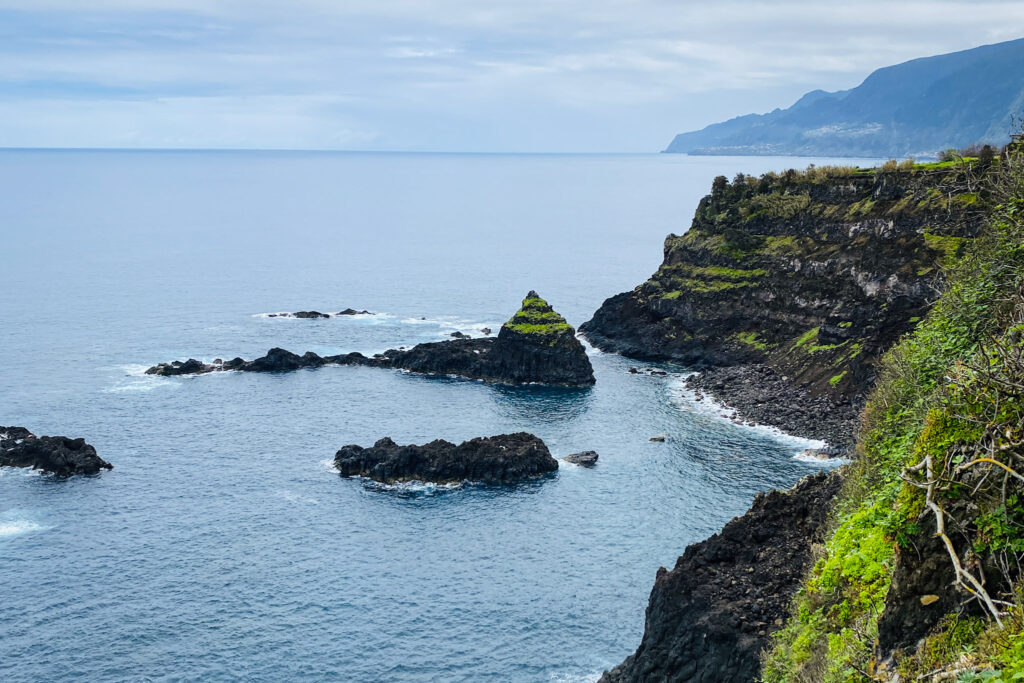
If Madeira has one iconic photo spot, it’s this one. Porto Moniz sits at the island’s northwestern tip, and its natural swimming pools — volcanic lava pools filled and refreshed by the Atlantic — are the reason half your Instagram feed has probably already seen this place.
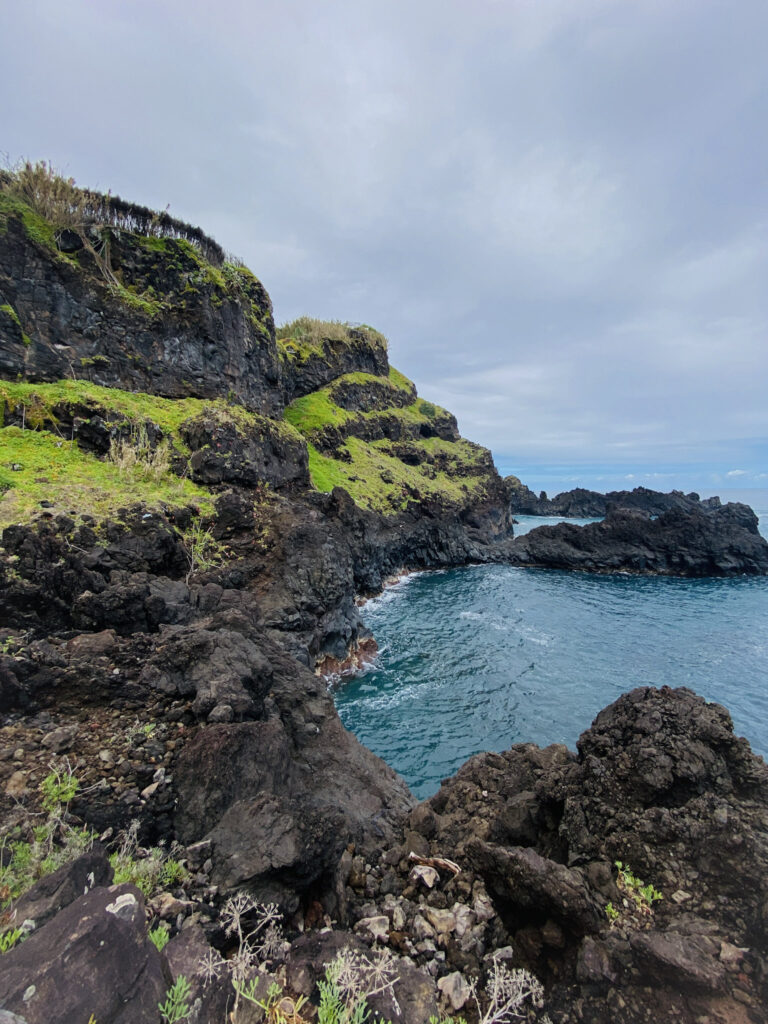
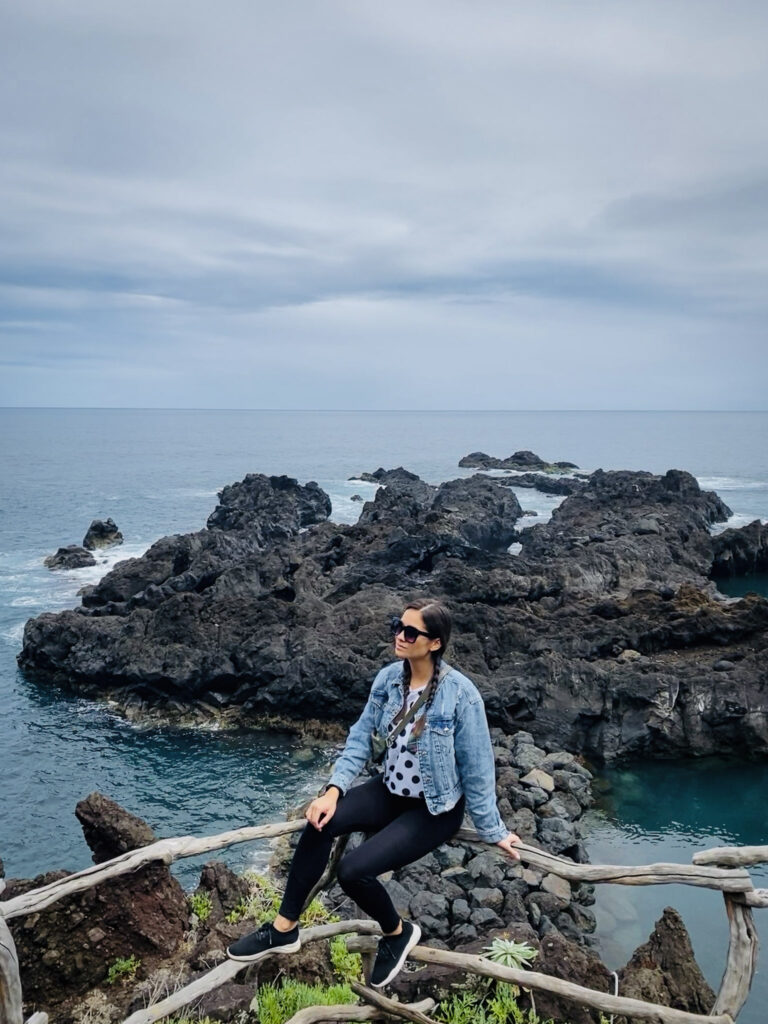
Swimming here is a genuinely strange sensation: calm, clear pools on one side, and just beyond the rocks, the ocean smashing against the coast like it’s annoyed it can’t get in. It’s touristy, yes, but it earns it.
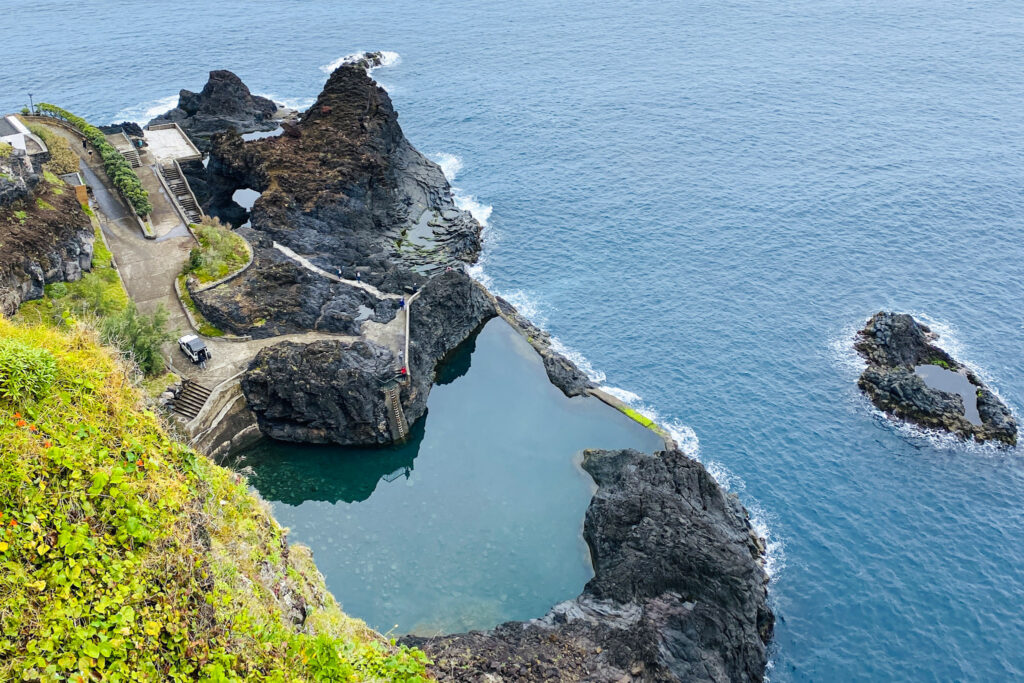
Jet Lag Jelly Tip: Go for a swim, then walk up to the town's upper viewpoint for a wide shot of the whole pool complex — it's a completely different (and better) photo than anything you'll get at pool level.
6. Ponta do Pargo: Cliffs, Viewpoints, and a Lighthouse
Keep heading along the west coast and things get quieter and wilder. This stretch is less “must-see landmark” and more “pull over every ten minutes because the view demands it.”
Fajã da Quebrada Nova is a striking coastal formation, one of those spots where the island’s volcanic layers are laid bare in front of you.
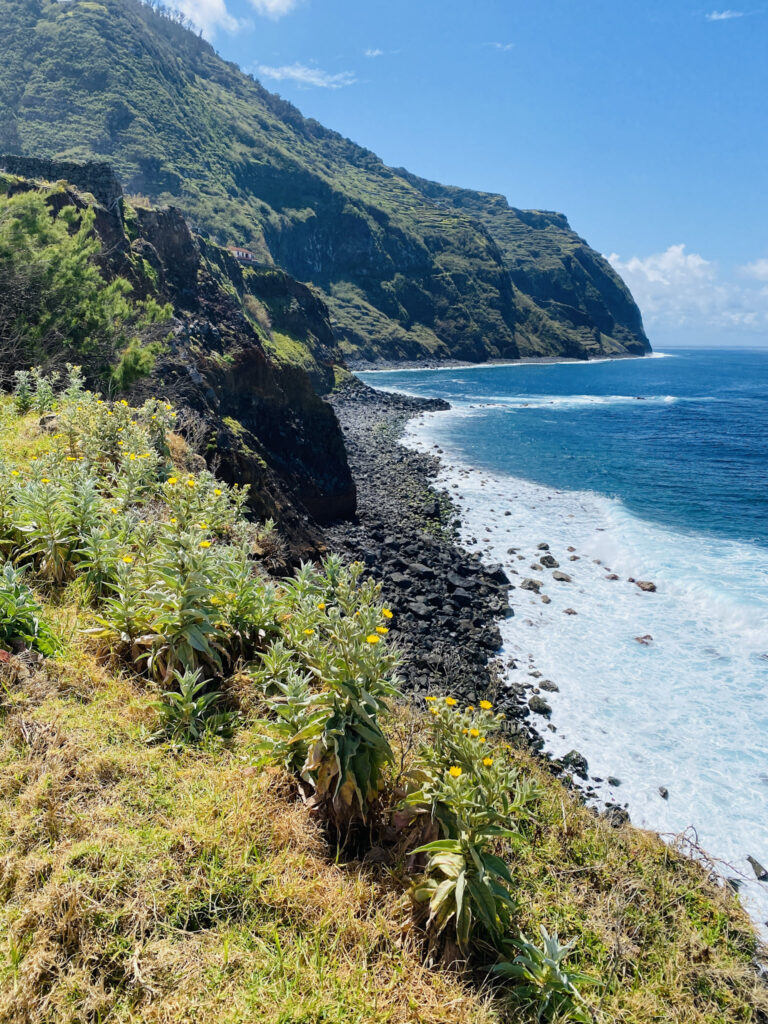
Miradouro da Santinha is a mountain viewpoint that rewards a short detour with sweeping views over the terraced hillsides — a good stop if you want the “so this is why everyone house on cliffs here” moment.
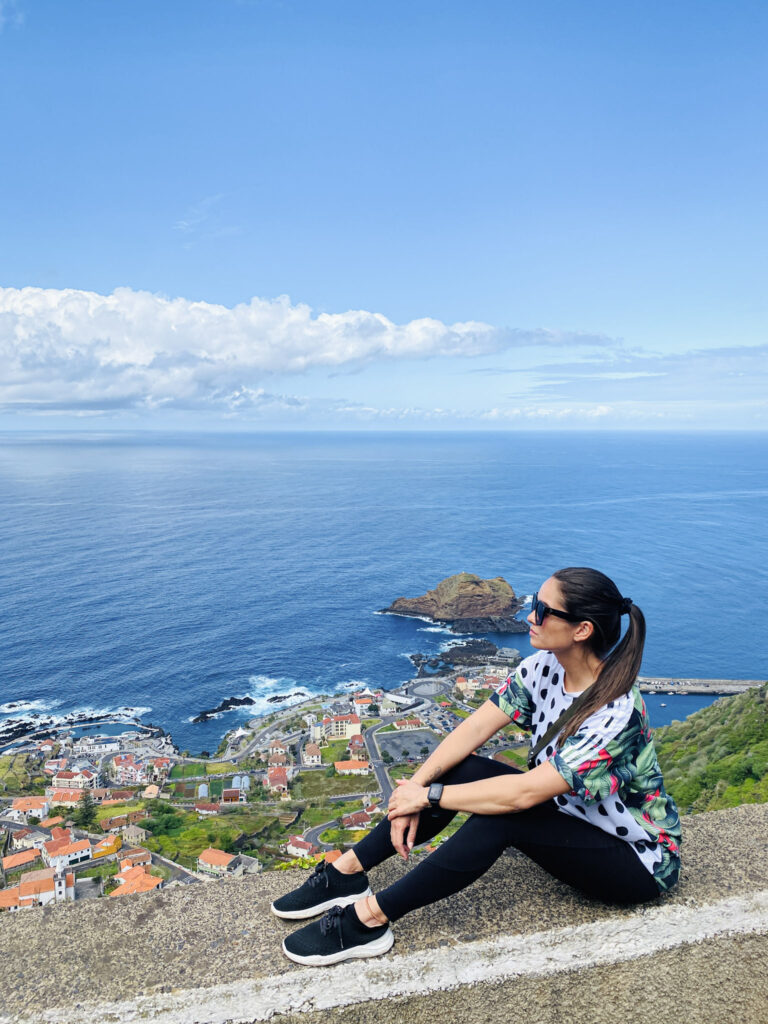
The dramatic coastal cliffside of Ponta do Pargo itself is the headline act of this whole stretch — sheer drops, wind that will rearrange your hair permanently, and views that stretch out over open Atlantic with nothing between you and the horizon.
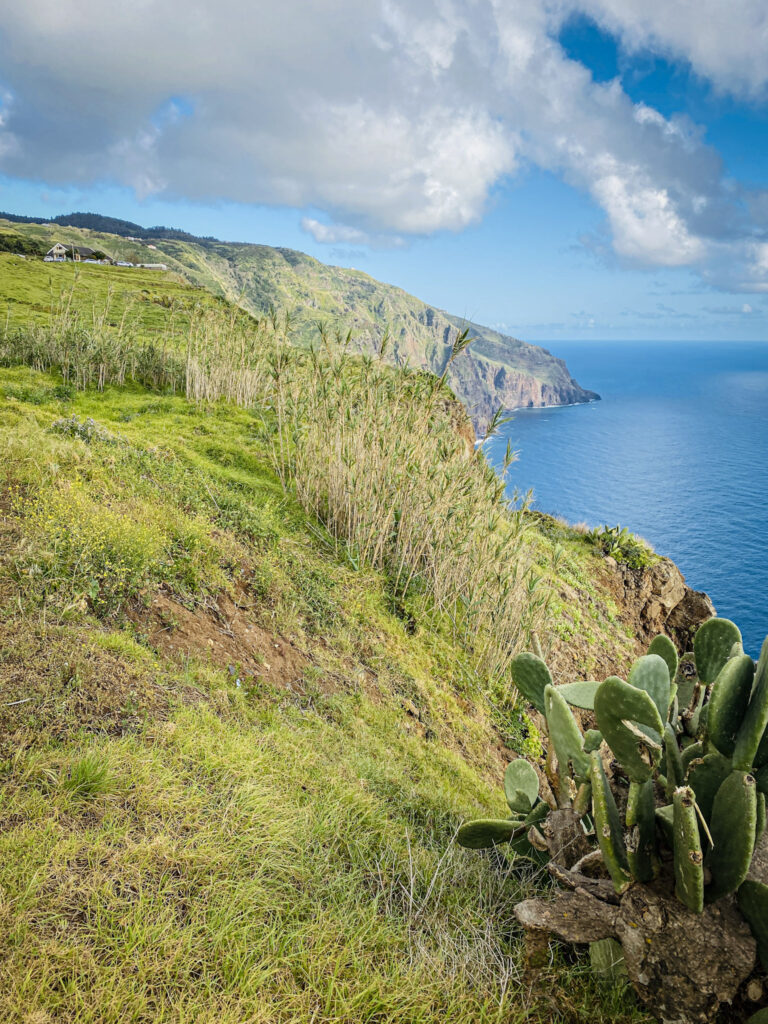
Miradouro do Fio adds another angle on the same wild coastline, and the Farol da Ponta do Pargo (Ponta do Pargo Lighthouse) marks the island’s westernmost point — a fitting bookend, small and white against all that cliff and sky.
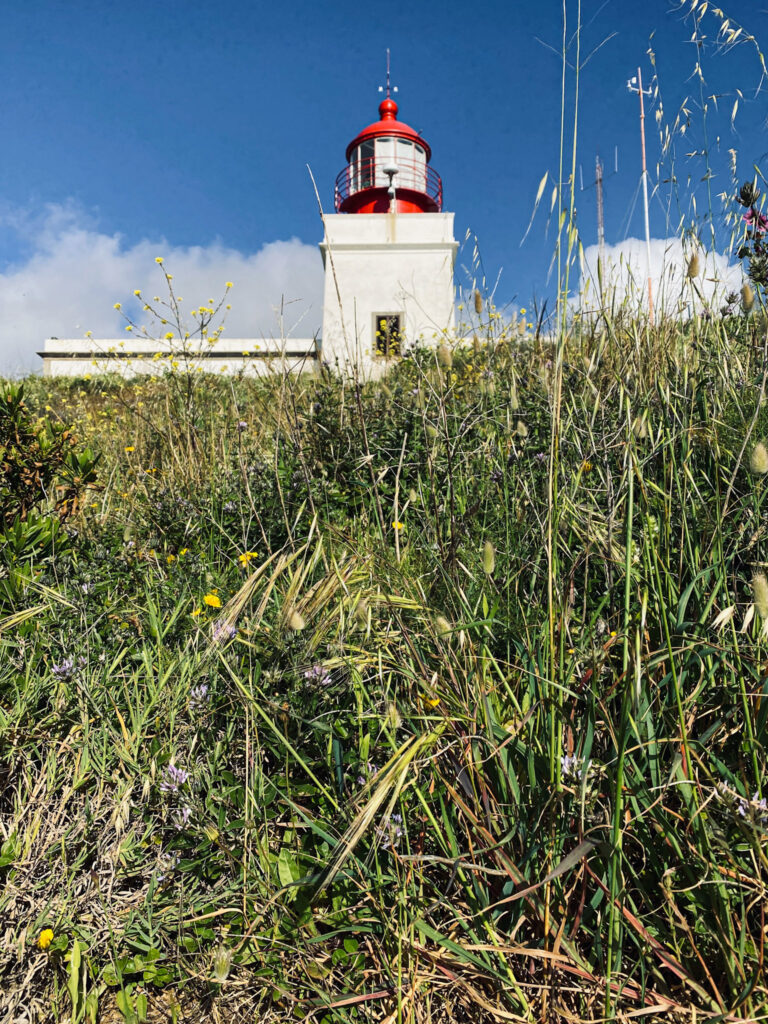
Jet Lag Jelly Tip: This is sunset territory. Ponta do Pargo faces west, the lighthouse gives you a clean foreground, and there's basically zero crowd competing for the view.
7. PR8: Vereda da Ponta de São Lourenço
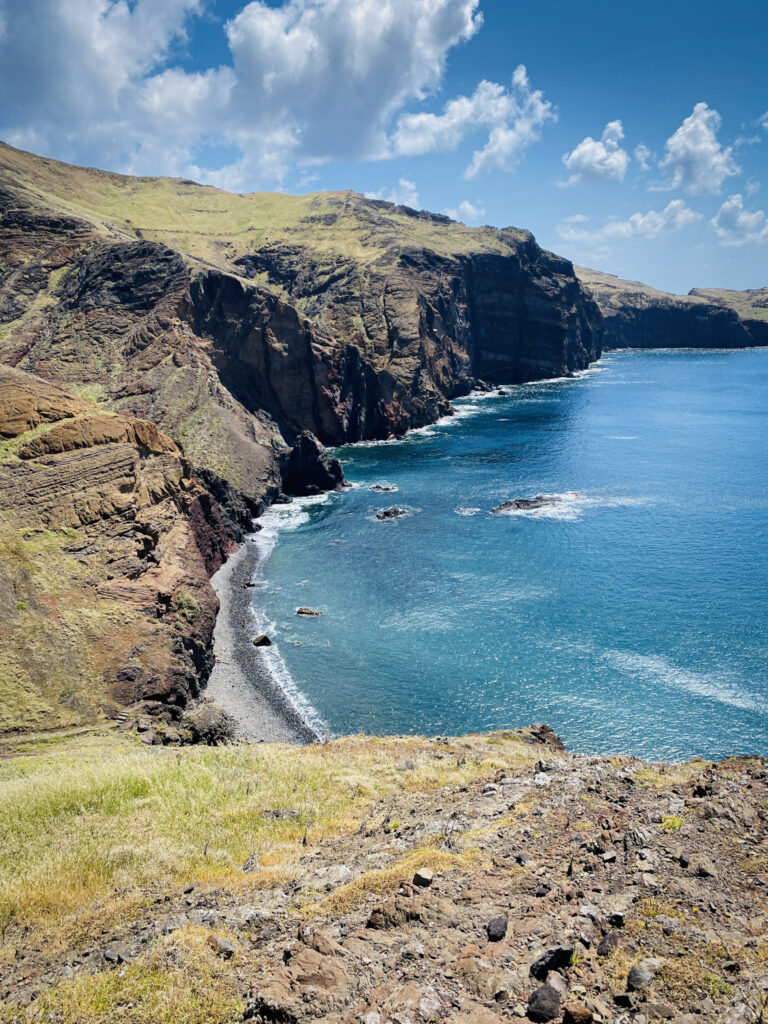
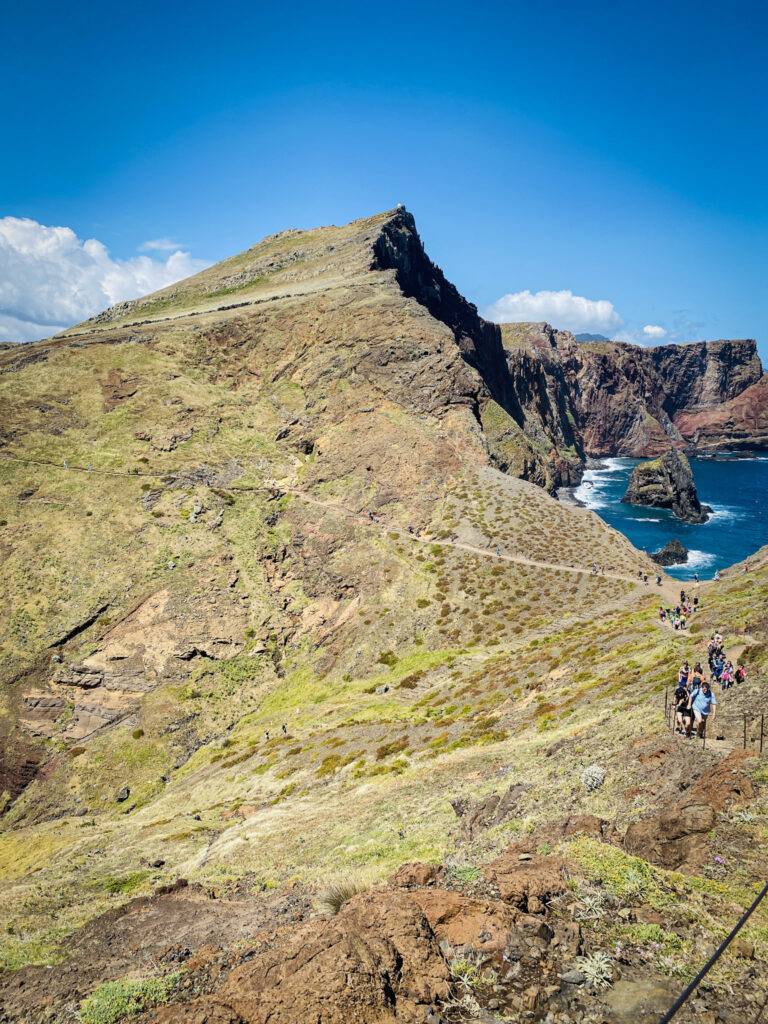
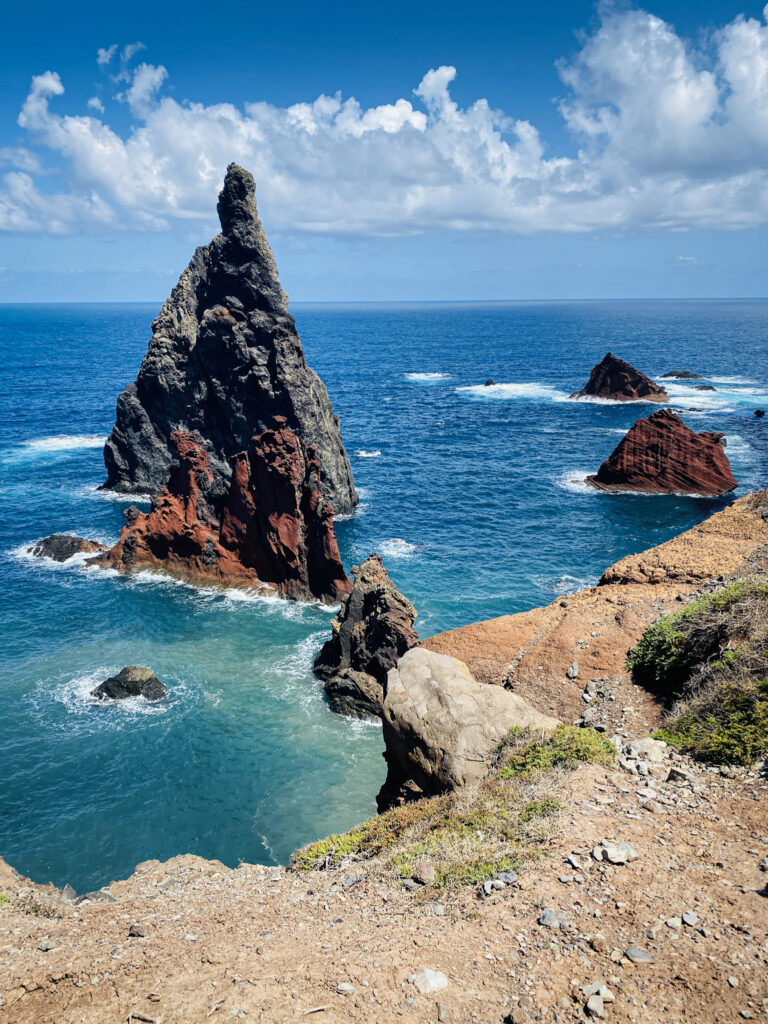
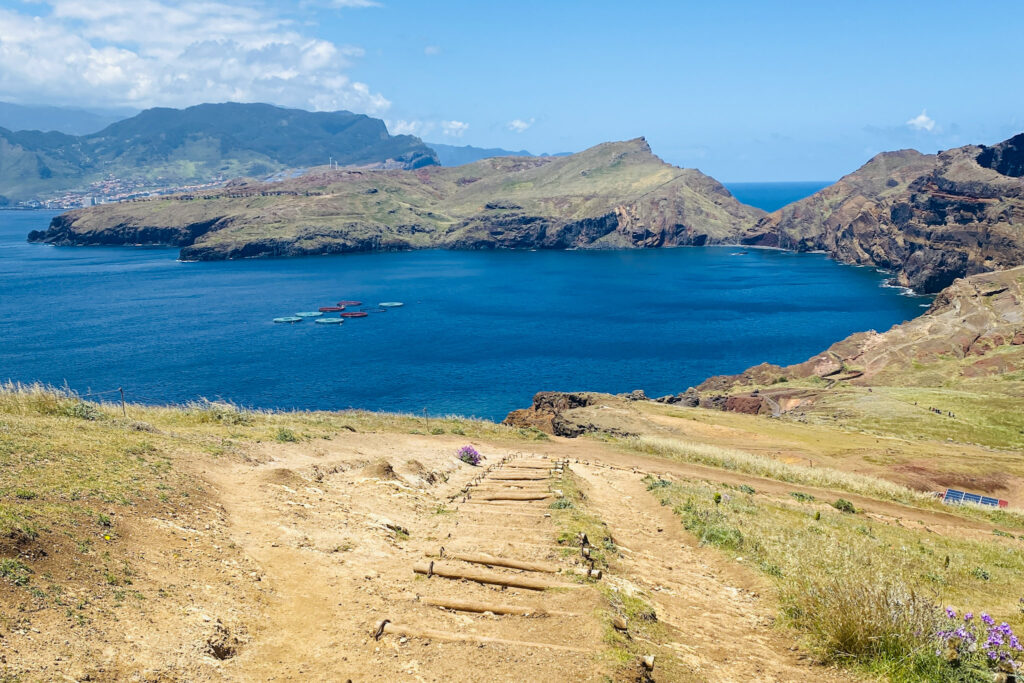
Now for the opposite end of the island — literally. The PR8 Vereda da Ponta de São Lourenço trail, inside Madeira Natural Park, runs along the island’s easternmost peninsula, and it looks nothing like the lush green Madeira you’ve seen everywhere else. This part is dry, red-and-ochre, volcanic, almost lunar — with cliffs dropping straight into a blue that doesn’t look real.
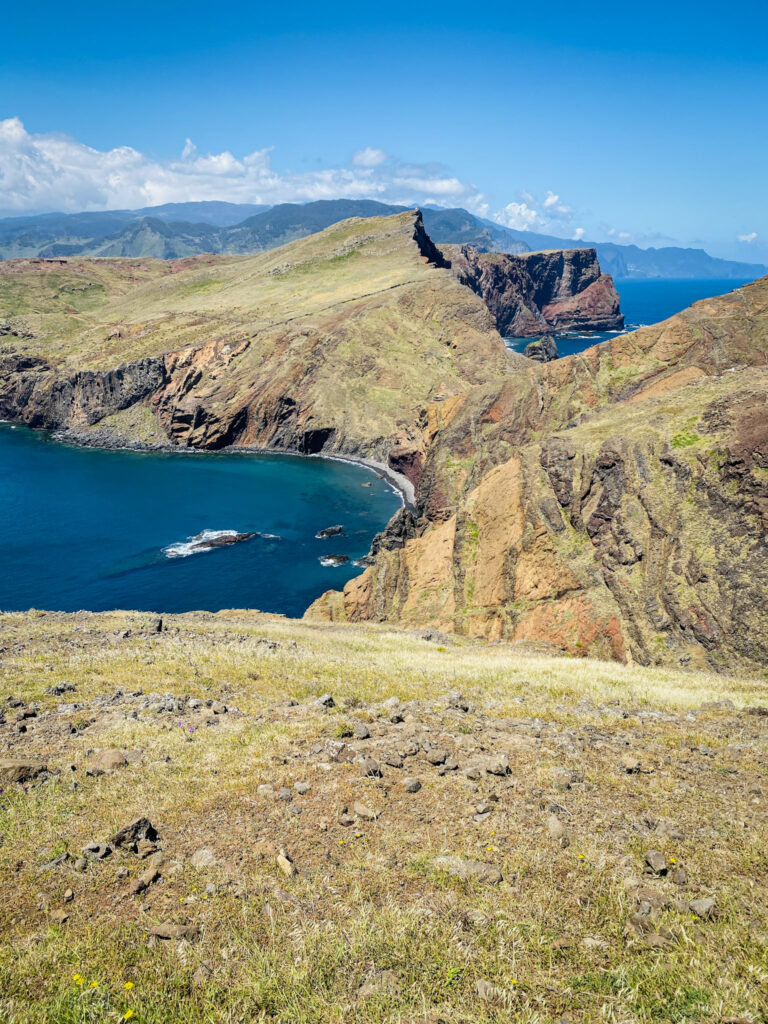
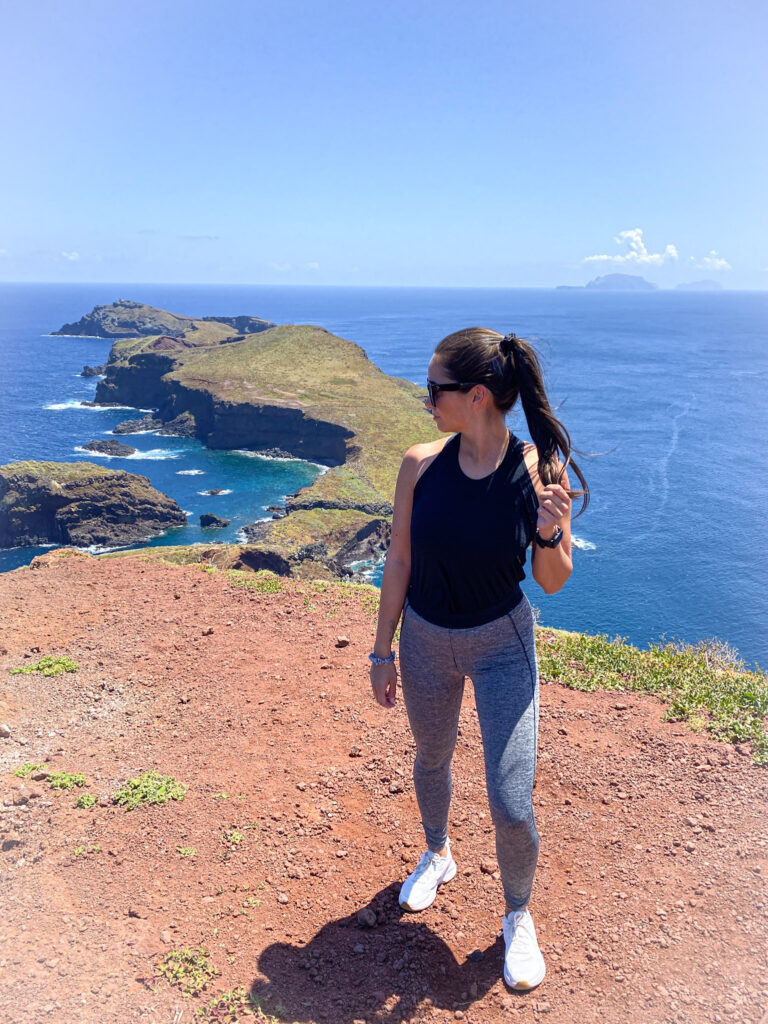
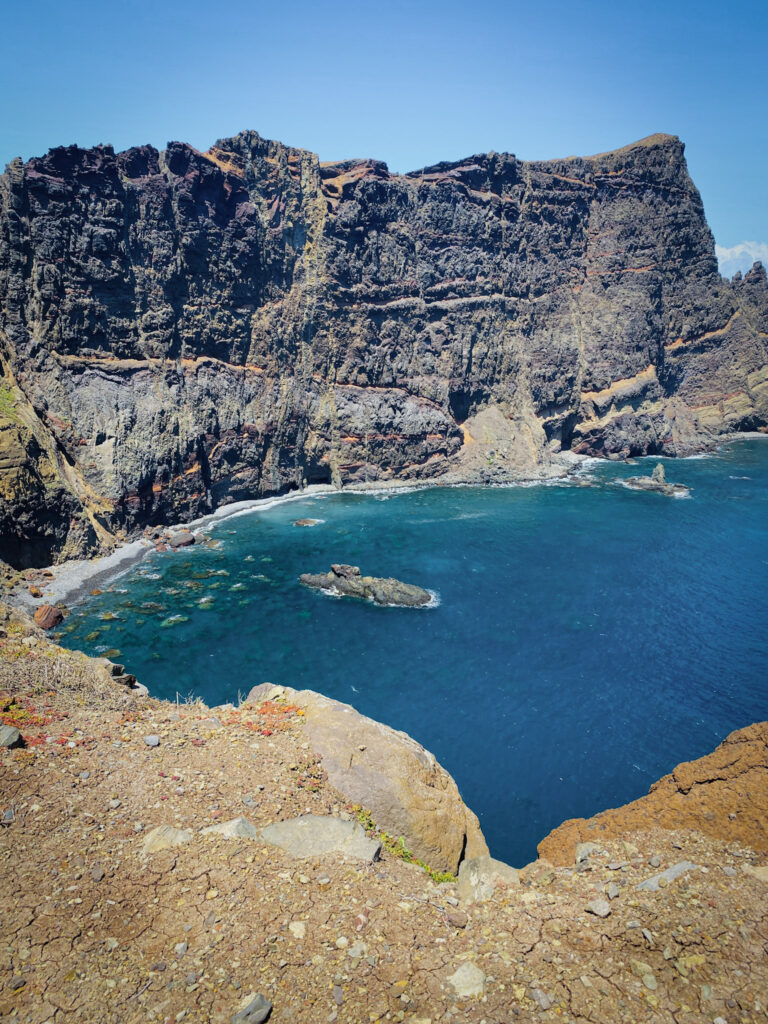
I’ll just say it: this was my favorite thing I did on the entire island, and the most incredible hike I’ve ever done, full stop. It’s one of the most photogenic hikes on the island, and thankfully one of the more manageable ones too — no technical scrambling, just consistently jaw-dropping scenery the entire way out to the point.
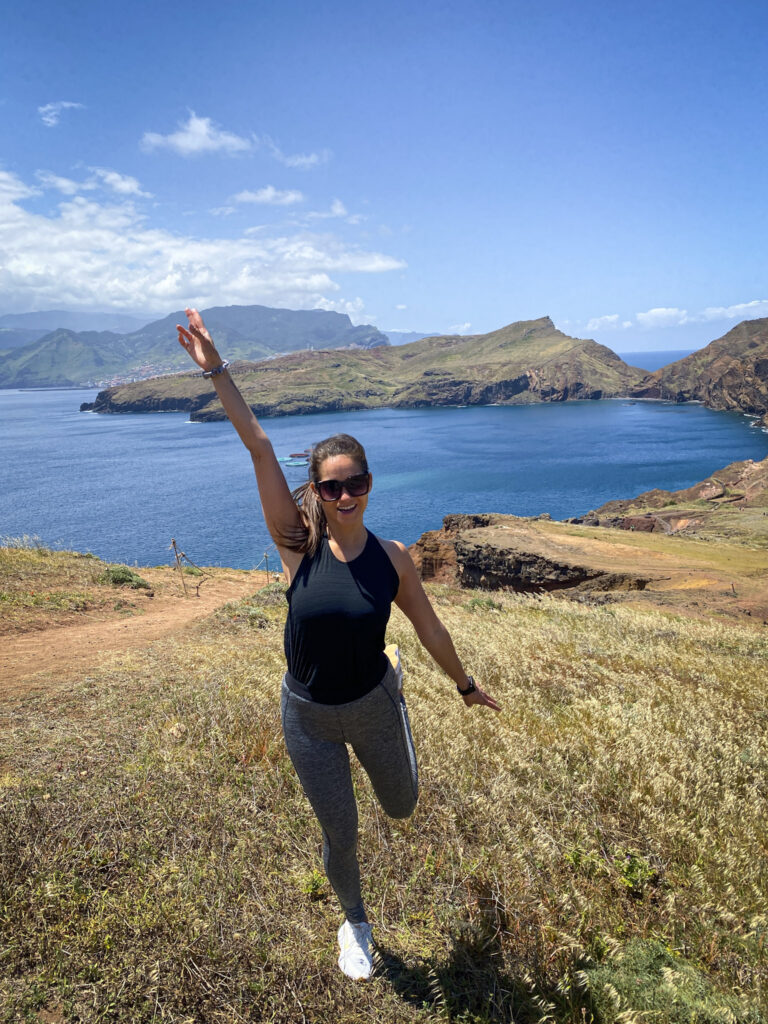
Every ridge you climb reveals a slightly different color of ocean, and the peninsula narrows as you go, so by the final stretch you’ve got open Atlantic on both sides of a trail that barely feels wide enough to hold you.
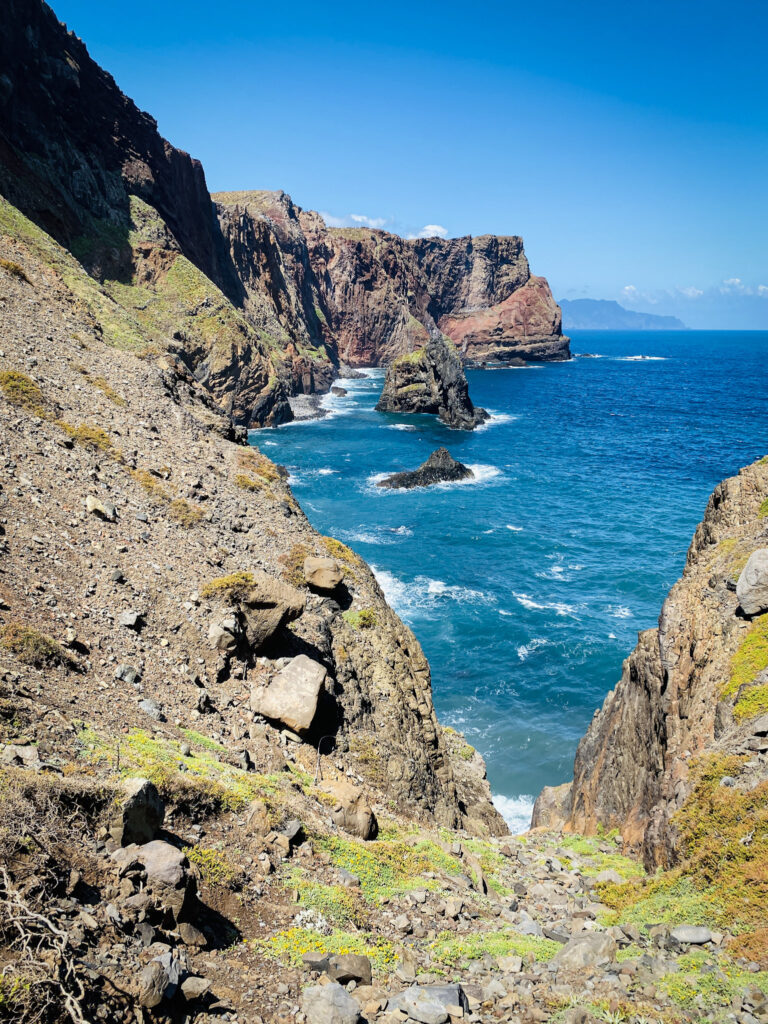
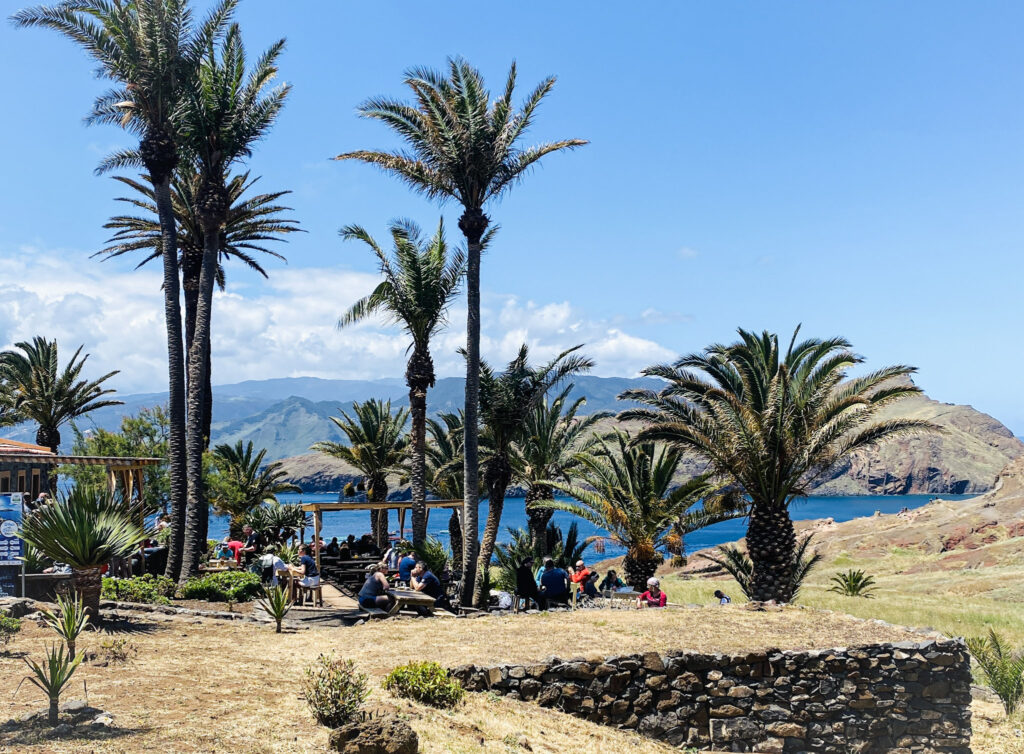
About two-thirds of the way along, the trail drops down into a genuinely surprising little oasis: Casa do Sardinha, a former farmhouse turned rest area, tucked into a palm-shaded valley that feels completely out of place against all that red volcanic rock around it. There’s a small café/buffet here where you can grab a coffee, a snack, or a full meal, plus the only toilets on the entire trail (small fee, usually around €1). Picnic tables are scattered around the shade, so if you’ve packed your own food, this is the spot to stop, eat, and just take it all in before tackling the final climb up to the Ponta do Furado viewpoint.
Jet Lag Jelly Tip: Wind picks up hard toward the tip of the peninsula. Bring a windbreaker even if the rest of the island feels calm.

Budget real time at Casa do Sardinha, not just a bathroom break. Pack a picnic, grab a shaded table, and treat it as a proper rest stop — you'll want the break before the last push to the viewpoint, and it's honestly one of the most peaceful spots on the whole trail. Note the café keeps limited hours (roughly 10am–5pm), so if you're hiking at sunrise, the toilets and food won't be available until it opens.

Parking at the PR8 trailhead (Baía d'Abra, end of ER109) is free, but the lot is small and fills up fast — especially in summer, when people end up parallel parking along the access road once the lot's full. Added a line right after the intro paragraph with a recommendation to arrive by 8–8:30am.

Book ahead: As of 2026, PR8 requires a pre-booked time slot through the official SIMplifica portal — book it a few days out during peak season to avoid missing your slot. If you'd rather skip the booking hassle entirely, a guided PR8 hiking tour handles the reservation and transport for you, often with a local guide included.
8. Santana
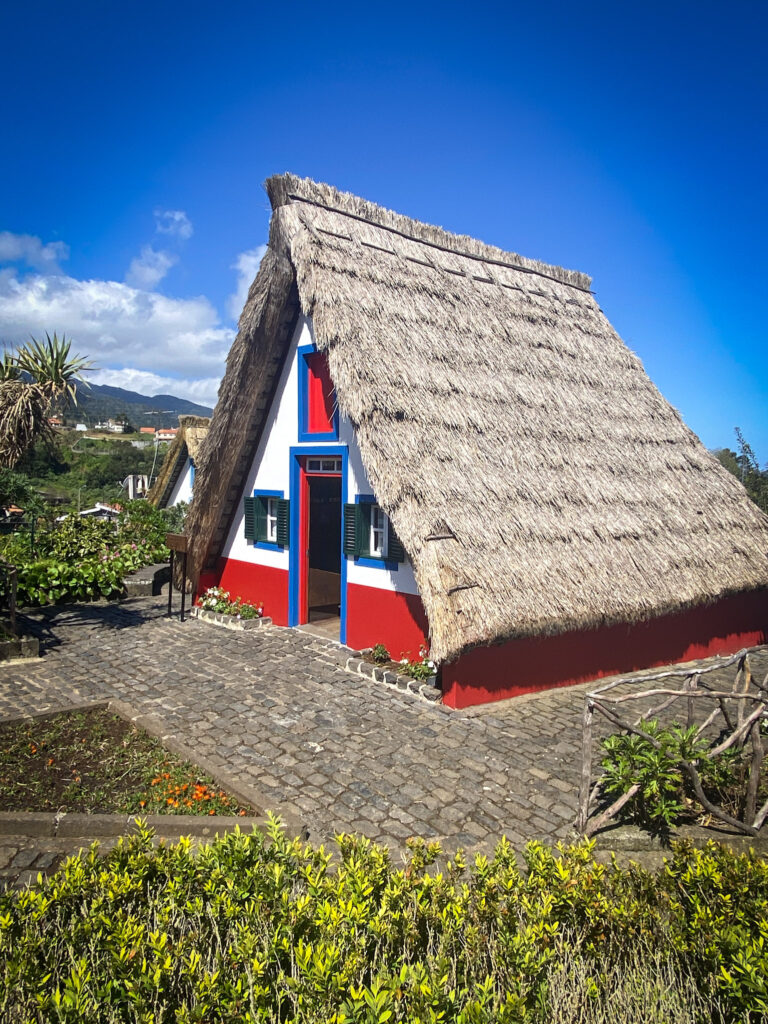
Santana is famous for its traditional triangular thatched houses — the ones that look like they belong in a storybook, bright red-and-white with steep straw roofs. These were once real family homes, built low and steep-roofed specifically to handle the region’s heavy rainfall, and a few are still preserved and open for visitors to walk through. It’s touristy in the town center, with the gift shops and tour buses to match, but charming enough to forgive it.
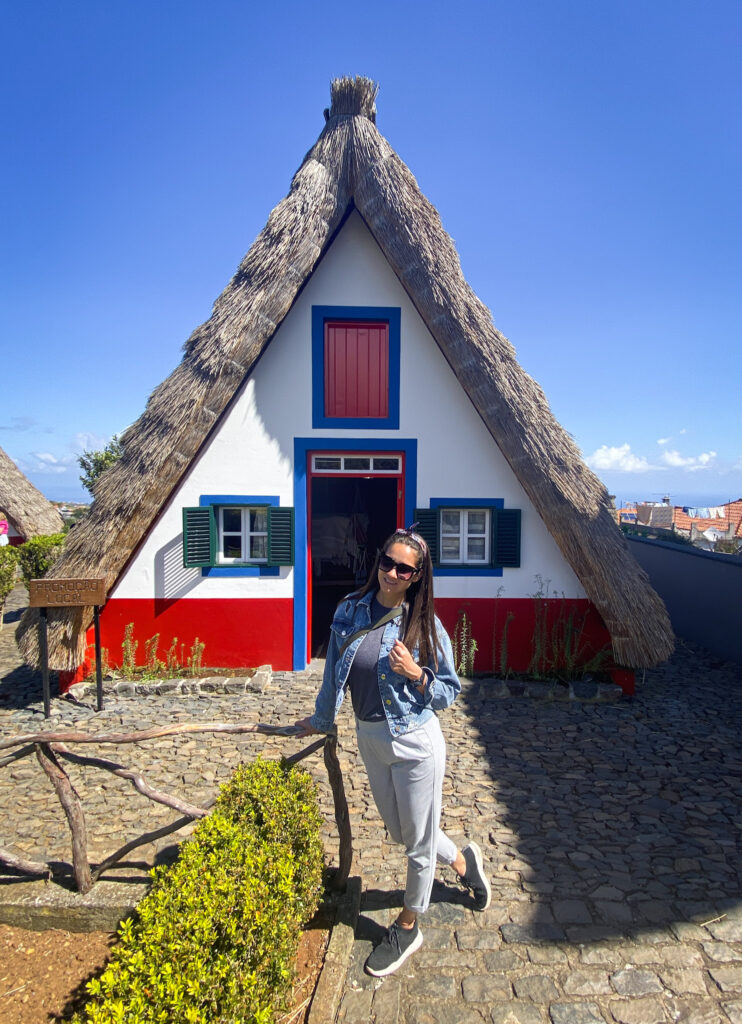
Jet Lag Jelly Tip: Skip the busiest thatched-house display near the main square and ask locally for a quieter one a street or two over — the experience is the same, minus the tour-bus crowd.
9. Miradouro da Rocha do Navio
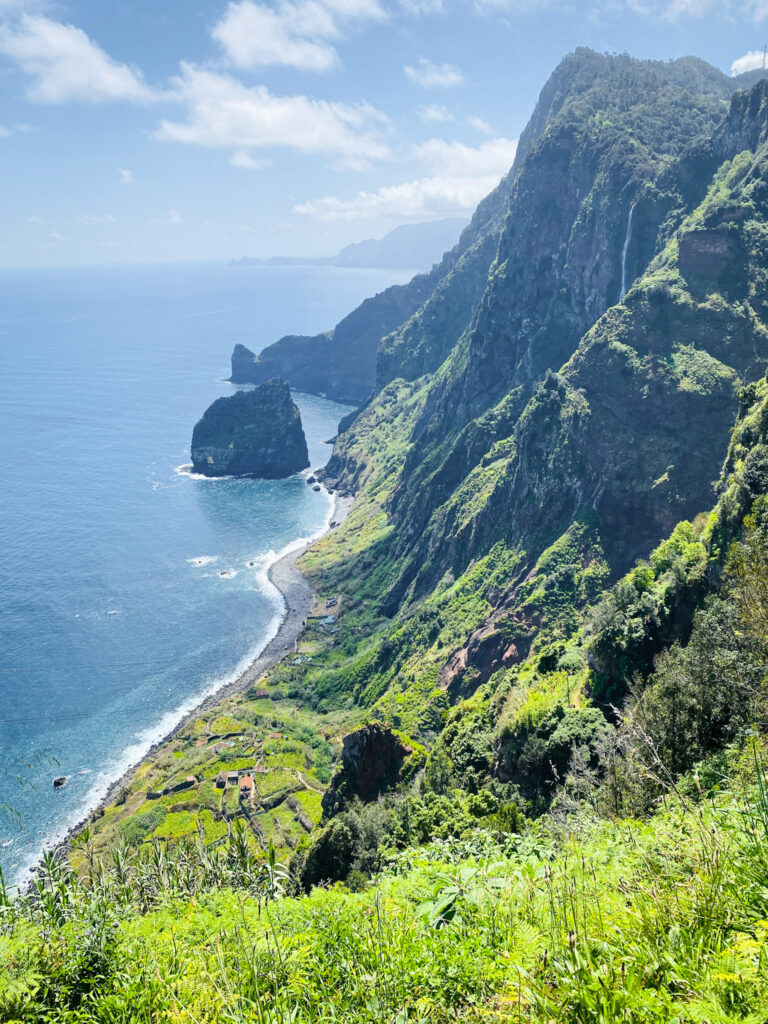
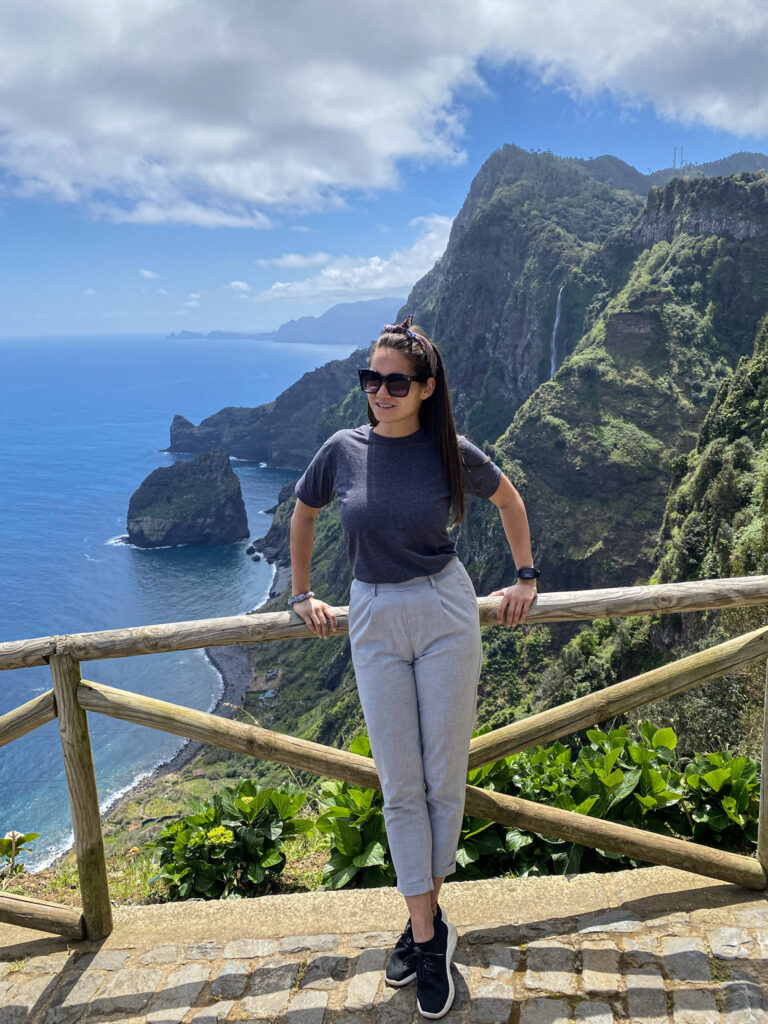
From Sanatana, Miradouro da Rocha do Navio gives you a cliffside viewpoint over one of the most dramatic stretches of Santana’s coastline. A cable car runs down from the top, if you want to actually reach the little beach and old fishing settlement below — it’s a short ride, but the views on the way down are worth it even if you don’t plan to linger at the bottom.
10. Porto da Cruz
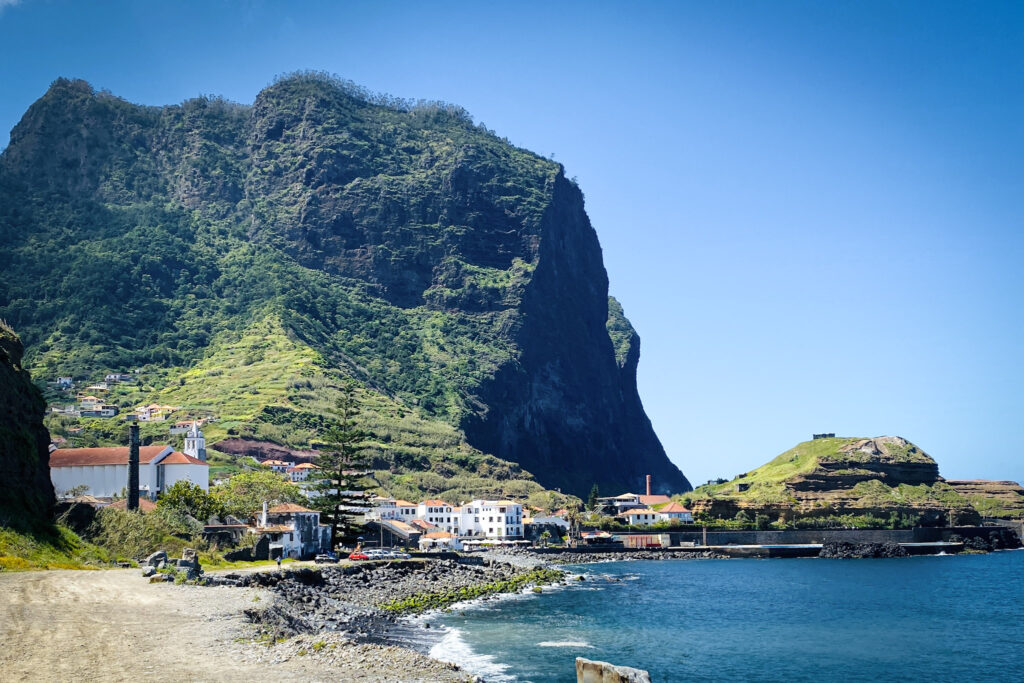
Porto da Cruz is a seaside village worth slowing down for — good waves, a laid-back vibe, and one seriously showstopping backdrop: Penha d’Águia (Eagle’s Rock), a massive volcanic monolith that towers directly over the village. It’s the kind of landmark that makes every photo of the town look dramatically overproduced, in the best way.
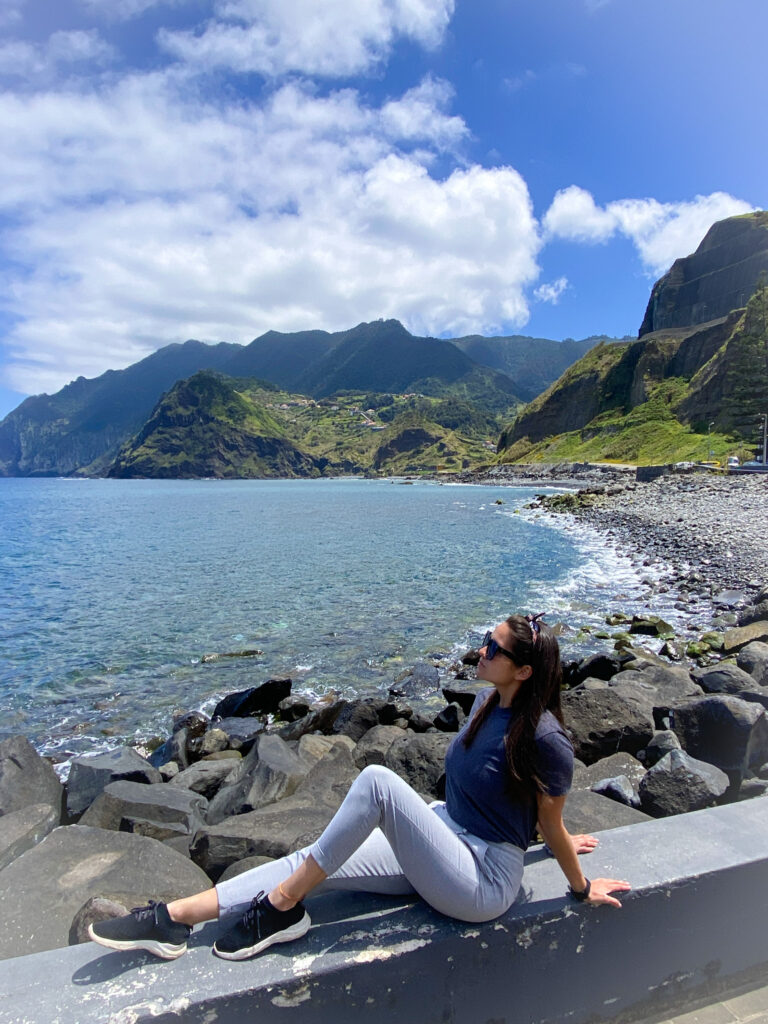
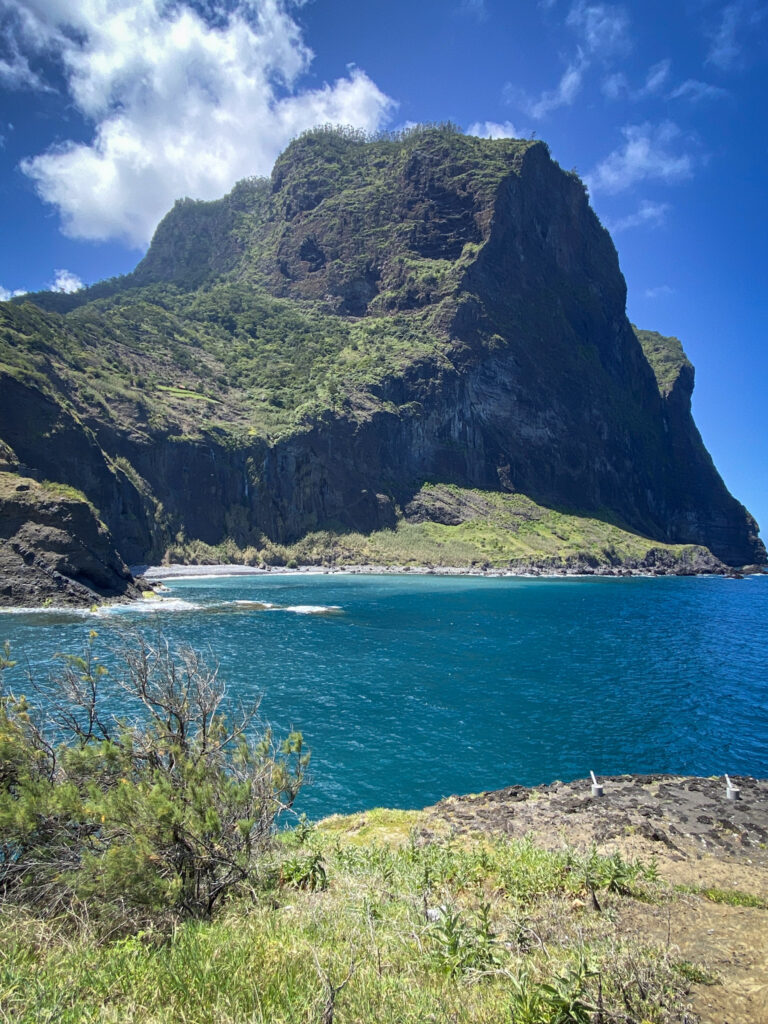
The village itself has a quieter, more local energy than a lot of Madeira’s north coast stops — it’s popular with surfers thanks to a decent break right off the village beach, and there’s a small distillery in town if you want to try (or bring home) some local rum. Between the rock formation, the water, and the general lack of crowds, it’s an easy place to end up staying longer than planned.
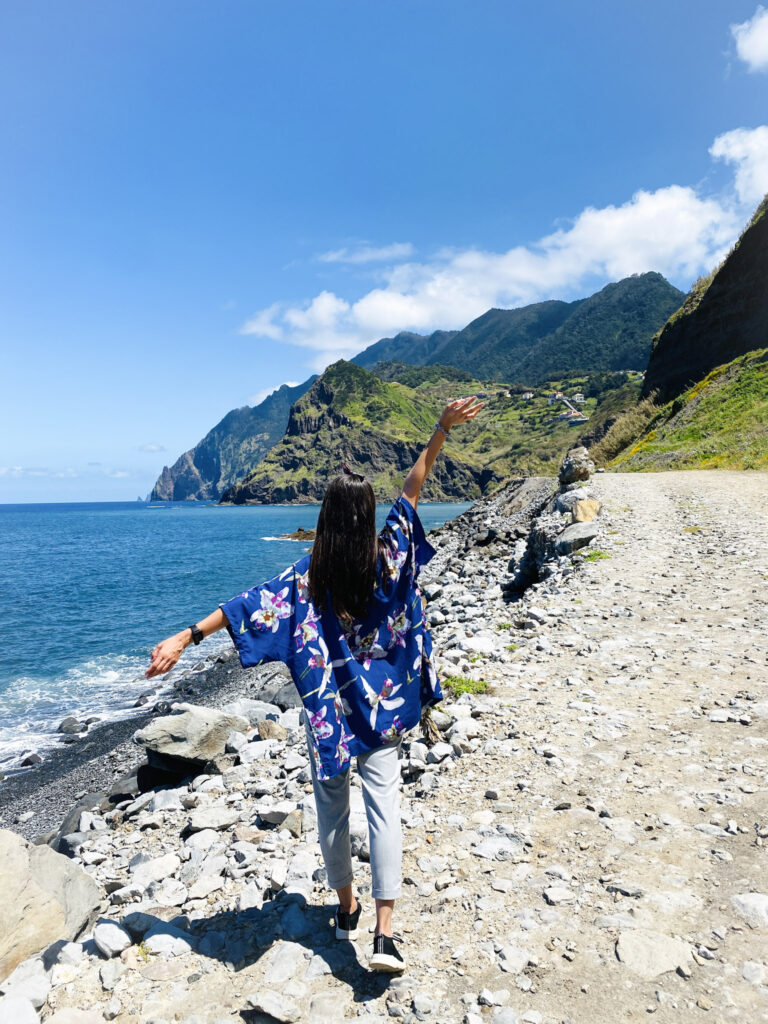
Jet Lag Jelly Tip: Time Porto da Cruz for late afternoon — Penha d'Águia catches the light beautifully, and the village empties out as day-trippers head back toward Funchal.
11. Ponta Delgada
Further along, Ponta Delgada is a small coastal town with a quieter, more local feel — a good spot to just sit at a café and watch the Atlantic do its thing without an itinerary breathing down your neck.
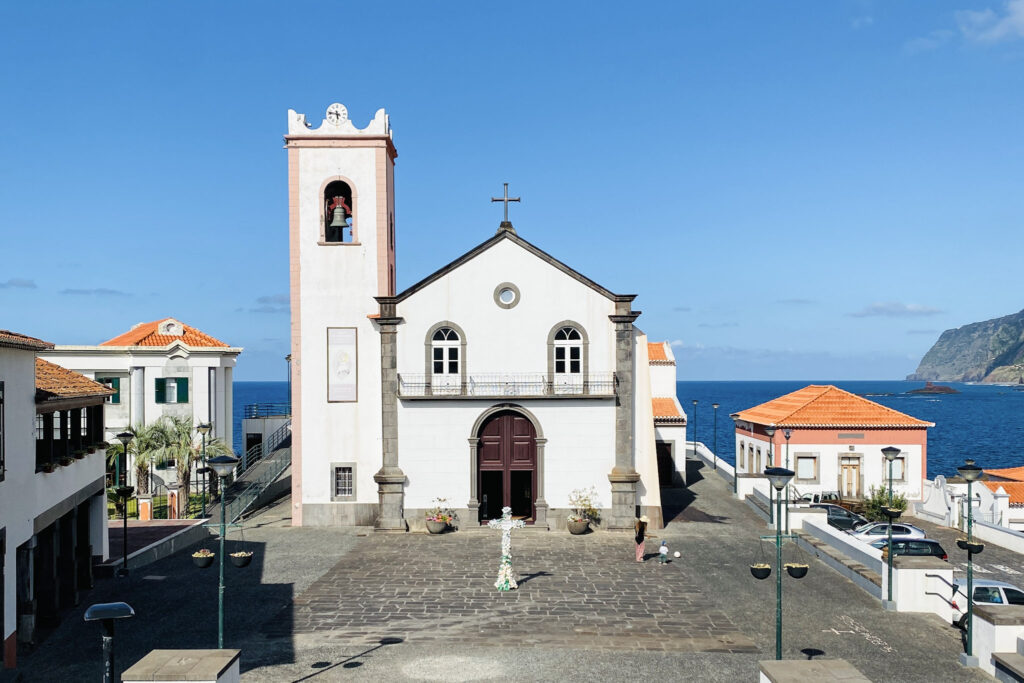
It’s easy to treat this one as a pit stop between bigger north-coast destinations, but it’s worth a proper pause. The town has its own small natural pool area, less visited than Porto Moniz’s, and a modest seafront church that’s become something of a local landmark after being rebuilt following a fire years back. There’s no single “must-see” here — it’s more about the pace than the sights.
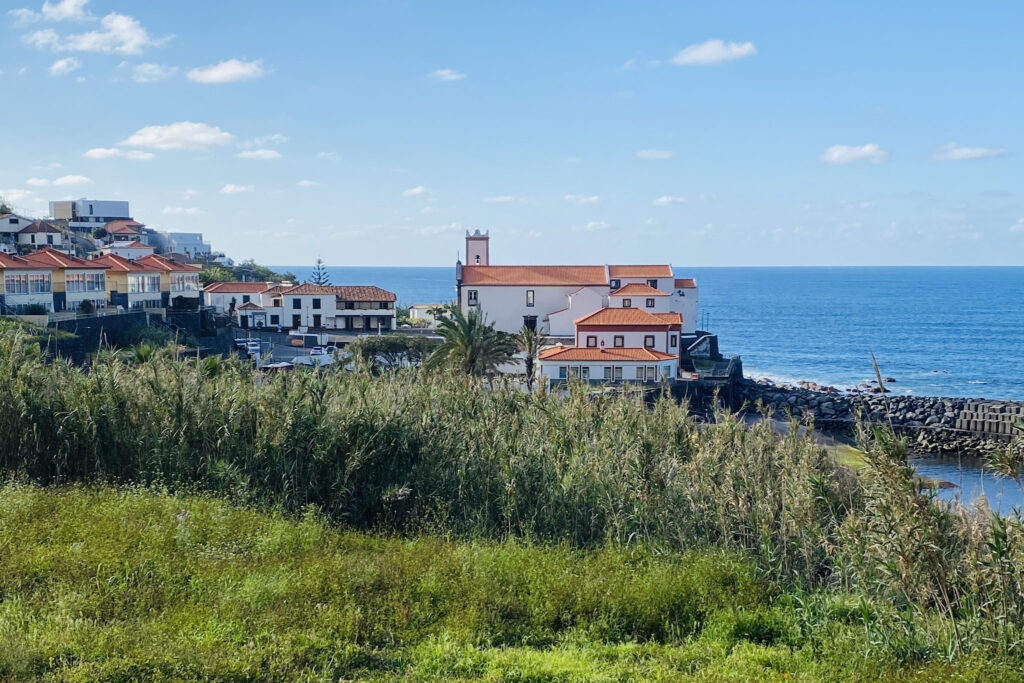
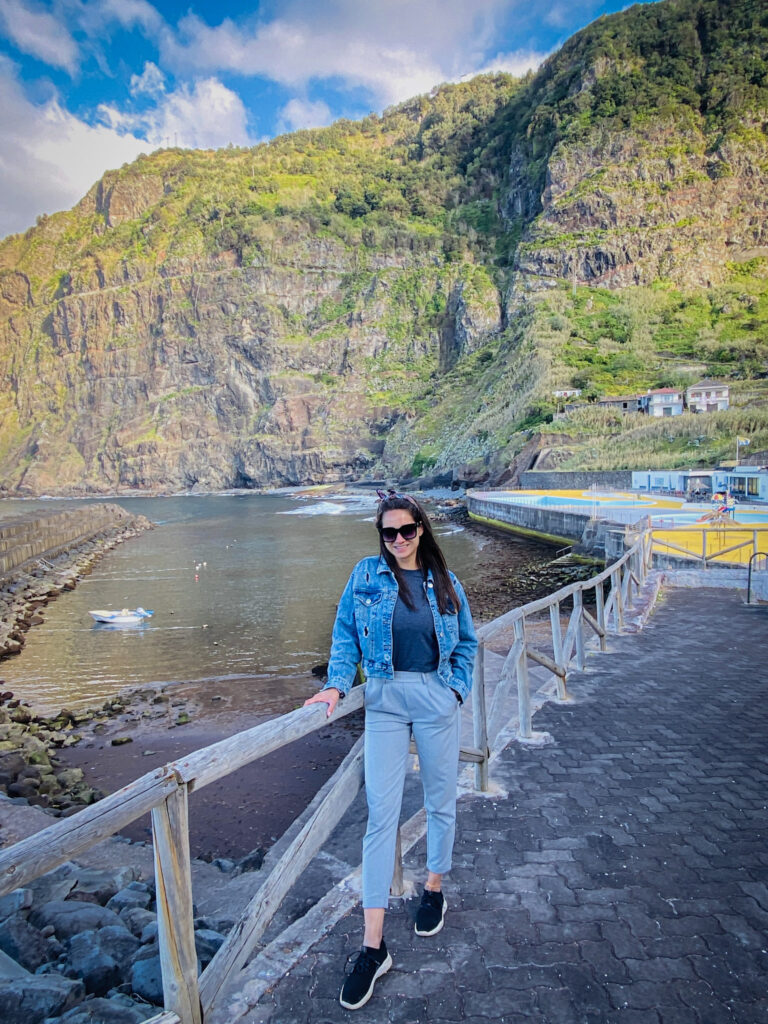
Jet Lag Jelly Tip: If you need a break from itinerary-hopping, this is the spot to take it. Grab a coffee, sit facing the water, and just let an hour pass without checking the map.
12. PR1: Vereda do Arieiro (The Legendary One)
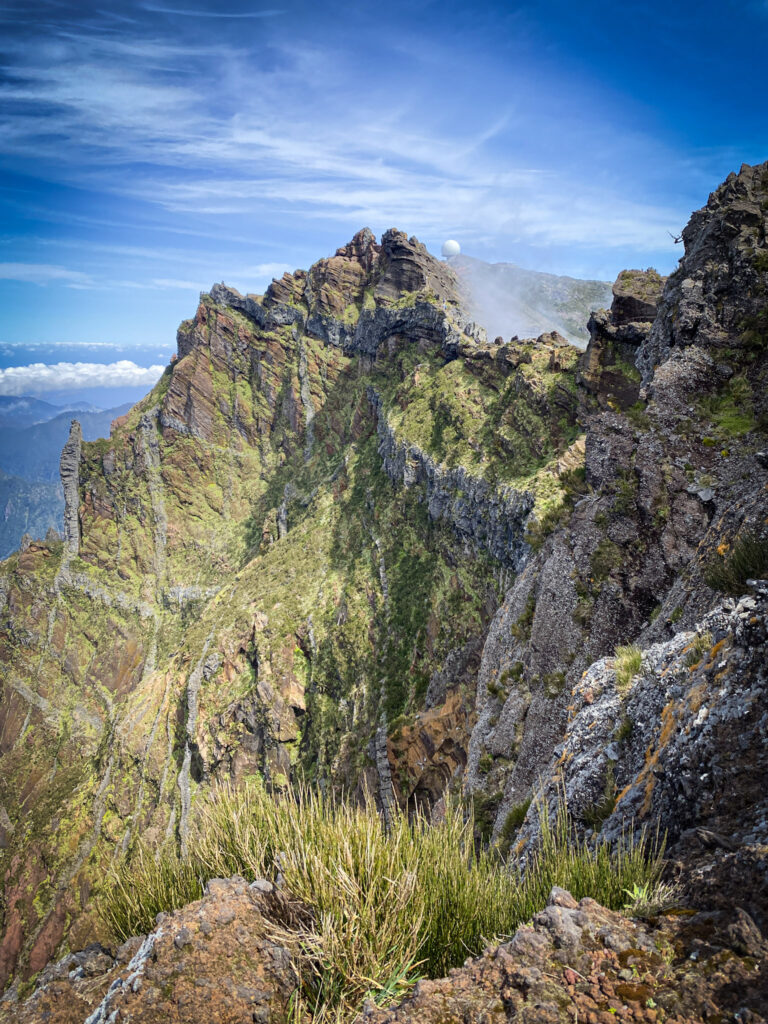
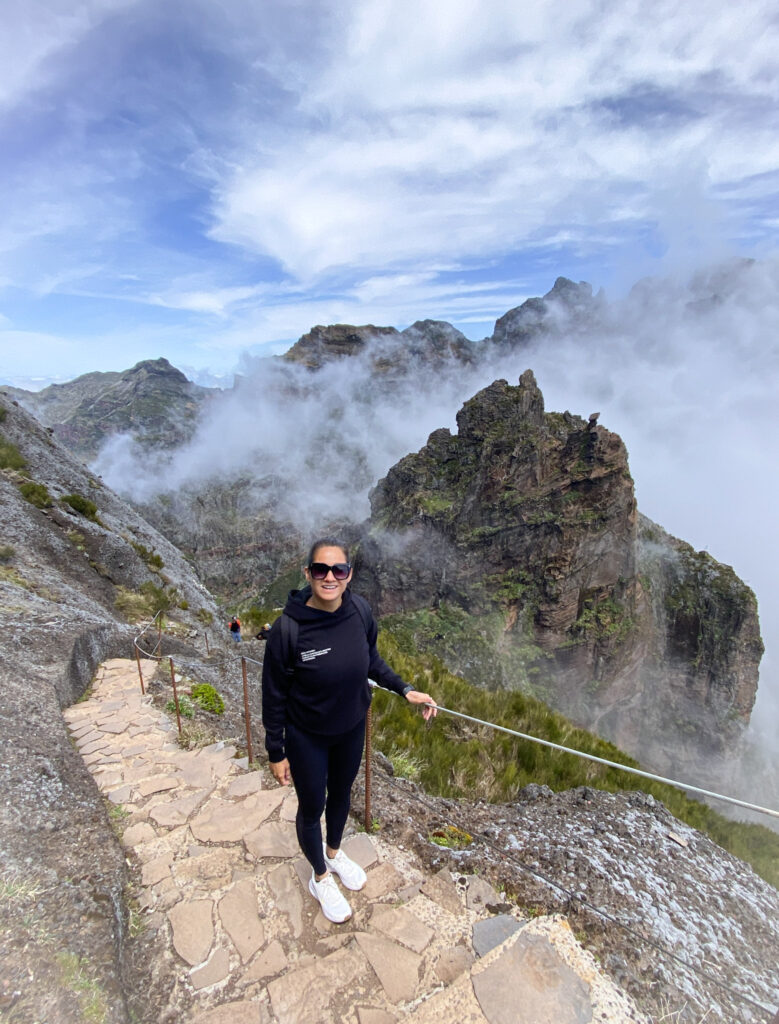
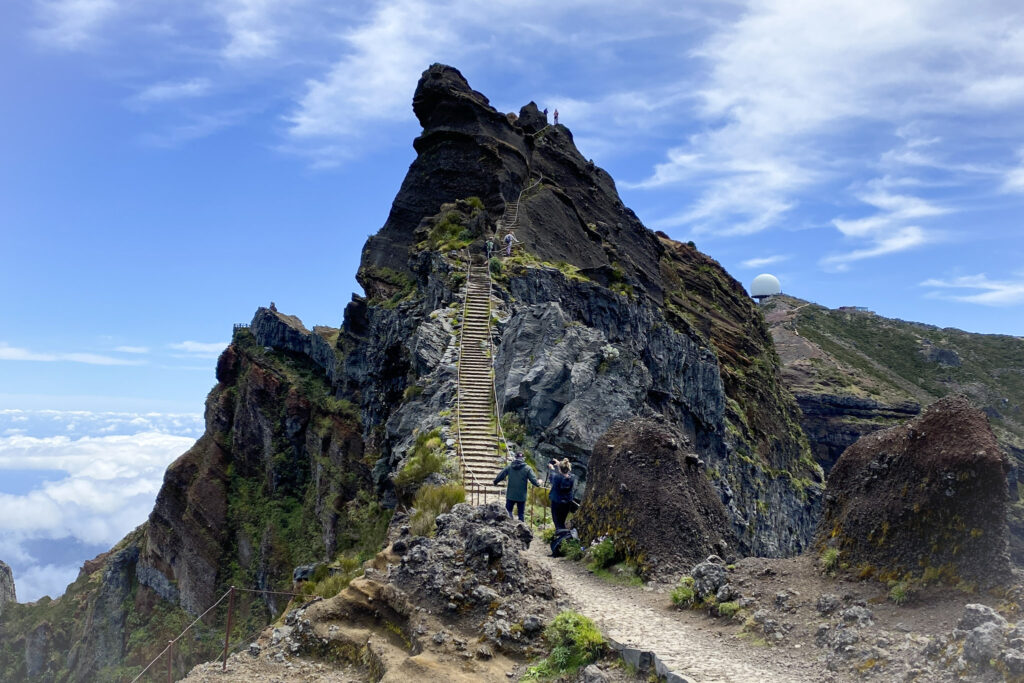
If Madeira has a bucket-list hike, it’s this one. PR1 Vereda do Arieiro runs along a knife-edge ridge connecting some of the island’s highest peaks, with staircases carved into cliff faces, tunnels through the mountain, and views that swing between “serene cloud sea” and “vertigo-inducing drop” within the same ten minutes.
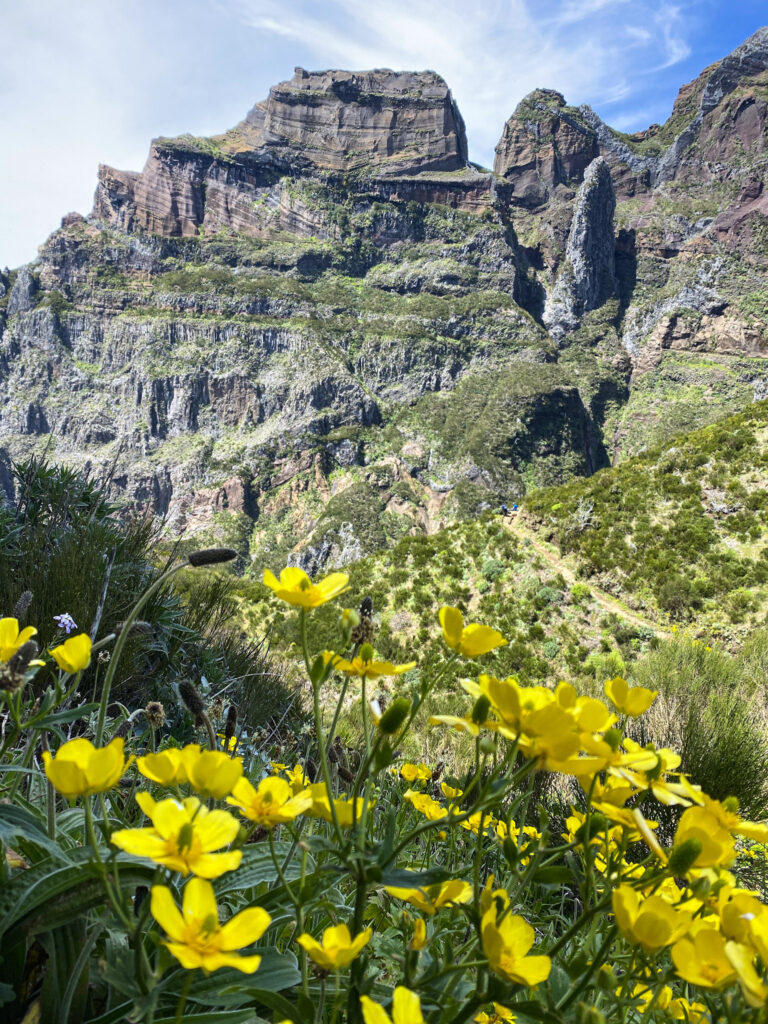
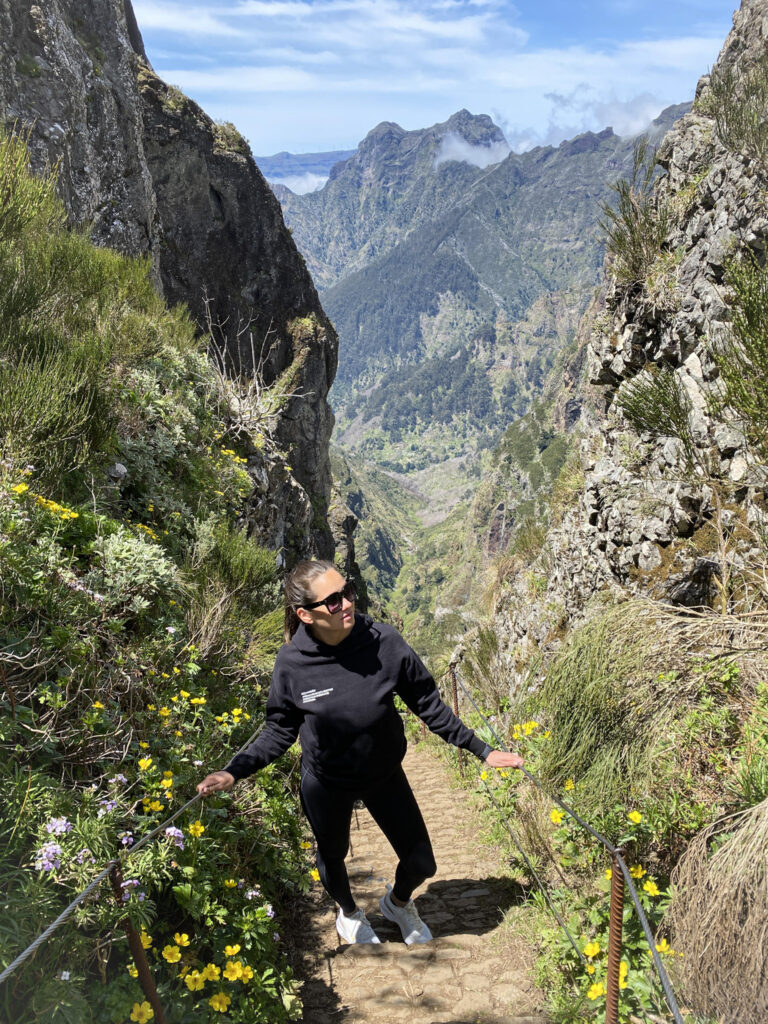
It’s not a stroll — expect steep sections, exposure, and a few hundred stairs that will absolutely be felt the next day — but it’s consistently ranked among the best hikes in Europe, and having done it, I get why.
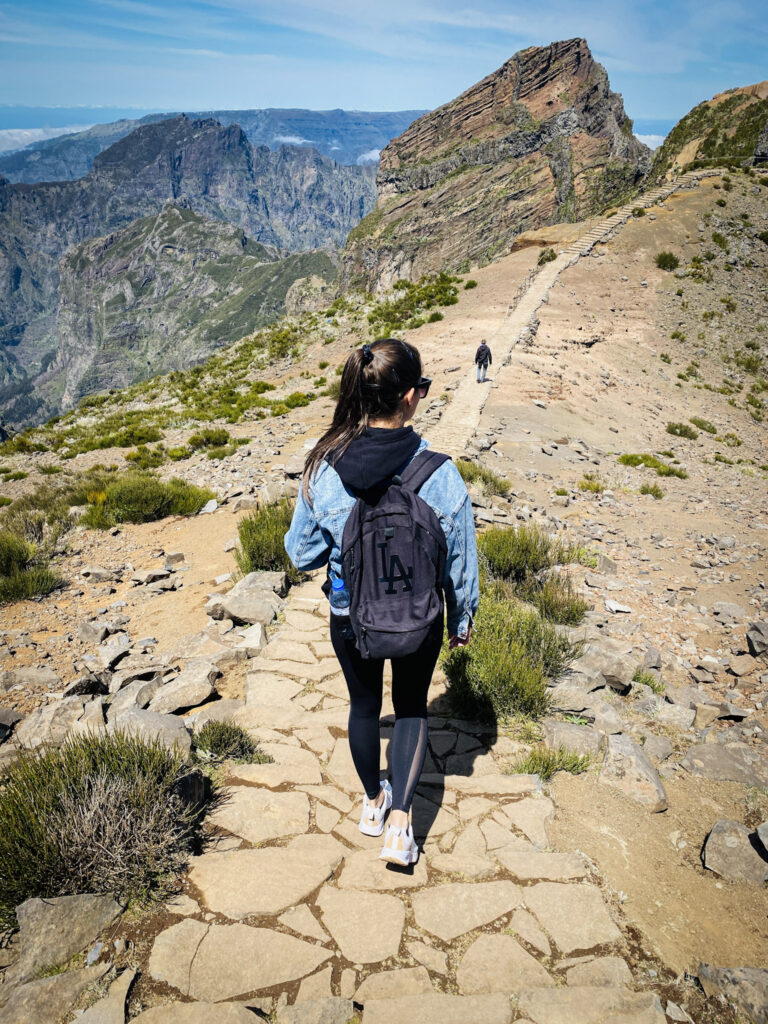
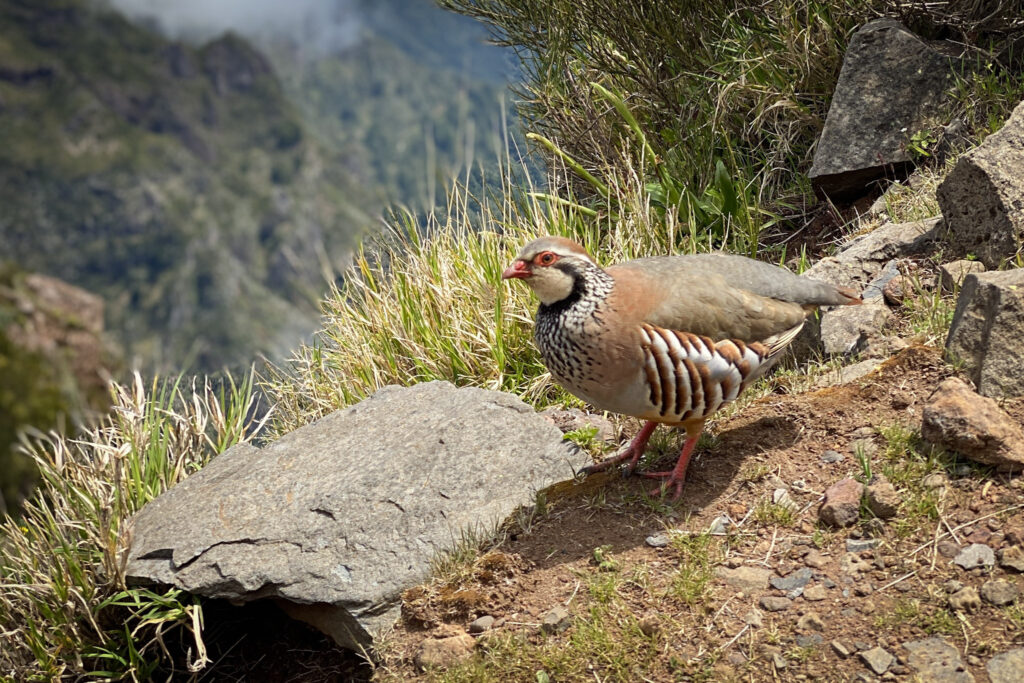
Jet Lag Jelly Tip: Start early. Clouds tend to roll in and swallow the views by midday, and you want clear skies for the ridge sections.
13. Fanal Forest and Cascata do Risco
Save some time for Madeira’s weirder, quieter corners.
Fanal Forest is an ancient laurel forest — a UNESCO-listed relic — famous for its centuries-old, wind-twisted trees standing alone in open pasture, often wrapped in fog that makes the whole place feel like a fairytale nobody bothered to translate into English. It’s eerie, beautiful, and completely unlike anywhere else on the island.
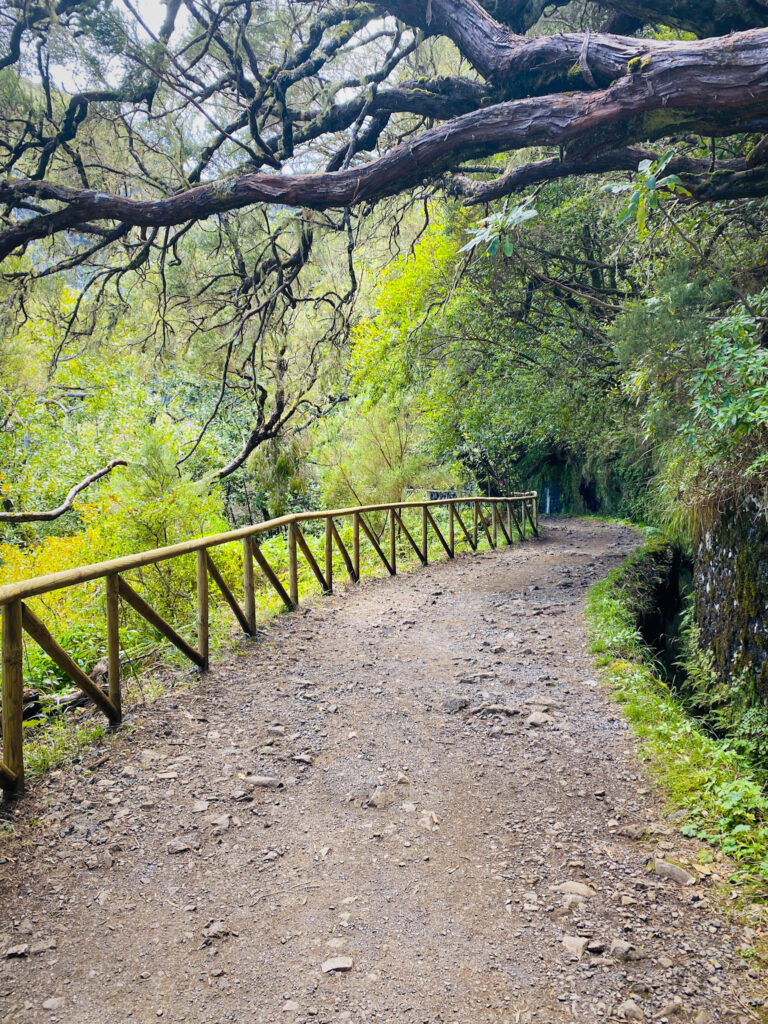
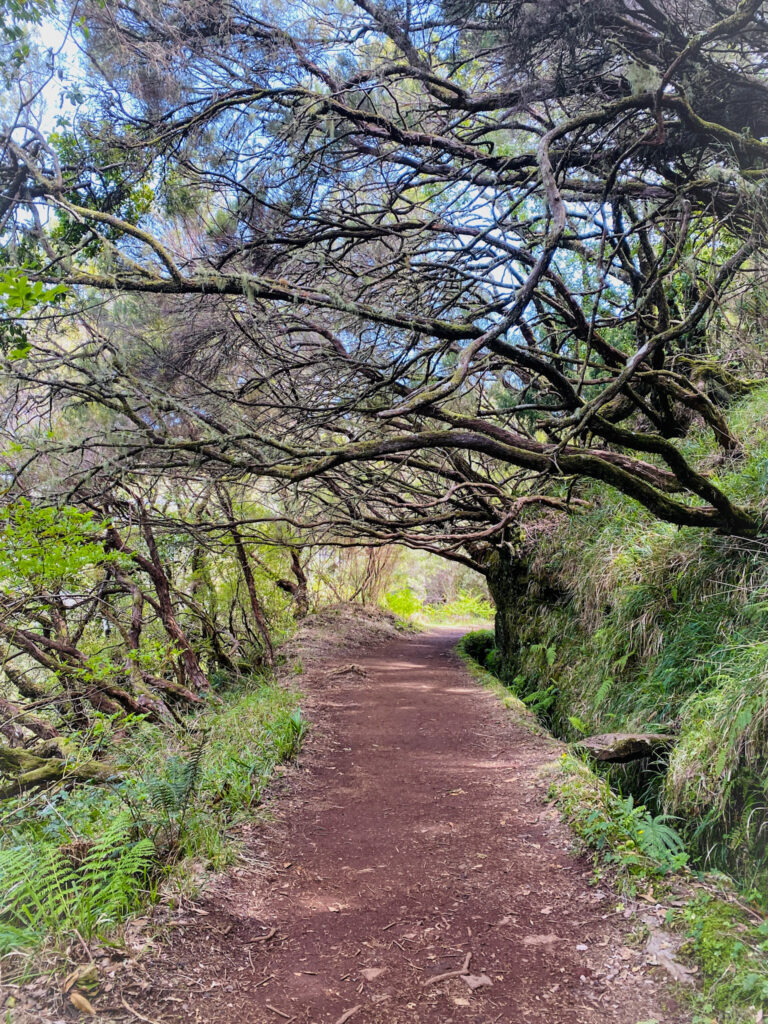
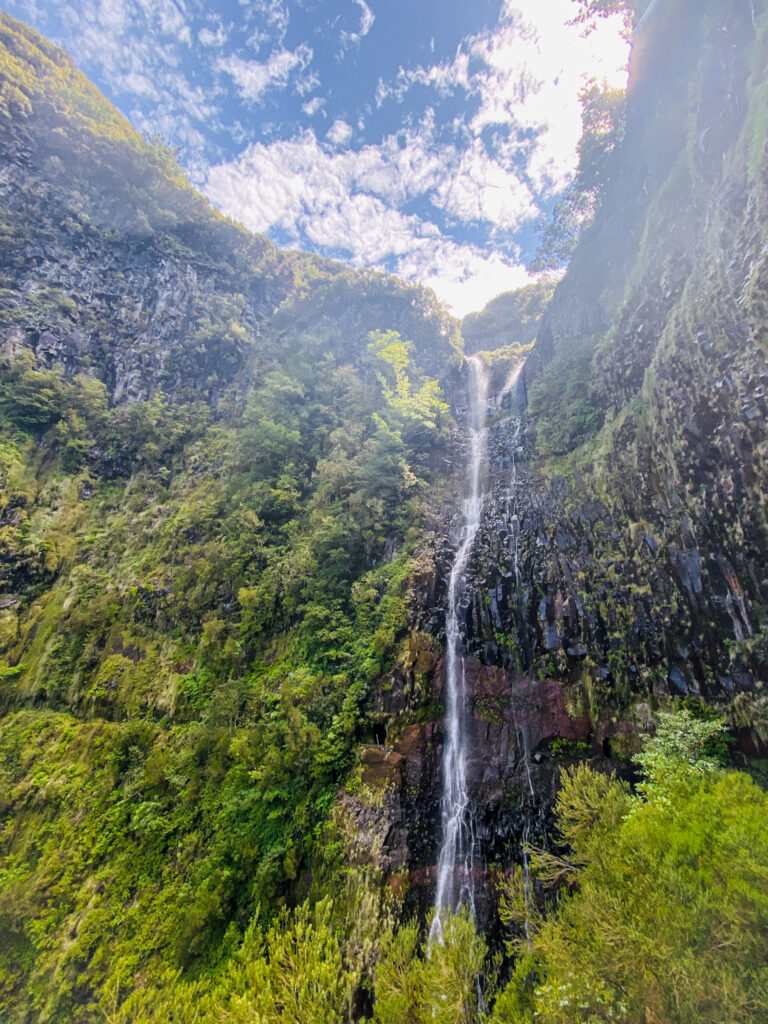
Nearby, Cascata do Risco (Risco Waterfall) is one of Madeira’s tallest waterfalls, reached via an easy, mostly flat walk through the Rabaçal levada network — a nice contrast if your legs are still recovering from Arieiro.
Jet Lag Jelly Tip: Fanal Forest is at its most magical in fog, which sounds counterintuitive, but that's when the "fairytale" effect actually happens. Don't skip it just because the forecast looks moody.
Best Time to Visit Madeira
Madeira is a year-round destination — it’s called the “island of eternal spring” for a reason — but there are sweet spots.
April to June is probably the best all-around window: wildflowers, mild temperatures, and fewer crowds than peak summer. September and October are similarly great, with warm sea temperatures left over from summer and thinner crowds.
July and August are the busiest and hottest months, especially in Funchal, though the coast still stays comfortable. December has its own appeal if you’re around for the famous New Year’s Eve fireworks over Funchal harbor, but pack layers — the mountains get properly cold, and Arieiro-type hikes can be a different experience entirely with wind and fog.
Jet Lag Jelly Tip: Whatever month you go, check the mountain forecast separately from the coastal one. It's common to have sun at sea level and thick cloud cover 1,500 meters up at Pico do Arieiro.
Where to Stay
Madeira rewards splitting your stay rather than basing yourself in one spot the whole trip — the island is small, but the mountain roads make cross-island drives slower than the map suggests.
- Funchal: The obvious base — most restaurants, the cable car, and easy access to the south coast and airport. Good for the first and last nights especially.
- Ponta do Sol or Calheta (south/west coast): Puts you close to Câmara de Lobos, Monte, and the Ponta do Pargo stretch without the city noise.
- Porto Moniz or Seixal (north coast): Worth a night or two if you want early access to the natural pools and Fanal Forest before the day-trippers arrive.
- Santana or Porto da Cruz (north/east): A good base for the thatched houses, Penha d’Águia, and an early start on PR1 or PR8.
You can browse and compare places to stay across the island on Booking.com — filtering by area makes it easy to match your stay to whichever part of the itinerary you’re tackling that day.
Jet Lag Jelly Tip: If you're only doing one PR1-or-PR8-style early start, book a night near the trailhead the night before — both are a solid hour-plus drive from Funchal, and pre-dawn mountain roads are not the time to be rushing.
Budget: What to Expect
Madeira is generally cheaper than most of mainland Western Europe, though Funchal and the resort areas can nudge prices up.
- Accommodation: Budget guesthouses and rural quintas start around €50–70/night; mid-range hotels run €90–150/night; upscale resorts in Funchal can go well beyond that.
- Food: A casual local meal (fresh fish, poncha, the works) runs €10–15 per person; a sit-down dinner with wine is more like €25–40 per person. Poncha and local wine are cheap thrills either way.
- Car rental: Budget roughly €30–50/day, which is genuinely worth it here — public transport doesn’t reach most of the viewpoints and trailheads on this list.
- Activities: Most viewpoints, beaches, and hikes are free. Paid attractions (Monte Palace Tropical Garden, the Funchal cable car, the Rocha do Navio cable car) each run somewhere around €12–20. Classified trails like PR1 and PR8 also require a small paid reservation through SIMplifica, Madeira’s official trail booking portal or find a guided tour in GetYourGuide.
A comfortable mid-range trip lands around €80–120 per person per day including car rental, food, and a few paid attractions; it’s easy to do it leaner if you self-cater and stick to guesthouses.
Getting Around the Island
Renting a car is the move. Madeira’s attractions are scattered across the whole island, mountain roads twist constantly, and public transport — while it exists — isn’t built for a viewpoint-hopping itinerary like this one. Roads are well maintained, but expect narrow lanes, tunnels, and serious elevation changes, especially heading toward Arieiro or the west coast. DiscoverCars is a solid way to compare rental prices and pick up right at Funchal airport — just size up a class if you’re not used to steep hills, since underpowered cars can genuinely struggle here.
If you’d rather not drive, the island’s bus network merged in 2024 into a single system called SIGA, which covers the main towns and villages. It’s cheap, but schedules thin out fast outside Funchal and won’t get you to most of the miradouros or trailheads on this list. Taxis and private tours fill the gap for specific hikes (PR1 and PR8 especially, since one-way trails mean you can’t just loop back to your car).
Jet Lag Jelly Tip: Fill up on fuel before heading into the interior or the west coast — stations thin out fast once you leave Funchal.
FAQ
Do I need a car for this itinerary? Yes, effectively. Most of what’s on this list — Ponta do Pargo, Seixal, Fanal Forest, the miradouros — isn’t reachable by public bus in any practical way.
How many days do I need? Five to seven days lets you cover this list without rushing. It’s doable in fewer if you prioritize ruthlessly, but Madeira rewards a slower pace.
Is PR1 (Vereda do Arieiro) dangerous? It’s not technical, but it is exposed in places, with steep drop-offs and a lot of stairs. Fine for a reasonably fit hiker with good footwear and no fear of heights; skip it in heavy fog or rain.
Do I need hiking experience for PR8 (Ponta de São Lourenço)? No — it’s more accessible than PR1, with no major exposure, though it’s still uneven terrain and can be very windy near the tip.
Is Madeira good for a beach holiday? It’s better for scenery than classic sand-beach lounging — most beaches are black volcanic sand or pebble, and the natural pools (Porto Moniz, Seixal) are the real swimming highlight.
What’s poncha? Madeira’s signature drink — rum, honey, and citrus. Worth trying at least once, ideally not right before a mountain drive.
Summary
Madeira packs an absurd amount of scenery into a small island — black-sand beaches, volcanic pools, a lunar-looking peninsula, a fairytale forest, and a ridge hike that’ll leave your legs (and your camera roll) thoroughly worked. Give yourself more days than you think you need. This island does not do “quick stop.”
Sleep later. Explore now.
Loved Madeira? Check out more of my Spain & Portugal coverage: Top 10 Things to Do in Tenerife, Around Alicante & Costa Blanca, The Best Places to Visit Near Málaga & Costa del Sol, and The 10 Most Trendy Beaches in Europe for 2026.